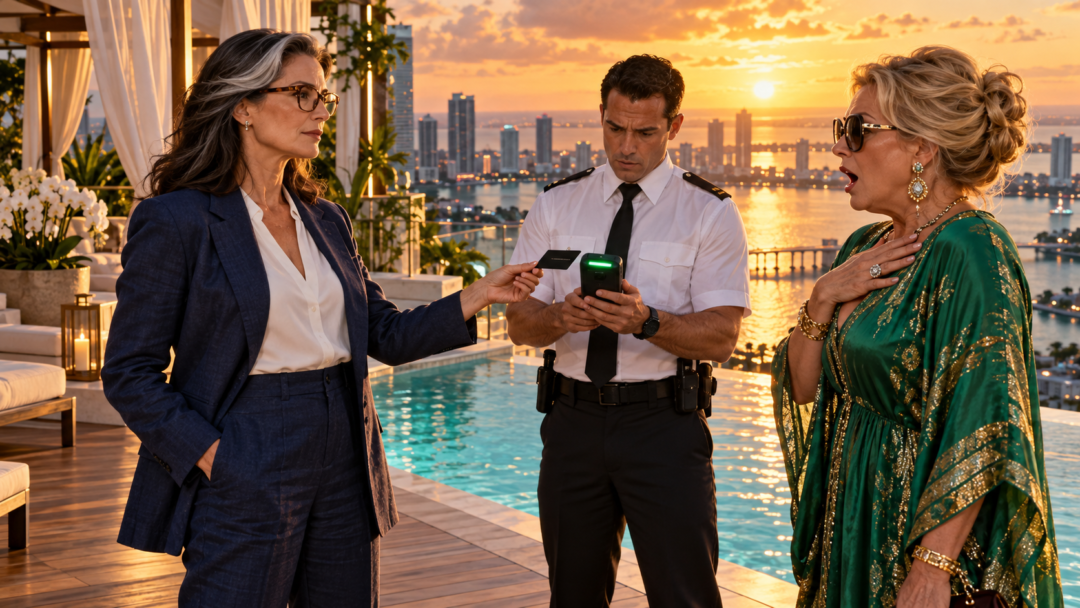
The Rooftop Cabana At The Penthouse And The Chief Magistrate
CHAPTER 3: THE PILLARS BENEATH THE WATERLINE
Two hours later, deep beneath the soaring glass and glittering chrome of the Continuum Tower, the atmosphere was subterranean, damp, and chillingly quiet.
Down in Parking Level Four, forty-two feet below the mean high-water line of Biscayne Bay, the air smelled heavily of salt water, damp concrete, and hydraulic fluid. The massive industrial bilge pumps housed in the perimeter sump rooms thrummed with a low, vibrating hum that traveled through the soles of one’s boots like an artificial heartbeat, moving thousands of gallons of tidal seepage through heavy cast-iron flanged pipes toward the city municipal storm canals. Fluorescent light fixtures hummed overhead in long, parallel rows, their harsh white glare bouncing off the damp asphalt ramps.
Chief Magistrate Marcus Vance walked along the lowest ramp, accompanied by Mateo Silva. Silva was seventy-one years old, a retired Master Chief Petty Officer from the Navy Civil Engineer Corps. His skin was the color of old saddle leather, weathered by forty years of sun on the decks of naval tenders from Subic Bay to Guantanamo. His hands were thick, square, and calloused, holding a five-pound steel geological testing hammer and a digital ultrasonic depth gauge with the effortless familiarity of an artisan.
Walking five paces behind them were two uniformed State Marshals in black tactical vests, their sidearms holstered securely, their eyes scanning the shadowy corners of the storage bays with trained, disciplined alertness.
“Look right here at Pillar Fourteen, Magistrate,” Mateo Silva said, coming to a halt before a massive, hexagonal column of reinforced concrete that supported the tower’s primary high-speed elevator core. He directed the powerful beam of an industrial LED flashlight against the face of the pillar. “Look at this surface coating. Do you see the brown, powdery crust flaking off the exterior?”
Vance leaned in close, inspecting the crumbling gray-brown material. “It looks like severe chemical spalling.”
“It’s not spalling,” Silva said with a bitter, disgusted laugh. “Three days ago, at two in the morning, Sterling’s private maintenance crew came down here with agricultural chemical sprayers. They soaked this pillar in a concentrated solution of industrial muriatic acid. It ate through the exterior paint and reacted with the free lime in the cosmetic plaster coat, creating a powdery efflorescence that looks like the rebar inside is rusting and expanding.”
Silva raised his geological hammer and brought the flat steel head against the center of the crumbling patch with a sharp, ringing crack.
The powdery surface layer shattered instantly, tumbling to the asphalt floor in a shower of dry plaster dust. Beneath the two-millimeter crust, the true structural concrete of the pillar was revealed—flawless, dark gray, dense as volcanic basalt, with the smooth wood-grain impressions of the original nineteen-ninety formwork boards still perfectly preserved on its surface.
“Solid as the day it was poured,” Silva said, running his thumb over the clean stone. “Not a single micro-fracture. But on Tuesday morning, Sterling brought the county building inspector down here for eight minutes, showed him this powdered plaster, and had him sign a preliminary condemnation advisory. Then she sent certified letters to forty owners on the lower floors telling them that if they didn’t hand over sixty thousand dollars in cash by Friday, their apartments would be seized under the master association’s statutory emergency lien powers.”
Marcus Vance reached out, touching the cold, unyielding face of the structural pillar. Her jaw tightened, the muscles along her cheekbones hardening like iron.
“And how many families signed the conveyance waivers under that threat, Mateo?”
“Twelve families already signed,” Silva whispered, his deep voice thick with grief and rage. “Mrs. Alvarez on the ninth floor—her husband was a decorated combat engineer who died in Fallujah. She lives on his military pension. The Garcias on fourteen—both retired school teachers. They didn’t have sixty thousand dollars in liquid cash, Magistrate. And no commercial bank in Florida would write a home equity line against a building that had a pending structural condemnation notice on file with the county.”
Mateo struck the floor with the handle of his hammer. “Sterling’s private holding company offered to buy their units for two hundred thousand dollars below market value to ‘relieve them of the assessment burden.’ The closing papers are sitting on the boardroom table right now, scheduled to be executed at eight o’clock.”
Vance pulled a clean linen handkerchief from her pocket, wiped a smudge of concrete dust from her knuckles, and checked the time on her watch. It was seven-forty-five.
“Did Officer Torres secure the security video feeds from the loading dock, Mateo?”
“Everything is on this encrypted drive,” Silva said, pulling a heavy brass thumb drive from his canvas work vest and handing it to Vance. “It shows Sterling’s brother-in-law unloading twelve fifty-gallon drums of muriatic acid from an unmarked rental truck at midnight on Tuesday. It shows him paying off the night maintenance supervisor with cash in the freight elevator lobby.”
A heavy tactical radio clipped to the lead marshal’s tactical vest crackled to life with a burst of static.
“Magistrate Vance, this is Captain Vance at the perimeter lobby,” the voice sounded, crisp, calm, and professional. “Mrs. Sterling has just entered the grand mezzanine boardroom. She has two private, armed security contractors stationed at the double doors. The four executive committee members are seated, and they have called the meeting to order fifteen minutes ahead of schedule. They are preparing to take an immediate voice vote on the foreclosure deeds.”
Chief Magistrate Marcus Vance looked at Mateo Silva, then at the two marshals. The quiet, scholarly demeanor she had worn in the cabana was completely gone. In its place stood the supreme legal authority of the state, armed with the truth and the unbending power of statutory equity.
“Captain,” Vance spoke into the radio microphone, her voice echoing off the concrete pillars of the cavernous garage. “Seal all exterior exits of the Continuum Tower. Deploy your entry team to the mezzanine landing. Inform the front desk that the Chief Magistrate is convening an emergency court of equity in the grand boardroom in precisely five minutes.”