The Faded Midnight Train Ticket And The Missing Shipping Tycoon
CHAPTER 3: THE RED LIGHT IN THE EVIDENCE POUCH
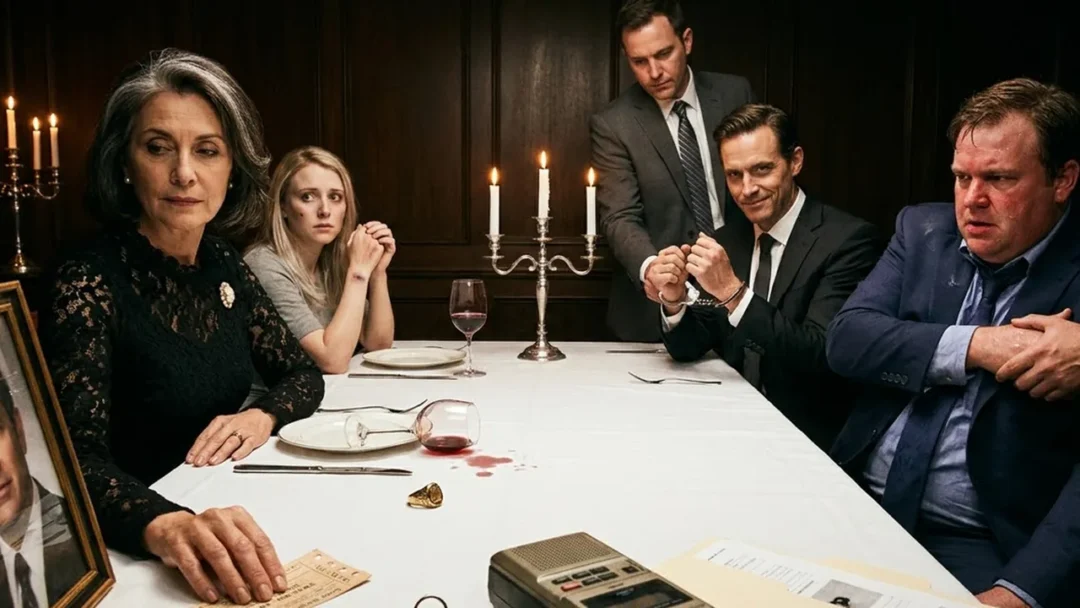
The Grand Founders Room descended into an absolute, breathless hush. The two dozen corporate executives, shipping lawyers, and municipal officials sat petrified in their high-backed leather chairs, watching Detective Thomas Cole place the clear evidence bag squarely in the center of the head table, right beside the spilled wine, the faded train ticket, and the brass locker key.
Gerald backed away against the walnut wainscoting, his hands raised in a half-hearted gesture of legal protest, his eyes darting frantically toward the service doors leading to the kitchen. “Detective Cole, this is an illegal entry into a private members’ club. You have no warrant to disrupt a private family memorial—”
“I have a grand jury evidentiary warrant signed by Judge Harrison forty minutes ago, Gerald,” Detective Cole replied smoothly, unbuttoning his damp trench coat to reveal his sidearm and holster. “Issued on the basis of sworn affidavits and physical evidence surrendered by your legal spouse. We broke the lock on Locker 44 at the abandoned Eastbank terminal. Inside that locker, wrapped in oilcloth and sealed inside an insulated marine ammunition box, was this digital microcassette recorder and a thirty-page handwritten ledger.”
Cole pulled a small pair of sterile latex gloves from his pocket, slipped them over his hands, and unzipped the evidence pouch. He lifted the battered black Olympus microcassette unit, setting it gently atop the damask cloth beneath the flickering candelabras.
Hugo Mercer slumped down in his chair, his ruddy face turning the color of curdled milk. “Cole… listen to me… this was a tragic river accident. The river current was twenty knots that night… the fog was so thick you couldn’t see the pilings…”
“Shut your mouth, Hugo,” Detective Cole said coldly. “Let’s hear what Richard had to say about that fog.”
Cole extended a gloved forefinger and pressed the small rectangular plastic play button on the face of the recorder.
The unit hissed with tape friction for three agonizing seconds. Then, a low, crackling audio feed filled the dining room, accompanied by the distinct, rhythmic clatter of freight train wheels rolling across iron joint-bars and the distant, lonely wail of a river horn.
Then came a voice.
It was raspy, wet with coughing, and thinned by cold water and trauma, but every single board member in that room recognized the gravelly, resonant cadence of Richard Vance.
“This is Richard Vance,” the recording wheezed, punctuated by heavy, labored breaths. “The time is eleven-fifty-eight on Monday night, November third. I am recording this inside the boiler house of the Eastbank rail spur. Twenty minutes ago, my son Gerald and my partner Hugo Mercer ambushed my Town Car at the south approach to the Fort Pitt Bridge. Gerald had cut the master hydraulic brake lines in the club garage two hours earlier. When my car went through the barrier, I jumped into the lower construction netting above the river pier. I didn’t drown. But they were waiting on the riverbank with two men from the dock security crew.”
A horrified, collective gasp broke from the dining table. Several women covered their faces with their napkins, while an elderly shipping trustee rose from his chair, trembling with rage.
The recorded voice continued, growing harder, sharper, and filled with an ancient, heartbroken fury:
“They dragged me into the concrete intake culvert under the rail bridge. Gerald held a three-page stock transfer deed to my face. He told me that if I didn’t sign the voting proxy over to him and Hugo tonight, they would throw my daughter-in-law Lila down the stairs and see to it that Irene never received a penny of the maritime pension. They thought the river would wash away their debt. They thought I would drown in the dark. I signed their paper to buy time, but I managed to slip through the drainage culvert into the railway yard while they were torching the car. If I do not survive the night… if Gerald takes my chair… give this tape to Irene. Irene, my love, do not believe them. Do not let them steal the river.”
The recording clicked off with a sharp mechanical thud, followed by the hiss of blank tape.
The silence in the Founders Room was so thick it felt like heavy oil.
Irene Vance stood beside the portrait of her husband, her face completely pale, her chin raised with an unshakeable, regal dignity. A single crystalline tear slipped down her cheek, catching the candlelight, but her eyes never wavered from her son’s face.
“Twelve years, Gerald,” Irene said, her voice dropping into a register of icy, devastating finality. “For twelve years, you sat in your father’s office. You sat in his leather chair. You drank his vintage port, and you paid me a quarterly allowance as if I were a beggar on your porch. You stole his empire, you terrorized this sweet girl, and you thought the river would hide your shame.”
Gerald’s face twisted into an expression of raw, cornered, feral malice. He stopped looking at the detectives. He stopped looking at his mother.
With a sudden, violent movement, Gerald kicked the heavy mahogany dining chair aside, sending it crashing into the banquet table, and bolted toward the service exit leading to the kitchen elevators.
The silver candelabras flickered as a draft swept through the heavy velvet drapes. Every man and woman seated at the thirty-foot table had made millions off the contracts Richard Vance had signed with Bethlehem Steel, Consol Energy, and the Pennsylvania Railroad. For twelve years, they had toasted Gerald’s aggressive modernizing, ignoring the quiet whispers along the Monongahela wharves that Richard’s death had been far too convenient for the young heir. Now, listening to the dead man’s voice rasping from the plastic speaker, the shame in the room was palpable, suffocating every voice into stunned, horrified silence.