The Neon Racing Bicycle Beyond Barnaby’s Electric Fence
CHAPTER 3: COMPLAINTS BY COPY AND PASTE
The red plastic condemnation tape flapped violently in the rising autumn wind, stretching like a jagged scar across the front sixty feet of Juniper Vale Ranch. Barnaby stood fifty feet back in the tall pasture fescue, his head raised high, staring at the fluttering red ribbon with deep, unblinking suspicion.
Inside the ranch office, Mae sat at the desk surrounded by municipal property deeds, topographical maps, and a printout of the public records portal Jonah had accessed through the county library server.
“Pritchard filed the condemnation order at 9:15 AM,” Mae said, pointing her pencil at the official digital timestamp on the pink citation. “Cross’s bike hit the trench at 8:41. That gave Pritchard exactly thirty-four minutes to receive a formal complaint, draft a four-page legal citation, verify the property boundary, print the order, and dispatch two county workers with survey stakes.”
“Nobody in county government works that fast,” Jonah said, leaning over the desk with his phone. “Not unless the paperwork was already sitting in the computer before the incident even happened.”
“Look at the public comments section on the county recreation board portal,” Jonah added, scrolling through the screen. “There are twenty-two emergency complaints filed against Juniper Vale in the last four hours. Every single one demands that the county immediately seize the sixty-foot roadside verge to protect the Blue Ridge Gran Fondo.”
Mae took the phone and scrolled through the entries. The submissions came from twenty-two different email addresses, but the wording was identical:
“Juniper Vale Ranch’s illegal electrical barriers and dangerous, uncontrolled livestock pose an imminent lethal threat to Virginia tourism. The county must enforce an immediate sixty-foot emergency safety easement before the international race.”
“They didn’t even bother to rephrase the sentence,” Mae whispered, her eyes narrowing. “It’s an automated macro sent from a marketing PR server.”
She switched to the state Department of Transportation’s public database and pulled up the official event permit application filed by Blue Ridge Sports Group four months earlier.
“Here it is,” Mae said, tracing the route map on her monitor. “The state granted Tessa Grant a conditional race permit under Section 12-A of the Highway Code. Condition Three: the race promoter must maintain an unobstructed sixty-foot roadway through Mile 14 to accommodate emergency medical vehicles, television broadcast trucks, and official pace cars. If the road is less than sixty feet wide, the permit is automatically voided at 8:00 AM on race day.”
“And the road along our pasture is only eighteen feet wide,” Jonah realized, his voice trembling with sudden clarity. “Without our sixty-foot strip, Tessa Grant’s entire race is illegal! She loses her television broadcast contract, she loses her corporate sponsorships, and she faces hundreds of thousands of dollars in breach-of-contract penalties!”
“Tessa couldn’t buy the land from me,” Mae said, “so she paid Adrian Cross to create an incident, and she had Officer Pritchard standing by to condemn the pasture under emergency safety codes.”
The desk telephone rang. The sharp, mechanical bell echoed through the quiet house. Mae picked up the receiver and pressed the speakerphone button.
“Mae? It’s Tessa Grant.”
Tessa’s voice was crisp, rhythmic, and thoroughly polished—the smooth, unshakeable tone of an elite sports executive managing a minor logistical inconvenience.
“Hello, Tessa,” Mae said, keeping her voice completely level. “Did you enjoy your morning video?”
Tessa chuckled softly, a rehearsed, melodic sound. “Mae, let’s speak frankly as businesswomen. Adrian can be dramatic, but you have to appreciate the stakes. He’s an Olympic bronze medalist with seven-figure corporate endorsements. His sponsors are demanding legal blood over the destruction of his machine.”
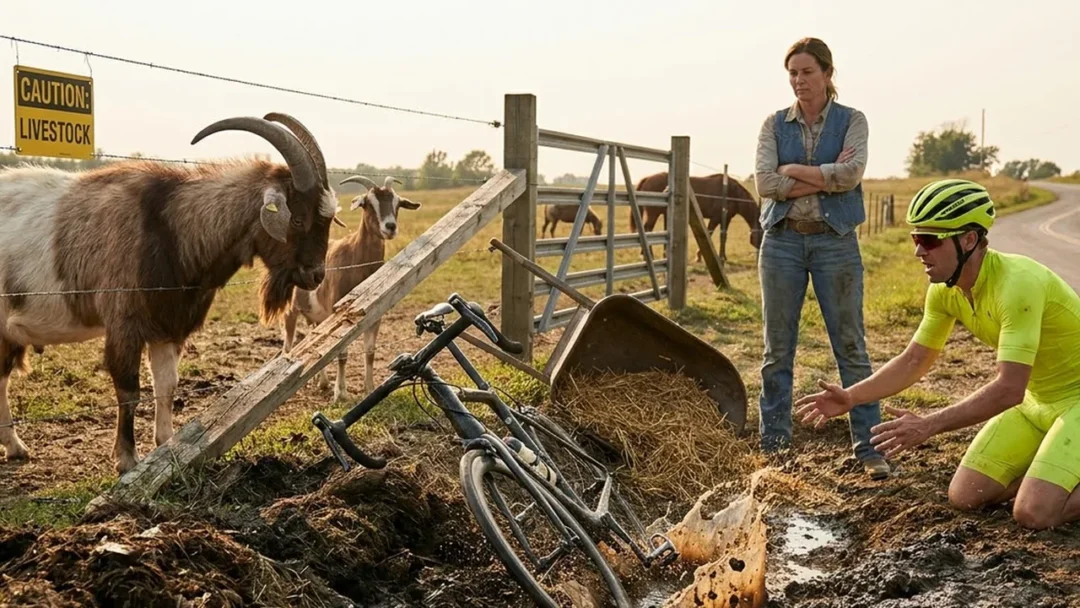
“He destroyed my wheelbarrow and shoved his bike onto an energized fence,” Mae replied. “He got exactly what he earned.”
“The county code enforcement division doesn’t see it that way, Mae,” Tessa said, her tone shifting into smooth corporate condescension. “Officer Pritchard has already condemned the verge. The zoning appeals board won’t even review the order until Tuesday afternoon. But I’m willing to offer you a very generous compromise. Blue Ridge Sports Group will wire fifty thousand dollars directly to your farm account within one hour. In exchange, you sign a temporary forty-eight-hour event right-of-way easement. Adrian drops his property lawsuit, Pritchard withdraws the animal control impound threat, and your ranch stays safe.”
“And if I refuse to sign?”
A heavy, deliberate silence hung on the line for three seconds. When Tessa spoke again, every trace of artificial warmth had vanished.
“If you refuse, Adrian’s attorney files a formal tort injunction in circuit court at four o’clock today,” Tessa said, her voice turning into cold, sharp steel. “The judge will issue an immediate pre-judgment writ of attachment against your livestock and property. County animal control will load that goat into an impound trailer before sunset, and your ranch will spend the next three years paying five hundred dollars an hour to bankruptcy lawyers. You have until three-thirty to accept the wire, Mae. Don’t sacrifice your family’s future for a strip of weeds.”
The line clicked dead.
Jonah looked at Mae, his fists clenched tight, his breathing shallow. “Mae, what can we do? We don’t have fifty thousand dollars for circuit court retainers.”
“We don’t need fifty thousand dollars if we have the original permit filing,” Mae said, standing up and grabbing her heavy canvas barn jacket. “Tessa had to submit her certified engineering safety log to the county field office at the fairgrounds. If that log proves Pritchard helped her plan this condemnation weeks ago, it’s not a zoning dispute—it’s criminal extortion under federal law.”
“Where is the file kept?”
“In Pritchard’s mobile inspection trailer at the race expo,” Mae said. “And we have two hours before the courthouse closes.”