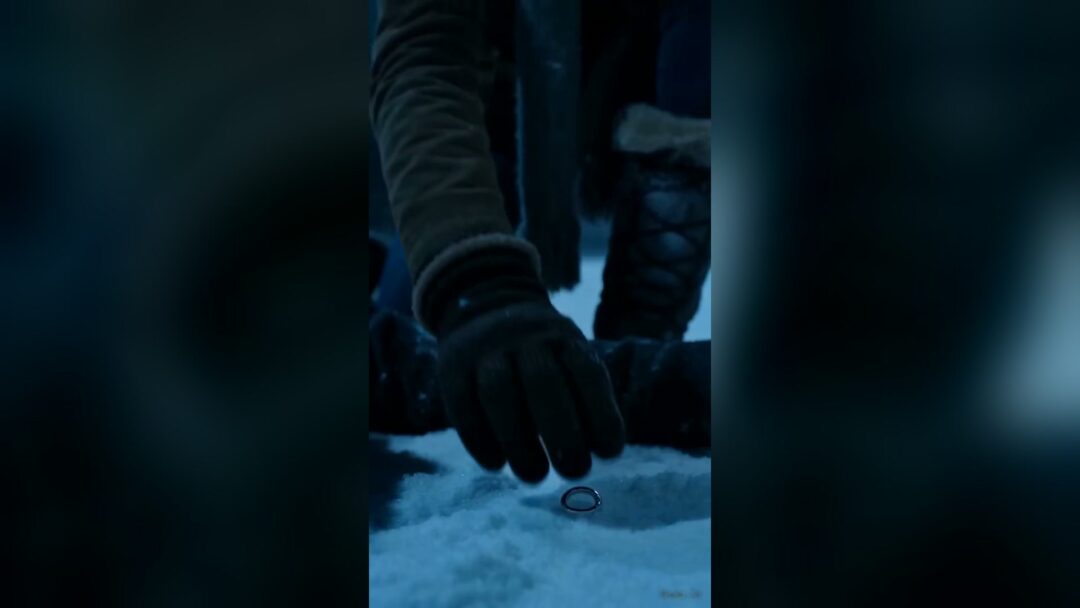
The Silver Ring And The Frozen Rail Yard Of Northgate
CHAPTER 1: THE FROST ON THE PALLET
The Minnesota sub-zero blizzard screamed across the vast industrial graveyard of the Northgate Burlington Northern rail yard, driving fine needles of powdered ice through the rusted gaps in forty iron ore hopper cars. The temperature had plunged to twenty-two degrees below zero by midnight, freezing the slush between the heavy cross-ties into jagged ridges of grey iron. Above the tracks, suspended from an angled steel gantry by frayed industrial cabling, a single mercury-vapor floodlight flickered violently in the howling northern gale, casting swaying pools of sickly amber-blue brilliance over mountains of packed snow and frozen ballast.
Anya Rho stood motionless in the open snowdrift between Track 8 and Track 9. She wore a heavy duck-canvas utility jacket lined with sheared sheepskin, a thick wool scarf wrapped twice around her neck and tucked securely beneath her sheepskin collar, and steel-toed oil-resistant rail boots that sank four inches into the fresh powder. Her breath rose in steady, measured clouds that vanished instantly into the storm. Her hands, calloused and square-knuckled from twenty years of pounding makiwara boards and heavy rail tools, rested relaxed at her thighs. Every muscle in her compact, five-foot-four frame was tuned to the rhythmic frequency of the gale; she felt the vibration of the frozen rails through the thick rubber soles of her boots.
Six feet above her, perched arrogantly atop a towering four-tier stack of weathered pine freight pallets, stood Silas Vane. His tailored black wool trench coat flapped in the wind like the wings of a scavenger bird. He wore no hat, allowing the snow to frost his slicked-back raven hair. His long, aristocratic fingers were adorned with heavy silver signet rings that gleamed under the mercury light as he brought his palms together in a slow, rhythmic, mocking clap that echoed off the empty boxcars.
“Look at you, Anya,” Silas sneered, his voice carrying the theatrical, melodic cadence of an opera singer performing for an empty hall. “Standing down there in your father’s dirty work clothes like a stray hound that doesn’t have the sense to get out of the drift. Do you remember what I told the board five years ago when I threw your gi into the street? You were always the slow one. The stubborn, plodding brute who could never master the grace of high-tier commercial competition.”
Anya did not move. The snow settled quietly upon the broad shoulders of her canvas jacket, but her dark, unblinking eyes remained anchored to the bridge of his nose. She had spent five years enduring the whispers of Northgate, listening to the small-town rumors that her father had died a negligent drunk, but her spirit had been tempered in quiet isolation, forged like the high-carbon steel of a railroad spike.
Silas laughed—a high, mocking sound that rattled like loose sheet metal—and vaulted down from the pallets. He landed lightly in the snow three feet in front of her, the hem of his coat kicking up a small cloud of powder. He stepped in close, his breath smelling of expensive peppermint schnapps, and reached out with two gloved fingers to flick a crust of ice from the collar of her jacket.
“You had one chance in this county, little girl,” Silas whispered, spreading his arms wide with dramatic pity. “One chance to fight under the Black Bear banner and draw a real purse. But you choked. You let sentiment make you soft. You refused to break the boy’s leg when the syndicate called the match. You wasted the only life you were ever going to have.”
“No,” Anya said. Her voice was quiet, pitched low beneath the drumming of the wind, carrying the bone-deep stillness of northern granite. “I saved it.”
Silas’s thin lips curled into a snarl of sudden disgust. “You saved nothing. You’re a beggar sleeping in a maintenance shed.”
Without a breath of telegraph, Silas whipped his right arm around in a vicious, blinding spinning backfist. The heavy silver rings on his knuckles cut through the freezing air like brass knuckles, aimed directly at her cheekbone.
Anya didn’t flinch. She ducked her head three inches, allowing the cold leather of his glove to whistle harmlessly over her woolen cap. In the same fluid, unbroken micro-second, she drove her rear foot into the frozen ballast, dropping into a deep, immovable zenkutsu-dachi front stance, and launched a crisp, linear gyaku-zuki reverse punch straight from her hip into his exposed floating ribs.
The impact was a dull, concussive crack that sounded like a green pine branch snapping under heavy snow.
The air blasted from Silas’s lungs in a violent white plume. The sheer kinetic force of the strike lifted his boots two inches out of the drift, sending him flying backward through the air.
Silas crashed back-first into the four-tier pallet stack. The dry pine lumber splintered under his two-hundred-pound impact with a sound like pistol fire. Two heavy freight pallets dislodged from the top and crashed into the snow beside him, showering him in pine needles, splinters, and frozen sawdust.
Anya stepped forward through the drift, her fists held tight against her ribs.
“You missed,” she said.
Silas roared in animal humiliation. He scrambled out of the broken timber like a cornered lynx, his face purple with fury, snow clinging to his eyebrows. He lunged forward through the powder, driving a flying right knee strike aimed at her throat.
Anya took a half-step laterally, shifting her center of balance off his centerline. She parried his flying knee with a sweeping downward block of her left forearm, rotated her hips with explosive torque, and drove a lightning-fast shuto-uchi knife-hand strike straight across his collarbone.
The strike struck with the concussive force of an iron wedge. Silas spun in mid-air, cried out in agony, and tripped violently over the rusted steel rail of Track 9.
His momentum carried him headlong into the heavy sliding steel door of an abandoned Burlington Northern boxcar. The top roller snapped off its iron track with a deafening screech, the forty-year-old door sagging open on rusted hinges.
Before Silas could recover, Anya closed the distance, grabbed the sodden black wool lapels of his coat, and hurled him violently into the dark interior of the freight car.
Silas crashed into a secondary stack of industrial shipping pallets stored inside the car, bringing twelve hundred pounds of seasoned oak crashing down around his legs. He lay flat on his back in the drifting snow that blew through the open door, his ribs screaming, gasping for breath like a landed carp.
Anya stood in the open doorway, framed against the raging blizzard, the mercury floodlight illuminating the frost on her eyelashes.
“Try harder,” she said softly.
Silas struggled to sit up, his fingers clawing at the frozen floorboards, but his left shoulder was dislocated and refused to bear weight. The cold, theatrical sneer had vanished completely from his face, replaced by the naked, trembling terror of a man who realized his adversary was not a person, but an elemental force.
“You… you can’t…” Silas wheezed, blood trickling from his split lip into the white snow. “You don’t understand what’s coming on the midnight manifest…”
Anya stepped into the boxcar. Her boot nudged something hard and metallic that had dislodged from his hand during the crash and was half-buried in the snow.
She knelt down and picked it up.
It was an antique hand-forged silver signet ring shaped like a snarling timber wolf. Anya wiped the frost from the polished band with her thumb.
Engraved on the inner circumference of the silver band were three worn capital letters: M.R.
Anya’s heart stopped.
Those were her father’s initials. Marcus Rho’s ring. The custom ring presented to him by the Brotherhood of Maintenance of Way Employees the week before his body was found frozen inside the bottom hopper of Grain Elevator 4.
CHAPTER 2: THE BLOOD IN THE ORE CAR
The howl of the wind outside seemed to vanish into absolute silence, replaced by the deafening, rhythmic thrumming of Anya’s own pulse behind her ears.
She stood in the center of the dark boxcar, holding the silver wolf ring between her calloused fingers. The metal was freezing, cold enough to tear flesh if touched with wet skin, but to Anya it burned like white phosphorus. Her thumb traced the worn indentation on the wolf’s brow where her father had tapped his ring against the kitchen table every night while going over union rosters.
“My father wore this ring for sixteen years,” Anya said, her voice dropping into a register so dark and low that Silas visibly shrank back into the broken pallets. “When the county sheriff pulled his body out of the bottom of the grain hopper, the coroner reported that his hands were bare. They said his ring had been sheared off in the conveyor auger and lost in sixty tons of hard red winter wheat.”
Silas swallowed hard, his Adam’s apple bobbing against his bruised, swollen throat. He dragged himself backward along the wooden floorboards until his spine hit the rusted corrugated steel wall of the boxcar. “Anya… listen to me. You have to be reasonable. It wasn’t personal. It was business. The Iron Range is bigger than your father. It’s bigger than both of us.”
Anya closed the distance in two measured strides. She didn’t raise her voice. She stepped on his right wrist, pinning his arm flat to the frozen floor with the edge of her steel-toed boot.
“How did you get this ring, Silas?” she demanded, leaning her weight forward until the small carpal bones in his wrist began to flex and protest under the pressure.
“Leland Vance!” Silas shrieked, tears of agony instantly freezing on his hollow cheeks. “County Commissioner Vance gave it to me! He gave it to me three years ago as a retainer!”
Anya’s eyes narrowed into slits. “Why would a county commissioner have my father’s ring?”
“Because your father didn’t fall into the hopper!” Silas gasped, his breath coming in shallow, ragged sobs. “Marcus found the transshipment crates in the roundhouse. He refused to clear the manifest for Track 9. Vance’s private rail security trapped him in the maintenance shed, beat him with iron pinch bars, and dumped him into the grain chute while the auger was running! Vance took the ring off his finger before they turned the electric switch to show the syndicate that the rail yard was under corporate control!”
A cold, bottomless fury settled into Anya’s chest. For five long years, the town of Northgate had whispered that Marcus Rho had been drinking on shift, that his negligence had nearly ruined the autumn harvest, that his daughter was the disgraced child of a dead failure.
“And you,” Anya said, her boot pressing harder, “you took the ring from Vance.”
“He needed muscle to run the dojo!” Silas pleaded, clawing frantically at her boot with his free hand. “He needed someone to train his security boys in close-quarters restraint! He told me the ring was a lucky charm from an old strike! I didn’t know it was Marcus’s! I swear to God on everything holy I didn’t know!”
“You knew,” Anya whispered. “You knew because my father wore it every time he walked through your doors to drop off my training dues.”
Before Silas could stammer another lie, the deep, mechanical rumble of heavy diesel machinery rattled the iron floorboards beneath their feet.
Through the broken boxcar door, the blinding halogen beams of two massive commercial railroad utility trucks swept across Track 9. Mounted on the front of each truck was a ten-foot steel rotary snowplow, their giant blades spinning in slow, menacing arcs that kicked up fountains of frozen slush.
On the sides of the vehicles, painted in reflective yellow stencils, was the emblem: VANCE INDUSTRIAL LOGISTICS – RAIL DIVISION.
A high-powered public address horn mounted to the lead plow crackled through the storm, echoing off the rusted sides of the boxcars:
“Silas! Clear the car! Commissioner Vance has authorized immediate track sanitization! We are leveling the entire spur!”
Through the blizzard, Anya saw four men in heavy arctic parkas step out from behind the trucks, carrying automatic carbines fitted with extended thirty-round magazines.
Silas looked up at Anya through bruised, blackened eyes, his voice breaking into hysterical terror. “They aren’t here to rescue me, Anya. They’re here to wipe the manifest. Neither of us is walking off this spur.”
CHAPTER 3: THE BOXCAR ARSENAL
The chatter of semi-automatic rifle fire ripped through the freezing night before the echo of the megaphone had died away.
Heavy copper-jacketed rounds punched through the thin, rusted steel siding of Boxcar 401 with concussive, deafening clangs, sending jagged metal curls and glowing orange sparks flying across the dark interior.
“Down!” Anya hissed.
She seized Silas by the collar of his heavy wool coat and hauled his two-hundred-pound frame behind a massive, five-foot-tall wooden crate stenciled in black military lettering: CRATE 14 – US ARMY LOGISTICS DEPOT, DULUTH.
The crate took four heavy rounds without penetrating; the dry hardwood framing was reinforced with quarter-inch sheet aluminum and dense high-density packing foam.
“What is in this car, Silas?” Anya demanded, her voice cutting through the ringing in their ears as wood splinters showered down over their heads.
Silas was trembling so violently his teeth clicked like castanets. “Night-vision goggles… thermal sniper scopes… forty Barrett fifty-caliber anti-materiel rifles stolen from the Duluth National Guard Armory three months ago. Vance’s syndicate has a buyer waiting in Thunder Bay. The midnight manifest is a private locomotive running north without rail traffic control.”
Anya inspected the wooden crate. Beside the military stencil was a digital shipping transponder with a blinking red light and a small liquid-crystal display.
The display showed a digital countdown timer: 04:18… 04:17… 04:16.
Beneath the timer, a line of text blinked in green phosphor: REMOTE TERMINATION PROTOCOL ARMED – DETONATION AT 00:00.
“They aren’t just shooting,” Anya said, her voice dropping into a deadly calm. “They’ve rigged the military ordnance to detonate. If forty crates of high-explosive munitions blow on Track 9, it’ll vaporize this entire rail yard and wipe out every shred of forensic evidence.”
“We’re dead,” Silas sobbed, curling into a ball in the sawdust. “We have four minutes. We can’t cross two hundred yards of open snow against four rifles.”
“You can’t,” Anya said, tightening her woolen scarf. “I can.”
She unzipped her canvas jacket and pulled her father’s heavy brass switch-lock wrench from her inner belt loop—an eighteen-inch bar of drop-forged steel with an offset hexagonal socket, carried by every union rail inspector since 1970.
She moved to the rear emergency hatch of the boxcar—a two-foot square steel inspection door used to check refrigerated cargo. The latch was frozen solid with three inches of blue river ice.
Anya didn’t try to chip the ice away. She slid her feet into a narrow, stable kiba-dachi horse-riding stance, focused her entire breath into her solar plexus, and drove the heel of her heavy steel-toed boot straight into the center of the hatch latch.
BANG.
The frozen latch sheared cleanly off its iron rivets with an explosive crack. The small hatch swung outward into the swirling blizzard.
Anya peered out into the howling darkness. The rear of Boxcar 401 faced the old timber drainage ditch that ran parallel to Track 12, where the drifts were piled six feet high beneath the overhanging eaves of the abandoned steam roundhouse.
“Out,” she ordered, dragging Silas toward the hatch.
“I can’t fit through there with a broken shoulder!” Silas cried.
“Fit or burn,” Anya said. She hauled him up by his belt and shoved him head-first through the square hatch.
Silas tumbled through the opening with a muffled yell, landing neck-deep in a drift of powdery white snow.
Anya vaulted through the hatch after him, landing lightly on top of the packed snow. She caught Silas by his uninjured arm and dragged him into the deep shadow beneath the wooden trestle of the coal chute just as a deafening, orange fireball erupted three hundred yards behind them.
The shockwave from Boxcar 401’s initial fuel leak slammed into their backs, blowing a hurricane of burning pine splinters and shredded aluminum high into the winter sky.
The timer was running. Three minutes left before the main military ordnance detonated.
“Where is the master logbook?” Anya shouted over the roar of the fire.
Silas pointed a trembling, frostbitten finger toward a dilapidated, two-story brick and timber structure rising like an iron tower above the rail yard switches. “The old Roundhouse Switch Tower! Eli Vance… the retired switchman… he lives in the maintenance caboose at the base of the tower. He has the logbook!”
CHAPTER 4: THE SWITCHMAN’S CABOOSE
The sub-zero gale screamed through the broken timber frames of the abandoned rail sidings, carrying blinding squalls of snow that reduced visibility to five yards. The sky was an eerie, glowing cauldron of orange and black as the fuel fire from Boxcar 401 sent thick, oily smoke billowing into the blizzard. The smell of burning creosote and diesel fuel hung heavy in the air, biting into Anya’s lungs with every freezing gasp.
Anya dragged Silas through the chest-deep drifts along the drainage ditch, using the massive cast-iron wheel assemblies of stationary ore hopper cars as shields against the wind. Her fingers were stiff inside her gloves, but her breathing remained steady, rhythmic, and disciplined. She kept her center of mass low, stepping directly into the footprints left by the drifting snow to conserve her energy.
At the foot of the sixty-foot brick switch tower sat an antique 1950s steel caboose, painted in faded Burlington Northern green, its iron smokejack spewing a thin, flickering plume of woodsmoke into the freezing dark.
Anya kicked open the heavy iron door of the caboose and shoved Silas inside onto the linoleum floor.
The interior was warm, smelling of burning tamarack wood, damp wool, and strong chicory coffee. In the center of the cabin, sitting beside a glowing cast-iron potbelly stove with an antique Winchester Model 94 lever-action rifle across his knees, was Eli Vance.
Eli was sixty-eight years old, his face weathered into deep, leather-like crevices by fifty Montana winters, his white beard yellowed with tobacco smoke. His eyes were wide with shock as he stared at the bruised, bloody wreck of Silas Vane, then up at Anya Rho.
“Anya,” Eli whispered, his trembling hands tightening on the walnut stock of the rifle. “My God, girl… I heard the blast on Track 9. I thought you were dead.”
“Not yet, Eli,” Anya said, pulling off her snow-caked scarf. She held out her hand, opening her palm to reveal the silver wolf ring.
Eli looked at the silver ring, and a single tear escaped his rheumy blue eyes, tracing a path through the ash on his cheek. “Marcus’s ring. I tried to stop them, Anya. I swear on my mother’s soul I tried.”
“Tell me what happened, Eli,” Anya commanded, stepping to the stove to warm her frostbitten fingers.
Eli closed his eyes, a shudder wracking his frail, broad-shouldered frame. “Five years ago, my brother Leland… the County Commissioner… he brought four men from the Chicago syndicate into this yard. They wanted to use the Canadian Pacific connection to run stolen military weapons across the international border. Marcus caught them in the roundhouse inspecting the first shipment.”
Eli choked back a sob, his knuckles white on the rifle. “Marcus had the union manifest in his pocket. He told Leland he was calling the federal marshals in Duluth. Leland didn’t argue. He signaled his security guards. They took Marcus into the grain elevator. I was locked in the switch cabin… I could hear the machinery running in the dark.”
Silas groaned from the floor, coughing up blood. “Leland gave me the ring to keep quiet, Eli! You know he did!”
“Shut your mouth, Silas,” Eli snapped, cocking the hammer of the Winchester with a sharp, oily click. “You took Leland’s money and you built your fancy martial arts school while this girl was left to freeze in the shacks.”
Eli looked back at Anya, reaching into his heavy wool mackinaw coat. He pulled out an eight-inch brass key stamped with the number “14.”
“The master logbook isn’t down here, Anya,” Eli said, his voice trembling with urgency. “Marcus kept a duplicate of every falsified manifest, every train number, and every wire receipt signed by Leland Vance. He locked it inside the iron fire safe on the top floor of the Switch Tower twenty minutes before they ambushed him.”
Before Anya could take the key, the small glass window of the caboose shattered inward in an explosion of white frost.
A high-powered rifle bullet punched through the cast-iron stove pipe, sending a shower of glowing red embers scattering across the wooden floorboards.
Outside, the heavy diesel roar of Leland Vance’s industrial snowcat shook the foundation of the caboose.
Through the shattered window, a voice amplified by a megaphone cut through the storm:
“Eli! Throw out the girl and the key, or we ignite the fuel lines under your caboose! You have sixty seconds to comply!”
CHAPTER 5: SIEGE AT THE ROUNDHOUSE
The red-hot embers from the shattered stove pipe hissed violently against the damp, salt-stained linoleum floorboards of the caboose, filling the narrow cabin with the choking, acrid smell of smoldering pine wood and scorched wool blankets. Outside, the freezing blizzard shrieked around the iron corners of the vintage car, rattling the heavy double-paned storm glass until it hummed like a tuning fork.
Anya dropped flat onto the floor, pulling Eli down by his canvas suspenders just as a second high-powered rifle round tore through the exterior wall plate, smashing a shelf of antique kerosene railway lanterns into brass and glass shrapnel above their heads. The burning kerosene ignited a small pool of oil in the corner, casting wild, flickering shadows across their faces.
“Eli, where does the maintenance crawlspace go?” Anya asked, her voice low, urgent, and rock-steady despite the chaos.
“Under the main turntable pit,” the old switchman rasped, coughing violently from the rising woodsmoke. “An iron steam culvert feeds the high-pressure boiler lines directly into the ground floor of the roundhouse. It was built during the steam era so mechanics could service the frozen locomotives from underneath during January blizzards. But it’s thirty yards of crawling through freezing slush, mud, and industrial grease.”
“Can you make it?”
“I lived in these pipes for forty years, kid,” Eli said, his jaw tightening as he clutched the walnut stock of the Winchester rifle against his chest. “I can make thirty yards on my belly.”
Anya turned her gaze upon Silas, who was curled into a trembling ball beneath the heavy wooden kitchen table, his eyes wide with animal panic, his hands clamped over his ears. “You stay behind Eli. If you try to run out the front door into the snow, Vance’s snipers on the grain elevator will cut you in half before you take two steps into the drift.”
Anya kicked open the heavy cast-iron trapdoor set into the caboose floorboards, dropping feet-first into the freezing, pitch-black darkness of the underground steam culvert.
The pipe was barely four feet in diameter, half-submerged in freezing runoff water, dead leaves, and thick, congealed petroleum grease. The sub-zero air inside was stagnant and freezing, searing the skin of their faces. Anya led the way on hands and knees, the freezing brine soaking through her canvas trousers, numbing her knees and shins. She moved forward with methodical, silent efficiency, clearing rusted debris with her forearms. Behind her, Eli dragged himself with iron determination, his breathing heavy but rhythmic, followed by the whimpering, stumbling Silas, who kept bumping his head against the overhead steam valves.
They emerged through a cast-iron drainage manhole into the cavernous, freezing interior of the abandoned steam roundhouse.
The roundhouse was a colossal semicircular cathedral of soot-stained brick, massive white oak timber trusses, and rusted iron, large enough to house twenty steam locomotives simultaneously. In the center lay the giant circular rail turntable—an eighty-foot bridge of heavy steel I-beams resting over a twenty-foot-deep pit filled with rusted engine parts, split timber ties, and jagged scrap iron.
Snow blew in through the shattered industrial skylights seventy feet above, dusting the colossal seven-foot iron driving wheels of three derelict steam engines that sat like sleeping black beasts on the radiating track spurs. The air tasted of ancient coal soot, frozen creosote, and the bitter cold of forty below.
Above them, cantilevered out from the second story of the brick exterior wall, was the glass-walled switch tower—the historical nerve center that once controlled every rail line and spur in northern Minnesota.
“The exterior gantry stairs are completely iced over,” Eli whispered, pointing up through the gloom with his rifle barrel. “Leland’s men will breach the roundhouse doors in two minutes. The hinges won’t hold against the snowcat.”
“Then we don’t let them breach together,” Anya said, her tactical mind dissecting the three-dimensional space of the cathedral.
She surveyed the layout with the cold, spatial genius of a master martial artist. The entrance to the roundhouse consisted of two colossal wooden sliding doors, each twelve feet wide and three inches thick, operated by heavy counterweight cables that hung from the ceiling trusses like giant iron pendulums.
Anya climbed onto the rusted catwalk above the doors using an old iron service ladder. She took her father’s heavy brass switch-lock wrench, wedged it into the counterweight gear mechanism, and tied off a fifty-foot length of heavy hemp rigging rope to the release dog.
“Eli,” Anya called down quietly from the shadows of the trusses. “Take Silas into the inspection pit beneath the locomotive tender of Engine 114. Keep your rifle ready, but do not fire unless they clear the tracks.”
Eli nodded, shoving the terrified Silas beneath the massive steel cowcatcher of Engine 114.
Three seconds later, the heavy wooden doors of the roundhouse groaned as the steel blade of Vance’s snowcat rammed them inward with a violent shockwave. The timber groaned, and four armed mercenaries in black tactical gear surged into the building, their weapon-mounted lights slicing through the soot and falling snow.
Behind them stepped Commissioner Leland Vance—a tall, heavy-set man of sixty, dressed in an immaculate shearling coat, carrying a stainless-steel revolver in a gloved hand.
“Search the stalls!” Vance roared, his voice echoing off the brick walls. “Eli is in here! Find the girl, find the ledger, and burn the building to the ground!”
Anya stood on the catwalk forty feet above, completely still, waiting for the four mercenaries to cross beneath the central counterweight beam.
When their boots hit the grease-stained concrete of the central turntable, Anya pulled the release rope with all the explosive force in her back and shoulders.
CHAPTER 6: THE TOWER ABOVE THE SNOW
The fifty-pound brass release dog sheared free from the gear teeth with a concussive, ear-splitting metallic screech that resonated down the entire length of the brick roundhouse.
High above in the darkness of the rafters, the two-ton cast-iron counterweight dropped like a falling meteor. The heavy steel cables whipped through the pulleys with a deafening screech of screaming friction, and the two colossal wooden roundhouse doors slammed shut with the force of an avalanche, cutting off the snowcat outside and plunging the entrance into total darkness.
The concussive backdraft blew the four mercenaries off their feet, scattering them across the frozen floor.
Before the dust and soot could settle, Anya dropped from the catwalk.
She didn’t use a rope. She descended fifteen feet onto the cab roof of Engine 114, rolled smoothly across the curved steel boiler plate to dissipate the kinetic impact, and leaped down into the center of the turntable with both heavy combat boots striking the lead mercenary squarely in his ballistic chest plate.
The mercenary hit the frozen concrete with a sickening crack, his carbine flying twenty feet across the floor into the scrap iron pit.
Anya didn’t pause. She pivoted on her left heel, dropping into a low kiba-dachi stance as the second mercenary lunged forward with a collapsible steel tactical baton whistling toward her neck.
She caught the swinging baton on the outside of her left forearm, using the heavy sheepskin sleeve to absorb the sting, wrapped her fingers around the operative’s wrist, and drove a savage, linear uraken backfist straight into the bridge of his nose. Cartilage exploded. The man collapsed backward into the turntable pit, screaming in agony as he crashed into the rusted locomotive parts twenty feet below.
The remaining two mercenaries panicked, raising their carbines to fire.
From beneath the tender of Engine 114, the sharp, thunderous crack of Eli Vance’s Winchester Model 94 split the air. The forty-four-forty round drilled cleanly through the wrist of the third mercenary, knocking the weapon from his hands with a spray of blood.
The fourth mercenary turned to run toward the darkness of the stalls, but Anya closed the distance in three explosive strides, driving a flying side kick straight into his shoulder blades that sent him sprawling face-first into the grease-slicked turntable pit.
Across the cavernous floor, Commissioner Leland Vance backed toward the exterior emergency stairwell, his heavy stainless-steel revolver shaking violently in his trembling grip.
“You’re a dead woman, Rho!” Vance screamed, firing two wild rounds that ricocheted harmlessly off the massive iron boiler plate of the locomotive in showers of bright orange sparks.
Vance turned and scrambled frantically up the iron gantry stairs toward the high switch tower, taking the frozen, ice-caked steps three at a time in his heavy winter boots.
Anya pursued him without hesitation. She climbed the exterior iron ladder with fluid, relentless speed, ignoring the sub-zero wind that whipped her hair into her eyes and froze the sweat on her brow. Her feet found the iron rungs with automatic memory, scaling forty feet in ten seconds.
She breached the switch tower door just as Vance reached the heavy cast-iron Mosler safe set into the brick wall beneath the brass mechanical control levers.
Vance spun, leveling the revolver at her chest, his face purple with exertion, his shearling coat flecked with snow, his chest heaving like a bellows.
“Stay back!” Vance gasped, his finger trembling violently on the grooved trigger. “I built this county! I brought the money, the infrastructure, and the contracts to Northgate! Your father was a small-minded, stubborn union clerk who stood in the way of economic progress!”
Anya stood five feet from the muzzle of the gun, her breathing completely calm, her hands open at her sides, perfectly centered.
“My father built the tracks you’re standing on, Leland,” Anya said, her voice cutting clean through the wind blowing through the broken window. “You just stole the ore.”
Vance pulled the hammer back with a heavy mechanical click.
Anya didn’t retreat. She stepped forward directly into his line of fire. In the split second before his finger tightened on the trigger, her right hand struck like an iron blade, driving a shuto knife-hand strike straight into the radial nerve of his forearm.
Vance screamed in agony as his fingers opened involuntarily. The stainless-steel revolver dropped from his numb hand, sliding across the dusty floorboards into the corner.
Anya caught him by the lapels of his shearling coat, spun him around with hip torque, and slammed him face-first against the heavy iron door of the safe.
“The key,” Anya said.
Eli Vance stepped through the doorway, breathing hard, holding out the brass key stamped with the number “14.”
Anya inserted the key into the safe’s lock, turned it ninety degrees, and hauled the heavy iron door open.
Inside lay Marcus Rho’s waterproof union operational journal, bound in dark green oilcloth, along with a stack of signed receipts detailing millions of dollars in illegal arms shipments routed through Track 9.
Beneath the journal was a small tape recorder labeled in Marcus’s handwriting: Leland Vance – Final Meeting, October 12.
Anya picked up the journal, holding it close to her chest.
Behind them, through the towering glass windows of the switch tower, the first crimson light of the northern dawn broke over the Iron Range, illuminating the flashing blue and red beacons of thirty Minnesota State Patrol cruisers and federal ATF tactical vans surrounding the rail yard.
CHAPTER 7: DAWN OVER THE IRON RANGE
The sub-zero blizzard finally broke at 6:45 AM, leaving the skies over Northgate a vast, crystal-clear canopy of pale sapphire, rose-gold, and winter frost. The snow lay four feet deep across the rail yard, burying the blackened, smoking ruins of Boxcar 401 beneath a pristine blanket of sparkling white powder that muted every sound into solemn stillness.
Down on the main track spur, dozens of heavily armed federal ATF agents, railroad police inspectors, and Minnesota state troopers in heavy winter parkas were securing the weapons crates, tagging evidence, and leading the disarmed mercenaries into the back of tactical transport vans. The flashing amber lights of utility tow trucks illuminated the frozen tracks as heavy winches began clearing the damaged rail cars.
Commissioner Leland Vance and Silas Vane sat handcuffed side by side on the running board of a state patrol utility truck, both wrapped in rough grey wool blankets provided by the rescue squad. Neither man spoke. Their eyes remained fixed on the frozen ground as federal investigators cataloged the recovered anti-materiel rifles, the night-vision optics, and the damning financial ledgers. All the theatrical arrogance that had sustained them through years of extortion had dissolved into bitter, silent defeat.
Special Agent David Miller of the ATF stepped out of the switch tower, holding Marcus Rho’s green oilcloth journal and the microcassette tape recorder in a sealed polyethylene evidence bag. He walked over to where Anya Rho stood beside the rusted iron turntable, accompanied by old Eli Vance, who was leaning gratefully against a timber post.
Agent Miller stopped before Anya, his breath billowing in large white clouds in the freezing morning air. He looked at the bruised, blood-stained young woman with profound, unreserved professional respect.
“Miss Rho,” Agent Miller said, his voice quiet and steady against the vast morning silence of the yard. “We’ve listened to the first twenty minutes of your father’s recording. He documented every single serial number, every off-the-manifest delivery, every payoff voucher, and every physical threat made by Leland Vance and his syndicate. The United States Attorney for the District of Minnesota has already issued forty federal indictments based entirely on this book.”
Anya nodded once, her face calm, centered, and unreadable. “My father was a union rail inspector, Agent Miller. He believed a train doesn’t run on luck; it runs on accurate measurements. He didn’t leave loose ends.”
“The Governor’s office called ten minutes ago,” Miller continued, his eyes reflecting the pale morning light. “The state will be issuing a formal, public apology to the Rho family at noon today in St. Paul. Marcus Rho’s name is being cleared of all allegations of misconduct, and the state railroad commission is officially renaming the Northgate Freight Terminal in his honor.”
Eli Vance reached out with his weathered, trembling hand and laid it gently on Anya’s shoulder, tears freezing into silver beads in the corners of his eyes. “You did it, Anya. You cleared the track. You brought your father home.”
Anya reached into her canvas jacket pocket, pulled out the antique silver wolf ring, and slipped it firmly onto her right thumb. The metal was warm now, heated by her own circulating blood and the rising northern sun. The wolf’s carved eyes caught the golden light, sharp and eternal.
“What will you do with the Black Bear Academy, Miss Rho?” Agent Miller asked, gesturing toward the commercial dojo visible on the ridge above the valley. “Silas Vane won’t be returning to it. The property is subject to federal asset forfeiture, but the union has requested priority purchase.”
Anya looked out across the endless expanse of the rail yard, where the morning sun was turning the snow-covered steel tracks into blazing ribbons of liquid gold stretching all the way to Lake Superior.
“Silas never had an academy,” Anya said softly, her breath curling into the crisp air. “He had a commercial racket. My father taught me that true martial discipline isn’t bought with silver rings, political influence, or tournament plastic. It’s built on foundations that don’t crack when forty below sets in.”
She turned her gaze to the old steam roundhouse, with its towering brick arches, massive fieldstone foundations, and unbroken oak trusses standing proud and defiant against the northern winter.
“I’m going to reopen the old freight depot,” Anya said, a faint, genuine smile touching her eyes for the first time in five years. “And I’m going to teach this town how to stand.”