They Called the Numbers on His Neck a Gang Mark Until the General Stood Up
Chapter 1: The Court Called Him by a Number
“Quit posing like a soldier.”
The detention officer shoved Charles Walker’s shoulder toward the gray wall and pulled down the collar of his orange jumpsuit.
Charles’s cuffed hands tightened once, then went still.
The camera mounted above the booking desk blinked red. Behind it, a clerk waited with two fingers resting on a keyboard. The officer hooked a thumb under the collar again, dragging the rough fabric across the burned skin on the left side of Charles’s neck.
A row of dark numbers emerged beneath his jaw.
“Hold it there,” the clerk said.
Charles turned his head just enough to ease the pressure.
“Stop pulling,” he said.
The officer gave the collar another impatient tug. “Then stop moving.”
“The skin is scarred.”
The officer glanced at the numbers, not the scar tissue running beneath them. “Looks like you managed to sit still for that.”
Charles said nothing.
The numbers had blurred at the edges over thirty-one years, but they were still readable. Latitude. Longitude. A place most people would never find unless they already knew what had happened there.
The clerk typed.
POSSIBLE GANG IDENTIFIER.
Charles watched the words appear upside down on the monitor.
He could have corrected her. He could have said the numbers belonged to a dry ravine across an ocean, where metal had burned hot enough to glow white and two men had disappeared beneath it.
Instead he raised his chin for the photograph.
The flash struck his eyes.
An hour later, the same officer walked him through the holding corridor with one hand on his elbow, though Charles had not stumbled once. The chains around his waist shortened his stride. Every third step, the cuff between his ankles scraped concrete.
At seventy-two, he had learned how quickly assistance could become handling.
“You answer when the judge asks,” the officer said. “No speeches.”
Charles looked through the narrow courtroom window as they approached. Dark wood. High bench. Rows of people waiting for their names to be called. A uniformed man sat near the back beside a veterans-court coordinator, his peaked cap resting across one knee.
Charles looked away before the man turned.
Inside, Angela Martin met him at the defense table. She had a yellow legal pad covered in small, sharp writing and the strained expression of someone who had been given too little time and too much trouble.
“You’re Charles Walker?”
The court clerk called from her desk, “Booking number 47318.”
Angela’s mouth tightened.
Charles sat when the detention officer pushed the chair toward the backs of his knees.
“I asked you three times downstairs,” Angela whispered. “Was anyone else inside that building with you?”
Charles studied the polished edge of the table.
“Mr. Walker.”
“Yes.”
“Yes, someone was there?”
“Yes, I heard you.”
Angela closed her eyes briefly. “The deputy has a fractured wrist and a head injury. The state is calling this aggravated assault. They also have obstruction and unlawful entry after an official evacuation order.”
“I understand.”
“Then help me understand.”
The bailiff called the room to order.
Judge Sharon Jones entered carrying a folder thick with morning cases. She sat, adjusted her glasses, and rested one temple against her hand while the clerk moved through two routine arraignments.
When Charles’s case was called, the detention officer pulled him upright.
“Booking number 47318,” the clerk said.
Angela rose. “Your Honor, the defendant’s name is Charles Walker.”
Judge Jones glanced at the file. “Noted. Mr. Walker, do you understand the charges as read?”
Charles looked at her. “Yes, ma’am.”
“Answer yes or no unless your attorney advises otherwise.”
“Yes.”
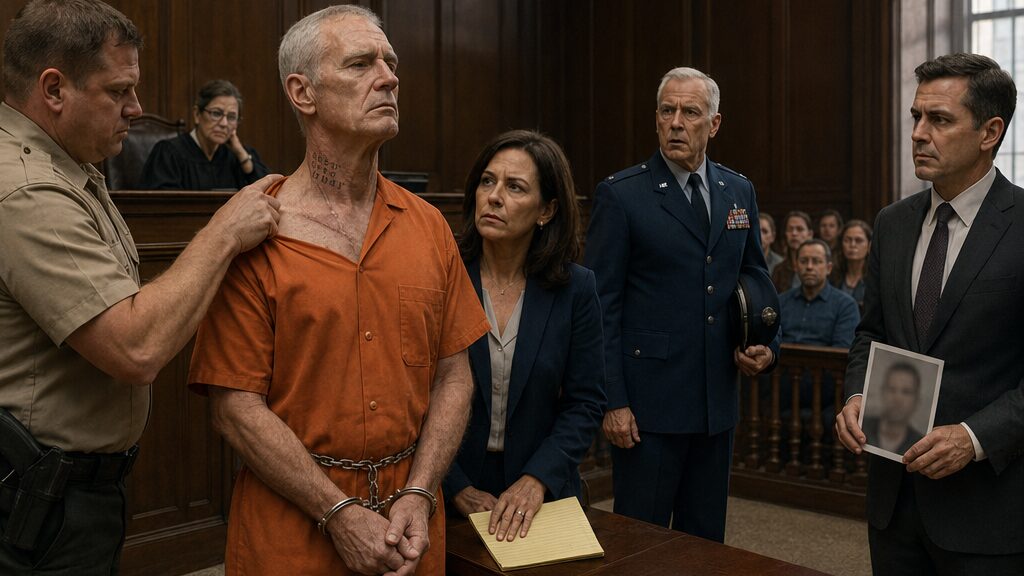
Timothy Perez stood at the prosecution table. He was neat, controlled, and already holding the photograph from booking.
“The state requests secured bail,” he said. “The defendant ignored a lawful exclusion order at a condemned property, forced entry through the rear, physically interfered with responding personnel, and assaulted a county deputy without apparent provocation.”
Charles heard the phrase without apparent provocation settle into the room.
Timothy lifted the photograph. “He also refused to identify a second person heard inside the structure and has given inconsistent answers regarding his affiliations.”
Angela turned. “Affiliations?”
“The booking officer documented a possible gang-related tattoo.”
A few heads moved in the gallery.
Charles kept his eyes on Judge Jones.
Timothy handed the photograph to the clerk. “A string of coordinates, Your Honor. Along with prior warnings for returning to the property after inspection closure.”
“They’re numbers,” Angela said. “Not evidence of affiliation.”
“They are unexplained markings on a defendant who has declined to explain nearly everything else.”
Judge Jones looked at Charles over her glasses. “Mr. Walker, are you refusing to cooperate with your attorney?”
“No.”
Angela leaned toward him. “Then tell me who was inside.”
Charles’s throat tightened at the memory of a man shouting through smoke. Not the words. The sound before them. Breath breaking apart. A body no longer certain where it was.
Timothy continued. “The residents had been evacuated. The fire inspector had cleared the building.”
One word caught under Charles’s ribs.
Evacuated.
Not abandoned.
Angela saw his face change.
“The state’s report says one resident was initially unaccounted for,” she said.
Timothy checked his file. “Temporarily. That does not excuse assault.”
“He was not abandoned,” Charles said.
The courtroom went quiet enough for the chain at his waist to settle.
Judge Jones straightened slightly. “Mr. Walker, I told you to answer only the questions put to you.”
Charles lowered his eyes. “Yes, ma’am.”
Angela whispered, “Who are you talking about?”
Charles did not answer.
Timothy requested bail high enough that Charles knew he would not make it. Angela argued age, local residence, lack of a serious record, and the fact that he had remained at the scene. Timothy answered that Charles had stayed because deputies had restrained him.
Judge Jones turned pages.
“Mr. Walker, the report states that a person inside the building was heard shouting before the deputy was injured. Who was that person?”
Charles saw Paul’s face in the smoke, young and old at once. He remembered another face, Paul’s father, made thin by illness years later, gripping Charles’s wrist with surprising strength.
Bring the boy home.
Charles had nodded.
He had spent half his life mistaking that nod for an order that could never expire.
“I won’t identify him,” Charles said.
Angela’s pen stopped.
Timothy looked toward the judge as though Charles had proved his entire argument.
Judge Jones’s fatigue hardened into impatience. “This is not optional if the court orders disclosure.”
“Then you’ll have to order it.”
The detention officer shifted closer.
Angela whispered, “You are making this worse.”
Charles knew.
That was not the same as knowing how to stop.
Judge Jones took the booking photograph from the clerk. “Read the identifying information into the record.”
The clerk listed Charles’s height, weight, age, and the scar along his neck. Then she read the numbers.
She had barely spoken the final coordinate when a wooden seat struck the floor in the back row.
The uniformed man had risen so fast that his cap slipped from his knee into his hand.
He stared at Charles’s neck.
Then he said, with a voice that carried through the whole courtroom, “Your Honor, those numbers are not a gang mark.”
Chapter 2: The General Recognized the Burned Coordinates
“They’re the coordinates where he carried me out of a burning aircraft.”
The man in uniform stood rigid in the back row, his cap held flat against his side.
Nobody moved.
Charles recognized Robert Campbell before he fully turned. The years had silvered Robert’s hair and added weight to his face, but the posture remained exact. So did the eyes that had once opened through smoke and asked Charles whether the rest of the crew was alive.
Charles looked back toward the bench.
Judge Jones removed her hand from her temple.
Timothy Perez was first to speak. “Your Honor, I object to an unsworn statement from the gallery.”
“So do I,” Charles said.
Angela looked at him as if she had stopped expecting ordinary responses.
Judge Jones studied Robert’s uniform. “Sir, identify yourself.”
“Robert Campbell. Retired brigadier general, United States Air Force. I’m here consulting with the county veterans court.”
Timothy stepped away from his table. “General Campbell’s presence may be distinguished, but it has no bearing on whether the defendant assaulted a deputy.”
Robert’s jaw shifted. “I did not say it did.”
Charles heard the restraint in the answer. Robert had learned command after the crash. Before it, he had been a young pilot with blood in his mouth and one boot trapped under a folded instrument panel.
Judge Jones looked at the photograph again. “You recognize these coordinates?”
“Yes, Your Honor.”
“How?”
Robert’s eyes returned to Charles. “Because I spent twenty years trying to forget them.”
The courtroom air seemed to narrow.
Judge Jones motioned toward the front. “Approach the rail. Do not address the substance of the current charges unless asked.”
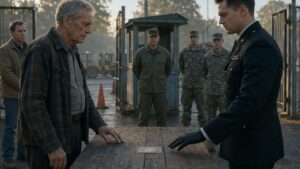
Robert walked down the center aisle. Decorations crossed the left side of his dark jacket, but Charles watched the hand holding the cap. A thin pale line still ran over two knuckles where the skin had burned.
Robert stopped several feet from the defense table.
“Master Sergeant Walker,” he said.
Charles’s shoulders locked.
The title passed through the room differently than the booking number had.
Angela turned toward him, searching his face.
Timothy said, “Again, Your Honor, military rank is not relevant to bail.”
Judge Jones lifted one hand. “Mr. Perez, I understand your position.”
Robert faced the bench. “Those numbers identify a crash site from 1991. Our aircraft went down during a recovery operation. Fire had reached the forward section. Sergeant Walker entered after the first rescue team was ordered back.”
Charles remembered heat pressing through his gloves. Fuel burning blue along torn earth. A voice over the radio ordering withdrawal while someone inside hammered weakly against metal.
“He removed two crew members,” Robert continued. “I was one of them.”
Only one of them lived, Charles thought.
Robert’s voice stayed level. “He did not receive the recognition he was recommended for because he refused to attend the review. He left the service record as it stood.”
Timothy glanced at Charles, not impressed so much as newly cautious. “That history may be relevant to mitigation later. It does not establish what happened three nights ago.”
“No,” Robert said. “It establishes that your gang notation is wrong.”
That landed harder than the rescue story.
Judge Jones turned to the clerk. “Strike the phrase possible gang identifier from the oral characterization. The tattoo will be described as numerical coordinates pending verification.”
The clerk’s fingers moved.
“And the defendant,” Judge Jones added, “will be referred to as Mr. Walker, not by booking number, except where required for administrative identification.”
Charles felt Angela’s hand settle on the table, not touching him, but close enough that he noticed.
It was a small correction. It should not have mattered as much as it did.
Robert turned toward Charles.
The cap remained at his side. His heels came together.
Charles saw what he intended before the right hand rose.
“Don’t,” Charles said.
The word was quiet.
Robert stopped with his fingers barely clear of his trouser seam.
Charles met his eyes. “Not here.”
Something passed across Robert’s face—not offense, not embarrassment. Recognition of a boundary he had ignored.
He lowered his hand.
“Yes, Sergeant.”
Charles almost corrected that too, but the courtroom had already changed around him. People who had stared at the orange cloth now looked for the man inside it. The detention officer stood straighter. The clerk no longer avoided his face.
It was more dangerous than contempt.
Contempt could be endured.
Respect could become an excuse.
Timothy returned to the prosecution table and opened a laptop. “Since the court is now considering context, the state asks to show the available exterior footage.”
Angela rose. “At arraignment?”
“Counsel has argued rescue motive. The footage bears directly on dangerousness.”
“I argued that someone was unaccounted for.”
Judge Jones looked between them. “I’ll view the portion relevant to the alleged assault.”
The clerk dimmed the monitor.
The video had no sound. It showed the rear of the boardinghouse beneath harsh emergency lights. Residents stood behind a line of tape. Smoke moved from a broken upstairs window in thin, uneven breaths.
Charles appeared at the edge of the frame wearing his old brown work jacket. He crossed the line.
A deputy blocked him.
Onscreen, Charles pointed toward the building. The deputy pointed back toward the street. Charles moved left. The deputy matched him.
Then another figure stumbled out of shadow near the rear steps.
The image broke into digital squares.
Charles stepped directly in front of the camera.
For three seconds, his back filled the frame.
When he moved aside, the deputy was falling.
His head struck the metal railing. His arm folded beneath him.
The courtroom watched without breathing.
The video continued. Charles forced the rear door, disappeared inside, and emerged later carrying an elderly resident whose oxygen tubing trailed behind them.
Timothy paused the image on Charles’s hand against the deputy’s chest.
“The state is not suggesting Mr. Walker lacks courage,” he said. “The state is suggesting courage does not authorize him to decide which laws apply.”
Charles looked at the frozen frame.
Timothy was not wrong.
Angela whispered, “Who was behind you?”
Charles kept his eyes on the screen.
Robert had saved him from being mistaken for one kind of man. He could not save him from being the man who had blocked the camera.
Judge Jones switched the monitor off.
“The court will not resolve disputed facts at arraignment,” she said. “I am granting a brief evidentiary continuance. Mr. Walker remains in custody pending review of the deputy’s condition, the complete footage, and the building records.”
Angela stood. “Your Honor, given his age—”
“Age did not prevent the conduct shown.”
“No, but—”
“I said pending review.”
The judge looked directly at Charles. This time there was no boredom in her face.
“Mr. Walker, recognition of your service does not answer the present charge.”
“I know.”
“Do you?”
“Yes, ma’am.”
Judge Jones turned to Angela. “Counsel, use the continuance. Find out what happened in the missing seconds.”
Angela nodded.
The bailiff called the next matter, but before Charles could be led away, Judge Jones lowered her voice.
“Ms. Martin.”
Angela looked up.
The judge glanced once toward the black monitor, then toward Charles.
“Who was he protecting?”
Chapter 3: A Heroic Past Could Not Explain the Fall
“General Campbell’s story is true,” Charles said. “It is also irrelevant.”
Angela Martin stared at him across the metal table in the detention interview room.
A camera occupied one upper corner. The wall behind Charles had been painted so many times the cinder-block seams had nearly disappeared. His orange collar sat high against his neck now, covering all but the last two digits of the tattoo.
“You were publicly misidentified as gang-affiliated,” Angela said. “A retired general confirmed that the marking relates to your service. That is not irrelevant.”
“To the assault charge, it is.”
“It matters to bail. It matters to motive. It matters to whether a judge sees a violent trespasser or a man who thought someone needed rescuing.”
Charles leaned back as far as the bolted chair allowed. “What she sees does not change what I did.”
Angela placed a photocopy of the security still between them. Charles’s hand was pressed against the rear door. The lock plate hung at an angle.
“You broke this.”
“Yes.”
“You entered after the fire inspector ordered the building cleared.”
“Yes.”
“You pushed past the deputy.”
“Yes.”
Angela studied him. “And then the deputy was injured.”
Charles said nothing.
She tapped the image. “You keep offering me enough truth to convict you and not enough to defend you.”
“That may be the amount that belongs to me.”
Her expression changed. The sympathy that had entered it in court receded, leaving something more useful.
Anger.
“You do not decide what belongs to you,” she said. “A jury does. A judge does. The evidence does. My job is to make sure they get all of it.”
Charles looked at the tabletop.
She pulled her legal pad closer. In one margin she had copied the coordinates from the booking photograph. Beneath them she had drawn a box around two words: LEFT TWO.
“Timothy sent a supplemental witness statement,” she said. “One of the residents heard you shouting before you entered.”
Charles’s gaze lifted.
Angela read from the page. “‘I left two before. I’m not leaving another.’”
The room seemed to lose its fluorescent hum.
“Who were the two?” she asked.
“No one connected to this case.”
“That is not what I asked.”
Charles saw a ravine. Two covered shapes separated from the aircraft by men who would not look at him. Robert on a stretcher, conscious enough to ask why Charles was not getting on the helicopter.
He had stayed because the recovery team was still cutting.
He had stayed because leaving felt like choosing.
“Men I could not bring out,” he said.
Angela waited.
“That’s all.”
“No, it isn’t.”
“It is today.”
She set the statement down. “The current incident triggered that memory.”
Charles’s mouth tightened. “Do not put medical language around a decision.”
“I didn’t.”
“You were going to.”
“I was going to say that a seventy-two-year-old man heard someone trapped in a condemned building and believed delay would kill him.”
“It might have.”
“That explains entry. It does not explain the deputy.”
Charles looked toward the camera.
Angela followed his eyes. “Attorney-client privilege still applies in this room.”
“Cameras do not improve trust.”
“Neither does silence.”
She changed tactics. “The fire inspector says every resident was accounted for before you crossed the tape.”
“He was wrong.”
“Who was missing?”
Charles said nothing.
“Was it the person shouting?”
Silence.
“Was that person injured?”
Charles’s fingers closed against the chain between his cuffs.
Angela noticed. “Was it Paul?”
Charles’s eyes moved to hers before he could stop them.
She had guessed.
Not proven. Not even close.
But the name was now in the room.
Angela leaned forward. “Who is Paul?”
“No one you need to find.”
“That answer guarantees I will.”
Charles’s voice dropped. “Leave him out of it.”
“You are facing a felony that could put you in prison for the rest of your functional life.”
“Leave him out.”
Angela sat back. “Then give me another explanation.”
He did not.
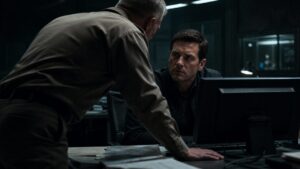
By Tuesday morning, the prosecution had enlarged the security frames and pinned them to a board in Timothy Perez’s office. Angela stood opposite him while he moved through the sequence with a pen.
“Here,” Timothy said. “Mr. Walker crosses the line.”
“Because someone was inside.”
“Allegedly.”
“Your own footage shows him carrying out a resident.”
“After he obstructed officers and after a deputy was injured.”
Timothy tapped the frame where Charles’s body filled the camera. “This is deliberate.”
“You cannot know that from a still.”
“I know he looked directly at the camera before stepping in front of it.”
Angela examined the grainy enlargement. Charles’s face was half-turned, eyes lifted toward the lens.
Timothy placed another statement on the desk. “The deputy regained enough clarity for an interview.”
Angela read it.
He remembered Charles pushing past him. He remembered a shout from near the rear steps. He remembered turning toward a second person in the smoke.
Then a hard impact.
“Did he identify the second person?” Angela asked.
“No. Male, possibly younger than Walker, dark jacket. He thinks the man came from inside.”
Angela kept reading.
“The deputy does not actually remember Charles striking him.”
“He remembers physical contact with Charles immediately beforehand.”
“That is not the same thing.”
“It is enough to continue investigating.”
Timothy’s tone was measured, but Angela saw the line he had drawn and intended to hold. Military service would not be allowed to soften the injury. In another case, she might have respected that more.
He handed her a final image.
Charles at the rear door, one shoulder lowered, boot braced against the frame. The damaged lock had not failed accidentally. He had broken it with practiced efficiency.
Angela returned to the detention center that afternoon.
Charles sat before she did.
“The deputy saw someone else,” she said.
His face remained still.
“He says a younger man came out of the smoke near the steps.”
Charles looked down at his cuffed hands.
“I can locate him,” Angela said. “The residents may know him. The building records may have him. General Campbell may know who Paul is.”
“No.”
“If that man struck the deputy—”
“No.”
The force of it brought the detention officer to the window.
Angela waited until the officer moved away.
“You do not get to protect him by volunteering for prison.”
Charles raised his head. “You do not know what protection requires.”
“Then tell me.”
For a moment, she thought he might.
His eyes went to the coordinates she had copied on her pad.
When he spoke, his voice was quiet again.
“Do not find him.”
Angela closed the file.
That was the moment she stopped seeing Charles Walker as a forgotten hero who needed to be rescued from a misunderstanding.
He was a client making a choice.
And somewhere beyond the locked room, a second man was living inside the cost of it.
Chapter 4: The Man Inside the Smoke Was Still Missing
The condemned boardinghouse still smelled burned, but the owner insisted there had never been a fire.
“An electrical odor,” he said, standing behind the yellow tape with both hands buried in his coat pockets. “Old wiring gets warm. People panic. Then the county sees a chance to shut you down.”
Angela looked up at the second-floor window. The glass had cracked inward. Black residue feathered the frame.
“Warm wiring did that?”
The owner followed her gaze and shrugged. “Someone probably held a lighter to the curtains.”
A county notice covered the front door. UNSAFE FOR OCCUPANCY. DO NOT ENTER. Beneath it, someone had taped a handwritten list of temporary shelters and crossed out three of them.
The boardinghouse had once been a narrow family hotel. Its brick front leaned toward the street as if listening. Twelve rooms, two shared bathrooms, one kitchen, and a rear stairwell that the fire inspector’s preliminary report called compromised.
Most of the residents had been veterans. Some received disability checks. Some worked when they could. All paid cash.
The owner pointed toward the notice. “Walker made himself useful around here, so they thought he owned the place. He didn’t. He changed light fixtures. Tightened pipes. Told people when their checks were late.”
“Did he have permission to perform repairs?”
“He had permission to stop bothering me.”
Angela wrote that down.
The owner watched her pen. “He’s unstable. Everybody knows it now. You saw what happened in court.”
“What happened in court?”
“Some general stood up and turned him into a hero.”
Angela closed the notebook. “Did Charles assault the deputy?”
“I saw the deputy on the ground.”
“That wasn’t my question.”
The owner glanced toward the building. “You lawyers always make simple things sound complicated.”
“The building’s alarm system worked?”
“It was inspected.”
“That wasn’t my question either.”
He walked away before she could ask again.
Two former residents waited at a bus shelter across the street. One held a plastic grocery bag full of medication bottles. The other carried a folded blanket under one arm though the afternoon was warm.
Angela showed them her identification.
“Charles got us out,” the man with the blanket said immediately.
“Before the deputy was injured?”
“Before, after—I couldn’t tell you. Everybody was yelling.”
The other resident shook a pill bottle near his ear. “Alarm never sounded. We smelled something. Charles started knocking on doors.”
“The inspector’s report says the building had already been evacuated when he crossed the tape.”
“The inspector counted heads on the sidewalk,” the first man said. “Counted the same person twice.”
“How do you know?”
“Because the person standing next to me was wearing two jackets. Inspector tapped both shoulders as he went past.”
The man with the medication laughed once without humor. “Government math.”
“Who was missing?”
They looked at each other.
The first man lowered his blanket. “The old fellow upstairs. Oxygen machine. Slept with the television on. Couldn’t hear well.”
“Was he removed by emergency personnel?”
“Charles carried him out.”
Angela had seen that part on the video. Charles emerging through the rear door with the resident folded against him, oxygen tubing dragging over the steps.
“Was Charles alone when he went inside?”
The men became still.
A bus sighed at the curb, opened its doors, then closed them when neither moved.
“There was somebody with him,” the second resident said.
“Who?”
“Didn’t see his face.”
“You know his name?”
The man twisted the grocery bag around his wrist. “A younger veteran came by sometimes. Helped Charles with the furnace. Had bad nights.”
“What kind of bad nights?”
The first resident answered. “The kind where a slammed door turns into something else.”
Angela looked back at the boardinghouse. “Did he live here?”
“No. Charles wouldn’t let him.”
“Why not?”
“He said the place wasn’t safe.”
That evening, a fire inspector met her at the hospital cafeteria before visiting the injured deputy. He spread photographs across a plastic table.
The alarm control panel had been disconnected. Two detectors contained no batteries. An extension cord had melted beneath a baseboard heater in the upstairs hall.
“This was not an open-flame fire,” he said. “There was heat damage and smoke, but it likely extinguished when the breaker failed.”
“So the owner lied.”
“He minimized.”
“Did the county know about the alarms?”
The inspector folded his hands. “There were prior citations.”
“How many?”
“I can’t release that without authorization.”
Angela pointed to the photographs. “Someone could have died.”
“Yes.”
“Did Charles know the upstairs resident was missing?”
The inspector hesitated. “He kept saying the man’s oxygen concentrator was still drawing power. He knew the sound it made. He said if the machine was running, the room had not been cleared.”
“And you ordered him away.”
“We had a procedure.”
“Was the resident still inside?”
“Yes.”
The word sat between them.
The inspector collected the photographs. “That does not justify what happened to the deputy.”
“No,” Angela said. “It explains why Charles broke the door.”
The injured deputy’s room smelled of disinfectant and stale coffee. His wrist was braced against his chest. A bandage covered the side of his head.
He remembered Charles at the tape.
“He wasn’t shouting at first,” the deputy said. “That made it worse. He kept telling me the head count was wrong like he was correcting a maintenance log.”
“Did he threaten you?”
“No.”
“Strike you?”
The deputy looked toward the dark television. “He put a hand on me when I blocked him. Hard enough to move me.”
“What happened after?”
“A man came out by the rear steps. Smoke behind him. He looked lost.”
“Younger than Charles?”
“Yes.”
“Did Charles know him?”
“I think so. Walker said his name, but I couldn’t make it out.”
“Then?”
“The man backed into the railing. I reached for him. He swung or shoved—I don’t know. Everything went sideways.”
“Did Charles block the security camera?”
The deputy frowned. “Maybe. He moved between us.”
“To conceal the assault?”
“I can’t tell you why.”
The hospital released a copy of the deputy’s statement but not his body-camera recording, which had been corrupted by heat or impact. Angela left with less certainty than she had arrived carrying.
At the courthouse, Timothy sent her an enhanced segment of exterior footage.
The image was grainy, but Charles’s movement was unmistakable. He looked toward the camera, stepped between it and the younger figure, and spread one arm as though directing someone behind him.
Then the deputy fell outside the frame.
The concealment had not been accidental.
By dusk, Angela returned to the boardinghouse with a county employee authorized to retrieve evidence. They entered through the rear. The hallway held the damp chill of a building suddenly emptied. Doors stood open. A television guide lay curled beside a wheelchair.
Under the stairs, the employee found a cracked oxygen regulator.
One side was blackened. The adjustment knob had been bent nearly flat.
Angela turned it over in her gloved hand. A strip of blue tape clung to the metal with a room number written on it.
“Could this have been attached to the resident’s portable tank?” she asked.
“Likely.”
Something white showed beneath it.
Angela crouched and reached past the regulator. Her fingers closed around a damp appointment card.
COUNTY VETERANS SERVICES.
A time and date had been printed across the front. The appointment was for the morning after the fire.
On the name line, in block letters, someone had written:
PAUL THOMPSON.
Chapter 5: The Promise Charles Had Turned Into a Prison
“Paul is gone.”
Robert Campbell delivered the words through the scratched glass of the detention visiting room without greeting.
Charles kept the telephone against his ear. Robert had changed out of uniform. In a gray suit, he looked less like a general and more like the young pilot Charles remembered—someone trying to command a situation already falling apart.
“What do you mean, gone?”
“His apartment is empty. His truck is at a bus station. He missed his veterans-services appointment.”
Charles’s jaw tightened.
Robert saw it. “You knew he was there.”
Charles glanced toward the detention officer at the far wall.
“Lower your voice.”
“No.”
The single word carried through the receiver.
Robert placed one hand flat against the glass. “Angela found his card under the stairs. The deputy saw a second man. I know who Paul is, and so does she.”
“She suspects.”
“She is past suspicion.”
Charles looked down at the chain between his wrists. “Paul does not do well when cornered.”
“Then perhaps you should not have made escape his only option.”
Charles lifted his eyes.
Robert did not retreat. “You blocked the camera for him.”
“I moved between two men.”
“You took responsibility before anyone asked whose hand put the deputy down.”
“He panicked.”
“And now he is missing because you taught him the same lesson you have taught everyone for thirty years—that Charles Walker will carry whatever they drop.”
Charles’s grip tightened around the receiver.
Robert’s voice softened, which made it harder to hear.
“You promised his father you would bring him home.”
“Yes.”
“You did not promise to keep him a child.”
The old words returned with a clarity that made the room disappear.
Paul’s father had been thin beneath a hospital blanket, his hands still broad from years of aircraft maintenance. He and Charles had served on the same rescue team at the ravine. He had survived the crash response but not the disease that came decades later.
Bring the boy home if he gets lost.
Paul had been twenty then, angry and newly enlisted. Charles had promised because refusing a dying man was impossible.
In the years afterward, he found Paul after missed drills, after a bar fight, after nights when fireworks drove him into locked rooms. He paid rent twice. Removed firearms once. Sat outside a bathroom door until sunrise.
Each time, Paul apologized.
Each time, Charles said nothing was owed.
Robert lifted his hand from the glass. “Do you know what happened at those coordinates after I was evacuated?”
Charles looked at him sharply.
“I know enough.”
“You know what the report said.”
“I know what you allowed it to say.”
Charles felt the scar beneath his collar begin to itch.
Robert continued. “One of the rescue team members cut the wrong section first. It delayed extraction. He admitted it to you.”
“He had a family.”
“So did the men who died.”
“He made a mistake in fire.”
“And you removed the statement from your supplemental report.”
Charles’s voice went flat. “It would not have brought anyone back.”
“No. It might have given their families the truth.”
The accusation landed cleanly because it had waited thirty-one years to be spoken.
Robert leaned closer. “You call it protecting people. Sometimes it is. Sometimes you decide they cannot survive their own consequences, and you take away their chance to try.”
Charles looked past him to the visitation room behind the glass. Angela stood near the door holding a folder. She had heard enough to know Robert was not discussing only Paul.
The two men sat without speaking.
Finally Robert said, “Why are there no names in the tattoo?”
Charles touched the collar with two fingers.
“Coordinates were enough.”
“For whom?”
Charles did not answer.
Robert’s eyes narrowed. “You did not put their names there because you did not believe you belonged beside them.”
The detention officer called the end of the visit.
Robert kept the receiver raised. “Paul is not home, Charles. He is running. Your silence did not save him.”
The line disconnected.
Angela replaced Robert in the chair. She pushed the folder through the narrow slot beneath the glass.
“Timothy made an offer.”
Charles opened it.
The aggravated assault charge would be reduced. He would plead to obstruction and unlawful entry. The recommendation was time served, probation, and mandatory evaluation. The language cited age, medical considerations, lack of serious prior convictions, and exceptional military service.
Charles read the last phrase twice.
“Public interest has changed the state’s position,” Angela said. “There are reporters outside. Someone posted the courtroom story. They’re calling you a forgotten rescue hero.”
“Did the deputy change his statement?”
“No.”
“Did the footage change?”
“No.”
“Did the owner admit the alarms failed?”
“Not yet.”
“Then why did the offer change?”
Angela exhaled. “Because cases do not exist outside public reality.”
“They should.”
“This keeps you out of prison.”
“It keeps the wrong account.”
“It allows us to pursue the housing records separately.”
“And Paul?”
Her eyes stayed on him. “The plea says nothing about a second person.”
“That is the problem.”
“Charles, if Paul injured the deputy, he can come forward later.”
“He will not if I show him that hiding works.”
Angela’s patience broke. “You are the one showing him.”
Charles closed the folder.
She leaned toward the glass. “You asked me not to find him. You let the court think you caused everything. Now you object because the deal leaves his lie untouched?”
“Yes.”
“That is not logic.”
“No.”
“What is it?”
Charles looked at the reflected orange of his jumpsuit in the glass. “Correction.”
Angela sat back.
He slid the folder toward her.
“Reject it.”
“Do not do this quickly.”
“I am not.”
“You may not get another offer.”
“I understand.”
“Timothy can prove obstruction. He can prove forced entry. He may persuade a jury that you caused the injury even if the deputy cannot remember the blow.”
“I understand.”
Angela did not take the folder. “And what exactly are you requesting instead?”
“A hearing.”
“For what purpose?”
“All of it.”
She stared at him.
Charles had spent years believing silence kept promises intact. In the visiting room, the belief finally showed its cost. Paul had vanished. The deputy carried an injury whose cause remained hidden. The residents had lost their rooms. And Robert had carried an old truth long enough to turn gratitude into anger.
Charles pushed the plea agreement fully through the slot.
“Tell Judge Jones I want the evidentiary hearing.”
Chapter 6: The Easy Plea Required the Wrong Truth
The first headline on Timothy Perez’s phone called Charles Walker a forgotten war hero.
The second called him a decorated rescuer jailed for saving an elderly veteran.
By the time Timothy entered the courthouse conference room Friday morning, three reporters were waiting outside and a television van had parked across the street.
He placed his phone facedown.
On the table lay Charles’s booking photograph. The orange collar had been pulled aside, exposing the coordinate tattoo and the scar beneath it. Across the evidence label, someone had typed POSSIBLE GANG IDENTIFIER.
Timothy had written the phrase into his first filing.
At the time, it had seemed like a minor descriptive detail supporting uncertainty about affiliation. Now he saw what it had become: an accusation without evidence, attached to a man whose silence made easy ground for other people’s assumptions.
Angela entered carrying a banker’s box.
“You heard he rejected the offer,” she said.
“I heard you allowed him to.”
“I advise. He decides.”
“Your client is gambling with years of his life.”
“He says the offer requires the wrong truth.”
Timothy almost laughed, but her face stopped him.
“My office reduced a serious charge,” he said. “We did not ask him to lie.”
“You asked him to accept an account that isolates his conduct from the unsafe building and erases the second man.”
“The second man has not been identified.”
“He has.”
Timothy waited.
Angela did not give him the name.
“You cannot use a mystery suspect as leverage,” he said.
“I’m not. I’m telling you the footage is incomplete.”
“The deputy was injured.”
“Yes.”
“Your client obstructed the camera.”
“Yes.”
“Then perhaps the simple explanation is also the correct one.”
Angela opened the banker’s box. Inside were inspection notices, photographs of disabled alarms, and copies of resident complaints.
“The county knew that building was unsafe for six months.”
Timothy read the first notice. Faulty panel. Missing detector batteries. Rear egress obstruction.
“Where did you get these?”
“Fire inspector produced them after Judge Jones’s order.”
A knock interrupted them. The fire inspector entered with county counsel and took a seat at the far end.
Under questioning, he confirmed three inspections, two missed correction deadlines, and an internal recommendation for emergency relocation that had not been funded.
“Were all residents accounted for before Charles Walker crossed the tape?” Timothy asked.
“We believed they were.”
“Were they?”
“No.”
“Was someone still upstairs?”
“Yes.”
“Would emergency personnel have gone back inside?”
“We were preparing entry.”
“How long would that have taken?”
The inspector looked toward county counsel.
“Answer,” Timothy said.
“Several minutes.”
“And the resident required oxygen?”
“Yes.”
Timothy closed the file.
None of it erased Charles’s conduct. It changed the shape around it.
He remembered his father wearing an old service cap to court after a drunk-driving arrest, telling the judge about deployments before anyone asked. Later, at home, he used the same deployments to explain broken furniture, missed birthdays, and every apology he did not intend to keep.
Timothy had learned early that service could be true and still be misused.
Charles had not misused it. Other people were doing that for him.
The reporters wanted a hero. The county wanted one defendant. The defense wanted context. Timothy wanted a case that could survive all three.
He picked up the booking photograph and drew one line through the label.
“This allegation is coming out,” he said.
Angela watched him. “The gang notation?”
“There is no foundation for it.”
“That is not the same as an apology.”
“No. It is a correction.”
She nodded once.
A bailiff entered with a message. Angela read it, then stepped into the hallway. When she returned, the color had changed in her face.
“Paul contacted me.”
Timothy stood. “Paul who?”
“I cannot disclose that yet.”
“Then why tell me?”
“Because he says he was at the building.”
“Where is he?”
“He would not say.”
“What does he want?”
Angela looked down at the message.
“He will confess if Charles is released first.”
Timothy felt the familiar pressure of a bargain assembled outside procedure. “No.”
“You haven’t heard what he is confessing to.”
“I heard the condition.”
“He is frightened.”
“So was the deputy when he went over that railing.”
Angela lowered her voice. “He may disappear permanently.”
“That does not make a private trade lawful.”
“No one said private.”
“He did.”
Timothy collected the inspection records. “Bring him to court. Arrange counsel. Put his statement under oath. I will not exchange one defendant for another through a phone message.”
Angela’s mouth tightened, but she did not argue further.
An hour later, the hearing chamber remained empty except for counsel, Charles, two detention officers, and Judge Jones’s clerk preparing exhibits. Robert sat in the back without uniform.
Angela arranged a monitored call from a secure room.
Charles took the receiver. His cuffs rested on the table.
For several seconds, only static came through.
Then a man breathed on the other end.
“Charles?”
Charles closed his eyes once.
“Where are you?”
“I’m okay.”
“That was not the question.”
“I heard about the deal.”
Charles looked toward Angela. She stood near the wall, arms folded.
Paul continued. “Take it. I’ll tell them after you’re out.”
“No.”
“You already did the time.”
“No.”
“I can fix this.”
“You can tell the truth.”
“They’ll charge me.”
“Yes.”
The silence on the line sharpened.
“You promised my dad,” Paul said.
Charles’s thumb moved along the edge of the receiver.
“I promised to bring you home.”
“This is home.”
“No. This is hiding.”
Paul’s breath became uneven. Charles recognized the rhythm immediately: short inhale, held chest, the body preparing for danger that was no longer present.
“Listen to me,” Charles said. “Put both feet down.”
“I don’t need—”
“Feet down.”
A faint scrape sounded over the line.
“Name five things you see.”
“Don’t do this.”
“Five.”
Paul named a vending machine, a cracked tile, a bus schedule, a red bag, a woman’s shoe.
His breathing slowed.
Charles waited until it did.
Then he said, “You will come in with a lawyer. You will say what you did. I will say what I did.”
“If I do that, you stay in jail.”
“Maybe.”
“I can get you out.”
“No.”
“Charles—”
“You will not buy my freedom with another lie.”
The line went silent.
Angela looked away.
Timothy stood beyond the glass partition, close enough to hear Charles’s side but not Paul’s. For the first time, he understood that the old man’s silence had not been a strategy for avoiding consequences.
It had been a strategy for owning too many.
On the phone, Paul finally whispered, “What if I can’t walk into that room?”
Charles looked toward the closed courtroom doors.
“Then walk to the first one,” he said. “And open it.”
Chapter 7: He Finally Refused to Carry Another Man’s Guilt
Robert was waiting beside the witness room when Charles arrived in orange and chains.
“I can testify first,” Robert said. “Give the court the mission history before Perez frames everything as obstruction.”
Charles stopped.
The detention officer behind him shifted impatiently, but Charles did not move until Robert met his eyes.
“No.”
Robert lowered his voice. “They need context.”
“They have enough to listen.”
“They do not have enough to understand you.”
“That is not your job today.”
The answer hurt Robert. Charles saw it in the way his fingers tightened around the cap beneath his arm.
For years, Robert had tried to repay a debt Charles had never agreed to collect. Every reunion invitation, every nomination, every phone call left unanswered had made the debt heavier rather than smaller.
Charles looked through the courtroom doors. Judge Jones was already on the bench. Timothy arranged exhibits at the prosecution table. Angela stood beside an empty witness chair.
“Let me speak before you do,” Robert said.
Charles shook his head. “That is how this started.”
“How what started?”
“Other men telling the part that made me easier to live with.”
The detention officer opened the door.
Angela approached as Charles entered. “You can testify in civilian clothes. I requested them.”
“I know.”
“You do not have to wear the jail uniform.”
“I was wearing it when they called the tattoo a gang mark.”
“That is not a legal reason.”
“No.”
She searched his face, then nodded toward the witness chair. “Once you begin, I cannot pull your words back.”
“I am not asking you to.”
Judge Jones called the hearing to order. She looked at Charles for a long moment.
“Ms. Martin, your first witness?”
Angela stood. “Charles Walker.”
A murmur moved through the gallery. Reporters occupied the last row, though Judge Jones had barred cameras.
Charles crossed to the stand in short steps limited by the ankle chain. Before he sat, he raised his cuffed hands.
“Your Honor, may these be removed while I testify?”
Timothy looked toward the detention officer, then back to the judge.
Judge Jones considered it. “For the duration of testimony.”
The cuffs came off.
Charles rubbed neither wrist.
Angela began with the building.
“Did you enter after an official order to remain outside?”
“Yes.”
“Did you break the rear lock?”
“Yes.”
“Did you place your hands on the injured deputy?”
“Yes.”
“Did you strike him?”
“No.”
“Did you cause him to fall?”
Charles looked toward the deputy, seated near the prosecution table with his wrist still braced.
“No.”
Angela let the answer settle.
“Who did?”
Charles’s mouth went dry.
For thirty years he had survived hard moments by reducing them to tasks. Check airway. Control bleeding. Find exit. Carry weight.
There was no procedure for putting down a burden he had chosen.
“Paul Thompson,” he said.
The name changed the room.
Timothy wrote it down. Robert closed his eyes. Angela remained still.
“Who is Paul Thompson?” she asked.
“The son of a man I served with.”
“Was Paul inside the boardinghouse?”
“Yes.”
“Why?”
“He had come to take an elderly resident to a veterans-services appointment the next morning. He stayed when the electrical system failed. Smoke reached the upper hall. The alarms did not sound.”
“Did Paul leave the building before you entered?”
“He came out near the rear steps.”
“What condition was he in?”
Charles glanced at Paul’s empty seat in the gallery.
“He did not know where he was.”
“Explain.”
“He was breathing too fast. He could not process instructions. The emergency lights, the smoke, people shouting—it put him somewhere else.”
“The deputy approached him?”
“Yes.”
“What happened?”
“The deputy reached for his arm. Paul reacted. He shoved him.”
The deputy’s jaw tightened, but he did not look away.
“Where were you?” Angela asked.
“Between Paul and the camera.”
“Did you position yourself there deliberately?”
“Yes.”
“Why?”
“To keep his face off the recording.”
“Did you know the deputy had been injured?”
“Yes.”
“And you allowed investigators to believe you were responsible?”
“Yes.”
Angela took one step closer. “Why?”
Charles looked at Robert. Then at the coordinates reflected faintly in the polished wood of the witness rail.
“I promised Paul’s father I would bring him home if he got lost.”
“Did that promise require you to accept a felony charge for him?”
“No.”
“Then why did you?”
Charles lifted a hand to the edge of the tattoo.
The skin there had never lain flat after the burn.
“Because I stopped knowing the difference.”
No one in the gallery moved.
Angela waited.
Charles continued. “I thought if I carried the consequence, Paul would have time to get steady. I thought keeping his name out of the room was protection.”
“Was it?”
“No.”
“What was it?”
Charles looked at the empty seat again. “Control.”
Timothy rose. “Your Honor, I do not object to the personal explanation, but the defendant has admitted deliberate concealment and interference.”
Judge Jones nodded. “The court is aware.”
Angela returned to the table and picked up the enlarged booking photograph.
“The numbers on your neck,” she said. “Why those coordinates?”
“A crash site.”
“We heard that from General Campbell. We did not hear why you marked them on your body.”
Charles saw Robert watching him.
“Two rescue men died there,” Charles said. “I came out. They did not.”
“Why no names?”
“Because I did not think mine belonged with theirs.”
Angela’s voice softened, though not into pity. “Your name is not tattooed there.”
“I know.”
“Then what do you mean?”
Charles lowered his hand.
“I lived. For a long time, that felt like removal from the list. As if remembering them required me to stand outside what happened.”
“And when Paul panicked?”
“I saw another man who might not come home.”
“So you made his decision for him.”
“Yes.”
Angela stepped back. “No further questions.”
Timothy approached the stand carrying no notes.
“Mr. Walker, did the fire inspector order you not to enter?”
“Yes.”
“You ignored him.”
“Yes.”
“You broke private property.”
“Yes.”
“You moved a deputy by force.”
“I pushed past him.”
“You deliberately blocked a security camera.”
“Yes.”
“You concealed the identity of the person who injured that deputy.”
“Yes.”
“Your military service did not authorize any of those acts, did it?”
“No.”
Timothy paused. He had expected resistance. Charles could see the absence of it disrupting the rhythm of his questions.
“Do you believe rescuing the resident excuses those acts?”
“No.”
“Then what are you asking this court to do?”
Charles looked directly at him.
“Charge what happened.”
Timothy’s expression shifted.
“Not what you first thought happened?”
“Not what General Campbell wishes happened. Not what the headlines say happened. What happened.”
The rear courtroom door opened.
A young man stood beside a court-appointed attorney. His dark jacket hung loose from his shoulders. One hand gripped the doorframe while the other pressed flat against his thigh.
Paul.
Charles’s first impulse was to rise.
He forced himself to remain seated.
Paul looked at him from across the room. Fear had hollowed the skin beneath his eyes. He took one step, then another.
The first door, Charles thought.
Then the next.
Paul’s attorney addressed the court. “Your Honor, my client wishes to make a statement after advice regarding his rights.”
Judge Jones recessed long enough for counsel to confer.
When the hearing resumed, Paul took the stand. His voice failed on the first attempt.
The deputy watched him.
Paul tried again.
“I pushed him,” he said. “Mr. Walker did not.”
He described smoke filling the rear hall, the failed alarm, the old resident upstairs, and the deputy’s hand reaching through flashing light. He did not use panic as an excuse. He said he had run. He said Charles told the officers the injury was his responsibility.
“Did Mr. Walker ask you to remain silent?” Timothy asked.
“No.”
“Did he help you leave?”
“He told me where the gate was.”
“Did you understand that as permission to disappear?”
Paul looked toward Charles. “I understood it as what I wanted to hear.”
The deputy requested a brief chance to speak. Judge Jones allowed it.
“I remember Mr. Walker’s hand on my chest,” he said. “I assumed the next impact came from him. After seeing the full footage and hearing this, I’m not certain of that anymore.”
Timothy stood with both hands resting on the prosecution table.
“The new testimony does not eliminate unlawful entry or obstruction,” he said. “Mr. Walker has admitted both. It also does not eliminate potential charges against Mr. Thompson.”
“No one has suggested otherwise,” Angela said.
Judge Jones removed her glasses.
“This court will not substitute admiration for fact,” she said. “Nor will it preserve charges that the facts no longer support.”
She looked first at Timothy.
“Mr. Perez, review the evidence and determine what your office can honestly maintain.”
Then she turned to Charles.
“Mr. Walker, your service explains part of how you became the man sitting before me. It does not relieve you of responsibility.”
“I understand.”
“But responsibility must be divided according to conduct, not according to who is most willing to carry it.”
Charles looked at Paul.
For the first time since the fire, Paul did not lower his eyes.
Judge Jones set the next hearing for two weeks later.
As the detention officer replaced the cuffs, Robert remained seated in the gallery. He did not stand. He did not salute.
He simply waited while Charles was led away.
At the door, Judge Jones spoke once more.
“When we reconvene, this court will sentence the acts that occurred—not the hero the public invented and not the criminal the first report assumed.”
Chapter 8: Respect Became What the Court Chose to Do
Charles entered the courtroom in a plain brown jacket without handcuffs and stopped at the same mark on the floor where he had once stood in orange.
The polished wood had not changed. The clerk’s monitor glowed beside the bench. The detention officer who had pulled down Charles’s collar was not present.
Robert sat in the back row holding his cap across both knees.
Paul sat beside his attorney.
This time, no one called Charles by a number.
Judge Jones took the bench and opened the corrected case file.
Timothy rose first.
“After review of the complete exterior footage, Mr. Thompson’s sworn statement, the injured deputy’s supplemental account, and the building inspection records, the state withdraws the aggravated assault charge against Charles Walker.”
There was no applause.
Judge Jones would not have permitted it, and Charles would not have wanted it.
Timothy continued. “The state maintains unlawful entry and obstruction. Mr. Walker knowingly violated the evacuation perimeter, broke the rear lock, physically bypassed a deputy, blocked a security camera, and concealed material information during the initial investigation.”
Angela stood. “Mr. Walker accepts responsibility for those acts.”
“The state also withdraws all language suggesting criminal or gang affiliation based on his tattoo,” Timothy said. “That characterization lacked evidentiary support and should not have appeared in the filing.”
Judge Jones turned to the clerk. “The record will reflect that the marking consists of memorial coordinates connected to Mr. Walker’s military service.”
The clerk typed.
Charles watched the correction appear on the monitor.
It did not erase the booking photograph or the moment the collar had scraped his scar. It did something smaller and more durable.
It prevented the mistake from becoming official truth.
Timothy addressed the unsafe boardinghouse next. The county had opened an investigation into prior inspection failures, delayed relocation, disabled alarms, and the owner’s continued collection of rent after closure warnings.
“The state does not offer these failures as a defense to Mr. Walker’s conduct,” he said. “They are part of the factual cause of the emergency and will be addressed separately.”
Judge Jones nodded. “As they should be.”
The injured deputy had submitted a written statement supporting withdrawal of the assault charge. He did not excuse Charles’s interference, but he acknowledged that Charles had been trying to reach a resident whom officials had failed to count.
Paul’s case would proceed separately. He had enrolled in treatment before the hearing, not as a condition of release but on his attorney’s advice and by his own request.
Charles listened without looking toward him.
There were still habits that needed breaking.
Judge Jones folded her hands.
“Mr. Walker, before sentence, you may speak.”
Charles moved to the lectern.
His jacket collar rested below the tattoo. He did not adjust it.
“I entered when I was told not to,” he said. “I broke the lock. I pushed past a deputy doing his job. I blocked the camera and withheld a name.”
He looked toward the deputy.
“I am sorry for adding danger to a dangerous scene.”
The deputy gave one small nod.
Charles continued. “The resident upstairs needed help. That does not make every choice I made correct.”
Judge Jones waited.
“I have spent years believing that if someone else was hurt, I should take the weight before they had to. Sometimes that helped. Sometimes it kept them from standing.”
His eyes moved to Paul.
“I will not do that again.”
Paul’s mouth tightened, but he remained upright.
Judge Jones reviewed the sentencing agreement. Charles would receive credit for time served, eighteen months of supervised release, and community service with a county veterans’ housing safety program. He was prohibited from entering condemned structures or acting independently during emergency evacuations.
The restriction pressed harder than the probation.
“You will not return to that boardinghouse as its unofficial caretaker,” Judge Jones said.
Charles’s fingers curled against the lectern.
Several residents still had tools and medication inside. The rear pipe would freeze by winter if no one drained it. The old instinct began listing what others would fail to do.
Judge Jones saw something in his face.
“This is not a punishment for caring,” she said. “It is a limit on acting alone.”
Charles let his hand open.
“Yes, ma’am.”
“The veterans’ housing program may consult you on maintenance and safety assessments, but you will work through its coordinator. You will report hazards. You will not personally become the emergency plan.”
“Yes, ma’am.”
Judge Jones signed the order.
“Mr. Walker, military service did not place you above the law.”
“No, ma’am.”
“Nor did an orange uniform place you beneath the truth.”
Charles held her gaze.
The sentence was entered.
Outside the courtroom, reporters called his name from behind a barrier. Angela guided him toward a side exit.
“Just one statement,” someone shouted. “Were you treated differently after the general identified you?”
Charles stopped long enough to answer.
“They listened longer.”
“Was that respect?”
“It was a start.”
He continued walking.
At the boardinghouse, the yellow tape had been replaced by a county fence. A veterans’ housing safety coordinator waited on the sidewalk with a clipboard and hard hat. Several former residents stood nearby to identify belongings before contractors entered.
Charles carried the damaged oxygen regulator in a clear evidence bag. The court had authorized its transfer after photographs and testing were complete.
He handed it to the coordinator.
“This knob failed under pressure,” he said. “The portable tanks in the other rooms use the same model.”
The coordinator did not glance past him or reach for the bag carelessly.
“Show me.”
Charles pointed through the plastic to the bent stem and heat discoloration. She listened until he finished, then wrote down the model number.
“We’ll inspect every unit,” she said. “Would you review the checklist with us next week?”
Charles looked at the boarded windows.
“Through the program?”
“Through the program.”
He nodded. “Yes.”
Paul approached from the curb holding the veterans-services appointment card Angela had found under the stairs. It had dried stiff and curled at the edges.
“I kept missing it,” Paul said.
Charles looked at the card but did not take it.
“Your appointment?”
“Rescheduled for Monday.”
“Then carry it.”
Paul slipped it into his own wallet.
Robert waited a few steps away. He wore no uniform, only a dark coat. His cap was tucked beneath one arm.
When Charles turned toward him, Robert did not raise his hand.
“May I?” he asked.
Charles looked at the boardinghouse, at Paul’s closed wallet, and at the regulator now carried by someone whose job was to act on what it showed.
Then he nodded.
Robert came to attention and gave one restrained salute.
Charles returned it.
No crowd joined them. No one spoke. The gesture lasted only a moment before both men lowered their hands.
Then Charles turned back to the coordinator’s checklist, where the first empty line waited for the name of the person responsible.
This time, it was not his alone.
The story has ended.