They Laughed When The Old Veteran Checked The Rifle Nobody Else Thought Was Wrong
Chapter 1: The Old Man At The Rifle Table
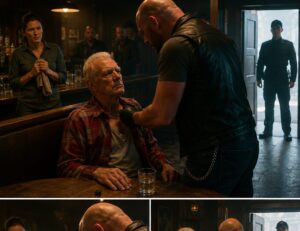
Brandon Harris laughed before Thomas Walker had even finished speaking.
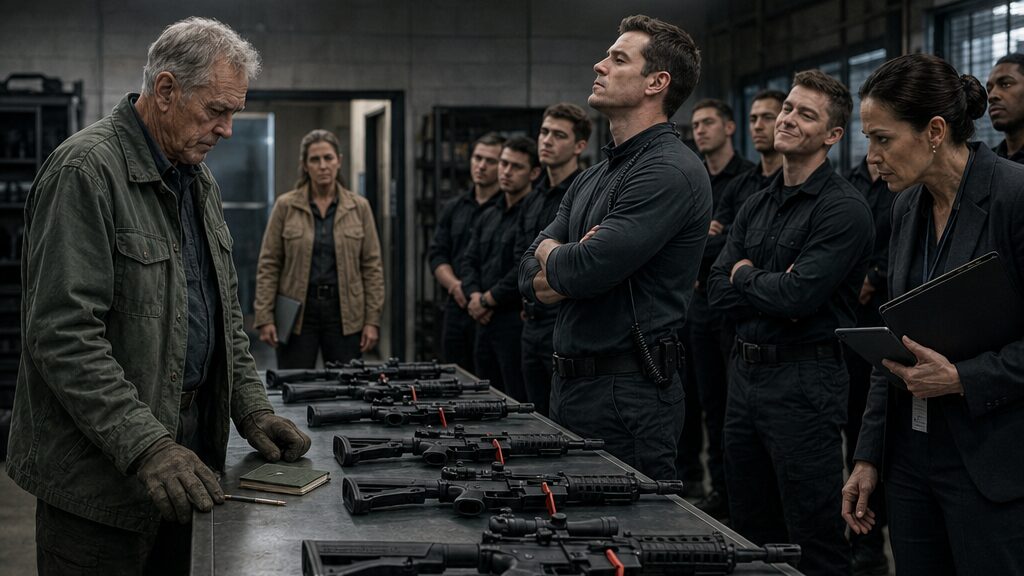
“This one should not go outside yet,” Thomas said, his gloved finger resting beside the scope mount of the third rifle on the metal table.
The armory went quiet for half a second, just long enough for the younger men to look at one another and decide whether they had heard an order, a warning, or an old man muttering at equipment. Then Brandon’s laugh cut through the fluorescent hum.
“Outside?” he said. “Sir, with respect, we stopped calling it outside about twenty years ago. It’s a controlled live-fire range.”
A few of the trainees smiled. One of them, Tyler Moore, turned his face away too late to hide it.
Thomas kept his hand on the rifle.
He had been invited through the side entrance before sunrise, given a paper visitor badge, and told by Jennifer Nelson that she only needed “another set of eyes.” No announcement. No authority. No introduction beyond “Mr. Walker used to work with range systems.” The used to had landed in the room harder than his name.
Now the rifles lay in a straight black row under the armory lights, each tagged, checked, and waiting to be moved to the staging rack. The metal table was clean except for soft cases, torque cards, a tray of chamber flags, and Thomas’s small green field notebook.
He had placed the notebook near his right hand the way he always did, square to the table edge, pencil clipped inside the cover. Its corners had gone soft from decades of pockets. The younger men had glanced at it as though it were a museum piece.
Brandon folded his arms. He was clean-shaven, sharp-shouldered, and young enough to believe fatigue was a character flaw. His black instructor shirt sat tight across his chest. A radio wire curved behind his ear.
“What’s wrong with it?” Brandon asked.
Thomas did not answer immediately. He leaned closer to the rifle. The weapon had been cleaned well. Too well, almost. The rail was free of dust. The optic glass was bright. The screws looked recently touched. A thin silver witness mark crossed from the mount to the base, drawn to show whether anything had shifted under use.
It should have made one clean line.
It did not.
The break in the mark was no wider than a pencil shaving, but it was there. The front ring leaned a breath off from the rear. Not enough for a casual glance. Enough for Thomas’s fingers to stop moving.
Brandon looked toward the others. “He’s reading paint now.”
More smiles.
Thomas lifted the rifle carefully and kept the muzzle in the safe direction without looking for approval. His shoulder protested when he raised it. That was one of the small humiliations of age: the body made noise even when the mind stayed quiet. He adjusted his stance, set his cheek to the stock, and looked through the scope.
The room blurred around the black circle of glass.
Inside it, the far wall appeared in a clean magnified slice: a faded safety poster, a red fire extinguisher tag, a row of hooks. Thomas moved the rifle a fraction left, then right. The reticle floated, then caught, then seemed to drag across the image instead of settle. He lowered the rifle, touched the mount again, and raised it once more.
No one laughed this time, but they were watching him for the wrong reason. They were waiting for his hands to shake.
Thomas felt the weight of the room settle on the back of his neck. He had stood under that weight before: inspection bays, weapons cages, desert ranges, young officers with clean boots and schedules they loved more than safety. The first rule had never been about being right. The first rule had been about catching what pride wanted to step over.
He lowered the rifle and laid it on the mat.
Brandon leaned in. “Well?”
Thomas opened his notebook.
The scrape of the pencil sounded louder than it should have. He turned to the next blank line and wrote the rifle number, the optic model, the time, and four words.
Front witness mark shifted.
Brandon gave a short breath through his nose. “That’s your finding?”
“It is my observation.”
“That’s not the same thing.”
“No,” Thomas said. “It is not.”
The answer seemed to irritate Brandon more than an argument would have. He picked up the rifle himself, shouldered it quickly, looked through the scope, and lowered it with a shrug.
“Clear glass. Stable image. Mount’s tight.”
“Did you check torque?”
“The rifle was cleared this morning.”
“By whom?”
Brandon’s expression changed. Not much. Just enough.
“By my staff,” he said.
Thomas nodded once, not because the answer satisfied him, but because it had been recorded now in the air.
Jennifer Nelson stood near the doorway in a tan uniform jacket, her tablet pressed against her side. She had not interrupted. That was her way. She watched first, acted second, and sometimes the pause cost her more than she expected. Her eyes moved from Thomas’s notebook to Brandon’s face.
“Do you want it pulled?” she asked.
Brandon turned before Thomas could speak. “No. We are not pulling a certified rifle over a paint line. We have county observers in forty minutes and a schedule that is already tight.”
Jennifer looked at Thomas.
Thomas could have made it official then. He knew the words. Safety hold. Remove from line. Reinspect before live-fire. He had taught those words to men who now had gray hair of their own.
Instead, he looked at the row of rifles, at the trainees pretending not to watch him, at Brandon’s jaw tightening because the old man had already taken too much room.
“I recommend it be checked again,” Thomas said.
Brandon smiled, but not warmly. “Recommendation noted.”
The phrase landed like a stamp on a form no one intended to read.
Tyler stepped forward when Brandon pointed. “Moore, take three through six to staging.”
Tyler lifted the third rifle first, the one Thomas had marked. He handled it with the eager care of someone who wanted to be seen doing everything right. As he turned, the scope caught the fluorescent light and flashed white for a moment, bright enough to make Thomas blink.
Thomas’s hand moved toward the table, toward the notebook, toward the rifle that was no longer there.
He did not call out.
Not yet.
Tyler carried the cleared rifle out of the armory toward the live-fire prep rack.
Chapter 2: The Mark Nobody Wanted To Check
Thomas found the second shifted mark while Brandon was still close enough to hear the rifle case unzip.
It was on the fifth rifle, half-hidden beneath the overhang of the rear scope ring. The white paint line looked whole until Thomas bent low and turned the rifle just enough for the fluorescent light to rake across the mount. Then the break appeared: a tiny offset, less than the width of a fingernail, front and rear lines disagreeing about where the rifle had been.
He did not touch it at first.
He only looked.
The armory had begun to empty into motion around him. Trainees carried rifles in pairs. Someone called out case numbers. A rolling cart squeaked near the equipment cage. The facility had the brisk, dangerous confidence of a place moving from preparation to performance.
Thomas set one finger beside the mark, not on it.
“Ms. Nelson,” he said.
Jennifer was at the doorway, speaking low into her radio. She glanced back.
Brandon answered instead. “We’re done here.”
Thomas kept his eyes on the rifle. “There is another.”
The trainee nearest the cart stopped smiling.
Brandon came back across the armory with quick steps. “Another what?”
“Witness mark shift. Same side. Same direction.”
Brandon looked down for less than a second. “That’s not shift. That’s paint slop.”
Thomas reached for his notebook. “Rifle five. Rear ring appears set, front ring shows movement.”
“Appears,” Brandon repeated. “You hear yourself?”
Thomas wrote anyway. His handwriting had grown smaller with age, not weaker. He had learned to conserve space. Paper ran out. Memory blurred. A written line stayed where it was told to stay.
From the equipment cage, Amanda Torres emerged with a tablet and a folder under one arm. She wore a dark blazer that made her look more like someone from the county offices than someone who belonged among rifle cases and cleaning mats. Her lanyard bounced against her chest as she walked.
“What are we looking at?” she asked.
Brandon’s voice sharpened. “Nothing that affects the event.”
Thomas looked at Amanda. “May I see the inspection record for rifles three and five?”
Amanda hesitated. Her eyes moved to Jennifer, then to Brandon. “Those were cleared.”
“I did not ask if they were cleared.”
A corner of Brandon’s mouth twitched. “He asks like that. Makes everything sound official.”
Amanda tapped on her tablet with one thumb. “Rifle three passed function and optic check at 0640. Rifle five at 0647. Both signed.”
“Mount replacement date?” Thomas asked.
Amanda’s thumb stopped.
Brandon said, “Why would that matter?”
Thomas turned the fifth rifle slightly and pointed without touching the screw heads. “These mounts are cleaner than the rails beneath them. The screw finish is newer. The witness marks were applied after installation. If the mount was replaced recently, I would like to know whether it was torqued, marked, and rechecked after settling.”
Brandon let out a dry laugh. “Settling. That’s exactly what I mean. We have manufacturer specs. We have modern tools. We don’t wait for ghosts to settle into metal anymore.”
Thomas felt the sting of it. Not because the words were clever. Because some of the trainees smiled again, relieved to know which side of the room still held authority.
Amanda looked at the tablet. “Replacement batch logged two days ago.”
Jennifer’s face tightened. “Two days?”
“Optic mounts for eight rifles,” Amanda said. “The work order says routine upgrade before certification.”
Thomas turned one page in his notebook. “Eight rifles?”
Brandon stepped closer. “The batch was authorized. We had a supply delay. We handled it.”
“Who installed them?”
“My staff.”
“Who checked torque after installation?”
Brandon’s eyes hardened. “My staff.”
Thomas looked at him for a quiet second. He could feel the old habit trying to guide him: write the question, note the answer, let the chain of command decide how much truth it wanted.
But there was no chain of command here that he trusted. There was a schedule, a table full of rifles, and a younger man defending an outcome instead of checking a fact.
Amanda turned the tablet so Jennifer could see. “Paperwork shows both rifles passed.”
“Paperwork can pass what recoil will expose,” Thomas said.
No one answered immediately.
The words had not been loud. They had not needed to be. Even Brandon looked down at the rifle then, as if the paint line might have changed while they argued.
A call came from the hallway. “Range staging wants rifles three through eight.”
Brandon took the fifth rifle from the table and snapped a chamber flag into place. “They’ll have them.”
Jennifer stepped into his path. “Brandon.”
He lowered his voice. “Not here. Not in front of them.”
“That is exactly where safety happens,” Thomas said.
Brandon turned on him. “You were asked to observe. You observed. Thank you.”
The armory went still again, but this time the silence had less laughter in it. Tyler stood at the hallway entrance with rifle three slung across his front, watching the adults disagree over the thing in his hands.
Thomas saw the young man’s thumb resting near the sling point. Saw the way he was trying not to look worried. Saw, too, that worry had already entered him.
Thomas closed the notebook.
“Then I will observe one more thing,” he said. “If the marks are nothing, checking them costs minutes. If they are something, ignoring them costs more than time.”
Brandon’s face reddened, but he did not shout. That would have been easier to answer.
Instead he turned toward the hall. “Move them to the range.”
Tyler obeyed because Brandon was the instructor and Thomas was only the old man with a notebook.
Amanda remained by the table after the rifles were gone. She looked down at the inspection sheet on her tablet, her brows drawn together. Thomas saw her zoom in with two fingers.
“What is it?” Jennifer asked.
Amanda did not answer right away. She tilted the screen away from the overhead glare.
At the bottom of the clearance block, beside rifles three and five, the initials were small but clear.
B.H.
Chapter 3: The Instructor With Too Much To Lose
The visiting observers arrived twenty minutes early, and Brandon Harris felt the day begin to close around his throat.
He saw them through the briefing-room window: county training board members in pressed jackets, two agency supervisors with visitor badges, a medical standby officer carrying coffee, all of them stepping into the range corridor before the facility staff had finished taping down the last cable. Early arrivals always acted like being early was a courtesy. It was not. It was pressure wearing a polite face.
Brandon checked his watch.
The live-fire demonstration was supposed to prove three things: that his trainees were ready, that the facility deserved certification renewal, and that he was the obvious choice for deputy training director when the position opened. None of those things were written on the morning schedule. All of them were written beneath it.
Behind him, the trainees sat in two rows, pretending not to listen while he reshuffled briefing cards he did not need. Tyler Moore kept glancing toward the staging rack outside the room. The kid had talent, but talent made young men hungry for approval. Brandon understood that. He had lived on approval so long he could tell when it was being withheld from across a building.
The old man’s notebook had withheld it.
Thomas Walker had not raised his voice. He had not accused anyone. That was part of what made him dangerous. Men like that did not fight where you could beat them. They made one note in pencil and let the room start doubting itself.
Brandon had seen the mark on rifle three. He had also seen that it could be nothing.
Paint shifted. Lines smeared. Mounts seated under final torque. Equipment had tolerances. The world did not stop every time an old armorer frowned at a screw head.
A staff member leaned into the briefing room. “Observers are asking if the range walk-through is still at eleven.”
“Tell them yes,” Brandon said.
The staff member left.
Jennifer Nelson entered before the door had finished swinging shut. She carried no tablet now. That worried him more than if she had brought one. When Jennifer wanted a record, she held a device. When she wanted the truth, she came empty-handed.
“Did every rifle get personally checked after the mount replacement?” she asked.
Brandon kept his voice low. “Not in front of the trainees.”
“They cannot hear us.”
“They can read a room.”
Jennifer looked through the glass toward the staging rack. “Answer me.”
He hated that tone. Not because it was harsh. Because it was careful. Jennifer’s carefulness could make a simple issue feel like the beginning of a report.
“Yes,” he said. “They were checked.”
“By you?”
“By the team.”
“That is not what I asked.”
Brandon set the briefing cards on the table. “We got the mounts late. County would not move the certification window. The old set had two documented failures in adjustment retention. You know that. We upgraded to avoid this exact kind of concern.”
“And the post-install torque?”
“Done.”
“Logged?”
He looked away.
That was all it took. Jennifer’s expression shifted, not to anger, but to disappointment. He could have handled anger.
“It was after hours,” he said. “The equipment clerk had already closed the cage. We had the tools.”
“Checked out?”
“We had the tools,” he repeated.
“Brandon.”
He stepped closer so the trainees would not see his mouth. “Do you know what happens if this gets stopped? The board writes us up for readiness failure. The agencies start sending people two counties over. We lose next quarter’s contract hours. You think they blame procurement? They blame instruction.”
Jennifer’s eyes did not move. “If the rifles are unsafe, none of that matters.”
“If.” He pointed toward the armory. “That entire word is standing on a paint line and a man who has not worked a facility like this in years.”
“He worked weapons longer than you have been alive.”
“And that is exactly why everyone is afraid to say he might be wrong.”
The words came out harder than Brandon intended. A trainee in the front row looked up. Brandon turned away as if he had meant to move.
Through the glass, he saw Thomas in the corridor near the staging area. The old man stood with one shoulder slightly lower than the other, green jacket worn pale at the elbows, notebook in hand. He looked smaller outside the armory, away from the table, among signs and cables and people moving fast.
For one moment, Brandon almost went out to him.
Not to apologize. Not that. To ask exactly what he had seen, without the audience, without the smirks he himself had allowed to spread. To say, Show me once. Make me understand it before this room gets bigger than both of us.
Then one of the county observers laughed at something near the range window, and Brandon imagined that same laugh turned toward him. Young lead instructor halted certification over unofficial concern from retired guest. Modern facility fails readiness check. Harris unable to manage inspection schedule.
He picked up his radio. “Proceed with briefing in five.”
Jennifer heard it and closed her eyes briefly.
When she opened them, Thomas was standing in the doorway.
He had not entered loudly. Brandon wondered how long he had been there.
“The rifles are in staging,” Thomas said.
“That is where rifles go before a demonstration,” Brandon answered.
Thomas looked at Jennifer, not at him. “I recommend rifles three through eight be held until the mounts are physically checked.”
Brandon gave the trainees a quick smile, the kind instructors used to make uncertainty look like part of the lesson. “Mr. Walker is very committed to his recommendation.”
No one laughed this time. That bothered Brandon more.
Jennifer stepped between them just enough to lower the temperature. “Thomas, are you certain?”
The old man’s fingers rested on the notebook cover. His thumb rubbed the edge once. Brandon saw it then: not theatrical confidence, not stubborn pride. Something closer to reluctance.
“I am certain they have not been proven safe,” Thomas said.
“That’s not the same as certain they’re unsafe,” Brandon said.
Thomas turned toward him. His eyes were tired, but not soft. “No. It is not.”
Again that answer. Again the refusal to overstate. It should have weakened him. Instead it made Brandon feel as if the floor beneath his own certainty had thinned.
Jennifer’s radio crackled. “Range to safety. Observers are seated. Ready for pre-fire brief.”
Brandon lifted his hand toward his own radio.
Jennifer did not look at him. She looked at Thomas.
“If you are certain,” she said quietly, “say it officially.”
Chapter 4: A Quiet Warning Becomes A Public Problem
Thomas opened his notebook to a page he had not shown anyone in twenty-eight years.
The paper was thinner than the newer pages, yellowed at the edge where his thumb had worried it too many times. The old entry sat halfway down the page in the same cramped hand he had used that morning.
Unverified movement after field adjustment. Recommend hold before live fire.
Below it, written later in darker pencil, were two words he had never crossed out.
Not held.
Jennifer’s voice still hung in the doorway behind him.
“If you are certain, say it officially.”
Thomas looked through the briefing-room glass. Beyond it, the range corridor had begun to fill with people who had no idea their morning might turn on a pencil mark. Observers adjusted badges. A staff member carried water bottles. Trainees shifted rifles from staging slots to ready positions under Brandon’s direction.
The building had moved past warning.
Thomas had not.
He closed the notebook around his finger to keep the old page marked. “Where is rifle three now?”
Jennifer glanced toward the range. “Staging rack. Lane two assignment.”
“Who has lane two?”
She did not answer quickly enough.
Thomas already knew.
Tyler Moore stood near the red safety line with rifle three angled across his chest, grinning at something another trainee said. He looked younger there than he had in the armory. Without the smirk, he looked like a boy trying to wear confidence until it fit.
Brandon stepped from the briefing room into the corridor. “We are not doing this in pieces. If you have an official objection, file it with Safety. If you don’t, we are proceeding.”
Thomas looked at the red safety line painted on the floor. Fresh paint. Clean edges. A warning everyone respected because it was visible.
The mark on the rifle had been visible too. Just not to the people who had already decided it did not matter.
“I need one minute with the rifle,” Thomas said.
Brandon shook his head. “No. You had your minute.”
“Then switch Tyler to another weapon until after check.”
That drew Tyler’s attention. His smile faded. “Sir?”
Brandon turned toward him. “Ignore it.”
Thomas saw the young man obey, but not fully. His hand shifted on the rifle. Not fear. Awareness.
That was worse. Once a man started wondering whether the tool in his hands could be trusted, every command after that had to fight the question.
Brandon lowered his voice. “You are making trainees doubt safe equipment.”
“No,” Thomas said. “Unsafe certainty does that.”
The words came out before he softened them. He felt Jennifer look at him, surprised. Brandon heard the change too. His eyes narrowed, as if he had finally located the part of Thomas that could be pushed into the open.
“Mr. Walker,” Brandon said, “you are a guest observer. You do not command this range.”
Thomas touched the notebook in his coat pocket. For most of his life, that had been enough: write the concern clearly, send it upward, keep your tone clean, do not make the issue about yourself. He had trusted procedure because procedure, when honest, saved men from pride.
But he had also seen procedure become a drawer. A place for inconvenient warnings to wait until after consequences.
A memory rose before he could stop it: dust on a folding table, a young sergeant rubbing his thumb over a sight assembly, a captain saying they would review it after the morning lane. Thomas had written the recommendation. He had not stepped past the line. By noon, the report had language in it. Misalignment. Environmental stress. Corrective measures pending.
Clean phrases. Dirty truth.
Tyler shifted again near lane two.
One of the other trainees noticed. “You got the old man’s cursed rifle,” he muttered.
A few nervous laughs followed.
Tyler tried to laugh with them. “Great. If I miss, I’m blaming history.”
Thomas looked at him then, really looked. Not at the trainee who had smiled in the armory. Not at the young man who wanted Brandon’s approval. At the hands holding the rifle. At the way one finger tapped the stock twice, unconsciously, waiting for the command to begin.
He had spent years teaching young soldiers to trust their equipment without worshiping it. The difference mattered. Trust was earned. Worship was blind.
“Tyler,” Thomas said.
Brandon snapped, “Do not address my trainee.”
Tyler looked anyway.
Thomas kept his voice calm. “If a rifle gives you a question before you fire, you do not owe anyone a shot.”
The corridor stilled.
It was not an order. That made it harder to punish. It was advice, plain enough for everyone to understand and dangerous enough to Brandon’s control that his face went tight.
Jennifer’s radio crackled. “Safety, we are ready for pre-fire brief. Board is seated.”
Brandon took his radio. “Copy. Instructor moving to line.”
He looked at Thomas. “Last chance to stay professional.”
Thomas almost smiled at the word. Professional. He had watched men use it to mean quiet. Use it to mean convenient. Use it to mean old men should keep their doubts in notebooks and let younger men mistake momentum for command.
Jennifer stepped closer. “Thomas.”
He heard the question she did not ask.
Are you certain enough to carry the cost?
Thomas opened his notebook again. The old page waited under his thumb. Not held. Two words, still accusing him without raising their voice.
He tore nothing out. He showed no one. He only turned to the current page and wrote beneath the morning entries.
Unsafe until physically verified.
Then he wrote his name.
His hand was not perfectly steady. That bothered him less than it would have years ago.
Brandon had already moved to the range entrance. The trainees followed, Tyler among them, rifle three still in his hands. The observers beyond the glass leaned forward, sensing a delay but not yet knowing its shape.
The overhead speaker clicked once.
“Prepare for live-fire demonstration. All personnel behind marked line unless assigned.”
Thomas looked at the red line on the floor.
He had spent too many years behind lines other men drew.
Jennifer’s lips parted as if she meant to stop him or support him. She did neither in time.
Thomas stepped past the marked safety line, lifted one hand where every person in the range could see it, and called out in a voice that filled the corridor without shaking.
“Hold the range.”
Chapter 5: The Hold Command No One Expected
“Do not fire that rifle,” Thomas said, and this time he said it loud enough for the observers behind the glass to hear.
Every muzzle on the range stayed down. Every head turned.
Tyler froze in lane two with rifle three angled toward the floor, his cheek still inches from the stock. Brandon stood five yards away with one hand raised for the pre-fire brief, his face caught between command and disbelief.
For one second, no one knew which authority to obey.
That was the most dangerous second of the day.
Jennifer ended it. “Range is on hold,” she said into her radio. “All weapons safe. Fingers clear. Maintain muzzle discipline.”
The range officer echoed the hold over the speaker. Red lights came on above the lanes. The clean, rehearsed rhythm of the demonstration broke apart into whispers, radio clicks, and the uneasy shuffle of people trying not to look alarmed.
Brandon walked toward Thomas with his jaw locked. “You just stopped a county certification event.”
Thomas did not lower his hand until Tyler had stepped back from the firing position.
“I stopped a shot,” Thomas said.
“On what proof?”
Thomas pulled the notebook from his pocket. The small green cover looked almost foolish under the range lights, surrounded by electronic timers, ballistic panels, cameras, and observers with tablets. He held it anyway.
“Rifle three. Rifle five. Same witness mark movement. Same mount batch. Same direction of shift.”
Brandon pointed toward the rifle in Tyler’s hands. “You keep saying mark like it is a failure. It is paint.”
“Then check it.”
“In front of the board?”
“Yes.”
The answer landed flat and heavy.
The county observers had left their seats behind the glass. They stood in a cluster near the viewing door, speaking quietly to Jennifer. Amanda Torres came quickly from the corridor with her tablet and folder, her eyes moving from Brandon to Thomas to the rifle.
Tyler looked at Brandon. “Sir, should I clear it onto the bench?”
Brandon hesitated.
Thomas heard that hesitation more clearly than anything else.
“Clear it,” Jennifer said.
Tyler obeyed. He removed the magazine, locked the action open, showed clear, and laid the rifle on the nearest bench. His hands moved carefully now. No jokes. No glances to see who approved.
Thomas approached only after Jennifer nodded. He did not take the rifle like a trophy. He did not hurry. He set his notebook beside it, opened to the morning page, and pointed to the first entry.
“Rifle three,” he said.
Amanda leaned in. “Show me.”
Thomas touched the air above the front witness mark. “Do not put your finger on it. Look across it, not down at it.”
Amanda shifted lower.
At first her face held the polite patience of someone prepared to humor a concern. Then the patience left.
“There’s a gap,” she said.
Brandon stepped closer. “A paint gap.”
Thomas looked at Tyler. “Would you bring rifle five?”
Tyler looked to Brandon by habit.
Brandon said nothing.
Jennifer said, “Bring it.”
When rifle five came onto the bench, Thomas placed it parallel to rifle three. Black metal beside black metal. Scope beside scope. Two small white lines, both almost right. The kind of almost that passed when a room was busy.
Thomas opened his notebook to the second entry and turned it so Jennifer and Amanda could read it.
Amanda lowered herself beside the bench. “Same side.”
Thomas nodded.
Brandon exhaled sharply. “Two rifles from a batch of eight. Even if there is movement, you have not shown operational failure.”
“No,” Thomas said. “I have shown reason not to fire until checked.”
The observers watched through the open door now. The range no longer felt like a demonstration. It felt like a room waiting for someone to choose honesty or performance.
Brandon knew it too. “You cannot stop a facility day on suspicion.”
Thomas looked at him. “Safety often begins there.”
The words were quiet, but this time no one smiled.
Jennifer turned to a staff member. “Bring rifles six, seven, and eight from staging.”
Brandon’s head snapped toward her. “Jennifer.”
“If this is nothing,” she said, “we lose minutes.”
“And if we lose the event?”
“Then we lose it safely.”
The staff member returned with the rifles. Thomas’s shoulder ached as he leaned over each one, but he ignored it until the pain sharpened enough to make his grip clumsy. He had to set one hand on the bench for a moment. Brandon saw it.
For a breath, his expression almost softened.
Then rifle seven turned under the light, and the mark showed itself.
Amanda whispered, “There.”
The room seemed to tighten.
Thomas did not feel triumph. He felt the old coldness that came when a possibility became a pattern. Rifle seven. Same direction. Smaller shift, but there. He marked it in the notebook beneath the first two entries.
Jennifer stood over the three rifles. “That is enough. All rifles from the replacement batch are pulled.”
Brandon’s voice dropped. “You are making a call based on him?”
“No,” Jennifer said. “I am making a call based on three matching physical observations and an unresolved inspection trail.”
Amanda looked up from her tablet. “The replacement batch was entered into inventory at 2146 last night.”
Brandon’s face changed.
Thomas saw it and felt no satisfaction. There were different kinds of being right. This was the kind that made the floor open under more than one person.
Amanda scrolled. “The inspection pass is timestamped 1908.”
Jennifer looked at Brandon. “That is before the mounts were logged.”
A county observer stepped closer. “Could someone explain how equipment passed inspection before it was in the system?”
Brandon opened his mouth, then closed it. His eyes moved to the trainees, then to the observers, then to the rifles lying side by side with their imperfect little marks.
Thomas watched the younger man struggle under the weight of a room he had tried so hard to control. For a moment, Thomas saw not arrogance, but fear with nowhere to stand.
Brandon said, “The mounts arrived physically before they were logged.”
Amanda’s voice stayed level. “Were they installed before they were logged?”
He did not answer.
Jennifer said, “Brandon.”
His shoulders lowered half an inch.
“We were behind,” he said. “The supply delay put us behind. I had staff install them last night. We planned to complete the documentation this morning.”
“And the post-install torque check?” Amanda asked.
Brandon looked at the rifles, not at her.
Thomas closed his notebook slowly.
Brandon swallowed. “The mounts were installed the night before certification.”
Chapter 6: The Inspection Sheet With Missing Hands
Amanda Torres found the impossible tools before anyone found the courage to speak plainly.
The inspection sheet listed a torque driver, a rail alignment gauge, and two witness-mark pens as checked out at 1845 the previous evening. The equipment cage log said the cage had closed at 1730. The clerk’s digital signature showed no after-hours release. The tools, on paper, had been in two places at once.
Amanda stood in the armory office with the tablet in one hand and the printed sheet in the other, feeling the whole day tilt from error into responsibility.
Behind the glass wall, the rifles from the replacement batch lay on the metal table again. They looked less impressive now. Stripped of their place in the demonstration, they were only objects waiting for the truth. Thomas Walker stood beside them with his notebook closed under one hand. Brandon Harris sat on a stool near the end of the table, elbows on knees, staring at the floor.
Jennifer Nelson was speaking with the county observers in the hall. Her voice was controlled. That worried Amanda. Controlled voices were often building something that would later need signatures.
Amanda stepped into the inspection room. “The tool log does not match the inspection sheet.”
Brandon looked up. “Ask the equipment clerk.”
The answer came too fast.
Tyler Moore, standing near the far wall with the other trainees, lifted his head. He had not been told to leave. Maybe no one had thought to remove him. Maybe Jennifer had wanted the younger men to see what happened after the laughing stopped.
Brandon saw Tyler watching and stopped himself.
The rest of the blame stayed in his mouth.
Amanda let the silence sit. “The cage was closed before the listed checkout time.”
Brandon rubbed both hands over his face. “We had access to backup tools.”
“Not the ones listed.”
“No.”
“Then the inspection sheet is inaccurate.”
He let out a breath that almost became a laugh but had no humor in it. “That is one way to say it.”
Thomas opened his notebook. Not to write. Only to rest his palm on the pages.
Amanda noticed the difference between his notebook and the forms in her hands. The forms looked official and had already lied. His notebook looked informal and had admitted uncertainty. Appears shifted. Recommend check. Unsafe until verified.
No line in it had pretended to be more complete than it was.
Jennifer returned from the hall. “The board wants an explanation before they decide whether to suspend the day or the certification.”
Brandon stood. “I’ll give them one.”
Jennifer looked at Amanda. “What do we know?”
Amanda handed her the sheet. “The inspection documentation lists tools that were not checked out. The replacement mounts were logged after the rifles were signed off. Three rifles show matching witness-mark movement. We do not yet know whether the issue is installation torque, wrong mount compatibility, or skipped settling check.”
Brandon’s mouth tightened at the word skipped.
Thomas looked at him then, not sharply. That almost made it worse.
Jennifer read the sheet. Her face did not change much, but Amanda had worked around enough officials to recognize the moment a person understood that the clean version was gone.
“I asked you yesterday if the replacement would affect readiness,” Jennifer said to Brandon.
“You asked if we could make the schedule,” he said.
“I asked both.”
“And I said yes.”
“Did you know it was incomplete?”
Brandon looked toward the trainees. “Can we not do this in front of—”
“No,” Thomas said.
Everyone turned.
Thomas had not raised his voice. He had only removed the option.
Brandon’s eyes flashed. “You want an audience now?”
“No.”
“Then what do you want?”
Thomas looked at the rifles, then at Tyler, then at Jennifer. “I want the people who were told to trust this process to hear what the process did.”
The room held that.
Amanda saw Jennifer take it in and flinch, not outwardly, but in the breath before she spoke. Because it was not only Brandon standing in the sentence. It was her too.
Jennifer set the inspection sheet on the table. “I suspected we were compressed too tightly after the supply delay. I should have frozen the replacement batch until documentation and physical checks were complete.”
Brandon stared at her. “You are putting that in?”
“I am saying it here first.”
The trainees shifted. The observers were no longer in the doorway, but the building itself seemed to be listening.
Brandon’s anger drained unevenly, leaving something rawer beneath it. “You know what happens if this fails certification?”
“Yes,” Jennifer said.
“No, you know on paper. I know who loses hours. I know which instructors get cut. I know which trainees get sent somewhere else and come back behind. I know what the board says about leadership when a facility looks unprepared.”
Amanda heard it then: not excuse, not innocence, but fear. Brandon had built the morning like a wall against failure, and Thomas had touched one small mark that showed the wall was hollow.
“That pressure does not sign a safe rifle,” Thomas said.
Brandon looked at him. “You think I don’t know that?”
“I think you remembered it too late.”
The words could have been cruel. They were not. That was what made Brandon look away.
Jennifer took the inspection sheet and began drafting the preliminary report on Amanda’s tablet. Amanda watched the first lines appear: Replacement mount documentation incomplete. Live-fire demonstration held pending further review. Physical inspection identified potential optic mount movement.
Thomas read over her shoulder and said nothing until Jennifer reached the paragraph about responsible factors.
Jennifer typed: Due to documentation timing discrepancy and uncertainty regarding post-install verification, the event was paused by Safety pending review.
Thomas’s hand came down flat on the table.
The sound was not loud, but it stopped her.
“That erases too much,” he said.
Jennifer looked at him. “It is accurate.”
“It is soft.”
Brandon gave a bitter smile. “Now he wants blood.”
Thomas turned to him. “No. If I wanted blood, I would let you be the only name in that paragraph.”
Brandon’s smile vanished.
Thomas looked back at Jennifer. “The report needs to say the equipment was moved toward live fire after a physical concern was raised. It needs to say the concern was dismissed. It needs to say the safety director had prior concern about the compressed replacement schedule. It needs to say the lead instructor chose to proceed before verification was complete.”
Jennifer’s face had gone pale, but she did not argue.
Amanda felt the room change again. This was no longer about proving the old man right. It was about how many people were willing to be named by the truth.
Jennifer lowered her hands from the tablet. “Thomas, that version will go straight to the board.”
“Yes.”
“It will cost people.”
Thomas looked at the rifles on the table. “So would the other version.”
For the first time all day, Brandon did not defend himself.
Jennifer turned the tablet toward Amanda, but Thomas had not finished. He looked at the softened paragraph, then at the notebook beneath his hand, then back at Jennifer.
“I will not sign a report,” he said, “that makes silence look like safety.”
Chapter 7: What The Old Notebook Finally Taught Them
Brandon asked Thomas what he wanted written in the final report, and the question sounded less like defiance than surrender.
They stood at the same metal table where the morning had begun. The rifles from the replacement batch lay stripped of certainty, bolts locked open, scopes turned under the armory lights. The county observers had moved to the hall. The trainees waited along the wall, quieter than men that young usually knew how to be. Jennifer had the tablet in both hands. Amanda stood beside her with the inspection sheets, the false tool log, and Thomas’s notebook entry copied onto a separate page.
Thomas looked at Brandon.
The younger man’s face had lost its hard polish. He still stood straight, still looked like an instructor, but something behind his eyes had been forced to sit down.
“What do you want in it?” Brandon repeated. “My name? The missed check? That I overruled you?”
Thomas did not answer at once. His hand rested on the closed notebook. The old page inside seemed heavier now than all the official sheets on the table.
“I want what happened,” Thomas said.
Brandon’s mouth tightened. “That is what I just said.”
“No. You asked how much blame to write.”
Jennifer lowered the tablet slightly.
Thomas turned the notebook so its worn cover faced the trainees. “Blame is easy to spend. Harder to use.”
No one spoke. Even the fluorescent lights seemed louder.
Amanda set the inspection sheet beside the notebook. “Then the report needs three parts. The shortcut, the pressure, and the corrected procedure.”
Thomas nodded once. “Yes.”
Jennifer’s eyes moved from him to Brandon. “The shortcut was moving rifles toward live fire before physical verification was complete.”
Brandon looked at the rifles. “Yes.”
“The pressure,” Amanda said, “was certification readiness after the supply delay.”
Jennifer took that in. “And my failure to freeze the replacement batch when I suspected the schedule was compressed.”
Brandon looked at her sharply. “You do not have to put yourself in it like that.”
Jennifer’s face stayed still. “Yes, I do.”
Thomas watched the words land between them. It was not kindness exactly, what Jennifer had done. It was heavier than kindness. She had stepped into the report instead of shaping it around herself. For the first time that day, Brandon was not standing alone under the whole ceiling.
Thomas opened his notebook to the current page and tore nothing from it. He placed it beside the tablet.
“The corrected procedure,” he said, “starts before the next rifle leaves this table.”
A trainee near the wall shifted. Tyler.
Thomas looked at him. “Come here.”
Tyler’s eyes flicked to Brandon by old habit. Brandon saw it and, after a moment, gave a small nod.
Tyler approached the table as if the rifles might accuse him too.
Thomas picked up rifle seven and turned it so the mount sat beneath the clearest light. “Do not start with the glass,” he said.
Tyler blinked. “Sir?”
“Everyone likes to look through the scope. Makes them feel like they are doing the work. Before that, look at what holds the scope to the rifle.”
He did not say it loudly. He did not make it a lesson for the observers. Still, the room leaned in.
Thomas pointed near the witness mark without touching it. “Across the line. Not down on it. Your eye wants the mark to agree with itself. Make it prove it.”
Tyler bent low. At first his face showed nothing but concentration. Then his brows pulled together.
“It breaks,” he said.
“Where?”
“Front ring. Same side as the others.”
“Now check the screw head finish. Then the rail under the mount.”
Tyler did. Slower now. His eagerness had changed into care. “The mount is cleaner than the rail.”
“Why does that matter?”
“It was installed after the rifle was already in use.”
Thomas nodded.
Tyler swallowed. “And if it was installed late, the paperwork should show the after-check.”
“It should.”
Tyler looked at Brandon then, not with accusation, but with the stunned discomfort of a young man realizing confidence had almost carried him into danger.
Brandon accepted the look without turning away.
Thomas felt something in his chest loosen, though not enough to call peace. Peace was too clean a word for a day like this. What he felt was the absence of one old weight pressing quite as hard.
Jennifer typed. Amanda read the lines aloud as they formed, trimming nothing soft.
Replacement optic mounts were installed under compressed certification schedule. Physical post-install verification was incomplete before rifles were moved toward live-fire staging. A safety concern raised by guest observer Thomas Walker was initially dismissed by lead instruction staff. Demonstration was halted when matching witness-mark movement appeared across multiple rifles. Corrective action: all replacement-batch rifles removed from use pending torque verification, compatibility check, updated tool control, and mandatory trainee inspection procedure.
Amanda paused. “Guest observer?”
Thomas looked at the title on the screen.
Guest observer. It was accurate. It was also small.
Brandon cleared his throat. “Retired Army armorer and range-safety instructor.”
Thomas looked at him.
Brandon did not make a show of it. He only kept his eyes on the tablet, as if the wording mattered more than anyone’s reaction. “That is also accurate.”
Jennifer changed the line.
No one applauded. No one smiled too broadly. The room did not become suddenly good. That would have made the whole day feel cheaper than it had been.
The observers returned long enough to receive the amended report. They asked their questions. Jennifer answered hers. Brandon answered his without hiding behind the equipment clerk. Amanda supplied the records and did not let the forms speak beyond what they knew. The certification day was suspended, not failed, pending corrective review.
Those words mattered to the facility. They mattered less to Thomas than the sight of the rifles staying on the table.
When the room finally thinned, Brandon remained near the bench while the trainees filed out. Tyler lingered last, holding a blank checklist Amanda had printed.
“Mr. Walker,” Tyler said, “is it all right if I copy the order of your check?”
Thomas looked at the paper. At the neat empty boxes waiting to become habit.
“Do not copy my handwriting,” he said.
Tyler hesitated, then realized it was not a refusal. “No, sir.”
Thomas gave him the sequence. Mount body. Witness mark. Screw head. Rail contact. Torque record. Glass last.
Tyler wrote each one down carefully.
When he left, Brandon stayed.
For a while, neither man spoke. The armory had lost the morning’s performance brightness. The same fluorescent lights shone over the same metal table, but the space had changed because the people in it had.
Brandon touched the edge of rifle three’s case. “I owe you an apology.”
Thomas closed his notebook. “Yes.”
The answer startled Brandon more than forgiveness would have.
He looked down. “I laughed because I thought if the room saw me take you seriously, they would see doubt.”
“They did see doubt.”
“Not the kind I meant.”
Thomas understood that. He had seen men hide fear inside certainty until they could not tell one from the other.
“I was trying to hold the day together,” Brandon said.
“You almost held it together wrong.”
Brandon nodded. The words struck, but he did not defend himself. “I know.”
Thomas slid the notebook into his coat pocket, then stopped. His fingers rested on the cover.
“I made a note once,” he said. “Long time ago. Similar concern. I wrote it clean. Sent it where it belonged. Did not step over the line when the line needed stepping over.”
Brandon looked at him carefully.
Thomas did not give the rest. He did not owe the room an old wound so that his warning would seem dramatic enough to respect. But he gave Brandon the part that mattered.
“I was right then too,” Thomas said. “Being right did not help much.”
Brandon’s face changed. Not pity. Recognition.
“I am sorry,” he said again.
Thomas looked at the younger man, at the pride still there, damaged but not gone. Pride did not need killing. It needed training.
“Do not make the apology the important part,” Thomas said. “Make the next check better.”
Brandon nodded once.
Jennifer came back to the doorway. Amanda stood behind her, holding the printed corrective checklist. Neither interrupted. They had the sense to let the silence finish its own work.
Thomas took his notebook out again and opened it to a fresh page. He wrote the new inspection sequence slowly, leaving enough space between the lines for younger hands to add what they learned later. When he was done, he turned the notebook around and left it open on the table while he zipped his old green jacket.
Tyler, passing the doorway with the other trainees, glanced in and stopped. His eyes dropped to the page.
One by one, the others looked too.
At the top of the fresh page, above the checklist, Thomas had written one sentence in pencil.
Check what pride wants to skip.
He let them read it long enough to remember it, then picked up the notebook and walked out without waiting for anyone to thank him.
The story has ended.