The HOA Ordered His Dam Repairs Removed Until The Water Made Everyone See The Warning He Gave
Chapter 1: The Warning Behind The Quiet Reservoir
Jack Torres knew something was wrong before he saw the water.
The sound came first.
It was a low, uneven vibration beneath the concrete walkway, almost too faint to notice unless someone had spent years listening to the structure breathe. Most people in Cedar Ridge Estates would have walked past it without a second thought. They would have looked at the calm reservoir, the tree-lined hills beyond it, and the neat rows of houses climbing the slope, then assumed everything was exactly as it had always been.
Jack stopped halfway across the maintenance path.
The flashlight in his hand remained pointed toward the dark concrete wall ahead.
He listened.
There it was again.
A deep metallic shudder followed by a small rush of water somewhere beneath the reinforced section he had repaired three months earlier.
Jack tightened his grip on the flashlight and walked closer.
The warning marker he had painted near the inspection point was still visible. A simple orange line across the concrete. Nothing dramatic. Nothing that would catch anyone’s attention.
But Jack knew what it meant.
Pressure was moving differently.
He crouched beside the access panel and ran his fingers along the edge. Moisture had appeared where the surface should have been dry.
He pulled a folded set of inspection notes from the inside pocket of his work jacket and opened them beneath the beam of his flashlight.
The numbers were not supposed to look like this.
The old spillway system had survived decades of storms, repairs, and changing regulations. Jack had spent twenty years maintaining it because the dam was more than concrete and steel. It held back the water that bordered hundreds of homes.
People slept because they trusted the structure.
That trust was exactly why Jack had started the stabilization work.
Not because he wanted a project.
Not because he wanted recognition.
Because he had seen the early signs and knew what happened when people waited for a problem to become impossible to ignore.
He stood and looked toward the quiet houses in the distance.
Somewhere behind those windows, families were still asleep.
Jack folded the papers.
He had already sent three maintenance requests. He had attached photographs. He had included measurements. He had explained that the temporary reinforcement needed to become a permanent repair before the next heavy storm season.
Nobody had said the work was unnecessary.
They had simply said it needed approval.
And approval had become another word for waiting.
A truck engine sounded behind him.
Jack turned.
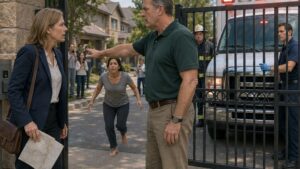
A white SUV rolled down the maintenance road and stopped near the gate. The vehicle door opened, and Donna Adams stepped out holding a folder.
She did not look surprised to see him.
That bothered Jack more than if she had been angry.
“Morning, Jack,” she said.
He looked at the folder in her hand.
“What is that?”
Donna walked closer but stopped several feet away.
“An enforcement notice.”
Jack stared at her.
“An enforcement notice for what?”
“For unauthorized modifications to association property.”
He looked back toward the repaired section.
“Donna, this is not a modification.”
“That is not what the board determined.”
“The board determined that before anyone inspected the damage?”
Donna kept her expression controlled.
“I understand you believe you are helping.”
Jack almost laughed.
Believe.
That was the word people used when they wanted to turn facts into opinions.
“I have inspection records.”
“I know.”
“You know?”
“Yes.”
“Then you know why this was necessary.”
Donna opened the folder.
“I know you submitted documents. I know you hired a contractor. I know work began before final approval.”
“Because the structure needed attention.”
“Because you decided the approval process did not apply to you.”
Jack felt the frustration rise in his chest.
He lowered his voice instead.
“That is not what happened.”
“From the association’s perspective, it is.”
The sentence sat between them.
From the association’s perspective.
Jack looked past Donna toward the dam.
The concrete did not care about perspectives.
Water did not care about meetings.
Pressure did not wait for a vote.
“Donna, if you remove this reinforcement before the permanent repair is approved, you are putting the original problem back.”
She closed the folder.
“The association cannot allow residents to make structural changes based only on personal judgment.”
“Personal judgment?”
“You are emotionally connected to this place, Jack. I understand that.”
He looked at her.
“I maintain this place.”
“And that is exactly why we need a formal process.”
Jack wanted to tell her that formal processes were supposed to protect people, not delay protection.
Instead, he reached into his jacket and pulled out the inspection photographs.
“Look at these.”
Donna glanced down.
“I have seen them.”
“Then look again.”
She did not.
That small refusal told Jack more than her words had.
She had already decided what the situation was.
Not dangerous repair.
Unauthorized work.
Not a warning.
A violation.
A phone buzzed in Donna’s hand.
She checked the screen.
“Your contractor has been notified that all work must stop.”
Jack’s face tightened.
“Stephen is not finished.”
“He should not have started.”
“He started because I showed him what was happening.”
Donna stepped back toward her vehicle.
“The board will review the matter at tomorrow night’s meeting.”
“And until then?”
“The work remains frozen.”
Jack looked at the repaired section.
The low vibration continued beneath his feet.
“Donna.”
She paused.
“If something happens because this is removed—”
She interrupted him gently.
“Jack, threatening consequences does not make unauthorized work acceptable.”
He watched her drive away.
For several minutes, he stood alone beside the reservoir.
The morning remained quiet.
The houses remained still.
The water looked peaceful.
That was the dangerous part.
Jack returned to the access panel and took another measurement.
Then another.
The numbers had changed.
He pulled out his phone and photographed the reading.
For the first time in years, Jack wondered whether knowing the truth was enough.
He had spent his life believing evidence mattered.
But evidence only mattered if someone was willing to look.
That evening, an email arrived from the HOA office.
Jack opened it expecting another request for documentation.
Instead, he saw a formal notice.
The association had scheduled removal of the unapproved repair structure.
The date was not weeks away.
It was not after another inspection.
It was the following morning.
Chapter 2: The Approval Meeting That Changed Everything
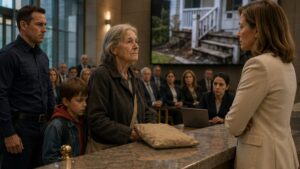
By the time Jack entered the Cedar Ridge Estates clubhouse, everyone already knew his name.
Not because they understood what happened.
Because Donna Adams had sent the meeting agenda to every resident.
The title was simple.
Unauthorized Dam Structure Review.
Jack stopped when he saw it posted beside the entrance.
Unauthorized.
The word had followed him all day.
He had spent twenty years preventing problems nobody noticed, and now the only thing people noticed was the accusation.
Inside the meeting room, residents filled folding chairs facing the HOA board table.
Donna sat at the center.
A stack of papers rested in front of her.
Jack recognized some of them.
His own reports.
His own photographs.
His own warnings.
He sat near the front beside Stephen Lewis, who had arrived wearing work clothes still marked with dust from the repair site.
“You look tired,” Stephen whispered.
Jack looked toward the board.
“I spent last night checking pressure readings.”
“Did they get worse?”
Jack nodded once.
Stephen exhaled.
“That should matter.”
Jack looked at him.
“It should.”
The meeting began.
Donna tapped the microphone.
“Tonight’s discussion concerns an unauthorized structural modification performed near the community dam.”
Jack listened as she carefully avoided the words repair, warning, or safety.
Every sentence was technically polite.
That almost made it worse.
“The association understands that residents may have concerns,” Donna continued. “However, rules exist to protect everyone.”
A resident near the back raised a hand.
“Was the work dangerous?”
Donna looked toward him.
“The concern is that the work was performed without approval.”
“That wasn’t my question.”
The room became quiet.
Donna folded her hands.
“The board is not here to debate individual opinions.”
Jack felt his jaw tighten.
That was the pattern.
Move the conversation away from the problem.
Make the process the problem.
He stood.
“May I speak?”
Donna looked at him.
“Briefly.”
Jack walked toward the front with his folder.
“I did not make a cosmetic change. I did not build something because I wanted something different. I responded to a structural issue.”
He placed photographs on the table.
“The section I reinforced showed signs of stress.”
Donna looked down.
“These concerns were not verified through association review.”
“Because association review had not happened.”
A few residents exchanged looks.
Jack continued.
“I submitted reports. I submitted measurements. I requested emergency consideration.”
Donna answered immediately.
“You began work before receiving approval.”
“Because the risk was increasing.”
“According to you.”
Jack looked at her.
That sentence hurt more than he expected.
Not because she disagreed.
Because she had reduced years of experience into a personal belief.
Stephen stood.
“I inspected the site too.”
Donna turned.
“Mr. Lewis, you were hired by Mr. Torres.”
“Yes.”
“So you are not independent.”
Stephen looked frustrated.
“No, but I know concrete failure when I see it.”
Donna moved to another document.
“The association has received concerns about residents performing work that affects shared property.”
Jack stared at the paper.
“Shared property.”
He repeated the words quietly.
The dam protected everyone.
But nobody wanted responsibility for it.
A board member leaned toward Donna.
“Can we just get another inspection before removing anything?”
Donna shook her head.
“The approval violation remains.”
Jack looked at her.
“Removal is already scheduled.”
A silence passed through the room.
Several residents turned.
“You mean the repair is coming out?” someone asked.
Donna answered.
“The association must restore compliance.”
Jack felt the room shift.
People had arrived expecting a rule discussion.
Now they were realizing the rule had a physical consequence.
He stepped closer.
“Donna, if you remove the reinforcement tomorrow, you are reversing the only corrective work currently in place.”
“We are following procedure.”
“Procedure does not stop water.”
Donna’s expression hardened slightly.
“And fear does not justify ignoring rules.”
Jack wanted to argue.
He wanted to show every report.
Every measurement.
Every photograph.
But then he noticed something.
A few residents were not looking at Donna.
They were looking at him.
Not with trust.
With uncertainty.
His silence had helped create that.
He had assumed the documents would explain everything.
They had not.
He had never told people what he was seeing because he thought the proof would arrive first.
Now the misunderstanding had already arrived.
The meeting ended with the board voting to proceed with removal.
Jack walked outside carrying his folder.
Stephen followed.
“They really think this is about approval.”
Jack looked back through the clubhouse windows.
“No.”
“What then?”
Jack watched Donna speaking with board members.
“They think they are preventing a problem.”
Stephen frowned.
“And they don’t see they are creating one.”
Jack looked toward the road.
A truck was parked near the community entrance.
Then another.
His stomach tightened.
The removal crew had already arrived.
Chapter 3: The Crew Arrives Before The Truth
The first sound Jack heard was the saw.
Not a warning.
Not a phone call.
Not a meeting.
A machine.
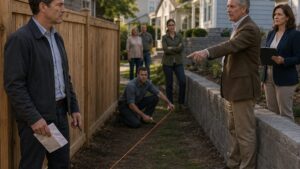
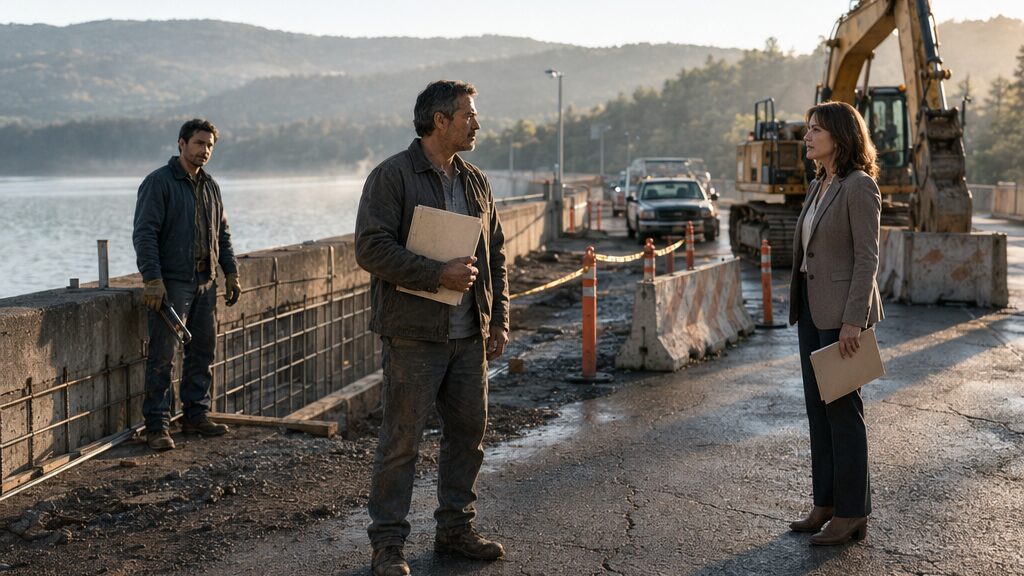
He turned the corner onto the dam access road and saw workers already cutting through the outer support frame.
For a moment, he simply stood there.
The repair he had spent weeks installing was being taken apart before he had even been given the chance to speak.
A truck sat beside the road.
Orange cones surrounded the work area.
A supervisor held a clipboard.
And Donna Adams stood beside him.
Jack walked faster.
“Stop.”
The workers looked toward the supervisor.
Donna turned.
“Jack.”
“What are you doing?”
“We are completing the enforcement action.”
“You scheduled removal after the meeting.”
“Yes.”
“Today.”
“Yes.”
He looked at the saw cutting into the support.
“You started before I arrived.”
Donna remained calm.
“The association provided notice.”
Jack pulled out his phone.
He began recording.
Donna noticed.
“Are you recording this?”
“Yes.”
“Why?”
“Because I want a record of who authorized this.”
The supervisor stepped forward.
“We have paperwork.”
Jack looked at him.
“Do you understand what you are removing?”
The man glanced toward Donna.
“It is a non-approved structure.”
Jack looked at the exposed concrete beneath it.
“That is not an answer.”
Donna stepped closer.
“Jack, move aside.”
“No.”
The workers stopped.
The word surprised everyone.
Not because he was loud.
Because he was not.
He stood there quietly.
A man in a work jacket holding a phone and a folder.
Not threatening.
Not fighting.
Just refusing to disappear.
Donna lowered her voice.
“You cannot interfere with authorized work.”
“I am asking you to provide the authorization.”
“It has already been provided.”
“Then show me.”
She hesitated.
Only briefly.
But Jack saw it.
The smallest pause.
“The board’s decision is documented.”
“That is not what I asked.”
The supervisor looked uncomfortable.
Jack opened his folder and pulled out the inspection pages.
“These repairs were temporary stabilization. They are connected to a pressure issue.”
Donna looked at the pages.
“We have reviewed your claims.”
“No.”
Jack shook his head.
“You reviewed my request.”
He pointed toward the structure.
“You did not review what happens if this comes out.”
A worker stopped cutting.
Donna noticed.
“Continue.”
The machine started again.
Jack looked toward the repair.
A piece of reinforced material fell away.
The sound echoed across the water.
For the first time, Donna looked uncertain.
But only for a second.
“We cannot allow residents to bypass rules because they believe they are correct.”
Jack stared at her.
“And what happens when the rule is wrong?”
Nobody answered.
The water beneath the structure moved differently.
Jack heard it.
He stepped toward the edge.
The others noticed his expression change.
“What is it?” Stephen asked.
Jack did not answer immediately.
He walked closer to the damaged section.
A thin stream of water appeared where the reinforcement had been protecting the area.
Not enough for panic.
Enough for proof.
Donna followed his eyes.
“What am I looking at?”
Jack looked back at her.
“The reason I built that.”
The supervisor lowered his clipboard.
The workers stopped.
Jack held up his phone, still recording.
The warning sign he had painted weeks earlier was visible beside the exposed concrete.
A simple orange line.
A mark nobody had cared about.
Until now.
The reservoir remained quiet.
But the structure underneath it had started telling the truth.
Chapter 4: The Damage Nobody Wanted To Measure
The water was moving before anyone admitted there was a problem.
Jack saw it first.
Not because he was looking for disaster.
Because he knew what normal looked like.
The thin stream beneath the removed reinforcement widened slowly along the concrete seam. It was not the violent failure everyone feared. There was no collapse, no sudden wall of water, no dramatic sound that forced people to pay attention.
That made it worse.
The kind of danger Jack had warned about did not always announce itself.
Sometimes it waited.
The workers had stopped cutting.
The machine sat silent beside the road, its blade hanging inches above the dismantled structure.
Donna stared at the exposed section.
“What does that mean?”
Jack kept his eyes on the water.
“It means the reinforcement was holding more than you thought.”
The supervisor looked toward Donna.
She did not answer him.
For the first time since arriving, she did not have an immediate response.
Jack stepped closer to the concrete edge.
“Stephen.”
The contractor moved beside him.
“How bad?”
Jack studied the flow.
“I don’t know yet.”
That answer surprised everyone.
Donna noticed.
“You don’t know?”
Jack looked back at her.
“No.”
The honesty changed something.
He could have pretended certainty. He could have used the moment to prove he was right.
But he wasn’t interested in winning.
Not anymore.
“We need measurements,” he said. “We need the pressure readings and we need to check the interior access point.”
Donna crossed her arms.
“You are asking us to trust the person who performed unauthorized work.”
Jack looked at her.
“No.”
He pointed toward the water.
“I am asking you to look at what is happening.”
The distinction bothered her because it was reasonable.
Residents began gathering near the road.
Some had seen the machinery.
Others had received messages from neighbors.
The story had already changed.
A few hours earlier, Jack was the resident who ignored rules.
Now people were watching a removed repair and asking why water was appearing behind it.
A man near the fence called out.
“Was this supposed to happen?”
Nobody answered.
Donna turned toward the crowd.
“Everyone needs to remain calm.”
Jack almost smiled.
The same words he had heard from her the night before.
Remain calm.
Follow procedure.
Wait.
Those words sounded different when the ground beneath them was changing.
Stephen opened his equipment case.
“We need to inspect.”
Donna looked at him.
“Under whose authorization?”
Stephen paused.
Jack noticed.
Even now, even with water appearing, the first question was permission.
Not safety.
Not urgency.
Authorization.
Jack stepped forward.
“Donna.”
She looked at him.
“If you want control of this situation, then stop treating information like a threat.”
The words landed harder than he intended.
Because they were true.
Jack had spent years collecting information and assuming that was enough.
He had not explained the problem well.
He had not brought the community into the process.
He had expected people to understand because he understood.
That mistake had given Donna room to believe she was protecting everyone.
He turned back toward the dam.
“I should have shown people more than reports.”
Donna watched him carefully.
It was the first time he had admitted any responsibility.
Not guilt for the repair.
Responsibility for the misunderstanding.
The police supervisor who had been standing near the entrance finally approached.
“Do you need this area restricted?”
Jack nodded.
“Yes.”
Donna looked at him.
“You are not in charge here.”
Jack met her eyes.
“No. But I am the person who knows what happens next if we ignore this.”
The supervisor looked between them.
Then toward the exposed concrete.
“Then we should probably listen.”
That sentence did more damage to Donna’s certainty than an argument would have.
Because it was not a victory.
It was common sense.
The area was closed.
The crew moved back.
The repair pieces they had removed remained stacked beside the truck.
Jack looked at them.
A week ago, they had been invisible.
Now everyone was staring at the pieces that had protected something they never knew was vulnerable.
By afternoon, another inspection team arrived.
Jack stayed near the structure while they worked.
Donna stayed too.
Not beside him.
Not with him.
But she did not leave.
The inspector opened the old access records.
Jack noticed Donna looking at the pages.
“You have seen those before.”
She did not answer.
“Donna.”
She looked up.
“I saw summaries.”
“Not the reports?”
“No.”
Jack frowned.
“What does that mean?”
She looked uncomfortable.
“It means I received what was presented to the board.”
Jack looked toward the clubhouse in the distance.
The answer bothered him.
Not because it cleared her.
Because it complicated everything.
The problem was bigger than one person refusing to listen.
Someone had decided what information mattered before it reached the people making decisions.
The inspector called them over.
“Jack.”
He walked closer.
Donna followed.
The inspector pointed to the exposed section.
“There is more movement than expected.”
“How much?”
“Enough that I want a full internal inspection.”
Jack felt his stomach tighten.
“What are you saying?”
The inspector looked toward the reservoir.
“I am saying the repair may have been the only thing keeping this from becoming worse.”
Donna looked at Jack.
Not angry.
Not defensive.
Just uncertain.
For the first time, she was looking at the same problem he had been looking at.
And she did not know what to do with it.
The inspector closed the folder.
“We need to check the original records.”
Jack looked at him.
“Why?”
The inspector hesitated.
“Because something about these readings looks familiar.”
Donna stepped closer.
“Familiar?”
The inspector turned a page.
“There should have been a previous warning.”
Jack looked at Donna.
She looked back.
Neither of them spoke.
Because the question had changed.
It was no longer whether Jack had broken a rule.
It was whether someone had ignored a warning before he ever touched the repair.
Chapter 5: The Records That Explained The Silence
The missing report was not missing.
It was sitting in a cabinet three rooms away from where everyone expected it to be.
Jack discovered that after four hours of searching.
The HOA office was nearly empty when he entered.
Donna had given him access after the inspector requested the old maintenance files.
Not an apology.
Not forgiveness.
Just access.
It was a small change.
But Jack noticed small changes.
They mattered.
He opened another drawer.
Old invoices.
Meeting notes.
Inspection summaries.
Nothing.
Then he found a folder with a faded label.
Dam Infrastructure Review.
Jack carried it to the table.
Donna was already there.
“You found something?”
Jack opened the folder.
Inside were photographs.
Older ones.
Before his repairs.
Before the arguments.
Before anyone had used the word violation.
Donna leaned closer.
“What is that?”
Jack looked at the date.
Three years earlier.
He read the first page.
A previous inspection had identified pressure concerns near the same section.
Not a failure.
Not an emergency.
A warning.
Donna took the paper.
“I never saw this.”
Jack looked at her.
“You were on the board.”
“Yes.”
“You approved maintenance budgets.”
“Yes.”
“Then how did you not see this?”
Her face changed.
Not anger.
Embarrassment.
“I saw what was placed in front of me.”
Jack wanted to respond sharply.
Part of him wanted to say that leaders were responsible for asking questions.
But then he remembered his own mistake.
He had assumed his reports would speak for themselves.
Neither of them had done enough.
One trusted procedure too much.
The other trusted evidence too much.
The difference was that people were standing between those mistakes.
Donna lowered the page.
“The summary said monitoring was recommended.”
Jack looked at the report.
“And the full report said reinforcement should be considered before the next storm cycle.”
Silence filled the room.
The difference was one sentence.
But one sentence had separated caution from action.
The next morning, the community gathered near the dam again.
This time nobody came to watch a violation being removed.
They came to watch experts measure damage.
The same residents who had looked uncertain at the meeting now stood quietly behind the safety line.
Jack noticed the change.
Not admiration.
Not praise.
Concern.
That felt more honest.
Stephen approached with a cup of coffee.
“You know everyone is waiting for you to say something.”
Jack looked toward the crowd.
“They are waiting for someone to explain what happened.”
“You could explain.”
Jack shook his head.
“I spent too long assuming that was enough.”
Stephen looked at him.
“That sounds almost like an apology.”
Jack smiled slightly.
“Maybe it is.”
Before Stephen could answer, Donna walked over.
She held the old inspection report.
“I need to ask you something.”
Jack turned.
“What?”
“Why didn’t you tell the board everything?”
He looked at her.
“I did.”
“No.”
She held up the report.
“You told us what was wrong with the structure. You did not tell us what you were afraid would happen.”
Jack looked away.
That was the part he had avoided.
The part that felt too personal.
He had spent years caring for the dam.
He knew every crack.
Every vibration.
Every unusual sound.
But he had spoken like a technician.
Not like someone responsible for homes.
“I thought the facts would be enough.”
Donna looked toward the reservoir.
“And they weren’t.”
“No.”
For a moment, neither of them spoke.
Then the inspector called from the work area.
They walked over.
The inspection equipment had found something unexpected.
The internal pressure was higher than previous measurements suggested.
The inspector looked at Jack.
“The delay changed the situation.”
Jack felt the weight of those words.
“How much?”
“Enough that we need emergency stabilization.”
Donna looked at him.
“What does that mean?”
Jack answered.
“It means we cannot wait for another meeting.”
The inspector nodded.
“We need approval for immediate work.”
Donna looked down at the report in her hand.
A document that had once represented procedure now represented something else.
A missed chance.
She turned toward the community.
People were watching her.
Waiting.
Not for a speech.
For a decision.
Donna took a breath.
“I will call an emergency board session.”
Jack looked at her.
“Donna—”
“I know.”
She interrupted softly.
“I know what you are going to say.”
“What?”
“That calling a meeting is not the same as fixing the problem.”
She looked toward the damaged section.
“So I will not call it to discuss whether the work should happen.”
Jack waited.
“I will call it to authorize what needs to happen.”
It was not redemption.
It was not forgiveness.
It was one decision.
But it was a different kind of decision.
By evening, the emergency request was approved.
The repair could continue.
But when Jack returned to the dam site, Stephen was waiting beside the equipment.
His expression was serious.
“What happened?”
Jack looked at him.
“Approval came through.”
Stephen nodded.
“Good.”
Then he looked toward the damaged area.
“But?”
Jack followed his eyes.
The water was still moving.
The repair could restart.
But the delay had already changed the condition of the structure.
Stephen lowered his voice.
“We might be past the point where this is just about fixing what was removed.”
Jack stared at the reservoir.
The thing he had spent months trying to prevent had finally arrived.
Not a collapse.
Not yet.
But a race against one.
Chapter 6: The Repair They Tried To Remove
The same repair everyone had called unnecessary became the first thing everyone needed.
Jack stood beside the dam before sunrise, watching workers prepare materials.
No meeting.
No arguments.
No cameras.
Just people moving quickly because the water did not care about paperwork.
Stephen checked the equipment.
“We have a narrow window.”
Jack nodded.
“How narrow?”
“Enough that we do not waste time.”
A week earlier, Jack would have taken those words as a challenge.
Now he heard something else.
A responsibility.
The community had trusted him with the truth.
He could not afford to turn that trust into another private burden.
Donna arrived while the crew was preparing.
Several residents noticed.
The HOA president had become the person everyone watched.
She walked toward Jack.
“I signed the emergency authorization.”
Jack looked at the document.
“Thank you.”
She seemed surprised by how simple the answer was.
“I know you do not believe that fixes what happened.”
“No.”
She looked down.
Jack continued.
“But it helps fix what happens next.”
Donna nodded.
That was the closest they had come to standing on the same side.
The repair began.
For hours, the only sounds were tools, instructions, and rushing water.
Jack moved between workers and inspectors.
He answered questions.
He explained decisions.
He did not assume anyone understood.
When residents approached the safety line, he explained what they were seeing.
Not because he needed them to agree with him.
Because they deserved to know.
Late in the afternoon, the inspector checked the final reinforcement.
Then he stepped back.
“It is holding.”
Nobody celebrated.
Nobody cheered.
They simply stood there.
Because everyone understood how close they had come.
Donna looked at the repaired section.
“The board needs to review our approval process.”
Jack looked at her.
“Yes.”
She expected more.
An accusation.
A demand.
Something.
Instead, Jack only said:
“Make sure the next person does not have to fight this hard to be heard.”
Donna nodded slowly.
The repair remained.
The water remained behind it.
And for the first time in days, the community was quiet for the right reason.
Not because nobody knew there was a problem.
Because the problem was finally being handled.
But Jack knew one thing was still unfinished.
The structure had been stabilized.
The trust had not.
And the final decision was waiting at the HOA meeting.
Chapter 6: The Repair They Tried To Remove
The meeting notice arrived before Jack had even finished reviewing the final inspection report.
For weeks, the HOA had used notices as warnings.
This one was different.
It was an emergency authorization.
Jack read it twice while standing beside the dam access road.
The same board that had ordered the repair removed was now authorizing the work to continue.
The paper in his hand looked almost identical to the violation notices that had started everything.
Different words.
Different meaning.
Different consequence.
Stephen walked over carrying a toolbox.
“Good news?”
Jack folded the paper.
“The work is approved.”
Stephen smiled briefly.
“That should feel better.”
Jack looked toward the repaired section.
“It does.”
“But?”
Jack watched the water moving behind the concrete.
“But it does not erase the days we lost.”
Stephen nodded.
Neither of them needed to say more.
The community had avoided the worst outcome.
That did not mean nothing had happened.
The removed reinforcement pieces still sat near the storage area where workers had placed them after dismantling them. They were no longer evidence of a violation.
They were evidence of how close everyone had come.
The repair team worked through the morning.
Jack stayed involved, but something about his role had changed.
Before, he had been the person trying to convince everyone.
Now, he was the person making sure everyone understood.
A resident approached the safety barrier.
“Can I ask what actually happened?”
Jack looked at the man.
A month earlier, he might have answered with technical terms.
Pressure changes.
Structural stress.
Material fatigue.
All true.
Not enough.
“The dam was showing signs that a section was weakening,” Jack said. “The repair was meant to reduce the risk before it became an emergency.”
The resident looked toward the water.
“So the HOA stopped it?”
Jack paused.
He could have said yes.
It would have been accurate.
But it would not have been complete.
“The approval process stopped it,” he said.
The resident studied him.
“That sounds like a careful answer.”
“It is.”
Jack looked back toward the structure.
“Because this was not only one person.”
The resident nodded slowly.
That answer mattered.
Not because it protected Donna.
Because it showed Jack had changed.
Donna arrived near noon.
The conversation around the work area quieted.
People still watched her.
Some with anger.
Some with suspicion.
Some waiting to see what she would do.
She approached Jack.
“I need to speak with you.”
Jack stepped away from the workers.
Donna held a folder.
“The board is reviewing every structural approval process connected to shared property.”
Jack waited.
“We are creating a faster emergency review system.”
“That is good.”
She looked surprised.
“You are not going to tell me it should have existed already?”
Jack looked at her.
“It should have.”
Donna accepted that.
“But?”
“But building a better process matters more than proving who was wrong.”
For a moment, Donna said nothing.
Then she nodded.
“I expected you to be angry.”
“I was.”
“And now?”
Jack looked toward the dam.
“Now I am tired.”
The honesty caught her off guard.
Not because it was dramatic.
Because it was human.
Donna lowered her voice.
“I made decisions based on incomplete information.”
Jack looked at her.
“Yes.”
She swallowed.
“I thought following procedure prevented harm.”
“And sometimes it does.”
The answer surprised her.
Jack continued.
“The problem is when following procedure becomes the reason nobody looks at the harm happening right in front of them.”
Donna looked down at the folder.
Inside were copies of the old reports.
The ones she had never seen.
The ones that had changed everything.
“I should have asked more questions.”
Jack did not answer immediately.
Because he knew what it was like to realize a mistake after the consequences had already started.
“I should have explained more clearly,” he said.
Donna looked up.
“You still think you share responsibility?”
Jack nodded.
“I knew how serious it was. I thought showing the documents was enough.”
He looked toward the residents watching from a distance.
“It was not.”
The admission was difficult.
Not because he was wrong.
Because he had spent years believing competence meant handling problems alone.
Now he understood something different.
A person could be responsible for protecting others without carrying everything by themselves.
By late afternoon, the repair was complete.
The inspector checked the final readings.
Then he removed his gloves.
“We are stable.”
Nobody cheered.
Nobody applauded.
The moment was quieter than that.
Workers packed equipment.
Residents slowly left.
The water continued moving behind the repaired structure.
Exactly as it should.
But as Jack walked back toward his truck, his phone buzzed.
A message from the HOA office.
The final review meeting had been scheduled.
Not about whether the repair should remain.
That decision had already been made.
About what happened.
Jack looked at the message.
The repair was finished.
The truth was not.
Chapter 7: The Home Protected By Responsibility
The room was more crowded than any HOA meeting Jack had ever attended.
Not because people wanted conflict.
Because they wanted to understand.
The same chairs that had held residents during the first meeting were filled again.
But the atmosphere had changed.
Before, everyone had been waiting for someone to prove who was right.
Now, they were trying to understand how everyone had been wrong.
Jack sat near the front.
The repaired inspection records rested on the table.
Donna stood at the microphone.
For several seconds, she did not speak.
That alone told everyone something had changed.
The Donna Adams who had opened the first meeting with certainty was gone.
Not replaced by someone weak.
By someone more careful.
“The board has completed its review of the dam repair situation,” she said.
The room stayed silent.
“We made decisions based on the information available to us at the time.”
Jack watched the residents.
Some looked frustrated.
Some nodded.
Donna continued.
“But we failed to ask whether the information we had was complete.”
She placed the old inspection report on the table.
“This report identified concerns that were not fully considered before enforcement action was taken.”
A resident raised a hand.
“So the repair should never have been removed?”
Donna looked toward him.
“No.”
The answer came immediately.
“It should have been reviewed differently.”
That mattered.
She did not turn the meeting into an apology performance.
She did not ask people to forgive her.
She acknowledged the decision.
The consequence.
The responsibility.
Another resident spoke.
“What changes now?”
Donna looked toward the board.
“Emergency structural concerns will receive immediate review. The association will not delay safety-related work while waiting through normal approval timelines.”
A quiet murmur moved through the room.
Jack listened.
The words were simple.
But they represented the entire lesson.
A rule existed to protect people.
Not replace judgment.
Donna turned toward Jack.
“Mr. Torres.”
He stood.
For a moment, he felt every person in the room watching him.
Months earlier, that attention would have made him defensive.
Now, he understood what it really was.
A responsibility.
“I do not think the answer is removing rules,” Jack said.
The room became quiet.
“I think the answer is remembering why they exist.”
He looked toward the window.
Beyond it, the reservoir was calm.
“The dam was never just concrete.”
He paused.
“It was never just a structure.”
People followed his gaze.
“It was connected to every home around it.”
Nobody moved.
Jack continued.
“When I saw a problem, I focused on the technical side. I believed the reports would explain everything.”
He looked down briefly.
“They did not.”
Donna watched him.
“I should have made sure people understood what was at stake before the argument started.”
The room stayed silent.
Not uncomfortable silence.
Listening silence.
“I hope the next person who raises a safety concern does not have to fight this hard to be heard.”
When Jack sat down, there was no applause.
That was exactly how he wanted it.
The moment was not about him.
It was about what happened when people stopped listening.
After the meeting, Jack walked outside.
The evening light reflected across the reservoir.
The repaired section of the dam stood quietly in the distance.
Donna stepped beside him.
“I thought you would say more.”
Jack smiled slightly.
“I said enough.”
She looked toward the water.
“You really believe this can work better next time?”
Jack considered the question.
He did not answer immediately.
Because he no longer believed systems fixed themselves.
People did.
“If people pay attention.”
Donna nodded.
“That sounds like a condition.”
“It is.”
They stood there for a while.
Not friends.
Not exactly.
But no longer opponents.
A few weeks later, residents walked along the protected path near the dam again.
The repair remained.
The warning signs remained too.
Jack had insisted they stay.
Not because he wanted people to remember his victory.
Because he wanted them to remember the warning.
The structure had almost failed because everyone trusted the wrong thing.
Some trusted procedure without understanding the danger.
Some trusted knowledge without explaining it.
The lesson was not that one side had won.
The lesson was that a community only stayed safe when people were willing to listen before something broke.
Jack stopped near the repaired section one morning.
He placed his hand against the concrete.
The vibration was gone.
The water moved normally.
Behind him, homes stood quietly along the shore.
Protected.
Not by a rule.
Not by a document.
By people finally understanding what they were responsible for.
The HOA Ordered His Dam Repairs Removed Until The Water Made Everyone See The Warning He Gave
The story has ended.