The Stolen Sanctuary And The Broken Swindler Of Mistvale Grove
CHAPTER 1: THE GOLD COIN IN THE MUD
The dawn river fog rolled off the brackish tidal reaches of the Altamaha River in thick, silver-blue blankets, curling through the towering fifty-foot culms of green timber bamboo that lined the historic sanctuary of Mistvale. The air was heavy and warm with the scent of damp river loam, marsh cordgrass, wild mint, and ancient decomposing leaves. In the canopy forty feet above, the eastern breeze made the slender green branches rub together in a continuous, hypnotic clatter that sounded like running water.
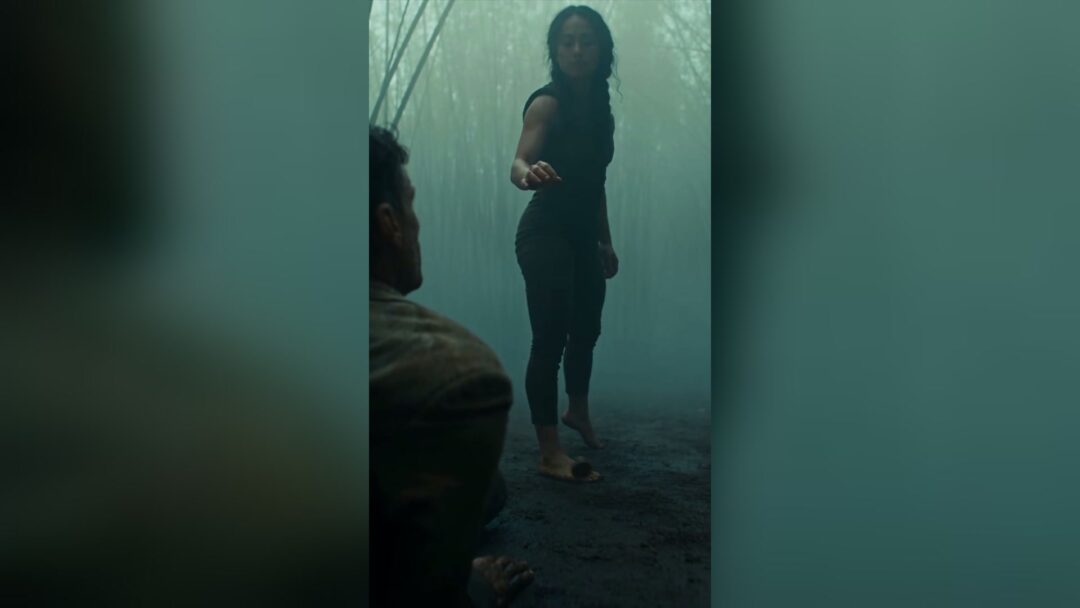
Nia Velez stood dead center in the moss-covered clearing between the riverbank and the central bamboo grove. Her bare soles were sunk an inch into the cool, black coastal clay, her weight balanced with feline poise. She wore a faded olive-green utility tank top, rolled earth-tone canvas work trousers cinched with a length of braided jute cord, and her dark, coarse hair was woven into a tight, crown-like braid around her temples. Her hands hung loose and relaxed at her sides, her breathing deep, rhythmic, and silent, moving in time with the sigh of the tidal current thirty paces behind her.
Ten paces away, leaning casually against an antebellum granite boundary marker covered in green velvet moss, stood Julian Cross. He was thirty-eight years old, slender and impeccably groomed, dressed in a tailored ivory linen three-piece suit that had cost four thousand dollars in a boutique on Madison Avenue. A heavy gold Rolex Submariner gleamed on his wrist beneath French cuffs, and his manicured fingers casually toyed with a heavy brass coin stamped with a corporate crest. His dark hair was pomaded into a sharp, glistening parting, and his thin lips held a practiced, patronizing smirk.
Julian tossed the heavy brass coin into the air. It turned three times in the dim morning light, catching the blue reflection of the fog, and dropped into the black mud six inches from Nia’s bare toes with a soft, wet squelch.
Julian chuckled—a soft, dry, theatrical sound that barely disturbed the mist.
“Look at you, Nia,” Julian murmured, adjusting the lapels of his linen jacket with an aristocratic flourish. “Standing out here barefoot in the mud like a wild animal that forgot how to leave the swamp. Do you remember five years ago when I sat in your father’s cedar study and signed the preliminary investment charter? You looked at me like I was a savior. But you were never a partner, Nia. You were a mark. A joke. The gullible daughter of an old dreamer who didn’t understand that the modern world doesn’t care about bamboo.”
Nia did not look down at the coin. Her dark, obsidian eyes remained locked on the notch of Julian’s throat.
Julian pushed himself off the granite boundary stone and began a slow, deliberate circle around her, his expensive calfskin dress shoes crunching through the damp river gravel and snapped bamboo twigs. He stopped directly behind her left shoulder, tapped the crystal face of his gold watch with a manicured nail, and pointed at the mud caking her arches.
“Your father spent thirty years playing the martyr for local ecology,” Julian said, his voice dropping into silky, confidential cruelty. “And what did it get him? A foreclosure notice on the county courthouse bulletin board and an unmarked grave behind the Methodist church. Look at you. Five years hiding in the reeds, still pretending you matter. The auction ended yesterday at four in the afternoon. The deed is recorded in Savannah. You have nothing.”
Nia’s voice was quiet, pitched low beneath the rustle of the high bamboo leaves, steady and cool as deep spring water.
“You’re still running, Julian.”
Julian’s smirk tightened into an ugly snarl of sudden irritation. “I don’t run from paupers.”
Without warning, Julian stepped forward and threw a stiff, spiteful right cross aimed directly at her jaw—a quick, vicious sucker-punch thrown by a man who had used hired muscle to handle every physical encounter of his adult life.
Nia didn’t step back. Her body yielded to the strike like water around an oar. She dropped into a low, fluid esquiva evasive tilt, swaying her head six inches beneath the trajectory of his fist. Her palms touched the wet river mud, and in the same continuous, rotational momentum, she swept her right leg around in a razor-sharp rasteira ankle reap.
The strike connected cleanly behind Julian’s lead heel.
The force of the sweep kicked Julian’s feet out from beneath him like a rug pulled off a polished floor. He flew sideways through the air, flailing his arms, and crashed violently into a thick cluster of three-inch green bamboo stalks.
Two heavy poles snapped with the explosive crack of rifle shots. The remaining culms whipped back like steel springs, slapping Julian across his face and chest, showering him in wet green leaves and mud.
Nia rolled effortlessly across her shoulders, returning to her feet in a low, coiled ginga stance, her arms weaving a rhythmic guard before her face.
“You missed,” she said.
Julian scrambled up out of the mud on his hands and knees, his ivory linen suit smeared with greasy black clay, his hair falling into his eyes. Pure, humiliated rage flushed his pale skin crimson. He let out an animal hiss, lunged forward with a desperate, wild left hook, and threw all his weight into the charge.
Nia ducked beneath the wild swing, planted her right palm firmly into the damp loam, and launched her body into a breathtaking meia-lua de compasso—a circular compass kick driven by the full rotation of her hips. Her bare heel struck Julian squarely on the point of his left shoulder.
The concussive impact drove Julian backward five yards, his heels catching on an exposed cypress knee. He collided hard with the rough, unyielding surface of the antebellum granite boundary marker, the stone scraping through the soaked linen of his back.
“Try harder, Julian,” Nia murmured, her breathing perfectly rhythmic.
Julian was panting now, his aristocratic facade collapsing into feral panic. He lowered his head and charged forward in a blind, frantic tackle, trying to drag her down into the clay with his sheer body weight.
Nia didn’t brace against the charge. As he reached her, she placed both palms against his back, launched her hips into the air, and performed a seamless aerial cartwheel aú directly over his charging shoulders.
Julian stumbled through empty air, losing his footing on the slick moss.
Before he could turn, Nia’s trailing foot caught him behind the knee in a snapping downward hook. Julian face-planted into the deep marsh mud, sliding three feet before coming to a halt.
Nia stepped forward with silent grace. Her bare heel came down with surgical precision on the heavy gold band of his Rolex Submariner.
The reinforced steel spring bar popped with a crisp metallic snap. The watch slid free from his wrist, and with a flick of her toes, Nia kicked the four-thousand-dollar timepiece twenty yards into the impenetrable, fog-choked reed beds of the tidal marsh.
Julian lay on his knees in the mud, clutching his dislocated left shoulder, his face coated in black silt, shivering violently in the damp morning breeze. His eyes were wide with a terror he had never experienced in any corporate boardroom.
“Wait—” Julian wheezed, his teeth chattering as he lifted one trembling, mud-caked hand. “Nia… please… I can explain everything… it wasn’t my decision…”
Nia knelt slowly in the mud beside him, completely unmarked, her breathing calm. She scooped up the brass coin Julian had thrown earlier, flipped it once into the mist, caught it with a sharp snap of her palm, and dropped it into the wet clay right between his knees.
“You lost the moment you opened your mouth, Julian,” she said.
She turned to walk back toward the river, but as she did, the brass coin caught the early morning light.
Stamped around the rim of the coin in deep machine-cut lettering were words that froze her in her tracks: Savannah River Container Terminal – Dredge Fleet Delta – Scheduled Demolition: 06:00 AM.
Nia looked at the eastern horizon through the bamboo. The grey clouds were already turning pink.
The clock was at twenty minutes to six.
CHAPTER 2: THE SCENT OF DIQUAT
The dawn mist seemed to turn freezing against Nia’s skin as the significance of the stamped coin settled into her mind.
She reached down, plucked the brass disc from the mud between Julian’s knees, and brought it inches from his face. The corporate seal showed a heavy industrial dredge bucket biting into a stylized riverbank—the official trademark of the Savannah Dredging and Maritime Consortium.
“What is Dredge Fleet Delta, Julian?” she asked, her voice dropping into a register that made the hair on his arms stand up.
Julian sat in the marsh clay, rocking gently as he clutched his dislocated left shoulder. The vanity, the tailored poise, and the cruel amusement had been completely scrubbed from his features by three minutes of Capoeira leverage.
“They’re coming up the channel,” Julian whispered, his voice trembling so hard his jaw shuddered. “They cleared the coastal sandbar at four this morning. A four-thousand-horsepower hydraulic cutterhead dredge, Nia. Accompanied by two mechanical logging barges equipped with horizontal forestry mulchers.”
Nia’s fingers tightened on the brass coin until the edges bit into her calloused skin. “This is an accredited agricultural sanctuary. It holds five endangered native bamboo varieties that exist nowhere else in North America. No state court can issue a demolition clearance without a ninety-day environmental impact survey.”
Julian let out a ragged, hysterical laugh that ended in a cough of river mud. “The survey was filed six months ago, Nia! The county zoning commissioner signed an emergency blighted-land condemnation order on Monday. They declared the entire forty-acre bluff an ecological dead zone infested with invasive aquatic weeds.”
“Blighted?” Nia repeated, stepping forward until her shadow fell completely over him. “My father cultivated this soil for thirty years. The microbial nitrogen balance in these beds is cleaner than the Okefenokee Swamp.”
“It was clean until five years ago,” Julian choked out, looking down at his mud-soaked linen trousers. “The week before your father’s final harvest… before he was supposed to present his structural tensile data to the federal timber consortium in Atlanta.”
Nia went dead still. The clatter of the bamboo stalks in the wind seemed to stop. “What did you do, Julian?”
Julian closed his eyes, fresh tears carving clean lines through the silt on his cheeks. “The Savannah syndicate couldn’t buy him out, Nia. Mateo wouldn’t name a price. He wanted the sanctuary protected under an irrevocable federal easement that would have blocked the container canal forever. So they gave me sixty thousand dollars and a fifty-gallon drum of concentrated Diquat dibromide.”
The chemical name hit Nia like an electric shock. Diquat was a restricted, non-selective contact herbicide used to clear clogged commercial shipping channels—a toxic chemical that destroyed cellular plant membranes within forty-eight hours of foliar absorption and poisoned marsh root systems for a decade.
“You poured it into the gravity irrigation reservoir,” Nia whispered, the horror of five years of unanswered grief suddenly crystallizing into cold, absolute clarity.
“I opened the intake valve at two in the morning,” Julian wept, his head hanging low. “I thought it would just yellow the leaves… I thought it would just ruin the commercial yield so Mateo would take the bank loan and sell the water rights! I didn’t know the chemical would sink into the subterranean aquifer! I didn’t know the whole western grove would wither in three days! Mateo… Mateo had a heart attack when he saw thirty years of research turning black on the stalks!”
Nia stood over him, her muscles trembling with the volcanic force of her suppressed rage. For five years, she had carried the crushing, private guilt that her father had failed because she hadn’t worked hard enough in the nursery, because she hadn’t spotted the blight soon enough to save him.
“You killed him,” Nia said.
“It was corporate business!” Julian pleaded, raising his uninjured hand to shield his face. “The Savannah consortium chairman, Senator Thaddeus Vance… he’s the one who authorized the funding! He’s on the dredge right now, Nia! He has thirty private armed security guards clearing the channel!”
Before Nia could haul him to his feet, the deep, rhythmic drone of a twin-screw marine diesel engine echoed down the winding river cut.
Through the silver river fog, two hundred yards down the Altamaha, the massive, rust-streaked bow of a commercial dredging vessel loomed like an iron fortress. Mounted on its forward gantry was a ten-foot steel rotary cutterhead, its diamond-toothed blades revolving in slow, terrifying circles above the water.
And sweeping along the muddy banks ahead of the vessel came four men dressed in black neoprene chest waders and tactical storm jackets, carrying semi-automatic shotguns fitted with heavy high-capacity drum magazines.
CHAPTER 3: THE CANAL AMBUSH
The harsh, mechanical whine of the dredge’s auxiliary generator sliced through the morning silence of Mistvale, scattering herons and egrets from the cypress branches in panic.
Nia didn’t waste a heartbeat on hesitation. She grabbed Julian by the collar of his ruined linen jacket, dragging him five paces into the dense wall of twenty-foot timber bamboo that bordered the riverbank.
“Stay down in the mud,” she commanded, shoving him behind the broad, fibrous root ball of an ancient moso bamboo culm. “If you make a sound, I will leave you here for Vance’s shredders.”
Julian nodded frantically, burying his face in the wet river moss, curling into a terrified ball.
Nia melted into the bamboo.
In the forest of green stalks, she was invisible. Her bare feet made zero sound on the thick carpet of damp, golden bamboo leaves. She moved with the silent, predatory fluidity of a panther, her breathing shallow, her eyes tracking the movement of the four armed security contractors through the swaying vertical canes.
The four men were moving in a disciplined wedge formation along the river levee, their tactical shotguns held at low-ready. They wore black ballistic helmets with comms headsets, and their heavy rubber waders squelched softly in the tidal mud.
“Team One, status,” the lead contractor spoke into his collar microphone, his gravelly voice carrying through the mist. “We’re on the southern boundary of the Velez parcel. Zero contact. Setting the perimeter for the mulching barges.”
“Proceed to the pump house,” the radio crackled in response from the dredge. “Ignite the diesel storage tanks first. The timber needs to burn clean before the cutterhead moves into the bluff.”
The contractors moved past Nia’s position, their sightlines fixed on the clearing where the stone marker stood.
Nia struck from above.
She had scaled a thirty-foot green culm using the natural nodes of the bamboo for footholds, bending the flexible wood with her weight until she hung suspended twelve feet above the trail like an uncoiled spring.
As the trailing contractor stepped beneath her, Nia released her grip.
She dropped silently onto his shoulders, her bare thighs locking around his neck in a scissors hold. With an explosive twist of her torso, she utilized her angular momentum to torque his entire body sideways, slamming him into the muddy trail before he could raise his shotgun.
The shotgun dropped into the marsh water with a dull splash.
Before the remaining three contractors could turn, Nia launched off the fallen man’s back, dropping into a low queda de rins kidney freeze on one elbow in the mud. She swept her legs in a blinding double helicopter kick—a pião de mão—that caught the second contractor across both shins.
The man’s legs flew out from under him. He went down hard on his back, the air exploding from his lungs in a ragged gasp as his helmet cracked against an exposed pine root.
The third contractor raised his shotgun, swinging the barrel toward her head. “Drop her!”
Nia didn’t retreat. She vaulted forward in an aerial cartwheel aú sem mão, clearing the barrel’s line of fire just as a heavy twelve-gauge slug shredded a bamboo culm three inches behind her heel.
She landed behind the shooter, drove an open-palm heel strike directly into the nerve cluster behind his ear, and snatched the shotgun from his falling hands.
With a flick of her wrists, she cleared the chamber, hurled the heavy steel weapon fifty feet out into the deep channel of the Altamaha River, and drove a sweeping roundhouse kick into the fourth contractor’s solar plexus as he tried to bring his weapon to bear.
The fourth man doubled over, clutching his ribs, tumbling backward into the muddy canal trench.
Nia knelt over the first fallen contractor, who was groaning in the mud. She unzipped his tactical vest pocket, searching for communications gear.
Her fingers brushed against something hard, rectangular, and wrapped in heavy waterproof vinyl.
Nia pulled it out.
It was a ruggedized, military-grade external hard drive with a handwritten label in faded blue ink taped across the casing: Dr. Mateo Velez – Altamaha Hybrid Tensile Data & Conservation Maps, 1994–2019.
Nia’s pulse hammered against her temples.
This was her father’s master research drive—the drive Julian Cross had claimed was lost in the office fire five years ago. On this disk was thirty years of authenticated botanical data, including the sovereign environmental deed that permanently protected the Mistvale bluff.
From the river, the horn of the commercial dredge sounded three deafening blasts.
The massive iron cutterhead was lowering into the water, its spinning teeth beginning to chew through the outer mudbank fifty yards from the edge of the grove.
CHAPTER 4: THE SOUND OF THE DREDGE
The vibration of the dredge’s cutterhead shook the marsh soil beneath Nia’s bare feet, sending ripples racing across the stagnant surface of the drainage ditches. The grinding roar of twelve steel blades tearing through granite riprap and ancient cypress roots was a sickening, industrial scream that echoed across the entire river basin.
Nia sprinted through the bamboo, the hard drive tucked securely into the waistband of her utility trousers, secured by her jute cord.
She reached Julian, who was still shivering behind the root ball, and hauled him upright by his collar with a single heave of her shoulders.
“On your feet,” she commanded.
Julian groaned, his face pale as lard, clutching his injured arm. “What… what was that gunfire?”
“Your security team is in the mud,” Nia said, shoving him toward the narrow wooden footbridge that spanned the canal. “Where is Thaddeus Vance?”
Julian pointed through the weeping willows toward the dredging barge. “The pilothouse on the upper deck. He’s overseeing the cut himself. If that dredge cuts fifty feet into the bluff, the tidal saltwater will flood the nursery beds, Nia. In ten minutes, the entire fresh-water ecosystem will be dead.”
Nia reached the riverbank where her father’s old cedar skiff was tied to a half-submerged cypress stump.
She didn’t use an outboard motor; the noise would draw rifle fire from the dredge deck. She untied the hemp mooring line, shoved Julian onto the floorboards between the cedar ribs, stepped in, and took up the long ash push-pole with both hands.
With four deep, powerful thrusts against the river bottom, she sent the narrow skiff gliding silently through the thick silver fog, using the overhanging curtain of Spanish moss to mask their approach.
They came alongside the massive steel hull of the dredge sixty yards out in the channel. The colossal iron machine towered twenty-five feet above the water, its black hull streaked with rust and river scum, spewing clouds of sulfurous diesel exhaust from two vertical stacks.
Nia caught the iron rungs of the exterior maintenance ladder welded to the starboard side.
“Stay in the boat,” she told Julian.
“Nia, there are armed men on that deck!” Julian stammered, his eyes wide with fear. “They have maritime authority!”
“They have stolen machinery,” Nia said, and began to scale the ladder with effortless, fluid agility.
She crested the main deck beside the massive hydraulic winch assembly that controlled the cutterhead gantry. The deck was covered in diesel slick and river silt, vibrating violently under the load of the three-thousand-horsepower diesel engines.
Standing near the bridge companionway, dressed in a heavy foul-weather slicker with a gold yacht club emblem on the chest, was Senator Thaddeus Vance. He was sixty-five years old, thick-necked and grey-haired, holding a laminated state clearance binder in one hand and a high-frequency marine radio in the other.
Beside him stood the dredge captain, operating the throttle levers on the open wing station.
“Increase cutterhead RPM to maximum!” Vance shouted over the roar of the machinery. “I want forty feet of the bluff cut away before the county commissioners convene their morning session in Brunswick!”
Nia stepped onto the steel deck behind them.
She didn’t shout a warning. She stepped forward with the silence of a hunting heron, caught the heavy iron emergency shut-off lever on the main hydraulic manifold, and threw her entire body weight downward into the release.
The heavy brass valve slammed shut with a concussive hydraulic bang.
The roaring scream of the cutterhead died instantly. The massive steel gantry groaned, the rotating blades seized in the mud, and the entire forty-ton boom swung dead in the river current, pitching the barge five degrees to starboard.
Senator Thaddeus Vance spun around, his face purple with shock and outrage. “What in the hell—who are you? Captain, secure this trespasser!”
Nia stood before them on the wet steel deck, her bare feet grounded against the vibration of the idling engines, her braided crown dark with morning mist.
“This cut is terminated, Senator,” Nia said, her voice cutting clean through the diesel drone.
Vance stared at her, his aristocratic jaw tightening into a mask of cold contempt. He thrust the laminated binder toward her face.
“You’re Mateo Velez’s girl,” Vance sneered, his voice dripping with condescending power. “You think you can play games with state commerce? This permit was signed by the Georgia Department of Natural Resources yesterday afternoon. Every acre of that muddy swamp belongs to the Savannah Harbor Authority. You have sixty seconds to jump off this barge before I have my men shoot you for maritime sabotage.”
Nia looked at the permit. At the bottom, stamped with a gold embossed seal, was the signature of the state lands commissioner.
She did not flinch. She tapped the hard drive at her waist.
“Your permit is based on a fraudulent environmental clearance,” Nia said evenly. “And the original 1888 state botanical grant is still intact inside the boundary marker on the bluff.”
Vance’s face drained of color. He looked from Nia to the distant trees of Mistvale, his hand reaching into his heavy oilskin coat for a concealed revolver.
CHAPTER 5: THE STONE IN THE MIST
The tension on the steel deck of the dredge barge was an unyielding wire drawn to the point of snapping.
Senator Thaddeus Vance’s fingers were inside his oilskin coat, his hand closed around the checkered walnut grip of a Smith & Wesson .38 snub-nosed revolver. His breath came in shallow, raspy wheezes, his eyes darting frantically between Nia’s calm posture and the distant fog-draped trees of the Mistvale bluff.
“The 1888 grant was burned in the courthouse fire of 1922,” Vance hissed, his voice trembling with frantic denial. “The state archives have zero record of a sovereign easement. That land was declared public domain ninety years ago!”
“The county record burned, Senator,” Nia said, her voice dropping into the quiet rhythm of an ancient song. “The original parchment was placed inside a sealed lead survey cylinder and entombed inside the granite boundary marker by Governor John Gordon himself. My father didn’t rely on the courthouse in Brunswick. He knew men like you would come when the timber grew tall.”
Vance whipped the revolver from his coat, leveling the two-inch barrel straight at her chest. “Then I’ll level that stone into gravel with the forestry mulchers!”
He pulled the trigger.
Nia was already moving.
She didn’t dodge backward; she stepped inside his firing radius, shifting her hips in an evasive negativa sweep that dropped her center of gravity four inches below the muzzle.
The .38 round cracked, punching a hole through the steel companionway door behind her, but before the hammer could cycle for a second shot, Nia’s left palm struck upward against Vance’s wrist.
The sharp impact forced the barrel skyward. Nia stepped across his lead foot, dropped her weight into an explosive chapa de frente straight thrust kick, and drove her heel directly into the center of Vance’s chest.
The two-hundred-pound senator was thrown backward into the brass ship’s binnacle, his head striking the casing with a sickening hollow bong. The revolver flew from his hand, skittering across the diesel-slick deck before plunging through a scupper into thirty feet of black river water.
Vance collapsed onto the steel plates, clutching his bruised sternum, gasping like a stranded catfish.
The dredge captain stepped back, hands raised high in the air, his eyes wide with terrified surrender. “I’m just an hourly contractor, ma’am! I don’t know nothing about no deeds! Don’t hit me!”
“Keep the engines in neutral,” Nia commanded.
She vaulted over the barge railing, dropping twelve feet into the misty water beside her father’s cedar skiff. She surfaced silently, hauled herself over the gunwale, and seized the push-pole.
Two minutes later, she was back on the muddy bank of Mistvale, hauling Julian Cross out of the skiff and into the clearing.
The fog had begun to lift, torn into golden ribbons by the rising sun. In the center of the clearing stood the mossy granite boundary marker—a four-foot pillar of rough-cut Stone Mountain granite, carved with an antique surveyor’s compass rose.
Nia knelt before the base of the stone. She took her father’s heavy carbon-steel chisel from her utility pocket, found the thin hairline seam beneath a patch of green lichens, and wedged the blade into the granite.
She hammered the chisel with a heavy river stone.
CRACK.
A six-inch square plug of dressed granite popped loose from the stone face.
Inside the hollow core lay a cylindrical lead capsule, sealed at both ends with heavy beeswax and stamped with the Great Seal of the State of Georgia, dated November 14, 1888.
Nia pulled the lead tube from the stone. Her hands trembled slightly as she scraped the wax away with the chisel blade.
Inside lay an unbroken roll of heavy parchment, signed in faded brown iron-gall ink by the Governor of Georgia, declaring the forty acres of Mistvale an eternal, unseverable botanical research easement deeded to the heirs of Mateo Velez in perpetuity.
A sudden sharp rustle in the bamboo made her look up.
Stepping through the green stalks into the clearing was Julian Cross, his linen suit completely ruined, flanked by a tall woman in a khaki uniform, a gold sheriff’s star pinned to her jacket, her hand resting firmly on the grip of her holstered Glock.
Sheriff Clara Boone looked at the broken stone, then at the lead tube in Nia’s hands.
“Step away from the boundary marker, Nia,” Sheriff Boone said, drawing her weapon with a crisp, mechanical click.
CHAPTER 6: THE TURN ON THE RIVERBANK
The clearing went dead silent save for the soft, persistent lap of the river against the mud bank and the rustling canopy of the high bamboo.
Julian Cross stepped out from behind the sheriff, a greasy, desperate smile spreading across his mud-stained lips. “I told you, Sheriff! She assaulted me on private property, destroyed corporate machinery on the dredge, and now she’s desecrating a historical survey monument! Arrest her! Put the cuffs on her right now!”
Nia did not move. She held the lead survey cylinder in her hands, her bare feet grounded on the damp soil, her gaze meeting Sheriff Clara Boone’s steady, weathered grey eyes.
“Clara,” Nia said softly. “You used to bring your daughter to this grove for the spring shoot festival. You sat on my father’s porch and drank sweet tea while he taught you how to identify the native cane.”
Sheriff Boone did not lower her weapon. Her jaw was set like a vice. “Your father was the finest man in McIntosh County, Nia. But the law is the law. The county commission issued a summary warrant for your arrest an hour ago based on Julian Cross’s affidavit.”
Julian laughed—a shrill, triumphant crow of relief. “You hear that, mark? You’re going to a state penitentiary for twenty years! The dredge will be cutting through this grove before the morning news runs!”
Sheriff Boone turned her head slowly, looking at Julian Cross. Her gaze was as cold and sharp as a butcher’s cleaver.
“Shut up, Julian,” Boone said.
Julian blinked, his oily smile faltering. “Excuse me? Sheriff, I’m the complainant—”
“You’re a two-bit swindler with four active federal warrants for wire fraud out of the Southern District of Florida,” Sheriff Boone said, her voice dropping into a flat, deadly drawl. “And you talk too much.”
Without warning, Sheriff Boone stepped sideways, pivoted her Glock forty-five degrees, and pressed the steel barrel firmly against the side of Julian Cross’s neck.
Julian froze, all the color draining from his face until he looked like chalk. “Sheriff… what are you doing? I’m representing Senator Vance!”
“I know who you represent,” Boone said. She reached into her utility belt with her left hand, pulled out a pair of heavy nickel-plated handcuffs, and slammed Julian face-first against the granite boundary marker with concussive force.
She wrenched his good arm behind his back and snapped the steel cuff shut with a vicious, ratcheting click.
“I’ve been working with the Georgia Bureau of Investigation and the Federal EPA for eighteen months, Julian,” Boone said, cinching the second cuff around his injured wrist. Julian shrieked in agony as his dislocated shoulder twisted. “We had the financial records on Vance’s dredge consortium. We had the wire transfers from the Savannah bank. All we needed was the physical chain of custody on Dr. Velez’s research drive and the 1888 grant.”
Sheriff Boone turned to Nia, holstering her weapon, her weathered face softening with deep, profound sorrow.
“I couldn’t tell you, Nia,” Boone said quietly. “If Vance knew the GBI was in the loop, his people in Savannah would have had the research drive wiped remotely and burned the boundary stone before we could secure the perimeter.”
Nia let out a long, ragged breath that she felt she had been holding for five years. She held out the lead cylinder and the waterproof hard drive.
“It’s all here, Clara,” Nia whispered. “The chemical reports on the Diquat herbicide. The original survey. Everything my father saved.”
Julian Cross slumped against the granite stone, weeping hysterically into his mud-stained cuffs. “You’re too late! Vance has already wired fifty million to the offshore escrow in Grand Cayman! He hired a secondary arson squad from Brunswick! They’re at the north gate right now with road flares!”
Nia looked toward the northern tree line.
Through the bamboo canopy, a thick, greasy plume of black smoke was already rising into the morning sky.
CHAPTER 7: DAWN OVER MISTVALE
The fire was roaring through the dry palmetto scrub along the north fence line, crackling like popcorn as thirty-foot flames leaped toward the canopy of the historic bamboo nursery. The thick black smoke smelled of aviation fuel, scorched pine needles, and burning peat moss, blotting out the rising sun in a suffocating wall of amber heat.
“They’re burning the research seedlings!” Nia shouted over the roar of the wind.
She didn’t wait for Sheriff Boone. She sprinted through the grove, her bare feet flying across the mossy earth, navigating the labyrinth of towering green culms with instinctive precision. The bamboo bent beneath her touch, guiding her steps like an ancient natural corridor.
At the north nursery, two men in greasy mechanic’s jumpsuits were pouring five-gallon steel cans of aviation fuel across the cedar shade houses where five hundred rare, hand-cultivated timber bamboo saplings were sheltered.
Nia burst from the bamboo like a thunderbolt.
She closed the distance in three explosive strides, leaped into a dynamic martelo roundhouse kick that struck the first arsonist’s fuel can, sending it flying twenty feet through the air into the dirt. Before he could recover his balance or reach for his utility knife, Nia swept his lead ankle with a crisp, low rasteira, dropping him flat onto his back in the sand with the wind knocked from his chest.
The second arsonist pulled a heavy road flare from his pocket, striking the phosphorus tip against the striker cap. A blazing crimson flame hissed to life, spewing sparks and acrid sulfur smoke. He lunged forward to throw it directly into the dry cedar roofing of the shade house.
Nia didn’t hesitate. She threw her entire body into a dynamic armada spinning crescent kick, her bare heel slapping the man’s wrist with bone-jarring accuracy. The flaming flare flew out of his hand in an arc, landing harmlessly in the middle of a muddy drainage ditch, where it sizzled out in a harmless plume of white steam.
Sheriff Boone emerged from the trees, her service weapon raised and steady. “Federal agents! Freeze! Down on the ground, hands behind your heads right now!”
The two arsonists threw themselves face-first into the dirt, trembling as Boone secured them with reinforced plastic zip ties.
Behind them, the low, mechanical rumble of heavy diesel pumps echoed from the riverbank. A fleet of six wooden oystering boats from the Altamaha commercial fleet had tied off along the sandbar. Local oystermen and crabbers, who had known Dr. Mateo Velez for decades, were running heavy industrial canvas hoses through the grove, spewing thousands of gallons of cool river water onto the palmetto scrub until the flames sputtered, hissed, and died out in thick clouds of white steam.
By 7:30 AM, the crisis had completely passed.
The morning sun had burned away the last remnants of the river mist, flooding the Altamaha River in brilliant, blazing gold. A cool, salt-tinged breeze blew through the unbroken bamboo canopy, setting the millions of green leaves into an immense, rustling symphony of peace and survival.
Down on the levee, three black Chevrolet Suburbans bearing the gold seals of the Georgia Bureau of Investigation and the Federal Bureau of Investigation had blocked the access road.
Senator Thaddeus Vance, stripped of his oilskin coat, was led off the dredge barge in heavy federal leg irons and handcuffs, surrounded by four grim-faced federal marshals. Beside him, Julian Cross sat in the back of a state patrol cruiser, his tailored linen suit ruined and covered in mud, his eyes swollen with tears of defeat, staring blankly through the steel cage mesh as reporters from the Savannah Morning News snapped relentless photographs.
Special Agent Marcus Rivera of the EPA’s Criminal Investigation Division walked over to where Nia stood beside her father’s granite boundary marker, holding the unsealed 1888 sovereign grant and the recovered digital research drive.
“Miss Velez,” Agent Rivera said, his voice ringing with professional gravity and profound respect. “The federal court in Savannah has just granted an emergency preliminary injunction against all commercial dredging in the Altamaha basin. Your father’s research drive has verified the conservation easement in full. The state will be declaring Mistvale an official National Botanical Landmark by executive order.”
Nia held her father’s field chisel in her hand, feeling the warm, rough texture of the high-carbon steel against her palm. She looked up at the towering green bamboo culms that rose fifty feet toward the pale blue sky, standing tall, unbroken, resilient, and clean.
Sheriff Clara Boone walked over, placing a gentle, reassuring hand on Nia’s shoulder. “Your father never gave up on this land, Nia. And you didn’t give up on him.”
Nia reached down, picked up a single green bamboo leaf that had fallen on the mossy granite marker, and let the morning breeze carry it out over the golden, sparkling river water.
A faint, serene smile touched her lips—the first true smile in five long years of shadow and grief.
“The roots are deep, Clara,” Nia said softly, watching the Altamaha flow peacefully toward the endless ocean. “And the grove will never fall.”