The Biker In The Garage And The Legacy Of Ben Reed
CHAPTER 2: THE SCENT OF SUGAR AND SULFUR
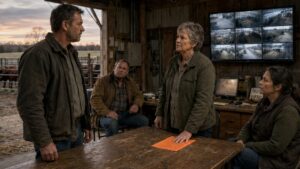
The sun dipped below the western ridges of the Black Hills, bathing the workshop in deep indigo shadows while the single fluorescent tube over the central workbench flickered with a persistent electric hum. Deke had rolled the heavy corrugated steel bay doors shut, locking the side deadbolts with a heavy iron bar.
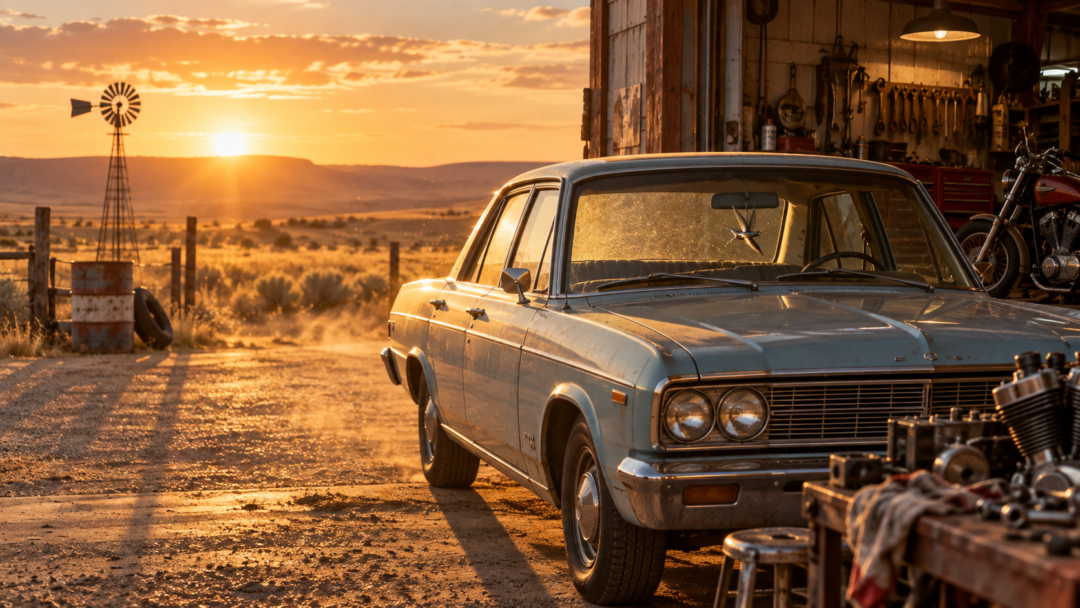
Inside the closed garage, the blue sedan sat elevated three feet on the hydraulic twin-post lift. Hank stood beneath the chassis with an inspection drop-light, illuminating the undercarriage with harsh white glare. Beside him on an aluminum rolling cart sat two clear glass mason jars.
One jar contained a sample of fuel Hank had drained from the carburetor float bowl; the liquid was cloudy, separated into two distinct layers with a thick, sugary sludge resting at the bottom. The second jar held hydraulic brake fluid drawn from the master cylinder, discolored by cloudy mineral contamination.
Sam sat on a wooden stool near the tool chest, a cold bottle of root beer held untouched between his sneakers. He had his backpack resting on his knees, watching Hank’s every movement with an anxious, watchful intensity.
“This wasn’t an accident, Sam,” Hank said, stepping out from beneath the lift and setting the inspection light on the cart. “And you didn’t touch a damn thing on this engine. Someone poured a pint of granulated cane sugar and half a cup of water directly into the gas tank through the filler neck. And they backed off the right rear bleeder screw half a turn.”
“Why would someone do that?” Sam asked, his voice trembling. “Garrett said I must have put dirt in the tank when I was washing the fenders.”
“Garrett Caine is a liar,” Hank said flatly, his jaw clenched tight. “If you drive this car down Custer Gap with a loose bleeder screw and water in the fuel, the engine stalls on the steep switchback just as your hydraulic pressure drains out of the pedal. You lose power steering, you lose your brakes, and the car sails three hundred feet off the limestone bluff into the canyon.”
Sam’s face went completely white. He looked down at his root beer, his shoulders pulling inward. “Mom was supposed to drive this car to the grocery warehouse in Rapid City tomorrow morning. Garrett told her he was taking his heavy diesel pickup to the county commission meeting.”
Deke walked over from the chemical analysis bench at the rear of the shop, holding a test tube with a dropper. He had a look of disgust on his weathered face that mirrored Hank’s cold rage.
“Hank, look at the sedimentation in the fuel sample,” Deke muttered. “That’s not just table sugar. There’s an agricultural surfactant mixed in. It’s an organophosphate defoliant—the kind they use to dry out sunflower crops before harvest. Caine’s agricultural supply depot is the only distributor within eighty miles licensed to sell that chemical.”
Hank wiped his grease-stained hands on a clean shop towel, every muscle in his back coiled like an industrial spring.
“Ben Reed never died of mechanical negligence,” Hank said, the realization settling into his bones like cold lead. “Seven years ago, when the news came down that Ben got pulled into the combine header on Caine’s lease, they said Ben was working under the machine with the PTO shaft engaged. I knew Ben for ten years in the Seabees. Ben wouldn’t reach his hand into an active combine header if you put a gun to his temple. He invented the automated hydraulic cutoff system specifically to prevent that kind of catastrophe.”
“My dad’s machine?” Sam asked, looking up, his eyes bright with sudden recognition. “My dad had blueprints in his desk. Big blue rolls with drawings of combine valves. Garrett took all the papers out of the cedar chest the week after the funeral.”
Hank walked to the wooden stool, bending down on one knee so his eyes were level with Sam’s.
“Tell me about your mother, Sam,” Hank said, his tone gentle, stripping away the harshness of the garage. “How does Garrett treat her out on that ranch?”
Sam’s eyes filled with tears, a single droplet spilling over his freckled cheek. “He took her car keys three months ago, Mr. Hank. He took her cell phone and told the neighbors she was having nervous breakdowns. He tells her every night that they’re completely broke, that the banks are taking the house, and that if she tries to leave, he’ll tell the county judge she’s an unfit mother and have me sent to the state military school in Plankinton. She cries in the pantry when he goes to the fields. She told me to take the blue car and run if anything ever happened to her.”
A heavy, sickening silence hung in the garage, punctuated only by the distant howl of a prairie coyote across the dry wheat stubble.
Hank stood up, his leather vest creaking against his chest. He reached to his belt, checking the holster of his Government-model .45 automatic pistol.
“Nobody is taking you to Plankinton, Sam,” Hank said, his voice hard as tempered tool steel. “And nobody is keeping Ben Reed’s wife locked in a pantry. Deke, get the torches out. We’re cutting this tracking sensor off the frame.”
Before Deke could reach the oxygen-acetylene cart, a harsh, blinding beam of high-intensity halogen light flooded through the frosted glass transom windows above the bay doors. The deafening, unmuffled roar of a commercial heavy-duty diesel engine shook the cinderblock walls, accompanied by the loud crunch of heavy tires rolling across the gravel apron outside.