The Contaminated Diesel Lot And The Ocean Of Giant Sunflowers
CHAPTER 3: THE GREEN STALKS OF CHERNOBYL
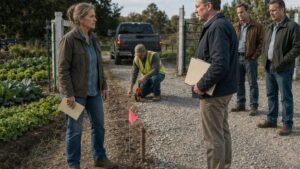
Chief Deputy Earl Simmons stepped out of the police cruiser, adjusting his duty belt with an uneasy, apologetic grimace. Behind him, Councilman Roger Vance stormed onto the fresh furrows, his face purple with bureaucratic outrage.
“Stop that tractor right now, Miller!” Vance roared, brandishing a fresh yellow legal notice stamped with a court-ordered emergency seal. “Township Municipal Injunction Number four-twelve! You are engaging in unauthorized agricultural seeding on an active environmental hazard sector! I warned you that any disturbance of this contaminated soil without a licensed civil hazmat excavation permit constitutes a third-degree misdemeanor!”
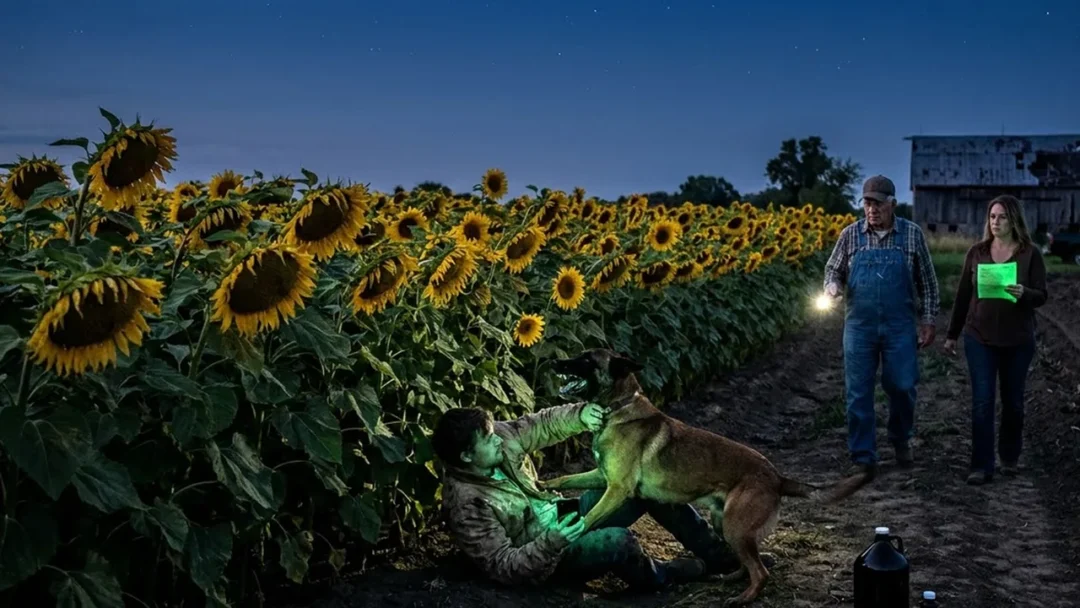
Frank killed the tractor engine, climbed down from the steel operator’s platform, and rested his hand on Bruno’s leather collar. The big Malinois stood rock-still at Frank’s side, a low, barely audible rumble vibrating deep within his chest, his dark eyes locked onto Vance’s throat.
“Step back off my furrow, Roger,” Frank said, his voice dropping into a dangerous, gravelly whisper. “You’re trespassing on private land.”
“This land is under county injunction, Frank!” Vance yelled, waving the yellow document at Chief Deputy Simmons. “Chief, serve the cease-and-desist order and impound that tractor!”
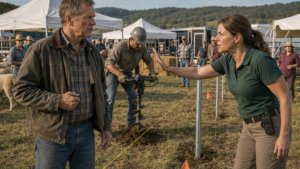
Before Deputy Simmons could unclip his clipboard, Maya Lin stepped forward from the drill seeder, pulling a thick blue folder from her backpack. She opened the folder, presenting an official document bearing the gold embossed seal of the Ohio Department of Agriculture and the signature of the State Agricultural Commissioner.
“I wouldn’t touch that tractor if I were you, Deputy,” Maya said, her voice clear, confident, and ringing with legal authority. “This five-acre parcel is officially registered under Ohio Revised Code Chapter 901 as a designated State Agricultural Research and Phytoremediation Demonstration Project, sponsored jointly by the Ohio State University College of Food, Agricultural, and Environmental Sciences and the Federal Natural Resources Conservation Service.”
Vance blinked, his arm freezing mid-air. “What are you talking about?! This is a township zoning violation!”
“State agricultural research exemptions preempt all municipal zoning ordinances under Ohio Revised Code 901.52, Councilman,” Maya replied, taking a step toward Vance and thrusting the state certification directly beneath his nose. “Furthermore, interfering with an authorized university research station carrying federal grant oversight is a class-four federal felony. If you touch this tractor or attempt to stop this seeding, my university legal counsel will file an immediate civil rights and tortious interference action against you personally in federal district court in Columbus before five o’clock.”
Councilman Vance looked at the gold seal on the document, his mouth opening and closing like a landed carp. He looked at Deputy Simmons, but the officer had already taken two steps back toward his patrol car, shaking his head.
“Roger…” Deputy Simmons muttered under his breath. “The state commissioner’s signature is authentic. We don’t have jurisdiction over a university research station. If you push this, the township attorney will have our badges.”
The legal hearing in Wayne County Common Pleas Court two days later had been a masterclass in statutory preemption. Represented by Maya’s father via an expedited teleconference appearance, Frank had presented the court with certified copies of the university research charter and federal grant covenants. The presiding magistrate, Judge Harold Kincaid, had reprimanded the township solicitor in open court, ruling that municipal authorities possessed zero jurisdiction to interfere with bona fide agricultural research overseen by the state university. The yellow injunction was dissolved on the spot, with prejudice, leaving Roger Vance fuming in the hallway as the court granted Frank permanent legal protection to complete the growing cycle.
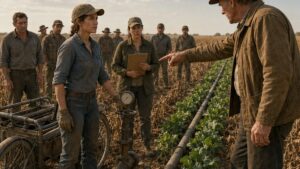
Vance’s face twisted into a mask of pure, bitter hatred. He glared at Frank, then at Maya, and finally at the two thousand rows of freshly drilled seed beds.
“You have thirty-eight days until the mandatory remediation compliance hearing, Miller,” Vance hissed, pointing a trembling finger at the dirt. “If your university birdseed doesn’t test at zero parts per million for lead and cadmium by September thirtieth, I will execute the tax forfeiture lien on the courthouse steps and bulldoze this entire lot into a hole!”
Vance turned on his heel, climbed into his sedan, and tore out of the gate in a spray of gravel.
The legal history of Ohio Revised Code Chapter 901 reflected a decades-long constitutional struggle to protect family farmers from aggressive municipal annexation and suburban regulatory harassment. Enacted to preserve prime agricultural soils from encroaching urban sprawl, the statute established that bona fide agricultural research and production activities certified by state universities held absolute legal immunity from municipal zoning ordinances, nuisance lawsuits, and local administrative stop-work orders. By officially partnering with Ohio State’s College of Food, Agricultural, and Environmental Sciences, Maya had effectively erected a sovereign state legal fortress around the five-acre parcel.
Frank looked down at Maya, a slow, appreciative smile creasing the corners of his eyes. “Where did you learn to quote state agricultural codes like an artillery barrage, Maya?”
“My father is a municipal civil rights attorney in Cleveland, Frank,” Maya smiled back, dusting off her hands. “Now let’s get these sunflowers in the ground.”