The Fault Line In The Forty Second Floor And The Broken Blueprint
CHAPTER 4: THE MIDNIGHT CORE SAMPLE
David moved with the explosive precision of a man who had spent three decades working around swinging iron and high-voltage cables. In one fluid motion, he drove his left elbow back into the guard’s solar plexus, knocking the breath from the man’s lungs with a wet gasp. Before the guard could recover, David hooked his right heel behind the man’s combat boot, sweeping his legs out from under him. The shotgun discharged with a deafening roar into the wet ballast gravel as the guard crashed down into the mud.
David didn’t wait for the yard alarms to sound. He grabbed his camera, sprinted through the shadows of the hopper cars, and scrambled through the perimeter fence into the freezing night. His truck roared to life, tires tearing through gravel as he swung onto Industrial Highway just as the flashing spotlights of the security trucks swept across the empty rail siding.
By 2:00 AM, David was back in downtown Chicago. The storm had intensified, whipping sleet into horizontal sheets that battered the glass towers of the Loop. The streets around the Aurora Tower were deserted, cordoned off by concrete Jersey barriers and blinking amber construction barrels.
David knew that filing a report with the police or the building department would be suicide. Raymond Bradley controlled the city’s inspection bureau; any formal complaint would disappear into bureaucratic limbo, giving Kowalski hours to destroy the evidence. Furthermore, according to the project schedule David had photographed, thirty cement mixer trucks were scheduled to begin pouring the concrete encasement around Column 42-B at 6:30 AM. Once the hollow counterfeit steel was encased in five feet of high-early-strength Portland cement, physical extraction of metallurgical core samples would be impossible without a federal search warrant that would take weeks to secure.
David pulled on his harness, clipped a heavy-duty portable magnetic-base core drill to his equipment pack, and entered the construction site through an unlocked fire exit in the subgrade parking structure. The tower was dark, save for the emergency stairwell lights casting sickly yellow rectangles across raw concrete steps.
He climbed forty-two flights in silence, the rhythm of his breathing steady, his heart hammering against his ribs. The burn in his thighs was nothing compared to the cold fire in his mind.
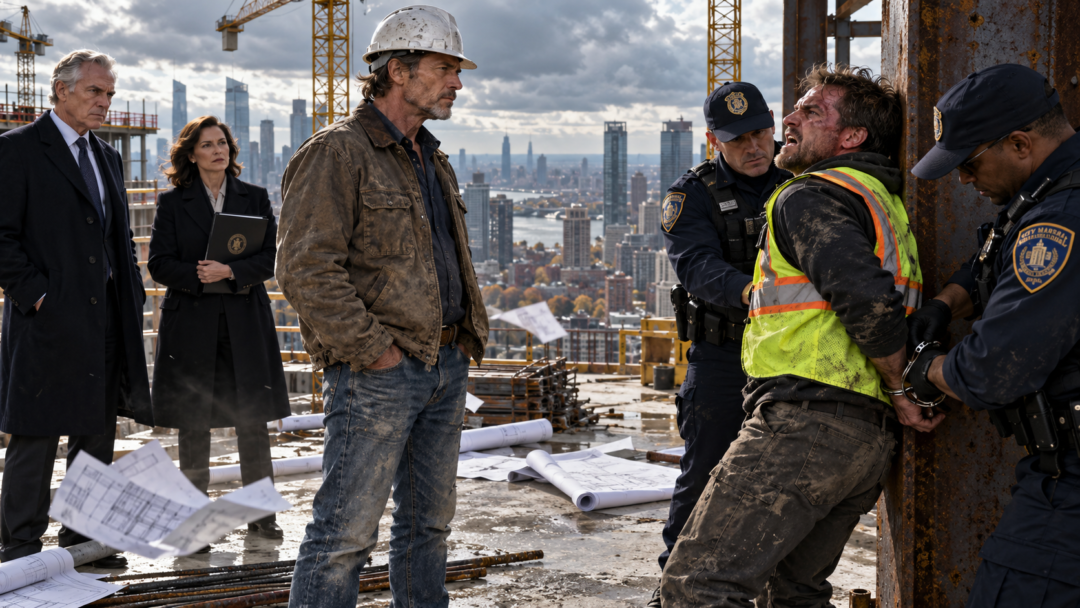
When he stepped out onto the forty-second floor, the wind screamed through the bare steel framework with the roar of an approaching freight train. The entire building swayed three inches to the south—a standard design tolerance, but one that felt terrifyingly unstable given the rotten bones within its core.
David knelt beside Column 42-B. He engaged the powerful electromagnet of the core drill, locking the machine solidly to the vertical flange. He connected the water cooling line, donned his safety goggles, and engaged the motor.
The diamond-tipped hollow bit began to bite into the black-painted steel with a high-pitched, screaming whine. Water mixed with fine gray metal shavings poured into the drip pan. Two inches into the cut, the high-speed drill suddenly lurched forward with a sickening crunch. The resistance vanished entirely.
David cut the motor and pulled the magnetic drill back. He shined his high-intensity LED penlight into the newly cut one-inch hole.
The outer flange was barely three-eighths of an inch thick—a thin cosmetic shell. Inside was an empty, jagged cavity filled with brittle iron slag, porous cinder ash, and unbonded casting sand. The column had less than twenty percent of the cross-sectional steel required by the structural blueprint. Under the combined dead weight of the remaining floors and a standard fifty-knot winter blizzard, Column 42-B would suffer a catastrophic buckling failure, triggering a progressive pancake collapse that would bring the seventy-story skyscraper down onto Wacker Drive.
David carefully extracted the cylindrical core sample with needle-nosed pliers and sealed it inside a numbered titanium evidence tube.
As he tightened the threaded cap, the harsh halogen floodlights mounted on the central hoist tower suddenly snapped on, bathing the forty-second floor in blinding white light.
Inside the pitch-black core of the unfinished skyscraper, every sound was amplified into a sinister echo. Water dripped down the empty elevator shafts with the steady rhythm of a ticking clock. The raw concrete stairwell smelled of curing lime, stagnant rainwater, and damp cardboard. David moved upward using only the crimson glow of a tactical military penlight, preserving his night vision while keeping his silhouette invisible from the construction street lights below.
At the thirty-fifth floor, he paused on a landing to adjust his breathing and check his rigging harness. The sheer physical exertion of carrying forty pounds of core drilling machinery up four hundred vertical feet made his quadriceps burn, but his mind remained cold and detached. He had spent his early career analyzing the aftermath of structural catastrophes: the Kansas City Hyatt Regency walkway collapse, the seismic failures of the Northridge earthquake, the progressive failures of brittle bridge trusses over the Mississippi. In every single disaster, the physical failure had been preceded by a human failure—an arrogant executive cutting corners, a compromised bureaucrat signing an unread document, a greedy contractor laughing at safety margins.
When he reached the open slab of forty-two, the temperature had dropped below twenty-eight degrees Fahrenheit. Ice was forming in glassy sheets along the edges of the concrete deck where the safety netting fluttered violently in the lake wind. David set up the magnetic base on Column 42-B with surgical speed. The magnetic feet engaged with an audible electronic clunk, drawing twenty-four volts from his lithium power pack to exert twelve hundred pounds of holding force against the steel flange.
As the diamond core barrel cut into the metal, the slurry running down into the plastic containment basin turned a sickly brownish gray instead of the bright silvery sheen of high-carbon alloy steel. David rubbed the sludge between his fingers; it felt gritty and chalky, like pulverized furnace brick mixed with iron filings. The core sample he extracted was barely structural metal at all—it was metallurgical garbage, compressed and dressed to pass a visual inspection by a blind or paid-off municipal bureaucrat.