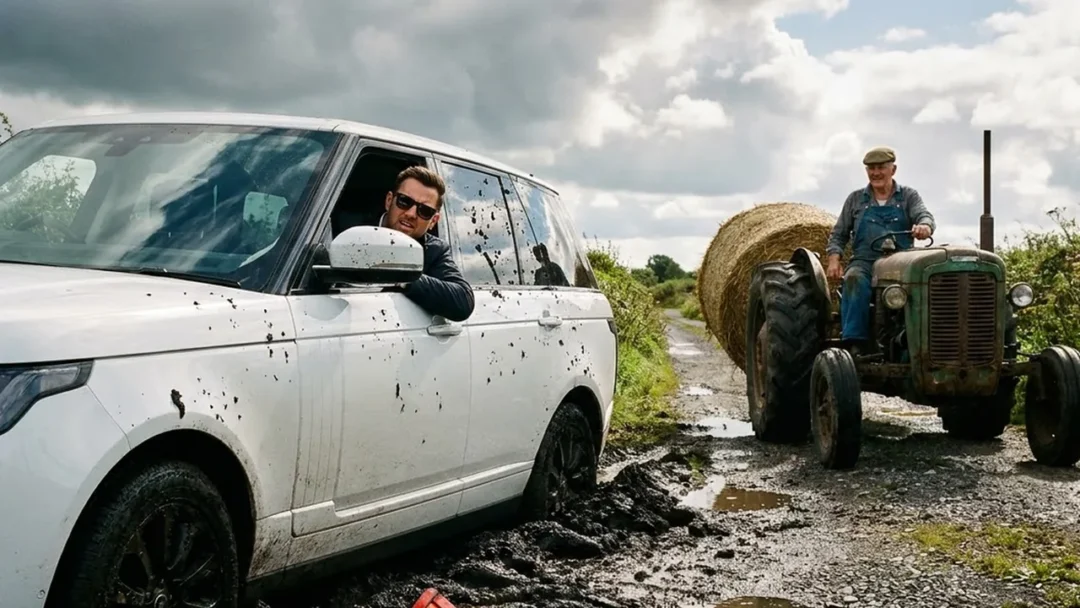
The Sunken Luxury SUV Beyond The Blackwood Cutoff Fence
CHAPTER 6: THE MEADOW THAT REMAINS
By Saturday morning, the storm front had broken completely, leaving a crystalline autumn sky that stretched deep cobalt blue over the crest of the Blue Ridge. The morning air was sharp, smelling of damp red cedar, clean earth, and cured Timothy hay.
At the bend of the Blackwood Cutoff, the scene was quiet once more.
The excavation crew had returned, but this time they were working under the direct supervision of the Virginia Department of Environmental Quality. A heavy commercial crane had lifted the luxury SUV from the mire the previous evening; the vehicle had been hauled directly to the state police impound lot in Staunton, its leather interior ruined, its electrical systems fused, and its transmission filled with five gallons of river silt.
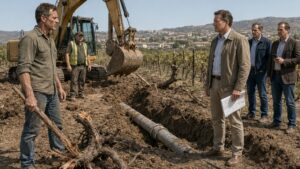
Gary Hatcher stood beside the road, directing a crew of three men as they carefully excavated the illegal PVC pipeline back to the golf course perimeter fence, capping the severed line with solid hydraulic cement.
Silas sat on the split-rail fence at the corner of his pasture, sipping black coffee from an old tin thermos. Beside him, Hannah leaned against the post, reviewing a registered letter that had arrived by special courier from the state conservation commissioner an hour earlier.
“The permanent agricultural conservation easement has been recorded with the state registrar,” Hannah said, looking out over the emerald sweep of the meadow. “No municipal bypass, no commercial zoning, no golf course expansions. Parcel 404 is protected for the next ninety-nine years.”
“Your grandfather would have liked that,” Silas said, taking a slow sip of the hot coffee. “He always said that limestone underneath us was like the bones of the earth. You can build all the castles you want on top of it, but if you don’t respect the stone, the ground will swallow you whole.”
Down the gravel road, Deputy Briggs’s cruiser pulled to a stop. Briggs stepped out, carrying two cold bottles of local apple cider and a copy of the morning edition of the Staunton News Leader. He walked over to the fence, handed the cider to Hannah, and opened the paper.
The front-page headline was printed in bold three-inch type: COUNTY ZONING ADMINISTRATOR INDICTED IN MULTI-MILLION-DOLLAR LAND SCANDAL; HIGHLAND MEADOWS PERMITS REVOKED.
Beneath the headline was a front-page photograph of Julian Vance, disheveled, handcuffed, and covered in dried peat, being escorted down the steps of the courthouse by state marshals.
“Vance’s venture capital partners pulled their credit facility at midnight,” Briggs said, leaning his forearms against the fence rail. “The whole project is entering federal receivership. The banks are selling the five hundred acres across the creek to the state forestry service to expand the wildlife corridor.”
“What about Warren Pike?” Silas asked.
“He’s cooperating with the state attorney general,” Briggs replied. “He surrendered his pension and his passport this morning. Turns out Vance had him on a monthly retainer for the last eighteen months, steering public roadwork contracts straight to his front companies.”
Briggs looked down at the ditch, where the bronze 1938 federal benchmark stood clean and clear, the mud washed away from its chiseled stone base by the morning dew.
“Gary told me Vance tried to bill his insurance company for the SUV,” Briggs added with a quiet chuckle. “Company denied the claim within an hour. They cited driver negligence for running down an active road-hazard warning marker.”
Silas smiled faintly, looking toward his tractor shed where the big John Deere sat clean and greased, its fuel tank topped off for the afternoon mowing.
“Cost him sixty thousand dollars for the rig,” Silas remarked, “another two million for the legal defense, and he still didn’t make his five o’clock meeting.”
“Like you told him, Silas,” Briggs said, tipping his hat. “Time’s expensive when you don’t know what you’re buying.”
Briggs climbed back into his cruiser and drove away, the tires humming a gentle rhythm over the newly graded gravel.
Hannah set her cider bottle on the fence post and looked at her father. “We still have twelve acres of second-cut clover on the lower bench that needs to be baled before the frost hits on Tuesday.”
Silas drained the last of his coffee, tightened the screw cap on his thermos, and stood up, smoothing the front of his canvas work coat.
“Well, let’s not waste daylight,” Silas said, walking toward the barn with a steady, unhurried stride. “The weather’s fair, the road is clear, and the ground isn’t going anywhere.”