The Torn Ticket On Jet Bridge Seven And The Captain’s Salute
CHAPTER 3: THE FORGED LOGBOOK
The cockpit of the Boeing 777 was quiet, bathed in the soft green and amber glow of the multi-function liquid crystal flight displays. Outside the curved acrylic windshield, rain streaked across the glass under the glare of the terminal taxiway floodlights. First Officer Kevin Zhao was completing the computerized pre-flight weight and balance calculations on the center pedestal, while Chief Pilot Thomas Miller closed the reinforced armored flight deck door behind Marcus’s wheelchair.
Miller pulled a heavy, spiral-bound maintenance release logbook from the side console pocket and laid it open across the throttle quadrant.
“Take a look at line eighteen, Marcus,” Miller said, tapping a red grease-pencil checkmark beside the dispatch approval code for the number two engine—the massive General Electric GE90-115B turbofan hanging beneath the starboard wing.
Marcus leaned forward, pulling a pair of titanium reading glasses from his blazer pocket. His eyes scanned the technical data columns with the razor-sharp scrutiny of an aeronautical engineer: Inspection Type: Stage 4 High-Pressure Turbine Rotor Assembly Overhaul. Facility: Aerotech Precision Turbine Overhauls, Macon, Georgia. Certified Inspector: Douglas Sterling, A&P License 381920.
Marcus’s finger stopped on the signature. His brow furrowed into deep, hard ridges.
“Douglas Sterling died six months ago in a light aircraft crash outside Savannah, Tom,” Marcus said, his voice dropping into cold, lethal gravity. “I attended his memorial service at the Georgia Tech Alumni Center. How is an A&P inspector who has been buried since April signing off on a high-pressure turbine overhaul dated yesterday morning?”
First Officer Zhao turned in his seat, his face pale under the panel lighting. “Director Hayes, that aircraft engine was installed three days ago during an overnight turnaround at the tech ops hangar. Aerotech delivered it as a zero-hour remanufactured unit under a fast-track corporate procurement contract. The dispatch paperwork came directly from the executive suite with Chairman Donald Vance’s personal expedited sign-off.”
“Why would Donald Vance bypass our certified maintenance facility in Atlanta to use an uncertified subcontractor in Macon?” Marcus asked.
Miller leaned close, his voice barely above a whisper. “Because Aerotech Precision isn’t an independent subcontractor, Marcus. It’s a private shell company owned through three layers of Delaware LLCs by Donald Vance and his investment partners. For the past eighteen months, Vance has been buying life-expired turbine compressor blades from scrap yards in Mexico and Eastern Europe, polishing the leading edges, re-stamping the serial numbers, and installing them into Atlantic Global’s international wide-body fleet. He’s billing the airline full replacement cost—forty thousand dollars a blade—while spending six hundred dollars on scrap.”
Marcus felt a cold surge of fury tighten his chest. “A life-expired turbine blade operating at thirty-five thousand feet under twenty thousand pounds of centrifugal force doesn’t just fail, Tom. It disintegrates like a fragmentation grenade. If a blade separates at cruising speed, the fragments puncture the engine cowl, sever the hydraulic lines, and shred the passenger cabin.”
“Flight 412 has three hundred and twelve passengers on board tonight,” Miller said, looking out the cockpit window at the starboard wing where the massive engine sat shrouded in mist. “Including sixty-two children traveling on summer student exchange programs. And NTSB Regional Director Robert Lang is seated in 2B—the seat right next to yours.”
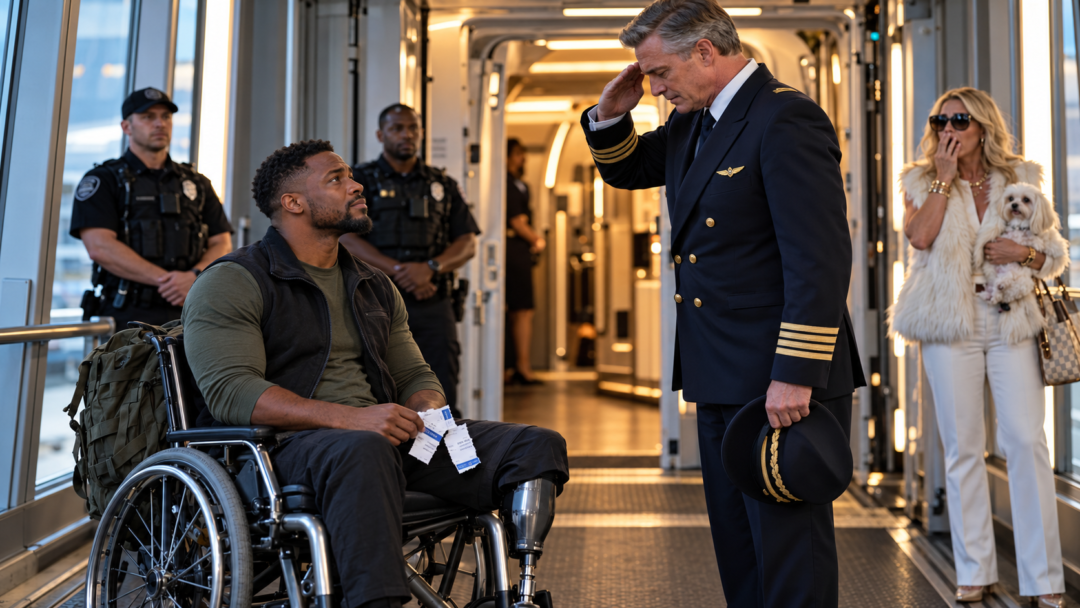
Marcus’s eyes narrowed behind his glasses as the pieces of the puzzle fell into place with chilling clarity. “That’s why Audrey Vance staged that scene on the jet bridge. Her father ordered her to create a disruption to bump me from Seat 1A. Donald knew Robert Lang and I were taking this flight together to the International Civil Aviation Safety Summit in Geneva. He couldn’t afford to have me sitting next to the head of the NTSB for eight hours with maintenance records on my tablet.”
“What do we do, Marcus?” Miller asked. “If I refuse dispatch without an official grounding order, the operations center in Chicago will pull my credentials for insubordination and assign a reserve crew to fly this plane across the Atlantic tonight.”
Marcus reached into his pocket and pulled out his encrypted satellite smartphone. “You won’t have to refuse dispatch alone, Tom. Under Section 44701 of Title 49, as the Chair of the Board Safety Committee, I have statutory authority to declare an immediate emergency administrative grounding of any aircraft suspected of containing counterfeit or uncertified parts. Tell the tower we are holding at the gate for an immediate borescope inspection. And summon the FBI Transportation Fraud Squad to Gate T-7 right now.”
First Officer Zhao pulled up the aircraft’s computerized maintenance history on the electronic flight bag display, highlighting the dispatch release signatures for the previous twenty-four months. The pattern was horrifyingly consistent: every time an engine assembly had been processed through Aerotech Precision in Macon, the mandatory ultrasonic non-destructive testing reports were missing from the FAA database, replaced only by generic scanned PDF certificates stamped with forged approval seals.
“They weren’t just forging Douglas Sterling’s name, Director Hayes,” Zhao added, his fingers shaking slightly as he pulled up the Federal Trade Commission corporate disclosures. “Aerotech was billing Atlantic Global forty-two thousand dollars for each titanium blade replacement, while paying sixty dollars a hundredweight for scrapped turbine parts recovered from an uncertified metal reclamation yard outside Guadalajara. The profit margin on this single aircraft overhaul exceeded three million dollars. Donald Vance was using the airline’s maintenance budget as his personal liquidity spigot, gambling that if a blade failed over the ocean, the wreckage would sink to four thousand fathoms before investigators could examine the turbine hub.”