The Chained Trailer Axle And The Hinged Porch Column
CHAPTER 3: THE ARCHITECTURE OF IRONWOOD
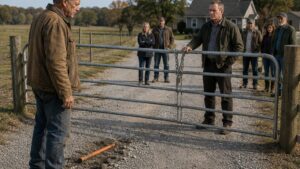
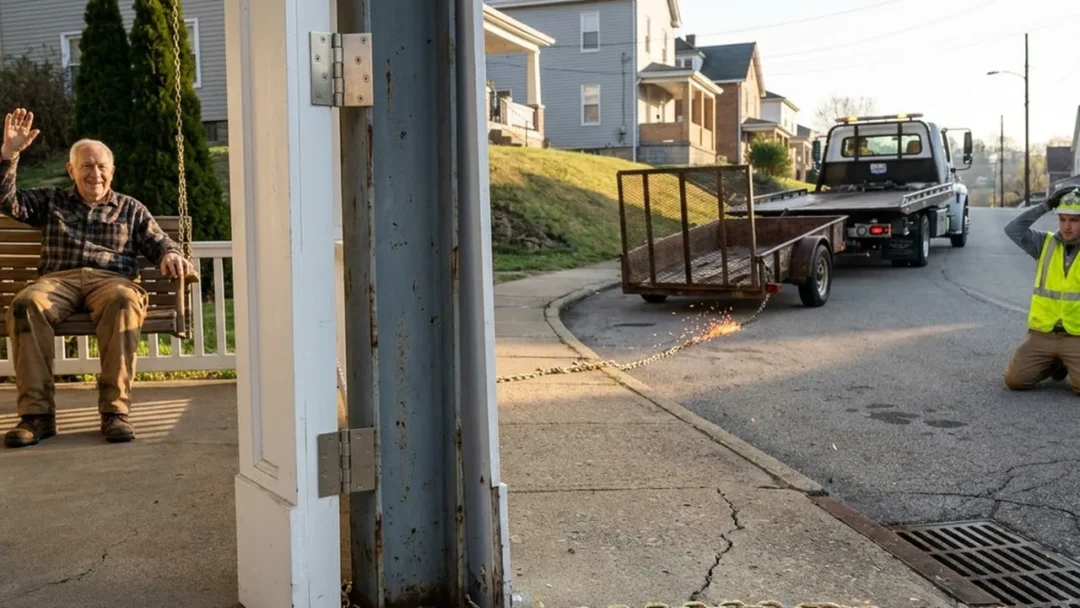
The street fell into an agonizing, helpless silence. The only sound was the deep, rhythmic chug of the municipal asphalt trucks idling at the corner and the distant hum of traffic on the valley bypass. The psychological leverage Brad had manufactured was devastating. In modern suburban municipal governance, the terror of catastrophic tort liability paralyzed city supervisors. If the borough tow truck initiated tension and sheared the corner column of an occupied dwelling, the resulting roof collapse would trigger immediate emergency structural condemnation, hazardous materials abatement teams, and a six-figure civil lawsuit that would dominate council hearings for a decade. Brad was weaponizing the physical house itself as a hostage.
Officer Callahan’s hand rested on his radio holster, his jaw clenched in pure professional rage. “Mercer, you just committed felony reckless endangerment of occupied residential property. If that chain causes structural failure to this dwelling—”
“I didn’t cause any failure, officer!” Brad laughed smugly, crossing his arms and leaning his hip against his trailer fender. “You guys are the ones trying to move it! If you touch that trailer and the porch collapses, that’s government property destruction. My attorney will have the borough council in depositions until next Christmas. Go get a hydraulic rescue saw and an oxy-acetylene torch from the central fire station. It’ll take them two hours to cut through that Grade-70 boron chain. Boron alloy steel cannot be cut with manual bolt cutters; its case-hardened surface will shatter high-carbon steel jaws into flying fragments. You’ll need a diamond rescue wheel spinning at five thousand RPM, creating showers of sparks that will scorch this old man’s wooden siding, or an oxy-acetylene flame that will ignite the dry cedar shakes within seconds. Go ahead and call the fire department, Snyder! Let’s see how many trucks you can block on this street!” And by that time, your sixty tons of asphalt will be completely hardened in the dump beds! Guess Ironwood Cul-de-Sac isn’t getting paved today!”
Hank Snyder cursed aloud, taking off his hard hat and slamming it against his thigh in sheer frustration. “The mix is already cooling! If we don’t start the spreader in ten minutes, the whole load is ruined! That’s twelve thousand dollars in wasted asphalt!”
“Stand easy, Hank,” a quiet, gravelly voice called out from the porch.
Frank Kowalski stepped down the three heart-pine porch steps, his gait slow, steady, and unhurried. He was seventy-seven years old, his shoulders broad and thick from four decades of driving rivets, slinging steel chokers, and climbing the skeletal frameworks of Pittsburgh bridges. His weathered face was lined with deep, calm wrinkles, his steel-gray eyes showing neither anger nor alarm.
Officer Callahan stepped forward, his tone protective and urgent. “Mr. Kowalski, please step back inside your home! That chain is locked around your primary corner support! If that trailer shifts or if the tension slips, the load could destabilize your entire porch roof!”
Frank smiled faintly, shaking his head as he stopped beside the white pillar. “Don’t worry about my roof, Ray. When you work forty years on the bridges across the Monongahela, you learn that you never build anything you can’t inspect, paint, and take apart with two hand tools.”
Frank reached out and tapped the white painted surface of the ten-inch square column with his knuckles.
A dull, hollow, wooden THUMP-THUMP answered.
Brad Mercer scoffed from across the curb, waving his hand dismissively. “Go back inside, old man! Don’t hurt yourself trying to play hero! That’s a solid four-by-four timber inside that box! You pull that chain and you’ll pull your ceiling down!”
“Is that right, son?” Frank murmured, bending his knees with deliberate, veteran patience. Frank had built high-altitude rigging on the Fort Pitt Bridge and repaired suspension stays on the Liberty Bridge. He knew that arrogant people always make one fundamental error: they assume that what they see on the surface is all that exists. Brad saw a white painted board and assumed weakness; he didn’t have the eyes to see the structural steel anchor buried deep in the bedrock below. Frank moved with the calm, methodical economy of motion that comes from four decades of heavy industry. He did not rush. In bridge construction, a man who hurried dropped tools, made flawed welds, or miscalculated crane radius. You checked your clearances, you verified your fastenings, and you executed the mechanical maneuver with steady, uncompromising precision.
Frank crouched beside the bottom trim molding of the pillar, right where the heavy gold-chromate chain was wrapped tightly around the white casing. He brushed away a few stray pine needles from the decorative cedar baseboard.
Curiosity Lock: Hidden beneath a recessed shadow of the wooden trim, Frank placed his calloused fingers on two polished brass cotter pins inserted horizontally through a heavy steel bracket, winking up at Officer Callahan.