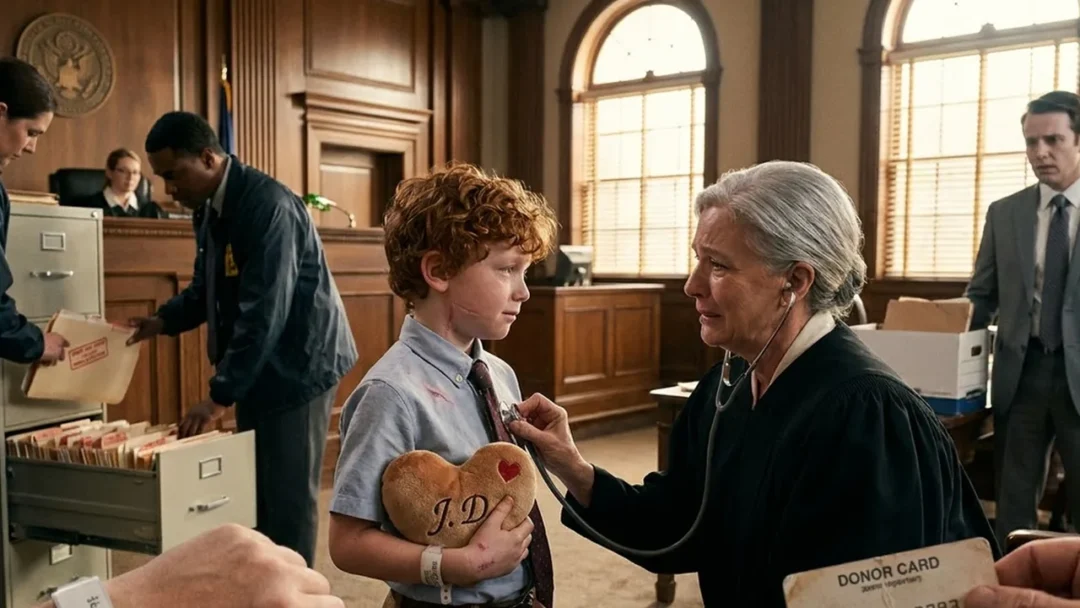
The Donor Heart And The Stethoscope In The Family Courtroom
CHAPTER 5: THE SHREDDING TRUCK AT INDEPENDENCE
Ten miles south of downtown Cleveland, the corporate park in Independence, Ohio, sat nestled among manicured pine berms and frosted retention ponds. The four-story mirrored-glass headquarters of Midwest Guardian Services looked like the regional headquarters of a prosperous health insurance conglomerate. But at the rear of the building, inside the enclosed concrete loading bay, the atmosphere was one of frantic, panicked destruction.
A massive, twin-axle commercial industrial shredding truck from a private disposal contractor was idling inside the dock, its powerful diesel engine roaring at high RPMs. Heavy gray rubber conveyor belts were feeding banker boxes full of files directly into the hydraulic shredding blades, which ground thousands of sheets of paper into fine, illegible gray pulp with a deafening metallic screech.
Donald Sterling, the fifty-six-year-old Chief Executive Officer of Midwest Guardian Services, stood on the loading platform in an expensive cashmere overcoat, shouting at three sweating warehouse workers who were frantically wheeling hand-trucks loaded with cardboard boxes out of the basement archives.
“Faster!” Sterling yelled, checking his gold Rolex with trembling hands. “Clear the entire 2021 through 2024 active recipient files! If the state investigators find those federal matching grant ledgers, we’re all looking at ten years in Terre Haute!”
Suddenly, the heavy iron security gate at the perimeter fence smashed open with an ear-splitting boom.
Four black-and-gold Ohio State Highway Patrol cruisers and two unmarked tactical vans roared into the loading apron, their tires screaming against the frozen asphalt as they formed an angled barricade blocking the exit ramp. Flashing red and blue emergency strobes turned the gray concrete walls into a blinding kaleidoscope of light.
Special Agent Rachel Lin leaped from the passenger seat of the lead van, flanked by four state troopers in gray tactical gear carrying high-intensity flashlights and sidearms drawn.
“Ohio State Police! Shut down that machinery right now!” Agent Lin bellowed through an illuminated megaphone. “Step away from the shredder!”
Donald Sterling froze, his face draining of color. “What is the meaning of this? This is a private corporate records disposition! You have no authority to trespass on private commercial property!”
Agent Lin marched up the concrete stairs onto the loading platform. She thrust the emergency judicial warrant signed by Judge Gallagher and Judge Marsh inches from Sterling’s face.
“Emergency writ of evidence seizure and felony obstruction warrant, Mr. Sterling,” Lin said, her voice hard as steel. “Trooper, pull the emergency cutoff switch on that truck!”
A state trooper lunged for the rear control box of the shredding vehicle, slamming his palm down onto the large red emergency stop button. The roaring hydraulic blades sputtered, groaned, and fell silent, leaving only the hum of idling police cruisers in the freezing air.
Agent Lin turned to the lead investigator, Special Agent David Miller. “Miller, secure the hard drives in the server room and place every corporate officer under armed escort in the main auditorium. Where is the subterranean archive?”
One of the frightened warehouse workers dropped his hand-truck, raising his hands in surrender. “Down the freight elevator… sub-basement Level Two… behind the electrical room…”
Agent Lin and two troopers descended in the freight elevator to the lowest level of the complex. The air was cold, damp, and smelled of concrete dust and ozone. They navigated a narrow corridor of bare cinder block until they reached a heavy steel fire door secured by a heavy brass Yale padlock, bearing an ominous black-and-yellow stencil: ARCHIVE D — RESTRICTED ACCESS.
“Breach it,” Lin ordered.
A state trooper applied a heavy pneumatic bolt cutter to the padlock shackle. With a sharp metallic crack, the hardened steel severed. The trooper kicked the door open.
The beam of Lin’s tactical flashlight swept across the interior of Archive D.
The room was vast, unheated, and lined with four rows of heavy industrial steel filing cabinets stretching fifty feet into the darkness. But what caught Lin’s breath was the color of the labels.
Every single drawer was labeled in bold red paint: CATEGORY FOUR — MEDICALLY SEQUESTERED / PERMANENT STATE WARDS.
Lin stepped forward, pulling open the top drawer of Cabinet One.
Inside rested forty-seven thick, pristine manila dossiers. Each folder bore the photograph of a child—toddlers in pediatric hospital gowns, young boys with bone marrow transplant scars, little girls with kidney dialysis ports—and stamped across every single application was the identical, sickening red rubber mark:
DONOR FAMILY CONTACT—SUPPRESSED.
ADOPTION PETITION—DENIED.
Behind Lin, the state trooper let out a low, horrified curse. “Dear God, Rachel… they erased forty-seven children.”
Lin looked at the sea of red-stamped files, her eyes burning with cold, incandescent fury. “Call the United States Attorney, David. Tell him we just found the biggest institutional trafficking racket in the history of the state of Ohio.”