The Farm Board Charged Every Neighbor for His Private Pond—Until He Found the Missing Insurance Money
Chapter 1: The Pond Became Everyone’s Liability Overnight
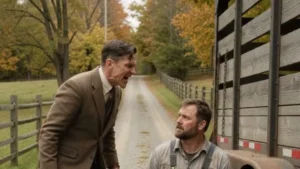
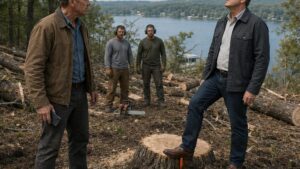
Nancy Anderson stepped into the gravel lane before Joshua Clark could ease the tractor past the pond gate.
He touched the brake. Behind him, the hay wagon settled with a wooden groan, stacked high enough that he could barely see its rear corners in the mirrors.
Nancy did not move.
She stood beside the weathered gate with a white envelope in one hand and the cooperative’s red ledger tucked against her hip.
“You’re overdue,” she said.
Joshua killed the tractor engine.
“For what?”
Nancy held out the envelope.
He climbed down slowly, dust clinging to his jeans. The cooperative collected road dues every spring, but those had been paid months ago. He tore the envelope open.
The first line stopped him.
SPECIAL LIABILITY ASSESSMENT.
Below it was an amount larger than any road fee the cooperative had ever charged him.
Joshua looked at Nancy.
“What liability?”
“Your pond.”
He glanced through the cedar posts toward the water. The pond sat fifty yards inside his fence, fed by a spring and used mostly for irrigation and watering cattle. His father had dug it decades earlier. It appeared on the deed survey and on every farm insurance inspection Joshua had endured since taking over the property.
“My pond?”
Nancy’s expression barely changed. “The insurer identified it as an exposure affecting the cooperative.”
“The cooperative doesn’t own it.”
“That isn’t the issue.”
Joshua read farther.
Every member property had been assessed the same amount.
He looked up. “Everybody?”
“Every voting parcel.”
“For my pond?”
“For shared liability exposure.”
Joshua almost laughed, but Nancy’s face warned him she was not joking.
He tapped the paper. “The pond is behind my fence. My cattle use it. My irrigation line comes out of it. I carry liability coverage on it.”
Nancy opened the red ledger against the gatepost.
“Private ownership doesn’t eliminate community exposure.”
She ran one finger down a column and stopped at his name.
The motion irritated him more than the notice. The ledger had always been a plain record of road gravel, culvert work and annual dues. In Nancy’s hands, it looked less like bookkeeping than judgment.
Joshua folded the notice.
“What happened?”
“There was an insurance review.”
“When?”
“Earlier this summer.”
“And the insurer decided my pond created the same liability for sixty farms?”
“They reviewed the cooperative as a whole.”
“That’s not what I asked.”
Nancy closed the ledger.
“You can come by the office if you want to discuss procedure.”
Joshua looked again toward the water. There had been no new fence opening, no public access, no cooperative easement through the pond pasture. The shared gravel road ran outside his fence and continued toward the bridge.
Nothing about the land had changed.
Only the paper had.
An hour later, after unloading hay, Joshua went into the farmhouse and pulled his insurance binder from a steel filing cabinet.
He had spent nearly twelve years as a field adjuster before returning to farming full-time. He had inspected barns, equipment sheds, irrigation ponds, private lanes and livestock claims across three counties. He knew enough to distrust any phrase that sounded precise without actually saying anything.
Shared liability exposure was exactly that kind of phrase.
He found the farm policy declaration.
The pond was listed.
So was the fencing around it.
So were livestock watering operations and irrigation use.
He called the insurance broker whose name appeared on his own policy.
The broker could tell him only about Joshua’s coverage, not the cooperative’s. But the answer was simple.
“Yes,” the broker said. “Your pond is scheduled on your farm liability policy.”
“And if somebody gets hurt there?”
“That depends on circumstances, but your policy is the primary liability coverage for your premises.”
Joshua looked at the cooperative assessment lying beside the telephone.
“So the cooperative isn’t insuring my pond.”
“Not through your policy.”
“That wasn’t my question.”
A pause.
“I can’t speak for their policy.”
Joshua thanked him and hung up.
That afternoon he drove to the cooperative office, a converted room attached to the machinery shed near the bridge. Nancy was seated behind a metal desk. Mark Roberts, the treasurer, was entering figures into the red ledger.
Joshua placed his policy declaration on the desk.
“My pond is privately insured.”
Nancy glanced at it.
“I never said it wasn’t.”
“You said the pond caused the assessment.”
“It contributed to the exposure review.”
Joshua pulled out the notice.
“Then show me the part where the cooperative insurer charged us for it.”
Mark stopped writing.
Nancy leaned back.
“The board received the renewal information and acted within its authority.”
“How much did the insurer increase the premium?”
“That material isn’t part of what we’re discussing.”
“It’s exactly what we’re discussing.”
“No.” Nancy’s voice stayed level. “You’re discussing ownership. We’re discussing shared risk.”
Joshua stared at her.
Years earlier, when an insurer had delayed a claim on leased acreage his family depended on, he had spent weeks learning how much damage could hide behind one vague sentence. He remembered being told repeatedly that the file was under review while rent, feed and equipment payments continued anyway.
He had learned something then.
When people refused to show the calculation, the calculation usually mattered.
“So what number did the insurer give you?” he asked.
Nancy placed her hand on the red ledger.
“That information stays with the board until the financial review is complete.”
Joshua picked up his policy.
“When will that be?”
“You can submit a records request.”
“I’m asking you now.”
“And I’m answering you now.”
She slid his assessment notice back across the desk.
“The charge stands.”
Joshua left without raising his voice.
At the farm entrance, he stopped beside the pond gate. The chain hung loose through the iron latch, exactly where he had left it that morning.
Private gate.
Private pond.
Private insurance.
Yet somewhere inside the cooperative’s red ledger, every farm on the road had been charged for a risk Nancy would not put a number to.
Joshua folded the assessment once more and slipped it into his shirt pocket.
The ownership question was settled.
The money question had just begun.
Chapter 2: The Numbers Behind the New Farm Rule
The envelope from the cooperative arrived Thursday with three documents missing.
Joshua knew because the cover sheet listed six attachments and only three were inside.
He spread the packet across his kitchen table.
Renewal summary.
Risk inspection notes.
Board authorization page.
No broker invoice.
No premium worksheet.
No detailed assessment calculation.
He called the cooperative office.
Mark answered.
“I’m missing attachments four through six.”
A pause followed.
“I sent what Nancy approved.”
“I requested the complete insurance file.”
“You got the available records.”
“The cover sheet says there are six.”
Another pause.
“I’ll have to check.”
Joshua looked at the empty boxes on the attachment list.
“Do that.”
He drove into the county seat after lunch, partly to keep himself from driving straight to Nancy’s farm. At the records office, he pulled the cooperative’s organizing documents and the easement maps governing the shared road.
Nothing gave the cooperative ownership of his pond.
That should have satisfied him.
Instead, it bothered him.
Nancy had already admitted ownership was not her argument.
Joshua had spent three days proving something she was not actually disputing.
At home he went through the packet again.
The inspection report mentioned several exposures: deteriorated guardrails at the creek crossing, drainage erosion near the eastern culvert, shared equipment access, livestock movement across portions of the road—and one unfenced water-access concern.
Joshua stopped there.
His pond was fenced.
He checked the inspection date.
Then he remembered.
The southern section had been open for two days while he replaced posts damaged by a fallen tree. If an inspector had visited then, the pond could have appeared accessible from the lane.
He sat back.
For the first time, Nancy’s position was not completely absurd.
The cooperative insurer could have noticed the pond.
But noticing a risk was not the same as charging sixty members the assessment Nancy had imposed.
The missing pages arrived the next morning by email from Mark.
Joshua printed them.
The broker’s renewal statement showed an increase in the cooperative’s annual liability premium.
A real increase.
He read the figure twice.
Then he reached for a calculator.
Divided across the membership, the increase came nowhere close to what each farm had been assessed.
Not even half.
He calculated it again using the previous year’s premium, then included fees, taxes and the obvious administrative costs.
Still nowhere close.
Joshua leaned back in the chair.
He had expected to find nothing—to prove Nancy had invented an insurance crisis from a private pond.
Instead, he had found the more troublesome answer.
There was an insurance problem.
It simply was not large enough to explain the charge.
He drove to Catherine Ramirez’s orchard that afternoon. She was repairing a loose irrigation fitting near the first row of apple trees.
“You get the insurance packet?” he asked.
Catherine wiped her hands on a rag.
“I got a bill.”
“You didn’t ask for the records?”
“I have fruit coming off trees in three weeks, Joshua.”
He handed her a copy of the broker page.
“The premium went up. Just not by what we were charged.”
She studied the numbers.
“How far off?”
“A long way.”
She gave the paper back.
“You think Nancy stole it?”
“I didn’t say that.”
“You’ve been telling people the whole thing is made up.”
“I told two people the pond explanation didn’t hold water.”
“That’s not how it came back to me.”
Joshua felt heat rise behind his collar.
“I’m checking the numbers.”
“Good. Check the bridge while you’re at it.”
He frowned.
Catherine pointed down the road.
“You remember last October?”
He did.
A storm had washed gravel from the bridge approach, forcing trucks to use a longer county-road route for several days.
“My picker sat here,” Catherine said, “because the hauler wouldn’t cross until the approach was rebuilt. I lost nearly two days.”
“That’s road maintenance. Not insurance.”
“I know.”
“Then why bring it up?”
“Because everybody knows the cooperative has no money.”
Joshua looked toward the road.
Catherine lowered her voice.
“I don’t like how Nancy handles things. But if you blow up whatever she’s trying to do, make sure you know what disappears with it.”
That stayed with him.
At home, Joshua placed the cooperative renewal statement beside the assessment notice.
Two numbers.
One defensible.
One unexplained.
He opened the partial ledger extract Mark had included. The assessment revenue appeared in one column. Below it were ordinary road-dues entries, insurance payments and equipment expenses.
Then, near the bottom, he found a line that did not belong with the others.
RESERVE ALLOCATION.
No explanation.
The amount was large enough to account for most of the gap.
Joshua circled it.
The insurance increase was real.
The excess money was real too.
Now he needed to know why a charge sold to every farmer as insurance was flowing into a reserve account.
Chapter 3: When Questions Started Costing the Neighbors
The yellow notice was wired to a mailbox post before sunrise.
Joshua saw it from his pickup as he turned onto the shared road.
The neighbor who owned the parcel was standing beside it in work clothes, reading the page with both hands. A feed truck waited behind him, engine idling.
Joshua stopped.
“What happened?”
The neighbor gave a humorless laugh.
“Apparently my access apron is out of compliance.”
Joshua looked down.
The gravel apron had a washout along one edge. It had been that way most of the summer.
“Since when?”
“Since I asked whether I could delay the insurance assessment until harvest.”
Joshua said nothing.
The notice cited a cooperative maintenance rule and carried an additional penalty if the repair was not completed within ten days.
Perfectly legal on its face.
Perfectly timed.
By the end of that week, two more members had received enforcement notices. One concerned brush near an easement marker. Another involved a livestock gate that had sagged for months without comment.
Nancy never mentioned the assessment in any of them.
She did not have to.
Joshua kept his own findings to himself.
That was how he worked. Verify first. Speak when the proof was complete.
But silence gave Nancy room.
At the feed store, he walked in halfway through a conversation and heard his own name.
Nobody insulted him. That almost made it worse.
A farmer near the counter simply said, “Some people have more acres and still don’t want to pay the same road costs as everybody else.”
Joshua bought mineral blocks without answering.
Two days later, Catherine found him checking fence wire beside the orchard entrance.
“You should have said something sooner,” she told him.
“About what?”
“The actual premium.”
“I’m still working out the rest.”
“That’s the problem.”
Joshua straightened.
“You want me making accusations before I know where the money went?”
“I want you to stop letting Nancy tell everybody what your argument is.”
“My argument is with the assessment.”
“No. Your argument sounds like the cooperative owes you a road but you don’t owe the cooperative anything.”
“That isn’t what I said.”
“It’s what people heard.”
Joshua hooked the fence stretcher onto the wire harder than necessary.
“My pond is private.”
Catherine stared at him.
“There it is again.”
“What?”
“The pond.”
“That’s what they used to justify the charge.”
“And you’re still talking like this is only about your property.”
He released the handle.
Catherine gestured toward the road.
“My orchard depends on that bridge. So does the cattle operation past me. So does the feed truck you just watched waiting behind that mailbox.”
“That doesn’t make a dishonest assessment honest.”
“No.”
Her answer came quickly enough to stop him.
“But being right about Nancy doesn’t make you right about everything else.”
Joshua looked at her.
Catherine folded her arms.
“When that bridge approach washed out last year, I had fruit ready and nowhere to send it. Nancy got gravel in there before the county would even return my call.”
“With cooperative money.”
“With whatever money she could find.”
“That’s exactly what I’m trying to understand.”
“Then understand all of it.”
She walked back toward the orchard.
Joshua remained beside the fence.
He disliked the irritation in himself because some of it had nothing to do with Nancy.
He had assumed Catherine would support him.
Worse, he had assumed that once he proved the assessment was mislabeled, everyone else would see the situation the way he did.
He had treated the facts like property.
His facts.
His investigation.
His fight.
That afternoon he drove to the bridge.
The creek beneath it was low, exposing stone and rust-colored mud. At the eastern edge, the culvert outlet had eaten a shallow cavity under the gravel shoulder.
It was not an emergency.
It was not nothing either.
Joshua crouched and pushed a screwdriver into the soft edge.
Six inches disappeared before meeting resistance.
A truck crossed above him, making the guardrail tremble.
Back at the cooperative office, Nancy was not there. Mark sat alone with the red ledger open.
Joshua placed a copy of the reserve entry on the desk.
“What is this?”
Mark glanced at it.
“You know what a reserve is.”
“I know what one is. I’m asking what this one is for.”
Mark closed the ledger.
“Road system.”
“Bridge?”
“Among other things.”
Joshua pulled out the broker statement.
“Then why was it collected as insurance?”
Mark rubbed his jaw.
“You need to talk to Nancy.”
“I am talking to the treasurer.”
“I don’t set policy.”
“You sign transfers.”
Mark looked toward the open machinery bay.
For several seconds, neither man spoke.
Joshua lowered his voice.
“Did the board decide to create the reserve after the insurance review?”
Mark’s eyes returned to him.
“That’s not how it happened.”
Joshua waited.
Mark seemed to realize what he had said.
“What do you mean?”
“I mean there’d been discussion.”
“Before the renewal?”
Mark stood.
“You need to take that up at a meeting.”
Joshua did not move.
“How long before?”
“Joshua.”
“How long?”
Mark picked up the ledger.
But Joshua had already seen the answer in his face.
The reserve had not been an emergency response to the new insurance bill.
It had existed as a plan before anyone told the members that Joshua’s pond had made them all more expensive to insure.
For the first time, the question was no longer whether Nancy had stretched the truth.
It was what she had needed the insurance story to hide.
Chapter 4: The Red Ledger Did Not Tell One Story
The copied ledger finally arrived on a Tuesday afternoon with page forty-seven missing.
Joshua noticed before he sat down.
The packet had been stapled in the upper corner, and the printed page numbers ran cleanly from forty-four to forty-six, then jumped to forty-eight.
He stood at the kitchen counter with one hand still resting on the envelope.
Page forty-seven should have covered the week the cooperative approved the reserve transfer.
He called Mark.
“Did you copy the ledger yourself?”
“Yes.”
“You skipped a page.”
“I copied what Nancy told me to release.”
Joshua closed his eyes for a moment.
“Is page forty-seven blank?”
“No.”
“What’s on it?”
“I’m not doing this over the phone.”
“Then I’ll come over.”
“Joshua—”
But Joshua had already hung up.
The machinery shed was quiet when he arrived. A grain wagon sat under one bay, its tires powdered with limestone dust. The office door was open.
Mark was inside with the red ledger on the desk.
Nancy was not there.
Joshua stopped in the doorway.
“That the original?”
Mark looked at him, then at the ledger.
“You know it is.”
“Show me page forty-seven.”
Mark did not touch it.
“You’re turning this into something bigger than it needs to be.”
“I’m trying to find out what it already is.”
Mark gave a tired breath and opened the cover.
The binding cracked softly as he flipped through the pages.
Forty-five.
Forty-six.
Then he stopped.
Joshua stepped closer.
Page forty-seven contained three entries.
One was a transfer into a capital reserve.
The second was a payment for a preliminary bridge inspection.
The third referenced a culvert replacement estimate.
All three entries were dated before the cooperative’s insurance renewal notice.
Joshua read them twice.
“You were already building the reserve.”
Mark remained standing.
“Yes.”
“Before the insurer reviewed the pond.”
“Yes.”
Joshua pointed at the first figure.
“And this is where most of the assessment money went?”
“Not all of it.”
“Most.”
Mark’s jaw tightened.
“Yes.”
Joshua stared at the ledger.
For days, he had pictured the unexplained money disappearing into some useless consulting contract or private arrangement.
Instead it was sitting exactly where Mark had said: inside the cooperative.
That should have been good news.
It wasn’t.
Because the money had still been collected under a different name.
Joshua pulled out his calculator.
“Walk me through it.”
Mark hesitated.
“Not estimates. Actual entries.”
Mark sat down.
For nearly forty minutes, they worked line by line.
The insurer’s premium increase was real.
Administrative fees were real.
A small amount had been set aside for potential deductible exposure.
Everything after that flowed into the capital reserve.
Joshua added the figures again.
The numbers balanced.
No hidden withdrawal.
No payment to Nancy.
No mysterious vendor.
The money had not vanished.
It had been disguised.
Joshua leaned back.
“So nobody stole it.”
Mark looked almost offended.
“I never said anybody did.”
“I thought somebody might have.”
“I know.”
The answer embarrassed Joshua more than he expected.
He had spent the previous week assuming that once he found the missing money, the whole dispute would become simple.
It had become harder.
“Why not just propose a bridge assessment?”
Mark gave him a look that suggested the answer ought to be obvious.
“We did.”
“When?”
“Three years ago.”
Joshua frowned.
“I don’t remember a vote.”
“You weren’t at that meeting.”
He almost replied that he had been cutting hay, then stopped himself.
Mark turned several pages back.
The notes were brief, but clear enough.
A proposed road-and-bridge reserve.
Rejected.
The following year, another smaller contribution.
Rejected.
Then a proposal to borrow against future dues.
Rejected again.
Joshua read the recorded comments.
Too expensive.
Not urgent.
Wait until repairs are necessary.
Let the farms using the eastern section pay more.
His own initials were beside one absence.
He remembered that season. He had been proud of not wasting an evening arguing over a road that, in his mind, somebody else was managing.
Catherine’s words returned to him.
Understand all of it.
“How bad is the bridge?” Joshua asked.
“Bad enough that the inspector recommended planning for replacement of the approach and at least one culvert.”
“Recommended. Not condemned.”
“No.”
“So Nancy decided people wouldn’t vote for it.”
Mark looked down at the ledger.
“She decided we couldn’t wait for them to.”
Joshua stared at him.
“And you went along.”
“I signed the transfers.”
“That isn’t what I asked.”
Mark rubbed the edge of the desk with his thumb.
“Yes. I went along.”
“Why?”
“Because I’m the one who watches the account hit bottom every winter.”
Joshua said nothing.
Mark continued.
“You know what gravel costs now. You know what the bridge crew charged last fall. People want the road open every day, but half of them act like money appears under the shed door.”
“That doesn’t make the notice honest.”
“No.”
Mark’s answer was quiet.
It was the first time anyone on Nancy’s side had said it.
Joshua closed the ledger.
At home that night, he covered the kitchen table with copies.
Insurance increase.
Assessment total.
Reserve transfers.
Maintenance estimates.
Prior meeting notes.
The red ledger no longer looked like evidence of theft.
It looked like evidence of two truths forced into one lie.
The cooperative did need money.
Nancy had still told sixty landowners they were paying for insurance when much of the charge had another purpose entirely.
Joshua took out the letter he had drafted two days earlier accusing the board of fraudulent diversion.
He read the first paragraph.
Then tore it in half.
The word fraud was too easy.
He could prove misrepresentation.
He could prove hidden allocation.
He could prove the board had collected money under a description that did not match where most of it went.
He could not prove theft.
That distinction mattered.
His phone rang.
Nancy.
He let it ring twice before answering.
“You’ve been asking Mark for internal records,” she said.
“They’re member records.”
“You have what you requested.”
“I have enough.”
There was a short silence.
“Then you also know the reserve isn’t missing.”
“I know what it is.”
“Good.”
“You think that makes the assessment legitimate?”
“I think it makes your accusations irresponsible.”
Joshua looked at the torn letter.
“I haven’t made an accusation publicly.”
“Not yet.”
“No.”
Nancy’s tone sharpened.
“The next regular meeting is six weeks away. Your assessment is already delinquent.”
“I’m disputing it.”
“The rules do not suspend because you disagree with them.”
Joshua almost smiled.
“You really believe that.”
“I believe a cooperative collapses when every member decides which obligations count.”
The line landed harder than he wanted it to.
Then she said, “Collection action begins Friday.”
Joshua straightened.
“Before the regular meeting?”
“You were given notice.”
“You know I requested review.”
“You requested records. You received them.”
“And now you’re trying to collect before the members can hear what those records show.”
“I’m enforcing an adopted assessment.”
Nancy hung up.
Joshua stood alone beside the table.
For the first time, the choice in front of him was not whether to expose Nancy.
It was whether he could expose what she had done without pretending the problem she had tried to solve was imaginary.
Friday had just become a deadline.
Chapter 5: The Meeting Where the Math Changed Sides
Joshua’s delinquency packet was already on the table when he walked into the machinery shed Friday evening.
Nancy had placed it beside the red ledger.
The arrangement was deliberate.
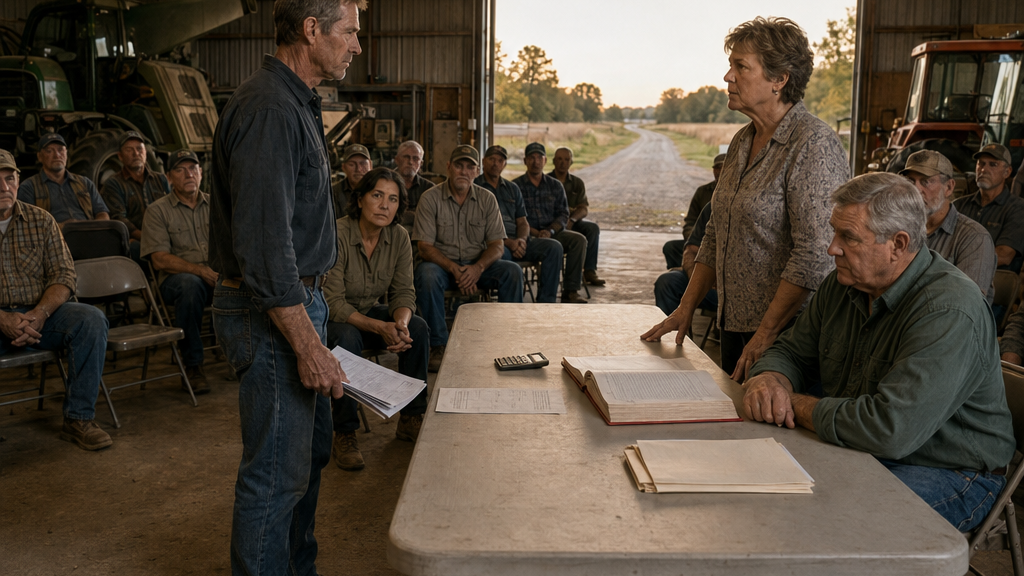
Members sat on folding chairs between a parked seed drill and a workbench cluttered with chains, oil cans and worn gloves. Catherine was near the front. Mark sat to Nancy’s right with a calculator and a stack of account sheets.
Joshua took an empty chair along the side wall.
Nancy called the meeting to order.
Road grading came first.
Then drainage.
Then equipment access.
Joshua waited.
When Nancy reached the last listed item, she closed the agenda folder.
“That concludes scheduled business.”
Joshua stood.
“I requested time on the assessment.”
Nancy did not look surprised.
“It is not on tonight’s agenda.”
“You moved collection action up to today.”
“That does not alter the agenda.”
Several heads turned toward Joshua.
Nancy opened the red ledger.
“Your delinquency will be handled under the existing policy.”
Joshua walked forward and placed three sheets on the table.
“Then handle it after everyone sees what they’re being charged for.”
Nancy’s mouth tightened.
“This is not the procedure.”
Joshua looked at the members, not at her.
“I’ll keep it short.”
“Joshua.”
He set down the insurer’s renewal invoice.
Then the assessment summary.
Then a copy of the reserve transfer.
Nancy said, “Sit down.”
He did not raise his voice.
“Tell me if any of these numbers are wrong.”
That changed the room.
Mark looked at the papers.
Nancy stayed still.
Joshua took out his calculator.
“The cooperative collected the same special assessment from each parcel. That total is here.”
He tapped the assessment sheet.
“The insurer’s actual premium increase is here.”
He tapped the invoice.
“The difference between those two figures did not go to insurance.”
Murmurs moved through the chairs.
Nancy spoke immediately.
“It went to cooperative obligations.”
Joshua nodded.
“Yes.”
The murmurs stopped.
Nancy blinked.
Joshua continued.
“I thought at first the whole insurance explanation was invented. It wasn’t.”
Catherine watched him carefully.
“The premium did increase,” Joshua said. “There was a risk review. My pond was mentioned along with the bridge, the culvert, livestock access and other conditions.”
He turned the invoice so the front row could see it.
“But the premium increase accounts for only a small part of what we were charged.”
A farmer near the aisle asked, “How small?”
Joshua gave the number per member.
Someone behind him said, “That’s not even close.”
“No,” Joshua said.
He entered the figures into the calculator and slid it beside the red ledger.
“This is what the insurer increased.”
He entered the second figure.
“This is what the cooperative collected.”
Then the third.
“This is what moved into a capital reserve.”
The shed went still.
Nancy folded her hands.
“You’re presenting reserve funding as though it disappeared.”
“No.”
Joshua looked directly at her now.
“I’m saying it was collected under an insurance assessment.”
“That reserve protects every property on this road.”
“Then call it a road reserve.”
“We tried.”
The answer came before Nancy seemed to decide whether she wanted to say it.
Joshua paused.
“So that is why?”
Nancy looked around the room.
“You all remember the votes.”
A few members shifted.
“Three years,” she said. “Three proposals. Every one rejected.”
A voice from the back said, “Because they were too high.”
“And every year the road got older.”
Nancy opened the ledger.
“The bridge approach washed out last fall. The eastern culvert is undermined. The guardrail failed inspection. We cannot keep paying emergency repair prices after every storm.”
Joshua said, “That may all be true.”
“It is true.”
“It still doesn’t turn road repairs into insurance.”
Nancy’s face reddened.
“You think labels matter more than keeping access open?”
“I think people should know what they’re paying for.”
“They knew the cooperative needed money.”
“They were told the money was for liability coverage.”
“The liability review made the reserve necessary.”
Joshua shook his head.
“No. The ledger shows the reserve plan existed before the renewal.”
Several people looked toward Mark.
Mark lowered his eyes.
Nancy said, “The reserve was discussed before the renewal. The insurance increase made action more urgent.”
Joshua placed a copied ledger page on the table.
“Then why wasn’t that stated in the notice?”
Nancy did not answer.
The silence lasted long enough to turn against her.
Catherine finally spoke.
“How much of what we paid is actually insurance?”
Joshua repeated the figure.
“And the rest?” she asked.
“Mostly reserve.”
Catherine turned to Nancy.
“You should’ve said that.”
Nancy’s expression hardened.
“And if I had?”
Nobody answered immediately.
Nancy looked around.
“You rejected it before.”
“That doesn’t mean you get to rename it,” Catherine said.
A farmer in the second row asked whether refunds were possible.
Another asked whether the reserve had already been spent.
A third wanted to know why enforcement notices had appeared after members questioned the assessment.
The room grew louder.
Joshua felt the shift he had expected all week.
For one sharp moment, satisfaction came with it.
He had the numbers.
Nancy did not.
Then Catherine turned back to him.
“If the money gets refunded, what happens to the bridge?”
The room quieted again.
Joshua looked at her.
She pointed toward the open shed doors, toward the road beyond them.
“You showed us what Nancy did. Fine. Now answer that.”
He did not have an easy answer.
“The assessment was misleading,” he said.
“I know.”
“The members are entitled to correct accounting.”
“I know.”
Catherine leaned forward.
“But if everybody gets the reserve money back tomorrow, who pays when that culvert gives way?”
Joshua glanced at the ledger.
For days, he had imagined this meeting ending when the arithmetic became clear.
It did not.
The arithmetic had only moved the argument.
Nancy watched him now with something close to exhaustion rather than anger.
“You wanted the whole truth,” she said.
Joshua looked at her.
“Then tell it.”
Nancy rested both hands on the table.
“We called it an insurance assessment because members would pay an insurance assessment.”
A low murmur spread through the room.
She continued before anyone interrupted.
“They would not pay another infrastructure assessment. We had the votes. We had the history. We knew exactly what would happen.”
Mark turned toward her.
“Nancy—”
“No. He wanted it said.”
Her eyes stayed on Joshua.
“The insurer increased the premium. The inspection listed the bridge, culvert and pond exposure. We used that opening to build the reserve while we still could.”
Joshua felt the last piece settle into place.
“You deliberately mislabeled it.”
“Yes.”
The word landed harder than any denial could have.
Nancy looked around the shed.
“I believed the alternative was waiting until something failed and then hearing all of you ask why the board had done nothing.”
Nobody answered.
Joshua looked at the delinquency packet beside the red ledger.
He had come prepared to prove that Nancy’s numbers were wrong.
Instead, she had admitted something more difficult.
Her math had been deliberate.
Her fear might even have been justified.
But she had decided that because the members had made choices she disliked, they no longer deserved an honest one.
And now Joshua had to decide what fixing that would cost.
Chapter 6: The Reason Nancy Hid the Repair Money
The storm took six inches of gravel from beneath the eastern bridge shoulder before dawn.
Joshua saw the damage on his way to check cattle.
He stopped the pickup and walked back.
Water still ran fast through the culvert, brown with silt. At the downstream edge, the bank had collapsed into a raw hollow beneath the roadbed.
Joshua crouched.
The screwdriver he kept behind the truck seat sank nearly to the handle before meeting compacted stone.
A tire rolled over the bridge above him.
The shoulder trembled.
He stood quickly.
By midmorning, orange cones blocked one side of the crossing.
Nancy arrived in an unmarked farm truck. She climbed out wearing mud-streaked boots and walked straight to the erosion.
Neither of them mentioned Friday’s meeting.
She looked beneath the shoulder.
“Worse than last month.”
“You knew about this section?”
“The inspector flagged it.”
“How long?”
“Spring.”
Joshua looked at her.
“And you thought hiding the reserve was safer than showing people this?”
“I showed pictures.”
“I never saw them.”
“You weren’t at the infrastructure meeting.”
The answer stung because it was true.
Joshua looked down at the creek.
Nancy stepped closer to the edge.
“Three years ago, we asked for a reserve contribution. Rejected. Two years ago, smaller one. Rejected. Last year, borrowing authority. Rejected.”
“You keep saying that like losing a vote gives you permission to stop asking.”
“No.”
She looked tired.
“It gave me fear.”
That was not the answer Joshua expected.
Nancy folded her arms against the morning chill.
“When Catherine’s orchard trucks got trapped last fall, she called me six times before noon. The cattle operation beyond her called twice. The feed supplier said they wouldn’t cross until the approach was rebuilt.”
Joshua remembered the detour.
“I called contractors.”
Nancy continued. “One could come immediately. He charged emergency rates. We paid him because there wasn’t another option.”
“That’s what reserves are for.”
“Yes.”
“Honest reserves.”
She stared at the water.
“You think I don’t know that?”
Joshua said nothing.
Nancy scraped mud from one boot against the gravel.
“I kept thinking if something failed badly enough, everybody would say the board had been warned. They’d ask why we hadn’t funded repairs.”
“So you made the choice for them.”
“Yes.”
“And used insurance because people were afraid not to pay it.”
Nancy looked at him.
“Yes.”
There was no defense in the word this time.
Only admission.
Joshua walked along the damaged shoulder.
A major failure here would not inconvenience the cooperative equally. Farms on his side of the bridge had another route to the county highway, though it added miles.
Catherine’s orchard did not.
Neither did several smaller operations farther east.
He had known that in theory.
Standing over the washed-out bank made it harder to ignore.
An agricultural lender representative arrived later with a contractor’s preliminary estimate. Mark joined them carrying copies of the reserve balance.
They spread the papers across the hood of Nancy’s truck.
Joshua compared the figures.
“If the full disputed portion is refunded,” Mark said, “we can cover the premium and ordinary operations, but not this repair.”
“How short?” Joshua asked.
Mark told him.
Joshua looked at the estimate again.
Not catastrophic.
Not trivial.
Nancy said, “This is what I was trying to prevent.”
Joshua turned toward her.
“No. This is what you were trying to pay for.”
She frowned.
“There’s a difference.”
“The repair is real. The deception was a choice.”
Nancy looked away.
The contractor walked the culvert with Mark, leaving Joshua and Nancy beside the truck.
After a moment, she said, “What do you want?”
“Correct the assessment.”
“And then?”
“Refund what was collected under the wrong description.”
“That empties the reserve.”
“I know.”
“So we wait for the bridge to fail?”
Joshua stared toward the cones.
This was where his old instinct told him to stop.
He had proven his case.
The rest belonged to the cooperative.
He could demand his money back, lock his pond gate and let Nancy explain the consequences she had created.
That would have been clean.
It also would have left Catherine staring at the same bridge with no repair money.
Joshua picked up the inspection estimate.
“What if the two issues are separated?”
Nancy looked at him.
“Insurance stays insurance,” he said. “Members pay the legitimate increase.”
“And the reserve?”
“New vote.”
“They’ll reject it.”
“Maybe.”
“They did before.”
“Then show them this.”
He pointed toward the washed-out shoulder.
“Show the estimate. Show the reserve balance. Show what happens if we wait. No bundled number. No vague liability language.”
Nancy gave a short, bitter laugh.
“You think transparency makes people generous?”
“No.”
“Then what makes this different?”
Joshua thought about Catherine telling him he had treated the facts like property.
“Nothing guarantees the vote.”
Nancy waited.
“That’s the point,” he said.
Her expression tightened.
“You want me to ask permission to do what I was elected to do.”
“I want you to ask permission to collect money for something members never approved.”
She stared at him.
“And if they say no?”
“Then the consequences belong to all of us.”
For a moment, neither spoke.
Mark returned carrying the red ledger under one arm.
Joshua looked at it.
“Open it.”
Mark hesitated.
“To what?”
“Everything related to the assessment. Insurance increase. Reserve transfers. Repair estimates.”
Nancy said, “You want to put all of that in front of the membership?”
“Yes.”
“And the refund?”
“Separate vote.”
Mark looked between them.
Joshua continued.
“First vote: correct the assessment and return the part collected under the wrong purpose.”
Nancy’s jaw tightened.
“Second vote?”
“Actual repair contribution. Named for what it is.”
The creek rushed beneath the bridge.
Nancy looked toward the damaged shoulder.
“You’d support it?”
Joshua did not answer immediately.
Two weeks earlier, he would have said the bridge was the board’s problem.
A week earlier, he would have said nothing mattered until his assessment disappeared.
Now the choice felt less satisfying.
“Yes,” he said. “If the numbers are clean.”
Nancy studied him.
“You expect people to pay again after we refund them.”
“I expect them to decide.”
“That may not be enough.”
“No.”
Joshua handed the repair estimate back to Mark.
“But it’s the only way the money means what we say it means.”
Nancy looked at the red ledger for a long time.
Then she nodded once.
“Two votes.”
Joshua turned toward the bridge.
The hardest part of the dispute was no longer proving that Nancy had misled them.
It was asking sixty angry landowners to return money they had every right to demand back—and then voluntarily pay for the problem hidden underneath the lie.
Chapter 7: What the Cooperative Chose to Pay For
The refund checks sat on the same folding table as the new repair proposal.
Joshua noticed that before anything else.
White envelopes in one stack.
A stapled infrastructure packet in another.
Between them lay the red cooperative ledger, open flat for anyone to read.
No one had ever left it that way before.
The machinery shed filled slowly. Members came in wearing work shirts, caps and boots still carrying field dust. Nobody lingered near Nancy.
She sat at the far end of the table with Mark beside her, but the red ledger was no longer within her reach alone.
Catherine stood near the center aisle, handing out copies of the repair estimate.
Joshua took one.
The numbers had been separated exactly as he requested.
Actual insurance increase.
Administrative cost.
Refundable excess.
Bridge repair.
Culvert replacement.
Contingency.
No bundled language.
No shared-risk phrase stretched across expenses that had nothing to do with insurance.
Mark tapped the microphone once.
“We’ll conduct two votes.”
A few people muttered.
Nancy kept her eyes on the ledger.
Mark continued.
“The first concerns correction of the special insurance assessment and restitution of the improperly allocated portion.”
Improperly allocated.
Joshua had suggested misleading.
Someone else had pushed for unauthorized.
The final phrase had survived three revisions because it was precise enough for everyone to accept.
The vote was nearly unanimous.
The excess portion would be refunded.
A state insurance investigator had already requested copies of the assessment documents and policy records after several members filed complaints. The cooperative had not been ordered to dissolve anything, nor had anyone marched in and solved the dispute for them.
But the review had made one thing clear enough: insurance-related charges had to be represented accurately.
Joshua signed for his refund but left the envelope unopened.
Then Mark moved to the second vote.
The atmosphere changed.
Members leaned back.
Someone near the rear door said, “Here comes the part where we give it back.”
A few people laughed without much humor.
Catherine turned.
“That’s exactly what this part is.”
The room settled.
She held up the repair estimate.
“This isn’t Nancy’s assessment.”
Nancy looked at her but said nothing.
“This is ours,” Catherine continued. “We either pay for the bridge and culvert, or we accept what happens if we don’t.”
A farmer in the second row asked, “Why should every parcel pay the same?”
Another answered before Catherine could.
“Because every parcel uses the road.”
“Not equally.”
“No, but try calculating every truck axle for the next ten years.”
The room broke into overlapping arguments.
Joshua listened.
Two weeks earlier, he would have sat through the noise with his arms folded, waiting for somebody else to make a bad argument he could correct.
Instead, he stood.
Catherine noticed first.
The voices faded.
Joshua held the insurance sheet in one hand and the repair proposal in the other.
“I fought the first charge because it wasn’t what it claimed to be.”
Nancy looked toward him.
“That hasn’t changed.”
He placed the insurance sheet on the table.
“But the bridge problem is real.”
Someone said, “You voting for this?”
Joshua looked toward the open shed doors. Beyond them the gravel road ran downhill toward the creek.
“Yes.”
The answer caused more surprise than anything he had said during the earlier meeting.
A farmer near the back shook his head.
“So Nancy scares everyone with insurance, you expose it, and now you want us to pay anyway?”
“No.”
Joshua pointed to the separate columns.
“I want us to pay for what we’re actually voting on.”
“That’s still money out of my pocket.”
“Yes.”
“You getting some discount because the pond started all this?”
“No.”
“Then what was the point?”
Joshua paused.
“The point was being allowed to decide.”
The room quieted again.
He looked around at people he had known for years without knowing much about what their farms could absorb.
“The first assessment took that choice away. This one doesn’t.”
Catherine lifted her packet.
“And it’s phased.”
That was the compromise she had pushed hardest for.
Instead of collecting the entire projected reserve immediately, the cooperative would repair the most vulnerable culvert first, stabilize the bridge approach and build the remaining reserve over two years.
The corrected insurance increase would remain separate.
Mark had also arranged for an outside accountant to review cooperative assessments above a fixed threshold.
A farmer asked who would approve emergency expenditures.
Mark answered, “The board still can, but amounts above the emergency limit require two signatures and disclosure at the next member meeting.”
The farmer glanced at Nancy.
“Whose signatures?”
Mark hesitated.
“That depends on the governance vote.”
There it was.
The third decision nobody wanted to call a third vote.
Nancy’s authority.
The room had agreed that the repair problem was real. That did not erase how she had handled it.
Catherine walked to the table.
“I have a motion.”
Nancy raised her head.
Catherine’s voice stayed even.
“Remove unilateral assessment authority from the chair. Require board approval and member notice for any special charge above the annual threshold.”
Mark wrote it down.
Nancy did not object.
Joshua watched her.
He had expected anger.
Instead, she looked older than she had at the pond gate.
The vote on the repair assessment was closer than the refund vote, but it passed.
Not overwhelmingly.
Enough.
Several people who voted against it stayed seated afterward, reading the estimate again rather than storming out.
Then came the governance motion.
Nancy finally spoke.
“I made a decision I believed was necessary.”
Nobody interrupted.
“I still believe the road and bridge needed funding before most of you were prepared to provide it.”
She looked toward Joshua.
“But I also know what I called the assessment.”
The red ledger remained open between them.
“I won’t argue that part anymore.”
The vote stripped the chair of unilateral financial authority.
Nancy remained on the board for the time being, but any future special assessment would require documented purpose, board approval and member notice.
No applause followed.
Mark simply recorded the result.
Catherine began gathering unused packets.
People lined up for their refund checks.
Joshua stood near the table until Nancy approached.
“You got what you wanted,” she said.
He looked at the repair proposal.
“Not exactly.”
Her mouth tightened slightly.
“You wanted the assessment overturned.”
“Yes.”
“And you wanted the books opened.”
“Yes.”
“And now they are.”
Joshua glanced at the red ledger.
“I thought that would feel more final.”
Nancy looked toward the door.
“Nothing involving a road is final.”
He almost smiled.
She did not.
After a moment, Joshua said, “The repair vote passed.”
“I heard.”
“You were right that it needed funding.”
Nancy’s eyes returned to him.
“That doesn’t make what I did right.”
“No.”
She nodded once.
It was not an apology.
He had not expected one.
Mark called Joshua back to the table.
“We need one more signature on the assessment separation.”
Joshua frowned.
“I’m not on the board.”
“Member acknowledgment. Catherine already signed.”
The page divided the cooperative accounts into insurance, ordinary operations and infrastructure reserve.
Joshua read every line.
Then he signed.
For years, he had treated the cooperative as something useful when the gravel was graded and irritating when it asked anything from him.
Now his name sat inside the same ledger he had once regarded only as Nancy’s instrument.
The refunds were approved.
The bridge repair was funded.
Nancy no longer controlled special assessments by herself.
Nothing had been destroyed.
Nothing had been completely repaired either.
As Joshua left the shed, he tucked the unopened refund check into his shirt pocket.
Behind him, the red ledger stayed open on the table while members continued reading it.
Chapter 8: The Gate Stayed Private, the Road Stayed Shared
The repair crew arrived before Joshua finished morning chores.
Two dump trucks waited near the bridge, and an excavator rested on the shoulder with its bucket lowered into the gravel.
Joshua stopped beside the work zone.
The foreman handed him a reflective vest.
“Road stays open one lane at a time.”
Joshua put it on.
A month earlier, he would have driven around the cones and left the bridge to the cooperative.
Instead, he walked down to the culvert.
The eroded shoulder had been cut back to stable ground. New stone filled the cavity beneath the road, and sections of drainage pipe lay beside the excavator.
Catherine’s pickup stopped on the other side.
She leaned out the window.
“Looks expensive.”
“It is.”
“You still voting yes?”
Joshua looked at the machinery.
“Ask me after the invoice.”
She smiled.
“That sounds more like you.”
The first expenditure statement arrived three days later.
This time there was no vague description.
Labor.
Stone.
Pipe.
Equipment hours.
Inspection fee.
Joshua sat at the cooperative office table with Mark and compared each entry to the contractor invoice.
The red ledger lay open.
Not guarded.
Not closed when someone approached.
Open.
Mark pointed at a change order.
“Extra excavation. They found more erosion under the approach.”
Joshua read the attached note.
“Inspector approve it?”
“Attached behind the invoice.”
Joshua checked.
It was there.
He initialed the member-review line.
The simple act bothered him in a way he had not expected.
Not because he distrusted the number.
Because signing made him part of what happened next.
It was easier to challenge a system than share responsibility for one.
The office door opened.
Nancy stepped inside carrying a cardboard file box.
No ledger.
No clipboard.
Just the box.
Mark looked up.
“What’s that?”
“Remaining assessment records.”
She placed it on the table.
“Old repair bids. Insurance correspondence. Prior vote packets.”
Mark opened the lid.
“You already copied most of this.”
“Most.”
Nancy looked at Joshua.
“There are handwritten meeting notes too.”
Joshua said, “Why weren’t they included before?”
“Because nobody asked for handwritten notes.”
He stared at her.
Nancy gave a tired half-shrug.
“I know.”
She pushed the box toward him.
“I’m done deciding which records count.”
The sentence held more weight than an apology would have.
Joshua opened the box.
Folders were arranged by year. Some were worn at the edges. One contained the earliest bridge proposal, rejected by a wide margin. Another held photographs of water cutting around the culvert after heavy rain.
He recognized his own absence in several meeting attendance sheets.
Nancy saw where he was looking.
“You missed a lot of votes.”
“I did.”
“You complained about a few results anyway.”
“I did that too.”
Mark glanced between them and wisely returned to the ledger.
Nancy rested one hand on the chair back.
“I thought if I could keep the road working, eventually nobody would care how.”
Joshua closed the folder.
“That was your mistake.”
“Yes.”
She looked toward the window.
“What was yours?”
He could have told her he had no obligation to answer.
Instead, he thought of the first morning at his pond gate.
His first question had been whether the cooperative owned anything behind his fence.
He had been so certain that proving private ownership would settle everything that he had barely looked beyond it.
“I thought if the problem wasn’t mine,” he said, “I didn’t have to help solve it.”
Nancy considered that.
“The pond was yours.”
“Still is.”
A faint smile touched her face.
“Good.”
She left the office.
No handshake.
No reconciliation made tidy enough for a photograph.
Only the file box remaining on the table.
By early autumn, the culvert replacement was complete.
The bridge approach had new stone and reinforced drainage along the eastern edge. The guardrail work would wait until the next funding phase.
The cooperative accounts were posted before each monthly meeting.
Some members still argued.
One complained that the repair contractor cost too much.
Another insisted the eastern farms benefited more.
A third wanted a different formula for future assessments.
The arguments did not disappear when the numbers became honest.
Joshua found that strangely reassuring.
Transparency had not made anyone agreeable.
It had simply made the disagreement real.
One evening, after checking cattle, he stopped beside his pond.
The water was low from late-summer irrigation. Hoofprints marked the muddy edge on the far side, and the old gate leaned slightly where the lower hinge had begun to wear.
Joshua lifted it while closing the latch.
He had been meaning to replace that hinge for months.
The cooperative road lay just beyond the fence.
A dump truck carrying the final load of gravel passed slowly, raising a thin cloud of dust.
Joshua threaded the chain through the gate and locked it.
Private land.
Private pond.
His responsibility.
He stood there for a moment with one hand on the padlock.
Then he walked back to the pickup.
On the passenger seat lay the latest cooperative statement.
The insurance line was small and clearly labeled.
The infrastructure contribution sat beneath it, separate and impossible to mistake for anything else.
Joshua had paid both.
Not because Nancy told him he had no choice.
Not because the cooperative had found a clever name for them.
Because he had seen the invoices, walked the damaged bridge, argued over the numbers and cast his vote.
He started the truck and turned onto the shared gravel road.
At the creek crossing, he slowed.
Fresh stone packed the shoulder where the storm had eaten it away. Water moved cleanly through the new culvert beneath him.
Catherine’s orchard truck approached from the opposite direction.
Joshua pulled onto the wider section and let it pass.
She lifted two fingers from the steering wheel.
He returned the gesture.
Then he drove on.
Behind him, the locked pond gate remained where it belonged.
Ahead of him, the road belonged to all of them.
The story has ended.