The Open Gate on Mercy Creek Dairy Road
CHAPTER 4: FORTY-EIGHT HOURS OF MILK
Ruth converted the machine shed into a war room. She mapped tanker routes, lender contacts, and complaint metadata on plywood. Amos disliked the display until he saw the pattern: every path led from Mercy Creek Retreat to the Keller pasture.
The bulk tank held twelve thousand gallons by afternoon. Without pickup, federal sanitation rules would force disposal before the next milking. Dumping into the manure lagoon risked overflow; land application required notice and suitable weather.
Ruth petitioned for emergency relief. Judge Price scheduled a hearing the next morning, too late for the oldest milk. Dr. Ortega found a cheese plant willing to accept it, but its driver refused the lender warning.
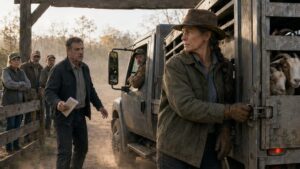
Amos cleaned an unused tanker trailer that had not moved in eight years. They replaced cracked hoses, tested brakes, sanitized the stainless compartment, and documented every step. Ruth held a commercial license from summers hauling feed. She could drive the milk herself if the plant approved the vessel.
“You left this place to avoid jobs like that,” Amos said.
“I left because I thought leaving proved I was capable.”
“You were capable here.”
“You never said it.”
He tightened a clamp longer than necessary. “Should have.”
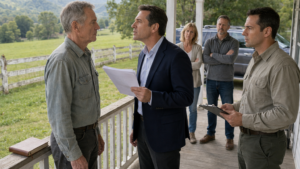
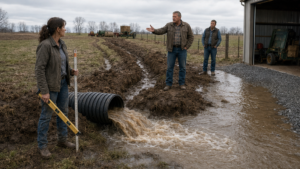
The cheese plant inspector arrived at dusk. The trailer passed pressure and sanitation tests. As Ruth connected the transfer hose, a county health officer served a stop order based on an anonymous complaint that the milk had been exposed to manure runoff.
Dr. Ortega took sterile samples. Results would need twelve hours.
Blake watched from the public lane in a rental SUV.
Amos started toward him. Ruth caught his arm. “He wants anger he can film.”
Blake lowered his window. “Sell the river pasture and I can make the access problem disappear. Full market price. Tonight only.”
“You caused the problem,” Amos said.
“Problems don’t care who caused them. Only who can afford them.”
Dana’s cruiser appeared behind him. Blake drove away.
Near midnight, a woman entered the dairy yard on foot. Maya Chen managed resort operations and had signed several access plans. Rain spotted her glasses. She carried no bag.
“Blake checks employee vehicles,” she said. “I parked at the church.”
Ruth brought her inside. Maya explained that Blake had ordered staff to stage photos, fly the drone, and submit complaints through shell email accounts. He promised the crossing would be condemned before opening day. When it was not, he called Heartland.
“I kept originals,” Maya said. “Video, emails, construction logs.”
“Where?”
“A backup drive in the resort utility cabinet. I couldn’t carry it out without triggering the inventory sensor.”
“Why come now?”
Maya looked through the window at Amos washing the tanker for a second time. “My family lost a restaurant because a landlord manufactured violations. I told myself this project was different until I heard Blake laugh about the milk.”
Headlights swept the yard. Maya stepped away from the glass.
Her phone vibrated with a message from Blake: I know you copied it. The next one was a photograph of her car at the church, taken minutes earlier.
Dana moved Maya to an unmarked cruiser and collected her phone. Ruth drafted a declaration while details remained fresh: who ordered each flight, who wrote complaints, and who removed the card. Maya corrected uncertain dates instead of guessing. Her restraint strengthened the account.
Amos returned to the milk house. He could not help with encryption, but he could keep the product safe. He rerouted cooling water, checked the agitator, and wrote the final lawful pickup minute on a chalkboard. Ruth joined him after Maya left. Neither said foreclosure.
They filled sterile vials for an independent lab and locked duplicates in Dana’s evidence refrigerator. If another contamination claim appeared, they had contemporaneous proof. At two in the morning, the gauge crossed the line marking one remaining milking. The countdown was no longer metaphorical.