The Open Gate on Mercy Creek Dairy Road
CHAPTER 7: THE ROAD THAT STAYED OPEN
Blake’s criminal case moved faster than his resort opening. Prosecutors charged evidence destruction, witness intimidation, conspiracy, fraud, criminal damage, and reckless endangerment. Heartland fired its special-assets director, then faced a federal inquiry. Keene recanted his statement and entered a cooperation agreement.
In civil court, the synced dash video ended the truck claim. Judge Price found Blake solely responsible for opening the gate and creating the acoustic trigger. Dr. Ortega’s evidence kept the bulls from being mislabeled as dangerous. They returned to pasture after the veterinary hold.
The older fight concerned the road. Blake argued that flood damage and modern traffic had made the 1948 easement impractical. Ruth answered with the recorded deed, township maintenance history, and his own access plans. The resort had purchased land subject to the cattle crossing. Wealth did not erase notice.
Judge Price made the crossing protection permanent. Any future development had to install signals, barriers, and a separate emergency approach at its own cost. Livestock retained priority during scheduled movements.
The resort entered bankruptcy before hosting a guest. A land trust bought the riverside acreage and leased part of it back to the Kellers. Prairie Star restored pickup and apologized publicly. Heartland refinanced the dairy on favorable terms as part of its settlement, but Amos insisted on moving the loan to a member-owned credit union.
“A cheaper rate isn’t cheap if somebody can sell your note to a thief,” he said.
Maya became the land trust’s operations director. She converted the finished domes into seasonal housing for veterinary students and watershed crews. Her testimony cost her a career path she had spent years building, then gave her work she could describe without lowering her eyes.
The township rebuilt the covered bridge with steel pins, flood-release rails, and load sensors Ruth could monitor from her phone. Amos complained that the alerts were too loud. Ruth changed the tone to a soft bell.
On the first autumn crossing, maple leaves collected along the new deck. Ruth stood at one end in reflective gear. Amos waited at the other with his staff. Solar lights flashed. Cars stopped. The herd moved between them in a measured black-and-white river.
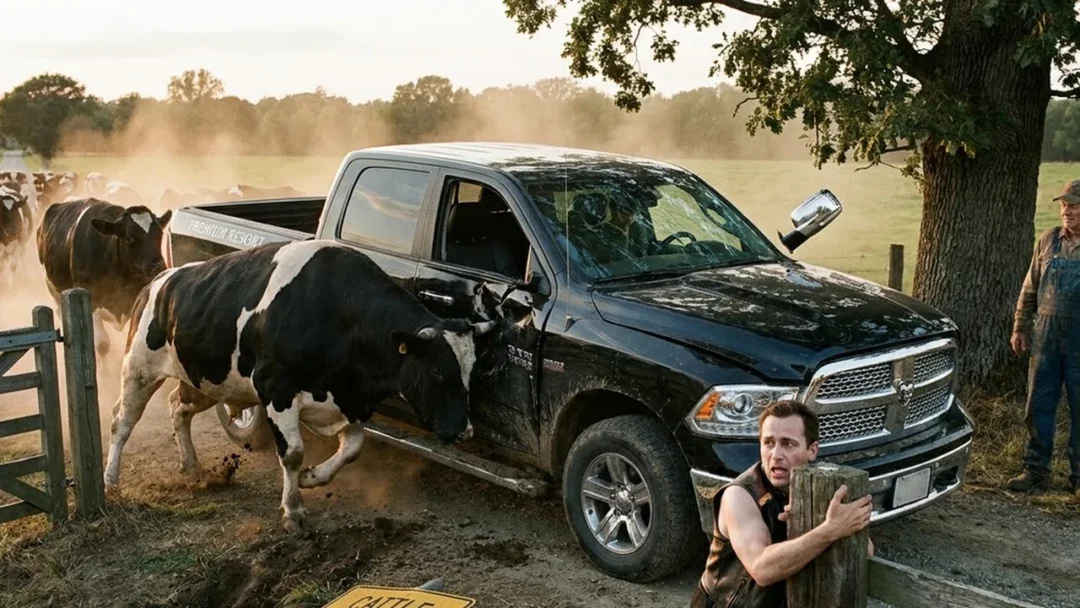
The two bulls followed last inside a reinforced lane. They paused near the oak where Blake’s truck had been destroyed. Amos tapped the ground once, and they continued.
The crossing took two minutes and forty-seven seconds.
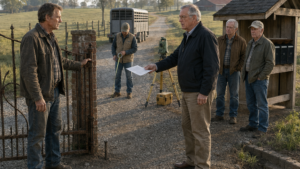
Afterward, father and daughter reset the orange sign in concrete. The old panel still bore Blake’s boot dent. Ruth had offered to replace it.
“Leave the mark,” Amos said. “A warning should show what ignored it.”
They walked to the milking barn. Stainless lines clicked into their wash cycle. Outside, a cooperative tanker crossed the lane without hesitation and backed toward the receiving port.
Ruth opened the office ledger. For the first time in months, the projected cash balance stayed above zero. Survival looked modest on paper: fuel, feed, payroll, principal. No line captured the night in the rain or the neighbors parked beside the road.
Amos placed the original easement in a new fireproof box. “Your mother wanted you home,” he said. “I told her asking would make you stay for us instead of yourself.”
“So you said nothing.”
“I was good at that.”
Ruth shut the box. “I’m here for myself now. You still have to ask when you need help.”
He nodded. It was not eloquent, but it was an agreement.
At dusk they moved the herd back from pasture. A family in a minivan waited at the signal. Two children pressed their faces to the glass, delighted by the cows. Their father switched off the engine. Nobody honked.
The crossing did not demand blind patience. A board counted remaining minutes, and pullouts let late vehicles turn. Ruth designed it with township engineers and made each sign explain that livestock priority protected animals and motorists alike. Safety became visible, not a slogan used against the farm.
Blake pleaded guilty after the synced video survived every challenge. Restitution covered the bridge, animal care, lost contracts, and emergency costs. Money could not undo fear, but it placed those costs where they belonged.
Each spring, Amos repainted the boot-dented sign without smoothing it. Ruth stored the easement archive in three secure places and printed one copy for the coffee tin. Old methods and new guarded the same truth.
Amos lifted a hand in thanks. The driver returned it.
Three minutes later, the road opened. The cars continued toward the ridge, the cows continued toward the barn, and neither journey required the other to disappear.