The Runaway Timber Trailer And The Crushed Luxury Grille
CHAPTER 6: THE RETRIBUTION OF THE VALLEY
For five agonizing seconds, nobody in the council chambers moved. The only sound was the muffled sobs of Fire Marshal Drake and the low, collective rumble of righteous fury building in the chests of the eighty local residents seated in the gallery.
Then Montgomery Vance made his final, desperate move.
He ripped the foam cervical collar from his neck, tossing it onto the table, his aristocratic composure shattering into a snarl of feral venom.
“That recording is an inadmissible, illegal interception of private communications!” Montgomery screamed, backing toward the side exit behind the dais. “My civil rights have been violated! This entire proceeding is a kangaroo court orchestrated by corrupt local deputies! You have no legal authority to detain me!”
Montgomery reached into his tailored breast pocket, whipping out an embossed leather portfolio tied with red silk ribbons.
“You think you’ve stopped Crestview?” Montgomery shouted, thrusting the parchment toward the gallery. “Three weeks ago, our corporate syndicate purchased the underlying 1872 Shepaug River water rights from the defunct Berkshire Railroad Corporation! Under that deed, we own the water flow that turns the Ward Mill turbine! By federal interstate commerce statutes, if you do not grant this development zoning today, we will shut the headgates at the upper dam and drain the riverbed dry! Your mill won’t turn another log! Your heritage fair is dead!”
The gallery murmured with anxiety. Generational timber mills lived and died by river head-pressure. If Montgomery held an unencumbered corporate water right, he could tie the valley up in federal litigation for a decade, starving the mill of power until Caleb went bankrupt.
Caleb looked at the parchment in Montgomery’s hand. He didn’t flinch. Instead, Caleb reached inside the pocket of his Carhartt jacket and pulled out a heavy, leather-bound brass-hinged ledger dating back to the late nineteenth century:
THE SHEPAUG VALLEY AGRICULTURAL & RIPARIAN COMPACT – 1892.
Caleb set the massive ledger on the podium with a solid, echoing thud.
“My grandfather didn’t trust railroad land barons, Montgomery,” Caleb said, his deep voice slicing through the tension like a razor-sharp band saw. “In October of 1892, thirty independent timber millers and family farmers pooled their savings to establish the Shepaug Public Water Covenant, countersigned by the Governor of Connecticut and registered under the sovereign protection of the state constitution.”
Caleb turned to page twenty-four, pointing a calloused finger at the faded calligraphy:
“‘Let it be forever established that the waters of the Shepaug River shall remain an inalienable public resource for the common agricultural and mechanical use of the local inhabitants, and no private syndicate, railroad corporation, or commercial entity shall ever possess the power to restrict, divert, or diminish the natural flow of the headwaters.'”
Caleb looked Montgomery dead in the eye.
“The Berkshire Railroad never owned the water rights, Montgomery. They held a temporary ten-year operational lease for steam locomotives that expired on December 31, 1902. Your high-priced New York lawyers bought a phantom deed. You don’t own the Shepaug River. You don’t own the mill. And by the end of today, you won’t even own your bespoke suit.”
Montgomery stared at the ledger, his jaw slacking as his eyes scanned the historic state seal. The realization hit him like a physical blow: every legal lever, every corporate threat, every forged document he had constructed had crumbled to dust against the unyielding bedrock of community history.
Deputy Brooks stepped onto the dais, flanked by the two State Police detectives.
“Montgomery Vance,” Brooks said, her voice ringing out with crisp, absolute authority. “Under warrants issued by the Litchfield Superior Court, you are under arrest for felony conspiracy to commit arson, commercial extortion, bribery of a public official, and attempted fraud against a municipal government.”
Montgomery backed toward the wall, his hands clawing at the curtains. “You can’t do this to me! I am a managing director! Call my attorneys in Manhattan! Call the governor’s office!”
The two state detectives seized Montgomery’s arms, twisting them behind his back with practiced, overwhelming force. The heavy stainless-steel handcuffs clicked shut with two loud, merciless snaps.
A thunderous, deafening cheer erupted from the gallery. Men stood on their benches waving work caps, women hugged their neighbors, and the timber workers in the back row slammed their fists against the wooden railings in triumphant celebration.
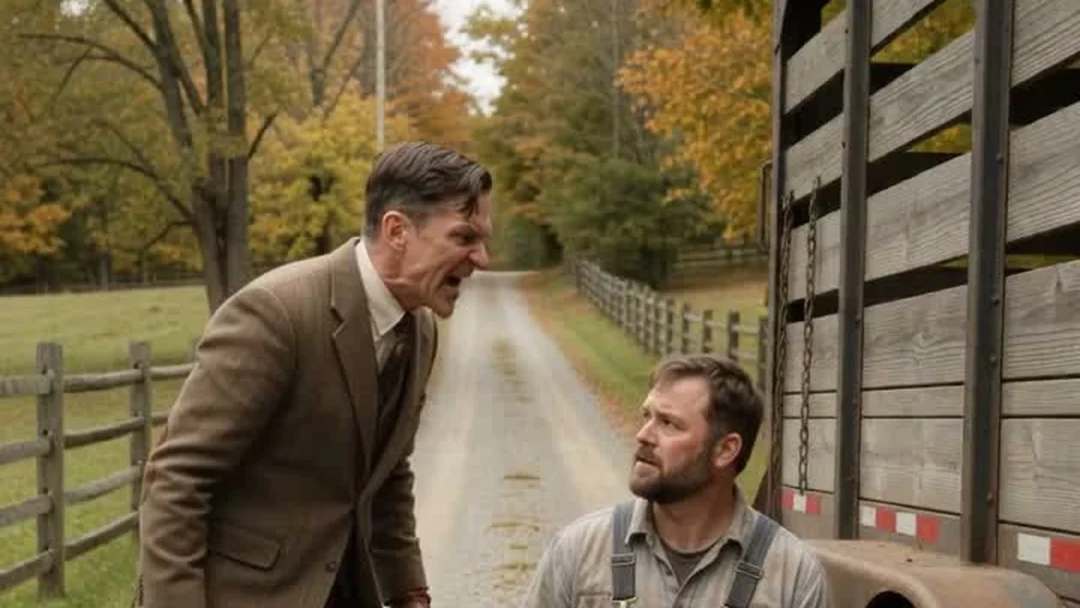
As Montgomery was marched down the center aisle in handcuffs, his expensive tweed jacket bunched around his shoulders, he passed Caleb Ward.
Montgomery glared at Caleb with burning, defeated eyes. “You think you won, Ward? You’re still just a dirt-poor mechanic cutting timber in the mud!”
Caleb looked down at him with quiet, pitying grace.
“I cut timber for the people who built this valley, Montgomery,” Caleb said softly. “And tomorrow morning, my saws will be singing while you’re eating cold gruel on a steel bunk in Bridgeport.”