The Secret Barbecue Behind The Cedar Fence And The Chief’s Ledger
CHAPTER 3: THE FORECLOSURE SHADOW
Marcus stared at the embossed gold seal on the heavy parchment paper, the afternoon daylight dying against the leaden sky until the words seemed to burn into his retinas. Maya stood beside the cedar table, her track jacket zipped high against the chill, her hand trembling as she leaned against her father’s shoulder. Marcus took her cold fingers in his broad palm, giving them a firm, reassuring squeeze that belied the fury pounding against his temples.
“Chancery Court,” Marcus murmured, reading the legal header. “Petition for Foreclosure of Municipal Assessment Lien: Whispering Pines Coalition versus Marcus Vance. Total claimed delinquency: seventeen thousand four hundred dollars in unassessed storm-water infrastructure surcharges.”
“Seventeen thousand?” Maya whispered, looking at Chief Rhodes with wide, frightened eyes. “Dad pays the storm drain fee every quarter with the county water bill. I saw the bank statements when we did the school taxes in August. Every single quarterly receipt is stamped and filed in your metal cabinet.”
“Because this isn’t a county water bill, baby,” Marcus said gently. He laid the document flat next to the pink police dispatch carbon. “This is a private special-assessment district petition. Created by the neighborhood coalition under an obscure state charter statute. They call it an infrastructure levy.”
Chief Rhodes pulled a pair of wire-rimmed reading glasses from his henley pocket, sliding them onto his nose as he scanned the dense legal boilerplate. His jaw set hard. “The presiding magistrate who signed off on the default judgment is Harold Sterling. Linda’s brother-in-law. He retired from the Henrico General District Court two years ago, but he still sits on the county arbitration panel for municipal infrastructure disputes. It’s a quasi-judicial body with statutory authority over private subdivision easements.”
“They held a hearing without serving me notice,” Marcus said, his voice dropping into dangerous calm. “I work forty hours a week at the high school, and I’ve spent every weekend for three years in my workshop out back. Nobody handed me a summons. Nobody posted a notice on my door. Nobody knocked on my gate.”
“They didn’t have to if they filed a fraudulent affidavit of attempted service,” Rhodes said, tapping a paragraph on the second page. “Look here. Signed by a private process server named Derrick Cole. He swears under penalty of perjury that he attempted personal service at this address three times in July and found the residence abandoned.”
Marcus let out a harsh, dry laugh. “In July, I was running the summer vocational welding intensive for forty county kids right here in my garage. We had high school buses dropping students off at the cul-de-sac every Tuesday and Thursday. Derrick Cole never stepped foot on this gravel.”
“We need to see who else on this street got hit with this paper,” Rhodes said, standing up from the table. “Linda wouldn’t risk forging an affidavit for a single parcel. Apex Parkway needs a continuous corridor of land to lay the asphalt beds and drainage culverts. If Marcus’s lot is in the crosshairs, his neighbors are already in the ditch.”
Ten minutes later, Marcus walked down the cracked asphalt of Whispering Pines Lane. The street was quiet, lined with split-level brick ranches built in the late 1960s, their yards shaded by massive post oaks and loblolly pines. Many of the homes belonged to retired railway workers, machinists, and widowed schoolteachers who had lived in the subdivision since the Vietnam War. Smoke curled lazily from brick chimneys, but behind drawn lace curtains, Marcus could sense the tension of a community under siege.
At the corner lot, three doors down, seventy-two-year-old Ray Henderson sat on his porch glider, wrapped in a woolen plaid blanket. Ray was a retired CSX freight conductor who had lost both legs below the knee in a yard accident twenty years ago. As Marcus approached the porch steps, Ray didn’t wave; he reached down and pushed a battered cardboard file box toward the edge of the porch railing.
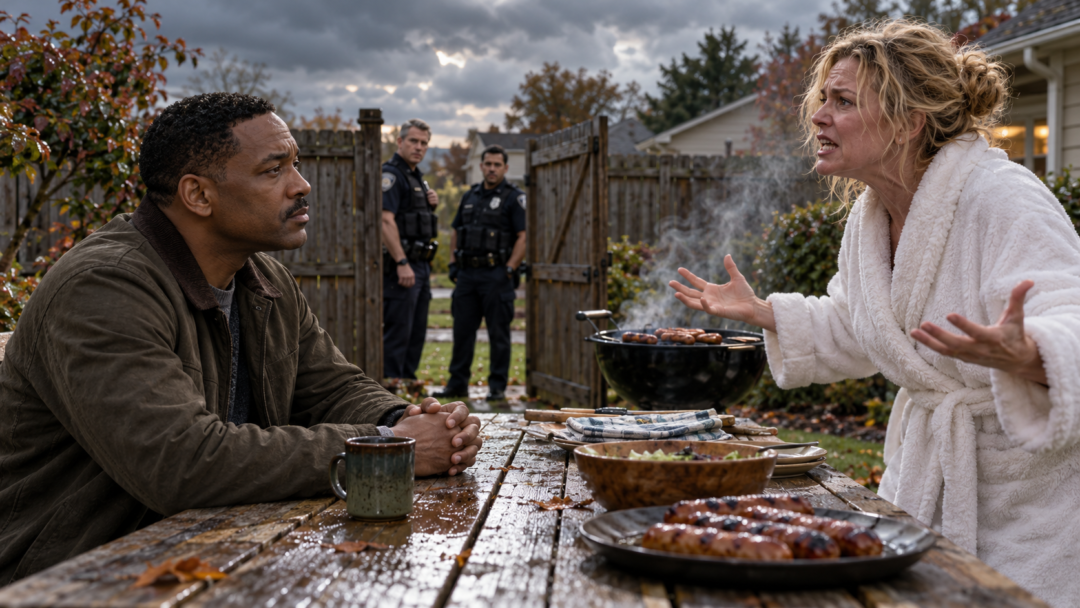
“Saw the squad cars at your place, Marcus,” Ray said, his voice raspy from decades of diesel smoke. “Linda pull her bathrobe routine on you again?”
“She tried,” Marcus said, stepping onto the wooden porch. “Ray, did you ever receive a registered notice about a private storm-water infrastructure surcharge?”
Ray’s weathered face sagged, the lines around his mouth deepening into bitter resignation. He gestured to the file box with a gnarled hand. “Three months ago. Claimed I owed twenty-one thousand dollars for a culvert repair that was done behind the power line easement back in 2018. When I told Linda I couldn’t pay it on my railroad pension, she brought by a pleasant young man in a three-piece suit from Apex Parkway Holdings. He offered to buy my house for ninety thousand dollars and clear the lien.”
“Ninety thousand?” Marcus clenched his fists until his knuckles turned bone-white. “The county tax assessment on your lot is three hundred and twenty thousand, Ray! You have three acres backing up to the nature reserve!”
“I know what it’s worth, son,” Ray said, his eyes welling with helpless moisture. “The bank sent me an eviction warning yesterday. Said if I don’t sign the Apex transfer by next Friday, the county sheriff’s department will remove my chair and my belongings to the sidewalk. They told me I was in default on an emergency municipal receivership.”
Ray reached into his pocket and pulled out an old microcassette recorder—the kind reporters used in the nineties. He pushed the plastic casing into Marcus’s hand.
“Linda came up here on this porch two weeks ago when she thought I was asleep,” Ray whispered. “She forgot I keep this little recorder taped under the armrest to log my medication times. Listen to track two, Marcus. She wasn’t talking to an engineer. She was talking to the county water commissioner about shutting off our street’s main valve.”
Marcus pressed play. Through the hiss of magnetic tape, Linda’s shrill voice cut like jagged glass: “Cut the water pressure to thirty PSI by Wednesday. When their old pipes back up into their crawlspaces, they’ll sign the Apex deeds before the mold even sets in.”