The White Luxury Convertible Impounded Across the Blue Access Ramp
CHAPTER 3: THE COURIER ENVELOPE IN THE DOOR POCKET
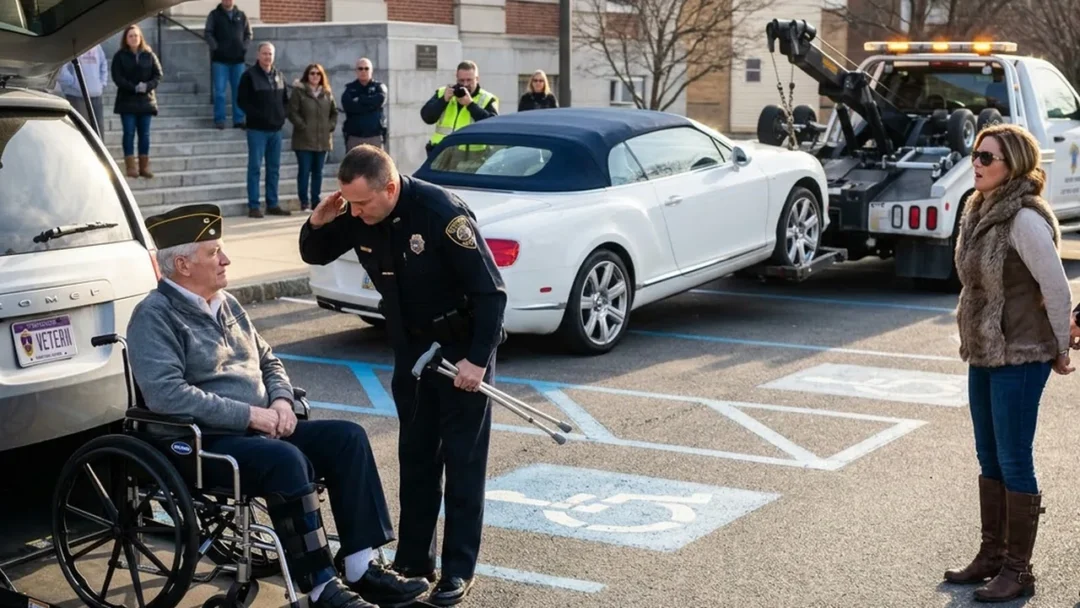
The hydraulic lift of the borough tow truck groaned under the weight of the Mercedes as the rear wheels rose off the blue pavement. As the car’s chassis tilted upward at a thirty-degree angle, the driver’s side door, which Victoria had left ajar in her haste to confront Caldwell, swung wide open on its heavy hinges.
Inside the molded leather map pocket of the driver’s door, a thick, heavy legal-sized courier envelope slipped from its compartment. It slid across the polished door sill, tumbled through the air, and slapped onto the oil-stained asphalt right at Sergeant Miller’s feet.
The envelope was made of reinforced waterproof Tyvek, sealed with red tamper-evident tape, and stamped across the front in bold red letters: CONFIDENTIAL – EX-PARTE INJUNCTION – CUMBERLAND COUNTY COURT OF COMMON PLEAS.
Miller frowned, knelt down, and picked up the envelope by its edges. Through the clear plastic window on the reverse side, several legal documents were clearly visible, including an unsigned emergency petition bearing the caption: Borough Council of Carlisle v. Trustees of the Veterans Memorial Park.
“Hey, don’t look at that!” Victoria screamed from the back bumper of the tow truck, where Deputy Briggs held her firmly by the arm. Her composure had completely collapsed, her designer sunglasses hanging crookedly from one ear, her eyes wide with frantic dread. “That’s privileged attorney-client work product! You have no right to look inside that envelope! That belongs to Arthur’s legal counsel!”
Miller looked up from the document, his sharp eyes narrowing as he read the first visible paragraph through the clear sleeve.
“This isn’t work product, Mrs. Ross,” Miller said, his voice dropping into a dangerous, measured tone. “This is a petition for an emergency ex-parte temporary restraining order to bar public testimony and seal the council chamber doors for today’s ten o’clock zoning hearing. And it lists you as the special delivery petitioner.”
Master Sergeant Caldwell carefully locked his leg brace, grasped the unfolded aluminum cane with his right hand, and lowered himself steadily from the van’s passenger seat onto the cleared asphalt. His boots found purchase on the pavement. He took two slow, measured steps toward Miller, his posture ramrod straight despite the visible stiffness in his spine.
“Arthur Ross has been trying to bury the park deed for six months, Sergeant,” Caldwell said quietly, looking at the envelope in Miller’s hands. “The borough received a thirty-million-dollar proposal from a Philadelphia commercial developer to turn the four acres of Memorial Park into luxury mid-rise condominiums. But under the 1948 charter, the land was dedicated in perpetuity to the families of Carlisle’s fallen soldiers. The borough cannot rezone or sell that dirt without unanimous voter consent at a general election.”
“Unless the council declares the property blighted and abandoned under an emergency public safety variance,” Deputy Briggs interjected, his voice tight with disgust.
“Exactly,” Caldwell nodded. “Arthur Ross scheduled an unannounced special zoning vote for ten o’clock this morning. He told the local papers it was a procedural budget review to keep the veterans from packing the gallery. When he found out I had pulled the original charter deed from the county archives, he sent his wife to courthouse security with an injunction to have me barred from the building before the gavel fell.”
Victoria Ross began trembling, the fox-fur trim of her coat shaking against her shoulders. “You don’t understand anything! The town needs that tax base! That park is just overgrown grass and rusted bronze plaques! Nobody cares about a war from eighty years ago! We are bringing luxury shops, rooftop dining, and high-income residents to this dying borough!”
“I care, ma’am,” Sergeant Miller said cold and clear. “My grandfather’s name is on the World War Two bronze plaque in the center of that grove. He was killed on Saipan in 1944. That plaque is the only gravestone my family has.”
Miller looked down at the envelope again, noticing that the bottom corner of the Tyvek packet had torn slightly on impact with the pavement. Peeking through the tear was not legal parchment, but the embossed blue corner of a corporate bank draft from a Swiss private financial group in Geneva, payable to Ross Heritage Holdings, LLC.
Deputy Briggs stepped over to the open door of the hoisted convertible. Following standard vehicle inventory protocols before towing, Briggs opened the leather-lined glove compartment. Inside lay a thick spiral-bound presentation binder labeled Apex Commercial Partners: Carlisle Parcels Phase One. Tucked into the back of the binder was a certified check receipt for three hundred thousand dollars and a set of architectural renderings showing the mature white oaks of Memorial Park razed to the ground, replaced by a five-story underground parking garage and luxury boutiques.
“Look at this, Miller,” Briggs said, holding the binder so Sergeant Miller could see the developer’s cover letter. “It’s addressed to Councilman Arthur Ross, marked private and confidential, detailing a five percent equity share in the condominium retail ground floor upon successful rezoning.”
Victoria let out a strangled sob. “That’s an investment! It’s legal consulting! Everyone does it!”
“Taking consulting fees from a developer while voting on their municipal zoning variances is commercial bribery under Pennsylvania criminal statute,” Miller said, his pen flying across his citation pad.
Miller pointed toward the open door of the convertible. “Kevin, hook the safety chains to the frame and pull the vehicle out of the aisle. We need this lane cleared for emergency access immediately.”
“You can’t search my car! You can’t take those files!” Victoria shrieked, thrashing wildly against Briggs’ grip until her heels slipped on the asphalt. “Arthur! Arthur, help me!”
Her shrill scream echoed across the brick courtyard just as the heavy brass-trimmed oak doors at the top of the courthouse steps swung wide open. Standing under the stone portico, flanked by two borough code enforcement officers, was Borough Councilman Arthur Ross.