The HOA Called His Water Valve Community Property—Then One Old Agreement Changed the Entire Neighborhood
Chapter 1: The Valve They Said Belonged to Everyone
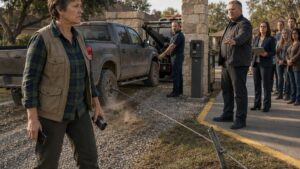
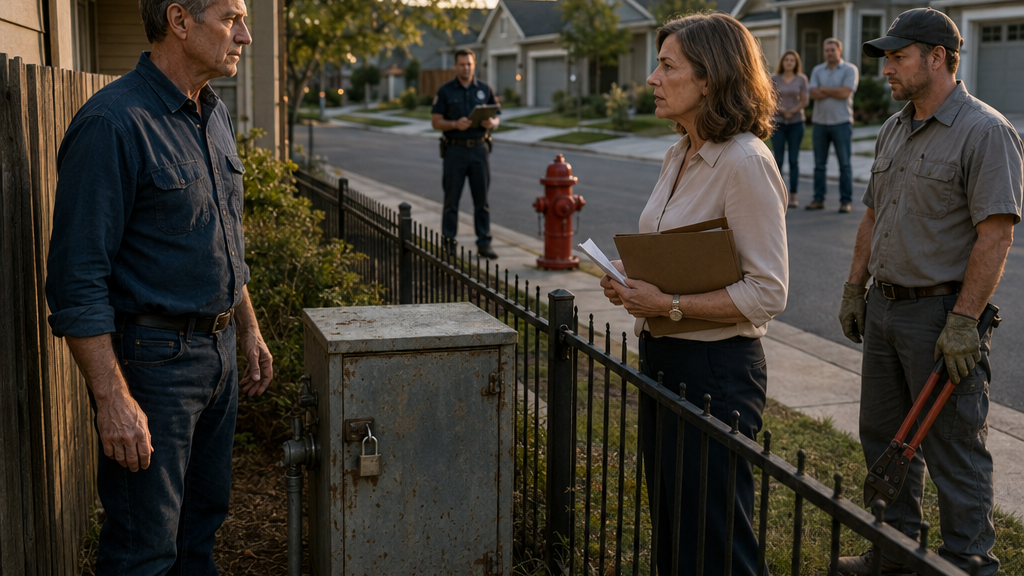
The man with the bolt cutters was already kneeling beside Steven Anderson’s fence when Steven stepped onto the side porch.
“Don’t.”
The contractor froze with one handle lifted.
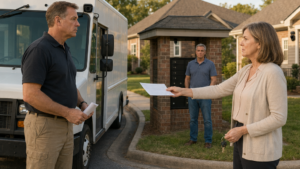
Beyond him, a white utility pickup idled at the curb. Sandra Clark stood beside its open passenger door with a folder tucked under one arm. Across the street, the neighborhood’s red fire hydrant caught the morning light.
Steven walked down the two porch steps without hurrying.
The valve box sat inside his property line, a waist-high steel cabinet bolted to a concrete pad that predated most of the houses visible beyond his fence. Its paint had faded from green to gray. A newer padlock hung through the latch.
Sandra watched him approach.
“We gave notice Friday,” she said.
“You emailed me Friday.”
“That was notice.”
“For what?”
“For access to community infrastructure.”
Steven stopped beside the contractor. “That box isn’t community property.”
The contractor looked at Sandra instead of answering.
Sandra opened her folder. “The association has maintained that line for years.”
Steven nodded once. “That wasn’t what I asked.”
Her mouth tightened.
Steven had known Sandra for six years. She was efficient, punctual, and rarely raised her voice because she had learned that quiet certainty worked better in board meetings. Usually, Steven respected that.
Not today.
“The line supplies the east loop,” she said. “We have a pressure inspection scheduled.”
“Then show me the easement.”
Sandra flipped through several papers.
She handed him a utility map.
Steven looked at it for less than five seconds. The blue line crossed his side lot exactly where he expected.
“This shows a pipe.”
“It shows the association system.”
“It shows where somebody drew a pipe.”
She pulled out an invoice. “Here. Valve service. Three years ago.”
Steven gave it back.
“That proves you paid somebody to work on it.”
Sandra lowered her voice. “Steven, fifty-eight homes depend on this line.”
That was new.
He had known the pipe fed part of the development. His father had called it “the neighborhood line” for years. Steven had never asked how many houses were actually tied to it.
“Then you should have paperwork,” he said.
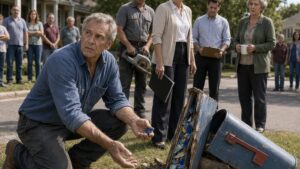
A garage door across the street opened. A man stepped out holding a travel mug. Two houses down, another neighbor slowed during a morning walk.
Sandra noticed them too.
“This is exactly why we didn’t want this becoming a scene.”
Steven looked at the bolt cutters.
“You brought those.”
The contractor stood up.
Sandra exhaled. “We need the valve accessible before the fire-flow test.”
“Show me the recorded right to enter my property.”
“We’ve entered before.”
“My father let you.”
“The association has relied on that access for decades.”
Steven said nothing.
That was the part Sandra did not understand.
Reliance was not the same thing as ownership.
At least, Steven did not think it was.
He knew there had been an agreement. He could picture it in his father’s desk drawer, folded into a long brown envelope with property tax receipts and an old survey. His father had shown it to him once after the first developer started laying pipe along the new subdivision road.
“They can use it,” his father had said. “That doesn’t mean they get it.”
Steven had never read every line.
That fact bothered him now.
Sandra held out her hand. “Unlock the box.”
“No.”
The neighbor with the coffee crossed the street.
“What’s going on?”
Sandra answered before Steven could. “We’re trying to complete a required water-system inspection.”
The man looked at Steven. “And?”
“And Mr. Anderson is denying access.”
Steven glanced at her.
“Mr. Anderson?”
Sandra ignored him.
The neighbor frowned. “Is that why the hydrant test got delayed?”
Steven looked toward the hydrant.
“Apparently.”
“You know that thing serves our street, right?”
Steven felt something old and familiar harden inside him. It was the same feeling he got whenever somebody from the HOA referred to the strip beside his fence as if it were merely inconvenient leftover space.
“Yes,” he said. “I know where the hydrant is.”
More people were outside now.
Sandra lowered the folder.
“Steven, nobody is trying to take your property.”
“Then show me the agreement.”
“I showed you the maintenance records.”
“Not the same thing.”
She stared at him for a moment, then turned to the contractor.
“Call the inspector.”
Steven’s confidence slipped half an inch.
“The fire inspector?”
“The one waiting on certification.”
The contractor walked toward his truck.
Sandra looked back at Steven. “This isn’t about landscaping rules or fence color. If we can’t certify pressure and access, we have a real problem.”
“Then you should know who owns the access.”
Her expression changed.
Not much. Just enough.
For the first time that morning, she looked less irritated than uncertain.
Steven noticed.
So did Joseph Davis, who had just come up the sidewalk carrying a folder of his own.
Joseph was the HOA treasurer. He lived near the clubhouse and had spent years reminding residents that the reserve fund was not “free money.”
He stopped near Sandra.
“What happened?”
“Steven won’t unlock the valve.”
Joseph looked at Steven. “Why?”
“Because nobody has shown me a recorded easement.”
Joseph turned to Sandra.
She said, “We have longstanding access.”
“That isn’t what he asked.”
Sandra’s jaw shifted.
Steven almost smiled.
Almost.
Then he saw the family across the street standing in their driveway. A woman held a toddler on one hip while an older child waited beside a backpack.
They were watching him.
Not Sandra.
Him.
The satisfaction disappeared.
Twenty minutes later, a county fire inspector arrived in a marked SUV.
He listened while Sandra explained the system, the test, the service records and the history of access. Then Steven explained that the box sat on his parcel and that he had asked for proof of permanent entry rights.
The inspector crouched at the cabinet but did not touch it.
“Valve operational?”
“As far as we know,” Sandra said.
“Pressure problem?”
“We’re trying to certify that.”
“Water currently flowing?”
“Yes.”
Steven looked at her sharply.
So nobody’s water had been shut off.
Not yet.
The inspector stood.
“This is a property-access question before it’s a fire-system question.”
Sandra crossed her arms. “We’ve maintained it for decades.”
The inspector looked at Steven.
“Who legally controls access to this line?”
For the first time all morning, Steven did not answer.
Because the truth was sitting in a desk drawer inside his house.
And he had not looked at it closely in years.
Chapter 2: The Agreement His Father Never Threw Away
The paper clipped to the old agreement was written in his father’s blocky handwriting.
Steven recognized it before he understood what it said.
1998 — valve packing replaced. HOA paid half.
2001 — leak by east fence. HOA reimbursed labor.
2007 — hydrant pressure problem. Opened for contractor.
Then, farther down:
2012 — no maintenance payment received.
2013 — same.
2014 — same.
Steven sat at the kitchen table with the brown envelope open in front of him.
The agreement itself was four pages, yellowed at the folds and signed long before Sandra Clark had moved into the neighborhood. His father’s signature appeared beside the signature of the subdivision’s original developer.
Steven read it once too quickly.
Then again.
The language was dry and careful.
Permission was granted for installation and maintenance of a water line across a defined portion of the Anderson parcel.
Access was permitted for inspection, repair and emergency service.
Nothing in the document transferred ownership of the land.
Nothing said “permanent HOA property.”
More importantly, access was described as conditional.
The development was responsible for repair costs, surface restoration and a proportional maintenance contribution.
Steven leaned back.
He had been right.
Not completely.
But enough to make Monday morning look very different.
He reread the emergency clause.
The property owner would provide reasonable access when immediate action was necessary to preserve water service or fire protection.
Steven stared at that sentence longer than the others.
His father had underlined it.
Not ownership.
Not unlimited entry.
But not a right to simply say no, either.
At eleven, Steven drove to the county records office.
The clerk behind the counter took the parcel number and disappeared into the back.
Steven waited beneath fluorescent lights with a copy of the agreement folded into his jacket pocket.
He told himself he was checking facts.
He was also hoping to find nothing that weakened his position.
The clerk returned with digital images of recorded documents tied to the property.
“There’s the original plat, utility dedication along the road, a drainage easement here,” she said, moving through the pages. “This one looks like an access license.”
Steven leaned closer.
It was the same agreement.
“Anything later replacing it?”
She searched again.
“No recorded permanent easement that I see.”
“No transfer?”
“No.”
“No utility ownership?”
“Not across that strip.”
Steven felt the same small lift he had felt when Sandra could not produce a document.
Then the clerk pointed at another page.
“This refers back to the access license.”
“What is it?”
“A later acknowledgment. Looks like your father confirmed emergency entry after the association took over from the developer.”
Steven read it.
The document was brief.
His father had recognized the HOA as successor to the developer’s maintenance duties.
Not owner.
Successor.
That distinction helped Steven.
The final paragraph did not.
Nothing herein shall prevent necessary emergency access consistent with the original agreement.
His father had signed beneath it.
Steven left the building with photocopies under his arm and less satisfaction than he expected.
By midafternoon, Sandra had sent three emails.
The first called Monday’s incident “an unnecessary interference with scheduled system inspection.”
The second attached an old service invoice.
The third was addressed to the full board and copied Steven.
Emergency Board Meeting — Tuesday, 7:00 PM.
Subject: Fire Protection Access and Homeowner Safety.
Steven read the subject twice.
Then his phone rang.
Joseph.
“What did you find?”
Steven looked through the kitchen window toward the side yard.
The valve box sat still behind the fence.
“A license,” he said.
“So Sandra was right?”
“No.”
A pause.
“So you were right?”
“Not exactly.”
Joseph sighed. “That sounds promising.”
Steven almost laughed.
“The HOA doesn’t own the access. At least nothing recorded says it does.”
“That’s good for you.”
“There’s emergency language.”
“What kind?”
“The kind that says I can’t block reasonable emergency access.”
Joseph was silent.
Steven tapped the paper with one finger.
“My father signed it.”
“That change anything?”
“It changes how stupid I’d look if I pretended the line had nothing to do with anybody else.”
Joseph said, “Sandra’s calling this a safety issue.”
“I saw.”
“She’s going to have people angry before you walk in the room.”
Steven looked again at his father’s notes.
2012 — no maintenance payment received.
2013 — same.
2014 — same.
There were no entries after 2017 except two brief lines noting emergency access.
“Do the HOA records show payments to my father?”
“For what?”
“Maintenance contributions.”
“I don’t know.”
“Look.”
Joseph paused.
“Steven, I’m the treasurer, not your investigator.”
“You asked what I found.”
“That doesn’t mean I’m taking your side.”
“I didn’t ask you to.”
That came out sharper than Steven intended.
Joseph heard it.
“Fine.”
Steven closed his eyes.
This was how he did it. He waited until he had something solid in his hand, then acted as if anybody asking questions had joined the other side.
His father had been different. Too different, maybe. He let people onto the property, fixed things himself, kept handwritten notes nobody else ever saw.
Steven had always thought that was weakness.
Now he was starting to wonder whether his own version was simply the opposite mistake.
“Joseph.”
“What?”
“Just check the budgets.”
“For what?”
“A line item. Easement fee. Access payment. Maintenance share. Anything tied to this line.”
“All right.”
“And Joseph?”
“What?”
“I’m not trying to shut anybody’s water off.”
“That’s probably worth saying tomorrow.”
Steven looked at the emergency clause.
“Maybe.”
He heard Joseph breathe out.
“That’s your problem.”
“What is?”
“You keep thinking people should know what you mean when you don’t say it.”
The call ended before Steven answered.
That evening, Steven laid the yellowed agreement beside the newer county copies.
For years he had treated the document as proof that his father had protected the property.
Now it looked more complicated.
His father had protected ownership.
He had also protected access.
Both things were on the same four pages.
At 8:16, another HOA email arrived.
Sandra had changed the meeting notice.
Emergency Board Meeting Regarding Fire-System Access, Insurance Exposure, and Anderson Property Refusal.
Steven stared at his own last name in the subject line.
By morning, every homeowner would receive it.
Chapter 3: The Hydrant Problem Became Everyone’s Problem
Sandra held up the insurance letter before Steven had found an empty chair.
The clubhouse was packed far beyond normal board-meeting attendance. Folding chairs filled the room, and another dozen residents stood along the back wall.
“This is not hypothetical,” Sandra said.
Steven remained near the door.
He had brought copies of the agreement, but they were still inside the envelope under his arm.
Sandra read from the letter.
“Continuation of full property coverage is subject to confirmation of functional fire-protection infrastructure, including verified system access for inspection and emergency service.”
A man near the front turned and looked directly at Steven.
Someone behind him muttered, “Unbelievable.”
Sandra lowered the page.
“We have forty-eight hours to provide documentation and complete the inspection.”
Steven felt the attention in the room tighten.
A woman in the second row raised her hand but did not wait to be called.
“So one person can just stop fire protection for everybody?”
Steven answered before Sandra could.
“No.”
Sandra looked at him.
Steven continued. “Nobody’s water is off. Nobody’s hydrant has been disabled. I asked the association to show me the legal right it claims to have.”
“Same result if you won’t let them inspect it,” someone said.
“Not the same result.”
“It could be.”
That was true.
Steven hated that it was true.
Sandra stepped closer to the table.
“We are not here to debate property philosophy. We need reliable access.”
“Then produce the recorded easement.”
A few people shifted.
Sandra said, “We have decades of maintenance records.”
Joseph, seated beside her, looked down at the stack of papers in front of him.
Steven noticed.
Sandra went on.
“The association has serviced the system, hired contractors and treated this line as part of common infrastructure since before many of us lived here.”
Steven finally took the old agreement from the envelope.
“That doesn’t make my property common infrastructure.”
He placed the document on the table.
The room quieted slightly.
Sandra looked at it.
“What is that?”
“The agreement everybody keeps talking around.”
She did not reach for it.
Steven opened to the first page.
“It grants access. Conditional access.”
“Which proves our point.”
“No. It proves you can come onto the property under specific conditions. It doesn’t say you own the valve box, the strip of land, or unrestricted access whenever somebody brings bolt cutters.”
A murmur moved through the room.
Sandra said, “It also requires emergency access.”
“Yes.”
That answer surprised people.
Steven saw it.
He had expected the admission to weaken him. Instead, it seemed to break the shape of the argument Sandra had built.
He wasn’t claiming absolute control.
He was claiming limits.
A man near the wall said, “So let them in.”
“I will for an actual emergency,” Steven said. “And I’m willing to arrange the inspection. What I’m not doing is pretending an old permission agreement became HOA ownership because nobody bothered to read it.”
Sandra’s expression hardened.
“Your distinction could cost every homeowner here money.”
Steven looked around the room.
That landed harder than he expected.
Several residents were older. One couple near the aisle held hands without seeming aware of it. Joseph had once told him that half the people in the neighborhood had most of their net worth tied up in their homes.
Steven had spent two days enjoying the thought that Sandra was finally being forced to answer a question she should have answered years ago.
Now that satisfaction felt smaller.
Joseph cleared his throat.
“I have a question.”
Sandra turned.
Joseph lifted a budget binder.
“If this line is association infrastructure, where is the reserve item for it?”
Sandra frowned. “What?”
“I went back through the budgets.”
Steven watched her face.
Joseph continued.
“We budget for road resurfacing, clubhouse roofing, pool pumps, monument lighting, irrigation, storm-drain cleaning. I cannot find a reserve allocation for this valve, this section of water line, or access across the Anderson parcel.”
Sandra said, “Maintenance may have been classified under general utilities.”
“I checked.”
The room became still.
Joseph opened another folder.
“There are contractor charges. Sporadic ones. But I don’t see easement payments, access fees, or a dedicated maintenance obligation.”
Sandra stared at the papers.
“That doesn’t mean there wasn’t an agreement.”
Steven slid the yellowed pages toward her.
“There was.”
She finally picked them up.
Joseph said, “The question is whether we followed it.”
Sandra’s head came up.
“You think this is the time to undermine the board?”
“I’m asking about the board’s records.”
“There is an insurance deadline.”
“That’s why I’m asking.”
The room changed.
Steven could feel it.
Ten minutes earlier, every angry glance had landed on him.
Now people were looking between Sandra and Joseph.
A woman near the aisle said, “Were we paying for access or not?”
Sandra answered carefully.
“The association has incurred maintenance expenses related to the system.”
“That wasn’t the question.”
Another homeowner leaned forward.
“If we don’t own the access, why did nobody know that?”
Sandra closed the agreement.
“The current issue is getting certification completed.”
Steven saw what she was doing because he had done the same thing his entire adult life.
Avoid the part that made you vulnerable.
Hold onto the part where you still had control.
The fire inspector arrived twenty minutes into the meeting carrying a clipboard and a bright orange notice.
He set it on the table.
“Inspection status is incomplete,” he said. “Not failed. Incomplete.”
Several people visibly relaxed.
Sandra asked, “What do you need?”
“Verified access procedure, functional valve access, and flow testing.”
Steven said, “Does that require the HOA to own my property?”
“No.”
“Does it require me to allow emergency access?”
“If that’s part of your governing agreement, yes.”
Steven nodded.
Sandra said, “And routine inspection?”
“Whatever your agreement says.”
Everyone looked at the yellowed pages.
The old document had stopped looking like Steven’s private weapon.
It had become the room’s unanswered question.
Joseph flipped through his budget binder again.
Then he stopped.
“Wait.”
He pulled a printed ledger from the back pocket.
“What?”
Joseph ran his finger down the page.
“I found the older contractor charges.”
Sandra said, “We already know there were charges.”
“No. Look at the dates.”
He turned the page toward her.
“Annual payments. Every year through 2011.”
Steven’s stomach tightened.
Joseph tapped the next line.
“Then nothing.”
Sandra looked at him.
Joseph pulled another ledger.
“After 2011, we still paid contractors when something broke. But the separate annual maintenance contribution disappears.”
Steven thought of his father’s handwritten notes.
2012 — no maintenance payment received.
2013 — same.
Two records, kept miles apart, suddenly pointed to the same year.
Joseph looked toward Steven.
“Your father kept letting them in after that?”
Steven did not answer immediately.
He knew the answer.
That was the problem.
Sandra stared at the ledger, then at the agreement in her hands.
For the first time since the dispute began, she looked less like an HOA president defending the neighborhood and more like someone who had just discovered that the neighborhood had inherited a promise nobody had bothered to understand.
Steven picked up his father’s old notes.
“Yes,” he said. “He did.”
And the room went quiet for an entirely different reason.
Chapter 4: The Courtesy That Slowly Became an Entitlement
Joseph set two sheets of paper on Steven’s kitchen table and pointed to the same year on both.
“2011.”
Steven did not sit down.
On the first sheet, an HOA ledger showed an annual payment made every spring for more than a decade. On the second, the payments simply stopped.
No explanation.
No revised agreement.
No board resolution.
Just an empty line where the contribution had always been.
Joseph tapped the page.
“Your father’s notes say no payment in 2012.”
“And 2013.”
“So these match.”
Steven pulled the yellowed agreement from its envelope.
The maintenance language was clearer now that he knew what he was looking for. The original developer had agreed to contribute toward upkeep of the section crossing the Anderson property and to restore any ground disturbed by service work.
The HOA had inherited those obligations when it took over.
At least on paper.
Joseph leaned back.
“Why didn’t your father do anything?”
Steven looked toward the side window.
The valve box was visible through the fence.
“I don’t know.”
That answer bothered him more than anything Sandra had said.
His father had complained about the association plenty. Not loudly. Usually while fixing something.
Steven remembered him coming inside one summer afternoon with mud to his knees after a line repair near the fence.
“They’ll send somebody next week,” his father had said.
Steven had asked why he was doing it himself.
“Because water doesn’t care whose paperwork is late.”
At the time, Steven had thought that was exactly how people got taken advantage of.
Now Joseph slid another document across the table.
“There’s more.”
It was a contractor service record dated 2015.
Emergency pressure loss — east loop.
At the bottom was a handwritten authorization.
Steven recognized the initials instantly.
His father’s.
Another record from 2017 carried the same initials.
Steven sat down.
Joseph watched him.
“He kept letting them in.”
“Yes.”
“After they stopped paying.”
“Yes.”
Joseph folded his arms. “That’s not going to help if Sandra argues they had established access.”
Steven knew it.
His father had not surrendered ownership. Nothing Steven had found suggested that.
But year after year, he had opened the gate, unlocked the box and allowed repairs.
He had behaved as though the relationship still existed even when the HOA stopped performing its side cleanly.
Steven traced the edge of the 2015 service slip.
“He should’ve made them fix it.”
“Maybe.”
“He should’ve put it in writing.”
Joseph gave him a long look.
Steven understood it before Joseph spoke.
“You mean the way you should’ve raised this before Monday?”
Steven pushed the paper away.
“I didn’t know how bad their records were.”
“But you knew the arrangement was questionable.”
Steven said nothing.
That silence was answer enough.
Joseph lowered his voice.
“You knew Sandra was calling that box HOA property for months.”
“She says lots of things.”
“You corrected her?”
“No.”
“Why?”
Steven almost said because it wasn’t worth arguing over.
That would have been false.
The truth was less flattering.
He had wanted to see what happened when somebody finally pushed too far.
His father had absorbed inconvenience until people mistook kindness for obligation.
Steven had sworn he would not do that.
Somewhere along the way, he had begun waiting for a confrontation he could win.
“I thought if they ever tried to force access,” he said, “I’d make them prove it.”
Joseph nodded slowly. “Well. Here we are.”
By Thursday afternoon, the dispute had acquired lawyers.
A certified letter arrived by courier.
Steven opened it at the kitchen counter.
The HOA attorney asserted that decades of uninterrupted use could support a claim of continuing access and warned that interference with essential community infrastructure might expose Steven to liability.
The letter did not say the HOA owned the valve box.
Steven noticed that immediately.
It said the HOA maintained that it possessed enforceable access rights based on prior agreements, historical practice and necessity.
Much more careful language than Sandra had used Monday.
Steven read the final paragraph twice.
The association reserved all legal remedies.
He called Joseph.
“They’re threatening suit.”
“They sent the board a draft too.”
“Did you vote on that?”
“No.”
“Then why is it here?”
“Sandra authorized counsel to preserve the association’s position.”
Steven looked at the letter.
“Preserve.”
“That’s the word.”
By evening he drove to the county archive again, this time looking for older subdivision files.
There were development maps, utility plans, meeting records and the acknowledgment his father had signed.
Nothing converted the access license into ownership.
But the longer Steven studied the paper trail, the less clean the history looked.
The original arrangement had not collapsed in one dramatic betrayal.
It had faded.
One board categorized the annual payment differently.
Another apparently stopped it.
His father let repairs continue.
Contractors changed.
Residents changed.
Years passed.
Courtesy became routine.
Routine became expectation.
Expectation became, in Sandra’s language, community property.
Steven sat in his truck outside the archive with the old agreement resting on the passenger seat.
For the first time, he did not see it as a weapon.
He saw an argument two generations had postponed.
His phone buzzed.
Joseph.
“You need to know something before tomorrow.”
“What?”
“The attorney talked to Sandra.”
Steven waited.
Joseph continued.
“He told her if this goes to court, we might win some form of access based on history. But it could also force the association to disclose that nobody secured a permanent easement and nobody can explain why the maintenance obligations disappeared.”
Steven looked at the old paper.
“So?”
“So he told her litigation could be worse for the board than negotiation.”
Steven glanced toward the subdivision entrance.
“And what did Sandra say?”
A pause.
“She hasn’t decided.”
Chapter 5: Sandra Had More to Lose Than Steven Knew
Sandra arrived Friday morning without her binder, without the HOA attorney, and without knocking on Steven’s door twice.
She rang once and waited at the end of his driveway.
Steven saw her through the front window.
For several seconds, he considered letting her stand there.
Then he remembered Joseph’s words.
You keep thinking people should know what you mean when you don’t say it.
He stepped outside.
Sandra held nothing but her phone.
“That’s different,” Steven said.
“What is?”
“No folder.”
“I’m not here officially.”
“You’re the HOA president.”
“I’m aware.”
They stood six feet apart beside the driveway.
Across the street, the hydrant inspection notice was still attached beneath the red cap.
Sandra looked toward it.
“The insurer gave us a short extension.”
“How short?”
“Until after Monday.”
Steven nodded.
She seemed irritated by the calmness of the gesture.
“I need temporary access for the contractor.”
“You have emergency access.”
“This isn’t an emergency yet.”
“Then we agree.”
Her mouth tightened.
“Steven, if we can’t complete the flow test, the insurance carrier can impose conditions. They can raise premiums. They can require additional inspections. Worst case, some residents may have trouble with individual coverage if this drags on.”
“That’s the board’s problem.”
“Yes.”
The answer stopped him.
Sandra looked back toward the houses.
“It’s also theirs.”
Steven followed her gaze.
A delivery van rolled slowly around the curve. Someone was mowing a front lawn. A retired couple walked a small dog on the opposite sidewalk.
Ordinary Friday morning.
The kind of morning that made the words insurance exposure sound unreal.
Sandra said, “Joseph told you about counsel’s warning.”
“He did.”
“He shouldn’t have.”
“Was it false?”
“No.”
She rubbed one thumb along the edge of her phone.
Steven had never seen her do that.
“You knew,” he said.
She looked at him.
“You knew the paperwork was weak.”
Sandra’s expression went still.
“How long?”
She did not answer.
Steven waited.
Finally she said, “Three months.”
His jaw tightened.
“Three months.”
“I knew there were gaps.”
“That isn’t what I asked.”
“I didn’t know there was no permanent recorded easement.”
“But you suspected.”
“Yes.”
“And Monday you brought bolt cutters.”
“The contractor brought them.”
“You told him to get access.”
“I told him we needed the inspection done.”
Steven laughed once, without humor.
Sandra looked down the street.
“The insurance representative asked for easement documentation during renewal review. I asked our management files for it. They sent maintenance invoices and the old utility map.”
“And you decided that was enough.”
“I decided we had used the access for more than twenty years without objection.”
“My father objected.”
“Not in any records I saw.”
“He wrote it down.”
“In his own notes.”
Steven stepped closer.
“He kept letting your people in.”
“Yes.”
“After you stopped paying.”
“I didn’t stop anything. I wasn’t president then.”
“No. You just inherited the assumption.”
Sandra looked at him sharply.
“So did you.”
That landed.
Steven said nothing.
“You inherited the agreement,” she continued. “You inherited the notes. You knew your father had been giving access. You knew the HOA treated the system as shared infrastructure.”
“I knew it wasn’t yours.”
“And you waited.”
The space between them changed.
Sandra was still responsible for what she had done. Steven knew that.
But for the first time, he heard his own behavior described without the story he told himself about it.
He had waited.
Sandra lowered her voice.
“I should have brought this to the board when the insurer asked. I didn’t.”
“Why?”
“Because the minute I tell sixty homeowners that we may not have documented access to part of the fire system, I create a problem before I know whether the problem is real.”
“It was real.”
“I know that now.”
“You knew enough.”
“Yes.”
The word came quietly.
No defense attached.
Steven looked at her.
Sandra’s shoulders had lost their usual board-meeting stiffness.
“My house is here too,” she said. “So is Joseph’s. There are retired people here who can’t absorb a five-thousand-dollar special assessment. There are families who bought last year. If insurance premiums jump or buyers hear there’s an unresolved fire-system access dispute, that doesn’t just hurt the board.”
Steven thought of the woman holding the toddler Monday morning.
“You still tried to force your way onto my property.”
“Yes.”
“And called it community property.”
“Yes.”
“That was your choice.”
Sandra met his eyes.
“Yes.”
There it was.
Not an apology.
Not yet.
But responsibility without an excuse.
Steven went inside.
When he returned, he carried the brown envelope.
Sandra stared at it.
“This is the original?”
“Yes.”
He handed it to her.
She hesitated before taking it.
For the next several minutes she read in silence.
Steven watched her reach the maintenance paragraph, then the emergency clause.
Her thumb stopped at his father’s signature.
“He kept granting access after the payments stopped.”
“Yes.”
“Why?”
“I wish I knew.”
Sandra reread the clause.
“So neither side actually ended this.”
“No.”
“And neither side fixed it.”
“No.”
She handed the agreement back.
“What do you want?”
Steven could have answered money.
He could have named a large annual fee and watched Sandra calculate what it would do to the budget.
Part of him wanted to.
Another part remembered his father coming inside covered in mud because water did not care whose paperwork was late.
“I want Monday’s meeting to happen,” Steven said.
Sandra frowned.
“That doesn’t help us today.”
“I’ll authorize the contractor to enter for the pressure test.”
Her eyes narrowed. “Unrestricted?”
“No.”
He went inside again and returned with a single typed page.
Sandra took it.
Temporary permission for inspection and emergency service.
Specified date.
Specified personnel.
No transfer of ownership.
No waiver of property rights.
Any disturbed ground to be restored.
Permission expiring after Monday’s board meeting unless extended in writing.
Sandra read the final line.
“You already wrote this?”
“Last night.”
“You were going to let the test happen.”
“I was going to decide this morning.”
“And if I’d brought the attorney?”
Steven looked toward the valve box.
“I don’t know.”
That was the most truthful answer he had given her.
Sandra signed the acknowledgment at the bottom.
Steven signed beneath it.
That afternoon, the contractor entered through Steven’s gate instead of cutting the lock.
Steven stood nearby while the cabinet opened.
The metal latch gave a familiar dry scrape.
Nobody celebrated.
Nobody lost water.
Nothing dramatic happened at all.
And somehow that mattered.
Before Sandra left, Steven stopped her at the driveway.
“This permission ends Monday night.”
“I read it.”
“If the board wants access after that, ask.”
Sandra looked at him.
Not demand.
Not assume.
Ask.
“What terms?”
“You’ll hear them Monday.”
She nodded.
For the first time since the dispute began, she walked back across the street without behaving as though the answer belonged to her already.
Chapter 6: The Board Finally Had to Ask Permission
Steven rejected the HOA attorney’s first offer before Sandra had finished reading the second page aloud.
“No.”
A restless murmur moved through the clubhouse.
The proposed easement sat in front of Steven beside his father’s yellowed agreement.
The old paper was creased, thin and soft at the folds.
The new draft was bright white and twelve pages long.
Sandra stopped.
“You haven’t heard the compensation section.”
“I read the draft.”
The attorney leaned forward.
“What specifically is unacceptable?”
“Permanent unrestricted entry.”
“It’s standard utility language.”
“Not on my property.”
A homeowner near the front shook his head.
“Here we go again.”
Steven heard him.
A week earlier, the comment would have made him dig in harder.
Tonight he opened his own folder.
“I’m not refusing an agreement.”
Sandra looked at the papers.
“You brought one?”
“A proposal.”
Joseph shifted in his chair.
The attorney held out a hand.
Steven did not give him the pages yet.
He looked around the room first.
The same faces from Tuesday were there, though the mood had changed. Less anger. More fatigue.
The hydrant inspection had been completed under the temporary permission.
The system had not failed.
That had bought them time.
It had not solved anything.
Steven placed one page on the table.
“Scheduled access for routine inspections with reasonable notice.”
A second.
“Immediate access for documented emergencies.”
A third.
“Restoration of my property after any work.”
The attorney read silently.
Steven continued.
“A funded maintenance reserve for this section of the system. Not general utilities. Not whatever category somebody remembers to use. A specific reserve.”
Joseph leaned forward.
“How much?”
Steven named a starting contribution based on contractor estimates Joseph had provided.
It was not small.
It was also far below the special assessment several residents had feared.
Joseph made a note.
Steven placed another page down.
“Annual compensation for the easement.”
Someone near the back laughed sharply.
“There it is.”
Steven looked toward the voice.
“Yes. There it is.”
Sandra said, “Let him finish.”
The room quieted.
“The compensation isn’t a windfall,” Steven said. “It recognizes that the association is asking for a permanent right across property it does not own.”
The attorney reviewed the figure.
“That’s negotiable.”
“Fine.”
Sandra looked at Steven.
“What isn’t?”
“Ownership.”
Nobody spoke.
“The HOA does not own the valve box,” Steven said. “It does not own the strip of my lot around it. It does not get to call access community property just because access is useful to the community.”
A man in the second row raised his hand.
“What happens when you sell?”
“The easement stays if we sign one.”
“And the next owner can’t lock us out?”
“Not if the association follows the agreement.”
Sandra glanced at Joseph.
Steven saw the significance reach several people at once.
He was not trying to preserve personal leverage forever.
He was trying to remove the ambiguity that had created it.
The attorney turned another page.
“You also require the association to restore fencing, landscaping and surface damage.”
“That was in the original deal.”
Steven touched the yellowed agreement.
“My father kept his side even after the other side got sloppy.”
The room went still.
He could have stopped there.
Instead, he said what he had resisted saying all week.
“And I got sloppy in a different way.”
Joseph looked at him.
Steven kept his eyes on the table.
“I knew there was confusion over that valve. I knew people were talking like it belonged to the HOA. I could’ve brought out this agreement months ago.”
Sandra did not move.
“I didn’t because I was tired of correcting people who acted like anything useful automatically belonged to the association. So I waited until somebody pushed.”
A woman near the aisle asked, “You wanted the fight?”
Steven thought about it.
“Part of me did.”
The answer created no applause.
Only silence.
That was better.
Sandra folded her hands.
“I need to say something too.”
The attorney turned toward her.
She ignored him.
“Three months ago, our insurance representative asked for documentation proving permanent access to the valve.”
Several homeowners shifted.
“I found maintenance records and utility maps. I did not find the recorded easement I expected.”
A man near the back said, “You knew?”
“I knew there was a documentation problem.”
“And you didn’t tell us?”
“No.”
The word sat heavily in the room.
Sandra continued.
“I believed decades of use gave the association enough authority to proceed while we sorted out the paperwork.”
Steven watched her.
“That belief was wrong.”
The attorney leaned toward his microphone.
“We should distinguish between legal conclusions—”
Sandra raised one hand.
“I’m not making a legal conclusion.”
She looked directly at Steven.
“I’m acknowledging that the HOA did not own what I said it owned.”
Nobody clapped.
Joseph closed his budget binder.
“That means we have two separate decisions.”
He looked at the homeowners.
“One: whether we want to spend association money litigating uncertain access rights.”
Then at Steven’s proposal.
“Two: whether we negotiate a permanent agreement with defined costs and obligations.”
A homeowner stood.
“You’re making it sound simple. He’s charging us for something we’ve used for twenty years.”
Joseph said, “We also stopped making the maintenance contribution around 2011.”
“That wasn’t us.”
“It was the association.”
“Different board.”
“Same association.”
Another resident spoke.
“So why should current owners pay for old mistakes?”
Joseph took a moment.
“Because current owners are the ones using the system.”
The answer drew a few unhappy murmurs.
Steven understood them.
Responsibility rarely arrived at a convenient address.
The attorney summarized the potential litigation costs.
Even before trial, they could exceed several years of Steven’s proposed compensation.
No guarantee of victory.
No guarantee of defeat.
Only expense and delay.
Sandra called for a motion to negotiate Steven’s proposal subject to final legal review.
One board member voted yes.
Another voted no.
Sandra voted yes.
The final vote belonged to Joseph.
A homeowner behind Steven whispered, “He’ll vote no. He hates assessments.”
Steven almost turned around.
Joseph did hate assessments.
He had said so at nearly every budget meeting Steven had attended.
Joseph stared at the figures for a long time.
Then he lifted his head.
“I spent most of this week trying to figure out how to keep this from costing homeowners money.”
Sandra waited.
Joseph looked toward the yellowed agreement.
“I think that’s the wrong question.”
A few people shifted.
“The system costs money whether we document it or not. Maintenance costs money. Access has value. Repairs cost money. We’ve just been hiding some of those costs inside somebody else’s cooperation.”
Steven felt something tighten in his throat.
Joseph looked down at the ballot.
“My vote is yes.”
For a second, the room did nothing.
Then Sandra wrote the result into the record.
Motion carried.
Steven looked at the two agreements lying side by side.
One had survived for decades because people kept cooperating after its terms blurred.
The other would survive only if people finally stopped relying on memory, habit and assumption.
Sandra slid Steven’s proposal toward the attorney.
“Prepare the revisions.”
Then she looked at Steven.
“We’ll need your approval.”
Not your compliance.
Not your cooperation.
Your approval.
Steven nodded once.
For the first time, being asked felt better than winning.
Chapter 7: What Changed After the Water Stayed On
The contractor stopped at Steven’s gate and waited.
He did not reach for the latch.
He did not call Sandra.
He looked toward the house until Steven came down the driveway carrying a ring of keys.
Three months earlier, that small pause would have seemed ridiculous.
Now it was exactly the point.
Steven unlocked the gate, signed the access log clipped to the inside post, and stepped aside.
“Valve inspection and hydrant test?”
The contractor nodded. “Routine service. Two technicians. We should be out in forty minutes.”
Steven checked the notice date against the copy he had received earlier in the week.
“Go ahead.”
The contractor thanked him.
That mattered too.
The new agreement had taken almost seven weeks to finish.
There had been revisions from the attorney, revisions from Steven, changes requested by the insurance carrier, questions from the water contractor, and one last argument over whether restoration of disturbed soil should be described as “reasonable” or “to substantially equivalent condition.”
Steven had insisted on the second.
Sandra had backed him.
The final document created a permanent easement for the existing line and valve, but only within a precisely surveyed strip.
The HOA received scheduled inspection rights.
Emergency entry procedures were written clearly enough that nobody had to guess.
Steven received annual compensation.
The association created a dedicated maintenance reserve tied to the water line and fire-protection system.
Any contractor entering his property had to document the work and restore damage.
The agreement also said, in plain language, that the underlying land and valve enclosure remained part of the Anderson parcel.
Nobody could call it community property anymore.
The settlement had cost the neighborhood money.
That fact did not disappear because everyone finally understood the paperwork.
Joseph had presented the first reserve contribution at a later board meeting. Dues increased slightly. Some homeowners complained.
One resident still insisted the HOA should have fought Steven in court on principle.
Joseph had answered, “Principle is expensive when nobody can explain the records.”
That ended the discussion more effectively than Steven could have.
Now, on a clear weekday morning, the contractor opened the steel box while Steven stood nearby.
The latch made the same dry scrape it always had.
For years Steven had heard that sound as proof that someone was entering his space.
Today it sounded different.
Permission had been given before the gate opened.
The difference was almost invisible.
That was why it had taken so long for everyone to understand it.
The contractor checked the valve assembly, tested the fittings, then radioed a second worker waiting near the red hydrant.
Steven walked to the fence.
Sandra was standing on the sidewalk with a clipboard.
She saw him and raised it slightly.
“Inspection form.”
“No folder?”
She almost smiled.
“Just one.”
He stepped closer to the fence.
For a while after the agreement was signed, conversations between them had remained stiff. Sandra had apologized publicly for the way she handled the original access demand, but Steven had never known what to do with apologies given into a microphone.
The quieter changes meant more.
She now emailed before sending anyone.
She copied Joseph on reserve expenditures.
She had stopped using phrases like association infrastructure when she meant infrastructure the association depended on.
Steven had stopped interpreting every request as a test.
Not every boundary required a fight to prove it existed.
Sandra looked toward the contractor.
“They think the pressure is good.”
“They haven’t tested the hydrant yet.”
“Always encouraging.”
He glanced at her.
“You’re learning.”
“So are you.”
Before he could answer, the hydrant valve opened.
Water rushed through the test equipment with a deep mechanical roar.
The sound carried down the street.
A few residents stepped onto porches.
Months earlier, that same hydrant had become the physical symbol of everything people feared: fire risk, insurance trouble, falling home values, somebody else having power over their safety.
Now a pressure gauge climbed steadily.
The inspector watched it, made a note and called a number to the contractor.
The contractor checked his own gauge.
Then he nodded.
“Pass.”
Sandra exhaled.
Steven had not realized she was holding her breath.
The inspector removed the test equipment and restored the hydrant cap.
There was no celebration.
Someone walking a dog glanced over and continued down the sidewalk.
A delivery truck turned the corner.
The neighborhood kept moving.
Steven preferred it that way.
Later that afternoon, Joseph stopped by with the first quarterly reserve statement.
“You don’t have to personally deliver these,” Steven said.
“I know.”
Joseph handed him the envelope anyway.
Inside was a simple accounting: opening reserve balance, contractor inspection cost, remaining funds, scheduled annual contribution.
Everything the old arrangement had gradually stopped doing was now visible on one page.
Steven folded it once.
Joseph noticed.
“Your father keep records like that?”
Steven looked toward the house.
“Not exactly.”
They went inside.
The yellowed agreement still lay in the brown envelope, but Steven no longer kept it hidden in the desk drawer.
He had placed it in a file box with the newly recorded easement, the survey, the maintenance protocol and the reserve information.
Joseph picked up the old document carefully.
“You ever figure out why your father kept letting them in after they stopped paying?”
Steven shook his head.
“Not for certain.”
“Any guess?”
Steven looked at the handwritten notes.
He could still see his father coming through the back door with mud on his pants.
Water doesn’t care whose paperwork is late.
“I think he believed keeping the water moving mattered more than being right that day.”
Joseph nodded.
“And you?”
Steven slid the new agreement beside the old one.
“I think he should’ve made them put it in writing sooner.”
Joseph laughed quietly.
“That sounds like you.”
“It also sounds like something I should’ve done sooner.”
That part no longer hurt to admit.
When Joseph left, Steven carried the file box to the front room.
From the window he could see the top of the hydrant beyond his fence.
Future homeowners might never know what had happened there.
They might see the valve box and assume the arrangement had always been obvious.
A permanent easement.
A reserve account.
An access procedure.
A normal piece of neighborhood infrastructure.
That was the strange thing about fixing a long-neglected problem.
If you did it properly, the next person might never understand how close everyone had come to getting it wrong.
Steven opened the brown envelope one final time.
The paper smelled faintly of dust.
He ran his thumb over his father’s signature, then placed the old agreement behind the newly recorded one.
Not underneath it.
Behind it.
The new document did not erase what his father had tried to protect.
It completed what his father had left unfinished.
Steven closed the file box.
Outside, the red hydrant stood beside the curb, ordinary again.
The valve remained on Steven’s land.
The neighborhood still depended on it.
Both things could be true.
That had been the answer all along.
The story has ended.