The Rescue Crew Ignored Steven’s Storm Warning Until One Woman Was Found Above the Black Waves
Chapter 1: The Search Grid Nobody Wanted
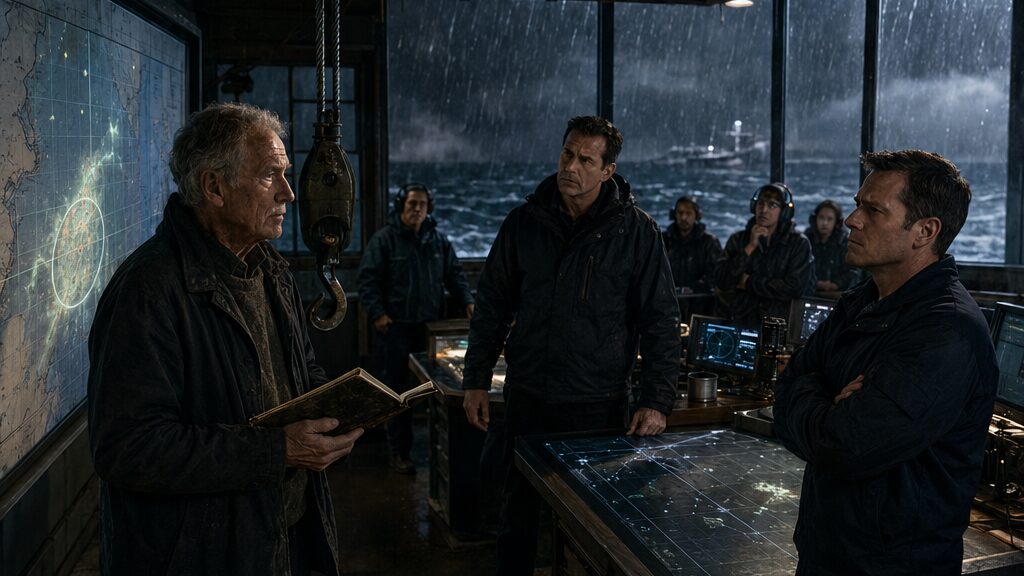
The red marker slid across the wall map and stopped three miles east of where Steven Lewis believed it should.
He stared at it from the back of the command room while rain hammered the harbor windows hard enough to rattle the glass.
Nobody seemed to notice.
The room was crowded with voices, weather updates, radio traffic, and the glow of computer screens. Outside, beyond the dark water, a storm rolled through the coast like a living thing.
Inside, people moved quickly.
Steven remained still.
The dispatcher at the front repeated the latest report.
“Last confirmed signal at twenty-one forty-three. Vessel disabled. One person believed aboard.”
James Wright nodded while studying the digital search model projected across the wall.
“The drift estimate remains unchanged.”
Steven looked from the screen to the harbor beyond the window.
Something felt wrong.
Not dramatic.
Not mysterious.
Just wrong.
The kind of wrong that arrived quietly.
The kind that got people killed.
He pulled a weathered notebook from the pocket of his jacket.
The notebook had followed him through twenty years in the Coast Guard and another decade after retirement. The cover was cracked. Salt stains marked the edges.
Most people assumed it contained memories.
It contained patterns.
Currents.
Wind behavior.
Mistakes.
Lessons paid for by lives.
Steven opened it and compared several pages to the projected search grid.
A low-pressure shift had moved faster than expected.
The software hadn’t fully adjusted.
He checked again.
Then again.
The answer remained the same.
Across the room, Commander Matthew Davis stood near the operations table speaking with two rescue coordinators.
Matthew was younger than Steven by almost thirty years.
Capable.
Respected.
Busy.
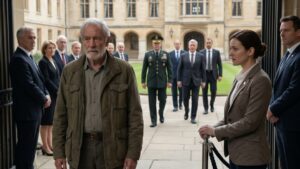
He had invited Steven to observe because the retired veteran occasionally consulted during difficult weather events.
Observe.
Not advise.
Observe.
The distinction had become clearer over the years.
Steven closed the notebook and walked forward.
Matthew noticed him approaching.
“Steven.”
Steven nodded toward the map.
“The current moved.”
James glanced over.
“The model updates every fifteen minutes.”
“I know.”
James returned his attention to the screen.
“The update already accounted for the weather shift.”
Steven studied the projected lines.
“No.”
The room remained focused on work.
Nobody was rude.
Nobody laughed.
The dismissal was quieter than that.
More professional.
More complete.
Matthew folded his arms.
“What are you seeing?”
Steven stepped closer to the wall map.
The missing vessel had vanished nearly four hours earlier.
Most of the search area stretched northeast.
Steven pointed farther south.
“The storm pushed earlier than forecast.”
James shook his head.
“The software doesn’t show that.”
“The software follows reported conditions.”
James answered immediately.
“Exactly.”
Steven looked at him.
“Reported isn’t the same as happening.”
For a second nobody spoke.
Rain pounded against the windows.
The harbor lights shimmered through sheets of water.
Matthew turned back toward the map.
“You think the survivor drifted south?”
“I think she’s already there.”
James exhaled.
“The probability is low.”
Steven nodded.
“It usually is.”
The response irritated James more than an argument would have.
Because Steven wasn’t trying to win.
He was simply stating what he believed.
Matthew studied the projection.
“We’ve got three aircraft already committed.”
Steven said nothing.
Years earlier he would have pushed harder.
He would have argued.
Pressed.
Demanded.
Experience had taught him something else.
People listened best when consequences arrived.
Unfortunately, consequences sometimes arrived too late.
The dispatcher spoke again.
“Still no emergency beacon.”
A silence followed.
That worried Steven more than anything.
Storm survivors usually left traces.
This one seemed to be disappearing.
Matthew checked his watch.
“If we widen the eastern sector—”
Steven looked back toward the windows.
A gust struck the building.
His eyes narrowed.
The wind had changed direction again.
Subtle.
But enough.
He opened the notebook.
A page near the center held notes from a rescue decades earlier.
Different year.
Different vessel.
Same coastline.
Same weather pattern.
He traced a line with his finger.
The memory surfaced instantly.
Not because he wanted it.
Because it refused to leave.
The room continued around him.
Radio calls.
Coordinates.
Forecast updates.
Yet Steven felt himself listening to the storm instead.
The harbor had a language.
Currents had habits.
Most people trusted data.
Steven trusted data too.
He simply knew data arrived after reality.
Matthew walked over.
“You’re certain?”
Steven considered the question.
Certainty was dangerous.
Especially at sea.
Finally he answered.
“No.”
Matthew looked surprised.
Steven pointed toward the southern section.
“But if she’s alive, that’s where she’ll be.”
The words landed heavily.
Not because they were dramatic.
Because they weren’t.
Matthew stared at the map.
James rubbed his forehead.
“We can’t move assets every time someone has a feeling.”
Steven didn’t react.
The phrase bothered Matthew more than it bothered him.
Feeling.
After fifty years around water, people still called observation a feeling.
The commander glanced between the notebook and the digital display.
Old paper.
New technology.
Experience against probability.
The storm against the clock.
Finally Matthew turned away.
“We stay with the current grid.”
The decision was made.
The room moved on.
Steven returned to the back wall.
Nobody had insulted him.
Nobody had mocked him.
And yet he felt older than he had an hour earlier.
Not because they disagreed.
Because they had already decided what kind of knowledge mattered.
Outside, a rescue helicopter sat on the wet runway.
A hoist cable hung beneath its frame while technicians completed inspections under floodlights.
Steven watched the cable sway in the wind.
A simple piece of equipment.
Thousands of lives connected to it over the years.
The sight lingered in his thoughts.
The search continued.
The map remained unchanged.
The storm deepened.
And somewhere beyond the black water, a woman nobody had met was still missing.
Steven looked once more at the southern section of the chart.
The place nobody wanted to search.
The place he could not stop thinking about.
Chapter 2: The Current Beneath the Forecast
The command center grew quieter after midnight.
Not calmer.
Only quieter.
Fatigue had begun replacing urgency.
Coffee cups gathered near computer stations.
Voices lowered.
Eyes narrowed against screens.
The storm remained relentless.
Steven sat alone at a side table beneath a hanging rescue hoist cable displayed from a retired aircraft.
The cable had been mounted years earlier as a memorial to successful rescue operations.
Most people rarely looked at it.
Steven often did.
He could still remember the sound it made when extending beneath a helicopter.
A metallic hum.
Steady.
Reliable.
The sound of possibility.
He opened his notebook again.
Page after page held observations most people would never consider important.
Water temperatures.
Wind shifts.
Current behavior around hidden shoals.
Nothing dramatic.
Just details.
Details were often the difference between finding someone and losing them.
A chair scraped nearby.
Linda Flores sat across from him.
She carried a cup of coffee that looked untouched.
“You haven’t left.”
Steven smiled faintly.
“Neither have you.”
She looked toward the operations floor.
“They’re preparing another update.”
Steven nodded.
Linda glanced at the notebook.
“You really think she’s south?”
“I think that’s where the water wants her.”
The answer made her pause.
Most people talked about storms as random events.
Steven talked about them as systems.
Living systems.
Predictable if respected.
Dangerous if simplified.
Linda leaned forward.
“What are you seeing that everyone else isn’t?”
Steven considered the notebook.
Then the map.
Then the storm outside.
“A correction.”
“That’s all?”
“Most disasters begin with small corrections.”
Before she could respond, a call from the operations floor pulled her away.
Steven remained seated.
The room’s lighting reflected off the glass harbor windows.
Beyond them, darkness covered the ocean completely.
Only occasional navigation lights pierced the blackness.
His eyes drifted again to an old entry in the notebook.
Thirty-one years earlier.
A fishing vessel.
A broken radio.
A survivor found fourteen miles south of every forecast.
He remembered the rescue vividly.
Not because it had succeeded.
Because it almost hadn’t.
The lesson had remained with him ever since.
A voice interrupted his thoughts.
James.
“We’ve updated the model.”
Steven looked up.
James stood beside the wall display.
Several personnel had gathered around.
The projected search area expanded farther east.
Not south.
East.
Steven rose slowly and walked over.
James pointed toward the screen.
“Latest weather feed.”
Steven studied it.
The adjustment made sense.
On paper.
Yet something still resisted.
A discrepancy.
Small.
Annoying.
Persistent.
He stepped closer.
“Where did this pressure reading come from?”
James pointed to a data source.
Steven frowned.
“The buoy is offshore.”
“Correct.”
“It’s also damaged.”
James looked confused.
“What?”
Steven tapped the display.
“The sensor started drifting six hours ago.”
Several people exchanged glances.
James checked another screen.
For the first time uncertainty entered his expression.
“How do you know that?”
Steven opened the notebook.
A simple note.
A recorded discrepancy.
Nothing remarkable.
Just something he had noticed earlier.
Nobody spoke.
The room seemed smaller suddenly.
James entered commands rapidly.
A new report appeared.
His jaw tightened.
“The sensor is reporting inconsistent values.”
Matthew approached.
“What happened?”
James hesitated.
Then answered.
“The buoy may be compromised.”
A brief silence followed.
Matthew looked toward Steven.
Not impressed.
Not amazed.
Just thoughtful.
“What does that change?”
Steven walked to the wall map.
The mounted rescue cable hung above him.
Rain tapped against the windows.
The room watched.
He opened the notebook and placed it beside the chart.
Then he drew a circle around a section of ocean southwest of the official grid.
“If she’s still alive,” he said quietly, “that’s where she’ll be.”
Nobody spoke.
The room stared at the marked location.
A place outside current priorities.
A place unsupported by most forecasts.
James folded his arms.
“We don’t have evidence.”
Steven nodded.
“Not yet.”
Matthew studied the circle.
The commander looked exhausted.
Responsible.
Trapped between procedure and uncertainty.
Finally he said, “We’ll review it.”
Not approval.
Not rejection.
Only delay.
Yet Steven knew what delay meant during storms.
Hours.
Miles.
Possibilities disappearing into water.
He gathered his notebook.
The discussion moved on.
The search grid remained unchanged.
But as he returned to his chair, a radio operator raised a hand.
“Commander.”
Matthew turned.
“We recovered part of the emergency transmission.”
The room quieted immediately.
The operator adjusted the recording.
Static filled the speakers.
Wind.
Crackling interference.
Then a woman’s voice.
Broken.
Faint.
Almost impossible to hear.
“…anchor line…”
More static.
“…current pulling…”
The transmission vanished.
Everyone listened again.
And again.
Steven felt something tighten inside him.
Anchor line.
Current.
Not random words.
Not meaningless.
A clue.
A very specific clue.
His eyes drifted back to the circle he had drawn on the map.
The place nobody wanted to search.
And for the first time all night, he became afraid he might be right.
Chapter 3: Somewhere Inside the Black Water
The first wave nearly tore Pamela Roberts from the wreckage.
She wrapped both arms around the floating section of railing and pressed her face against the freezing metal.
Darkness surrounded her.
The storm had erased everything else.
The boat.
The horizon.
Direction itself.
Only the water remained.
Hours earlier she had been returning from a marine research trip along the coast.
Nothing unusual.
Nothing reckless.
Then the weather shifted.
Too fast.
Faster than forecasts predicted.
One equipment failure became another.
The engine died.
A violent impact damaged communications.
And eventually the sea took the vessel apart piece by piece.
Now she floated alone in the black water.
A length of anchor rope remained tangled around part of the debris.
That rope had become her lifeline.
Every few minutes another wave tried to steal it.
Every few minutes she fought to keep hold.
Her hands had long since gone numb.
Rain struck her face.
Salt burned her eyes.
Time lost meaning.
She measured the night by survival alone.
Hold on.
Breathe.
Hold on again.
At some point she managed to activate the emergency transmitter.
Only briefly.
The battery failed shortly afterward.
She didn’t know if anyone had heard.
Didn’t know if anyone was searching.
The ocean offered no answers.
Only noise.
The current kept pulling.
Always pulling.
Not east.
Not north.
South.
Though Pamela barely realized it.
The movement happened slowly enough to feel invisible.
The storm carried her through darkness while she focused on the next wave.
And the next.
And the next.
Several times she thought about letting go.
Not because she wanted to die.
Because exhaustion made everything seem distant.
Then she would remember a face.
A voice.
A promise.
And she would tighten her grip.
Hours passed.
Her body shook uncontrollably.
The rope cut into her fingers.
The floating railing rose and fell beneath her.
At one point she thought she heard an aircraft.
She looked up.
Nothing.
Only wind.
The disappointment hurt more than she expected.
Hope consumed energy.
And energy was becoming precious.
The night stretched onward.
The storm gradually changed.
Not weaker.
Different.
The waves shifted rhythm.
The wind moved across her left shoulder instead of directly ahead.
She didn’t understand what it meant.
But she felt it.
The current continued carrying her.
Far away, rescue crews debated maps.
Forecasts.
Probabilities.
Pamela knew nothing about any of that.
She knew only cold.
Fear.
And movement.
Near dawn, she spotted a light.
Small.
Brief.
Then gone.
Her heart jumped.
She lifted herself higher on the wreckage.
The light disappeared.
Perhaps imagined.
Perhaps real.
The darkness played tricks.
Minutes passed.
Maybe longer.
Then another light flashed.
Far away.
Moving.
Pamela stared.
This time she knew she wasn’t imagining it.
A sound followed.
Faint.
A distant thumping carried through wind and water.
She closed her eyes.
Listened.
The sound vanished.
Returned.
Vanished again.
Her chest tightened.
Aircraft.
Somewhere.
Not close.
But somewhere.
For the first time all night, hope felt dangerous.
She had seen false signs before.
Reflections.
Cloud breaks.
Imagined engines.
Yet this felt different.
The sound grew stronger.
Slowly.
Very slowly.
Pamela tightened her grip on the rope.
The waves continued rising beneath her.
The storm continued pushing her through darkness.
But now she stared toward the distant sky.
Watching.
Waiting.
Praying she wasn’t hearing things.
The sound came again.
Closer this time.
And through the black horizon she saw a moving light searching across the waves.
Chapter 4: The One Helicopter Left
By dawn, the storm had begun exhausting everyone.
Not because it was weakening.
Because it refused to end.
Matthew Davis stood inside the operations center staring at a screen filled with search coordinates and fuel calculations. The room smelled of coffee, damp clothing, and fatigue.
One aircraft had already returned.
Another was nearing its operational limit.
The ocean remained enormous.
The missing woman remained unseen.
The clock continued moving.
A rescue operation always reached a point where hope collided with resources. Matthew had spent years learning how to make decisions inside that collision.
None of them felt good.
A coordinator approached.
“We’ve covered eighty-seven percent of the assigned sectors.”
Matthew nodded.
“No visual contact.”
“No, sir.”
The coordinator hesitated.
“The probability curve is dropping fast.”
Matthew knew.
Everyone knew.
The numbers sat on every screen in the room.
Survival time.
Exposure.
Water temperature.
Distance.
Forecast drift.
Statistics rarely cared about optimism.
Across the room, Steven sat quietly near the windows.
His notebook rested on his lap.
He hadn’t argued since midnight.
Hadn’t repeated himself.
Hadn’t tried to force anyone’s hand.
Somehow that bothered Matthew more than if the older man had become angry.
People who were wrong usually fought harder.
Steven simply waited.
Matthew looked back toward the southern circle still visible on the wall chart.
The location remained outside the primary search grid.
Officially.
Unofficially, Matthew found himself glancing at it every few minutes.
A radio crackled.
A pilot’s voice emerged through static.
“Negative contact. Returning to base.”
Another section of ocean crossed off.
Another possibility erased.
Matthew rubbed his eyes.
When he looked up, Linda Flores was standing nearby.
“You should get some rest.”
He almost laughed.
“After this.”
“You said that three hours ago.”
Matthew looked toward Steven.
“Do you believe him?”
Linda followed his gaze.
The veteran sat motionless, watching rain slide down the harbor glass.
“I don’t know,” she said honestly.
“But I think he believes himself.”
That wasn’t the same thing.
Yet it stayed with Matthew.
He walked toward the windows.
Steven noticed him approaching.
Neither man spoke immediately.
Outside, waves struck the harbor breakwater.
A rescue helicopter sat on the runway under gray morning light.
Its hoist cable swung gently beneath the fuselage as technicians prepared it for inspection.
The sight pulled Matthew’s attention for a moment.
Then he looked back at Steven.
“You haven’t changed your mind.”
“No.”
“You still think she’s there.”
Steven nodded.
Matthew folded his arms.
“Why?”
The older man remained silent long enough that Matthew wondered if he intended to answer at all.
Finally Steven said, “Because the storm changed before the forecast did.”
“That’s it?”
“No.”
“What else?”
Steven looked toward the ocean.
“I’ve seen this one before.”
Matthew waited.
Nothing more came.
The answer irritated him slightly.
Not because it was vague.
Because it sounded sincere.
Years of training pushed Matthew toward data.
Years of command pushed him toward procedure.
Yet somewhere beneath both things a quieter question had begun growing.
What if Steven was right?
A sudden call from the operations floor interrupted them.
“Commander.”
Matthew turned.
The radio operator looked up from a headset.
“We isolated more of the transmission.”
Everyone in the room seemed to stop moving.
The recording played.
Static.
Wind.
Then the woman’s voice again.
Faint.
Broken.
“…rope still attached…”
A burst of interference followed.
“…drifting south…”
The room became completely silent.
Matthew felt something shift.
Not certainty.
Not proof.
Something smaller.
Something more dangerous.
Possibility.
He looked toward James.
The search coordinator stared at the recording equipment.
No one spoke for several seconds.
Finally James cleared his throat.
“That could mean anything.”
It could.
Matthew knew that.
But he also knew the words matched Steven’s concerns too closely to ignore.
He walked toward the wall map.
The southern circle seemed larger now.
More real.
The veteran said nothing.
He didn’t need to.
The room had finally begun asking the same question he had been asking all night.
Matthew studied fuel reports.
Aircraft availability.
Weather windows.
Everything pointed toward the same conclusion.
One helicopter remained capable of flying another search pattern before conditions worsened again.
One.
The decision settled heavily onto his shoulders.
If the search failed, critics would call it wasted effort.
If he ignored the possibility and the woman was there, he would carry that much longer.
The room waited.
Matthew stared at the coordinates.
Then he made the choice.
“Launch one final mission.”
Several heads lifted.
James looked surprised.
Matthew continued.
“Search Steven’s sector.”
Nobody celebrated.
Nobody argued.
The decision simply entered the room like another weather report.
Practical.
Necessary.
Potentially too late.
Steven looked down at his notebook.
For the first time all night, relief touched his face.
Only briefly.
Then it disappeared.
Because he understood something everyone else did.
Finding the right place didn’t guarantee finding a person.
Outside, ground crews began moving toward the helicopter.
Its rotors started turning.
The hoist cable swayed beneath the aircraft.
And as the storm rolled over the harbor, Matthew watched the machine rise into the gray sky carrying the last meaningful chance they had left.
Chapter 5: Hanging Above the Waves
Linda Flores had flown enough rescue missions to know when fear entered a helicopter.
It rarely announced itself.
It settled into the cabin quietly.
A glance.
A tightened jaw.
A hand gripping equipment slightly harder than necessary.
This flight carried that feeling from the beginning.
Rain hammered the aircraft.
The ocean below looked less like water than moving darkness.
Linda sat strapped beside emergency gear while the helicopter fought through turbulence.
Across from her, the crew chief monitored the hoist system.
The cable drum vibrated softly beneath his hand.
A familiar sound.
Mechanical.
Reliable.
The pilot’s voice came through the headset.
“Entering search area.”
Linda looked through the side window.
Nothing.
Only waves.
The coordinates Steven had insisted upon lay directly beneath them.
The final search sector.
The final attempt.
No one said it aloud, but everyone understood.
If this failed, the operation would end.
Minutes passed.
The aircraft followed a search pattern across the water.
Rain blurred visibility.
The crew chief leaned toward the window.
“Negative contact.”
Linda checked equipment automatically.
Thermal blanket.
Medical kit.
Oxygen.
Routine tasks helped keep fear organized.
Another pass.
Another sweep.
Nothing.
The pilot adjusted course.
A wave exploded against a rocky outcropping far below.
The helicopter climbed slightly.
Then the crew chief suddenly froze.
“I’ve got something.”
Every head turned.
The helicopter banked.
Linda pressed toward the window.
At first she saw only water.
Then she saw it.
A tiny shape rising and falling among the waves.
Not debris.
A person.
“Contact confirmed.”
The words filled the cabin instantly.
The pilot circled.
The crew chief kept his eyes locked on the target.
“Female. Holding wreckage.”
Linda felt a sharp rush of relief.
Not because the rescue was finished.
Because it had become possible.
The helicopter descended carefully.
Wind battered the aircraft.
Spray exploded upward from the ocean.
The survivor remained below.
Small.
Fragile.
Alive.
The crew chief prepared the hoist.
The cable began extending beneath the helicopter.
Linda watched it disappear toward the waves.
The sight reminded her unexpectedly of the memorial cable hanging in the command center.
The one Steven often looked at.
Years of rescues.
Years of chances.
The basket reached the water.
The survivor struggled toward it.
For one terrible moment a wave rolled over both.
Linda’s stomach tightened.
Then the woman emerged again.
Still holding on.
Still fighting.
The crew guided her carefully.
Minutes stretched.
The storm seemed determined to interfere with every movement.
Eventually the basket locked.
The hoist began lifting.
Slowly.
Painfully slowly.
The woman rose above the black water.
Suspended between sea and sky.
Linda could see exhaustion written across every movement.
Water streamed from her clothing.
One hand remained wrapped around a length of rope even now.
As if letting go might somehow pull her back into the ocean.
The helicopter crew worked without speaking unnecessarily.
Experience reduced communication to essentials.
“Steady.”
“Three feet.”
“Clear.”
The basket reached the door.
Hands grabbed.
Pulled.
Guided.
Then suddenly the survivor was inside.
Safe.
At least safe enough to begin helping.
Linda moved immediately.
The woman trembled violently.
Her lips had turned pale.
Her eyes struggled to focus.
Linda wrapped a thermal blanket around her shoulders.
The reflective material crackled softly.
The survivor tried to speak.
Nothing came out.
“Easy,” Linda said.
“You’re okay.”
The woman stared at her.
Disbelieving.
Overwhelmed.
Alive.
The helicopter climbed away from the ocean.
Nobody relaxed yet.
Not fully.
But the atmosphere had changed.
The impossible had become real.
Linda checked vital signs while the survivor slowly regained awareness.
Eventually the woman found enough strength to speak.
Barely above a whisper.
“How?”
Linda leaned closer.
“What?”
The woman’s eyes drifted toward the storm outside.
Then back.
“How did you know where I was?”
Linda hesitated.
The answer felt strangely important.
“A man named Steven.”
The woman blinked.
Confused.
Linda continued adjusting the blanket.
“He told them where to look.”
The survivor stared at her for a long moment.
As if trying to remember the name.
Then she whispered something so softly Linda almost missed it.
“What if they hadn’t listened?”
The question lingered in the cabin.
No one answered.
Because everyone already knew.
Chapter 6: Why Steven Knew
The hospital felt strangely quiet after the storm.
Not silent.
Just detached from the urgency that had consumed the harbor all night.
Steven sat beside a window overlooking a parking lot still wet from rain. The notebook rested in his hands.
For the first time in nearly twenty-four hours, nobody needed a decision from him.
Nobody needed a prediction.
The search was over.
Pamela Roberts was alive.
Yet relief refused to settle completely.
A nurse passed through the hallway.
A television murmured somewhere behind a half-open door.
Steven looked down at the notebook.
The page remained open to an entry more than three decades old.
He had not intended to revisit it.
Some memories returned whether invited or not.
A soft knock interrupted him.
Linda stepped into the waiting area.
“Thought I’d find you here.”
Steven smiled faintly.
“You usually do.”
She sat beside him.
For a moment neither spoke.
The hospital carried its own rhythm. Monitors beeped in distant rooms. Footsteps echoed through polished corridors.
Finally Linda nodded toward the notebook.
“The famous notebook.”
Steven glanced down.
“Not very famous.”
“Maybe it should be.”
He closed it gently.
“No.”
The answer came quickly.
Too quickly.
Linda noticed.
She waited.
Eventually Steven looked back toward the window.
“The first time I saw that storm pattern, I was thirty-nine.”
Linda remained silent.
The story arrived slowly.
As if every sentence had to pass through years before reaching the present.
“A fishing boat lost power during a winter storm.”
He paused.
“We searched where the forecasts told us to search.”
Linda listened carefully.
Steven’s eyes never left the rain-dark pavement outside.
“The current changed early.”
His hand tightened slightly against the notebook.
“I saw it.”
Another pause.
“Noticed it.”
“What happened?”
Steven swallowed.
“We stayed with the model.”
The answer was simple.
Its weight was not.
Linda understood immediately.
The rest barely needed explaining.
“We found the boat two days later.”
The hospital noise seemed distant suddenly.
Steven lowered his gaze.
“There was one survivor.”
Only one.
The unspoken words filled the space between them.
Years of rescue work had taught Linda something important.
The worst losses were often the ones attached to uncertainty.
Not knowing.
Not speaking.
Not insisting.
She looked at the notebook.
“That’s why you kept all this.”
Steven nodded.
“After that rescue I started writing everything down.”
Currents.
Pressure shifts.
Mistakes.
Near misses.
Things that didn’t fit official reports.
Things he never wanted to forget.
The notebook had begun as guilt.
Eventually it became discipline.
Years passed.
Then decades.
The pages accumulated.
Most people saw old notes.
Steven saw promises.
Linda studied him carefully.
“You blamed yourself.”
The veteran looked out the window again.
“Sometimes.”
“Still?”
A faint smile appeared.
Tired.
Honest.
“Less than I used to.”
The answer carried enough truth to hurt.
For a while they sat quietly.
Then footsteps approached.
Matthew entered the waiting area.
He looked exhausted.
The kind of exhaustion that lingered after responsibility finally loosened its grip.
“Pamela’s stable.”
Steven nodded.
He had expected as much.
Still, hearing it helped.
Matthew sat across from them.
For several moments nobody spoke.
Finally he looked toward Steven.
“I should’ve listened earlier.”
Steven met his eyes.
The commander continued before the older man could answer.
“Maybe it wouldn’t have changed anything.”
He hesitated.
“Maybe it would’ve.”
The admission seemed difficult.
Not dramatic.
Just genuine.
Steven considered it.
Then shrugged lightly.
“She’s alive.”
Matthew stared at him.
The response somehow made the apology harder.
Because there was no accusation waiting on the other side.
No victory.
No scorekeeping.
Only the simple fact that someone had survived.
The commander exhaled slowly.
“I kept thinking experience should support the data.”
Steven nodded.
“It should.”
Matthew frowned.
“Then what was different?”
The older man tapped the notebook gently.
“The data arrived late.”
Nobody spoke.
The answer settled quietly into the room.
Not a rejection of technology.
Not a triumph of old methods.
Something smaller.
Experience had noticed what information hadn’t caught yet.
The distinction mattered.
A nurse appeared at the end of the hallway.
“Mr. Lewis?”
Steven looked up.
“Yes?”
The nurse smiled.
“Pamela is asking for you.”
The request surprised him.
Not because she remembered his name.
Because she wanted to see him.
Steven closed the notebook.
For a moment he remained seated.
The nurse waited patiently.
Linda smiled.
Matthew looked away politely.
Finally Steven stood.
The hallway seemed longer than it should have.
As he followed the nurse, old memories moved beside him.
Storms.
Rescues.
Successes.
Failures.
People found.
People lost.
All of them somehow connected to the weathered notebook tucked beneath his arm.
At the end of the corridor the nurse opened a door.
Pamela sat upright in bed.
Pale.
Tired.
Alive.
She looked toward him immediately.
And Steven suddenly realized she wasn’t merely a survivor anymore.
She was the person who knew exactly how close everyone had come to being wrong.
Chapter 7: The Person Who Finally Listened
A week later, sunlight returned to the harbor.
The storm felt almost imaginary now.
Only scattered debris along the shoreline hinted at what had happened.
Steven walked slowly through the training building near the docks.
The place had changed little over the years.
Photographs lined the walls.
Old rescue equipment occupied display cases.
New recruits occasionally passed through the halls carrying manuals and coffee cups.
Life moving forward.
The way it always did.
At the far end of the building, a rescue hoist cable hung from a steel support beam.
The same cable he had looked at countless times.
The polished metal caught the morning light.
For years Steven had seen it as a reminder of responsibility.
Today it felt different.
Not lighter.
Just different.
Voices drifted from a nearby meeting room.
Matthew had invited several people involved in the operation to review the rescue.
Nothing formal.
No ceremony.
No speeches.
Just a discussion.
Exactly the way Steven preferred it.
When he entered, Linda sat near the back of the room.
James stood beside a projection screen.
Matthew reviewed search data with several volunteers.
The atmosphere felt practical.
Comfortable.
Steven took a chair quietly.
Nobody stopped the meeting.
Nobody announced his arrival.
He appreciated that.
The discussion moved through weather reports and communication delays.
Search patterns.
Aircraft deployment.
Equipment performance.
The same details that determined whether operations succeeded or failed.
Eventually James displayed the search map.
The familiar chart appeared on the screen.
Along with the circle Steven had drawn.
The room grew still.
James looked toward it for a moment.
Then toward Steven.
“I spent three days reviewing the drift models.”
His voice remained professional.
Measured.
“I couldn’t make them produce that location.”
A few people smiled.
James shook his head slightly.
“Not with the information we had at the time.”
Steven said nothing.
James continued.
“The notebook did better.”
Several people laughed quietly.
Not at Steven.
With him.
The difference mattered.
The search coordinator looked almost uncomfortable.
“I should’ve paid more attention.”
Steven met his eyes.
“You were doing your job.”
James nodded.
Yet the acknowledgment remained.
Simple.
Unforced.
Real.
The discussion continued.
Lessons were recorded.
Procedures updated.
Several recommendations emerged from the review.
One of them involved preserving observational notes alongside digital forecasts during severe weather events.
Linda noticed Steven’s expression when that decision was made.
He didn’t smile much.
But he smiled then.
Only briefly.
Later, as people began leaving, Matthew approached.
He carried a small folder.
“Something I wanted to show you.”
Steven followed him down the hallway.
They stopped near the training room.
Inside, new recruits listened to an instructor discussing rescue procedures.
The hoist cable hung prominently at the front.
Matthew opened the folder.
A page inside described changes approved after the operation.
Additional review requirements.
Current verification procedures.
Observation logs.
Handwritten notes.
Steven read quietly.
Then looked up.
“You didn’t need to do this.”
“Maybe.”
Matthew folded the folder closed.
“But we’re doing it anyway.”
The commander hesitated.
“When you retire from something, people start treating your experience like history.”
Steven smiled faintly.
“Sometimes it is history.”
“Not all of it.”
The words lingered.
Neither man seemed interested in turning them into something larger.
The harbor outside shimmered beneath clear skies.
A week earlier the same water had looked endless and hostile.
Now it looked peaceful.
Steven knew better than to trust appearances.
The ocean changed quickly.
People sometimes did too.
Later that afternoon he walked toward the docks.
A familiar voice called his name.
He turned.
Pamela approached slowly from the parking area.
She still moved carefully.
Recovery remained visible in every step.
Yet she looked stronger than she had in the hospital.
They met near the edge of the pier.
For a moment neither spoke.
The water rolled gently beneath them.
Finally Pamela looked toward the harbor.
“I wanted to see where it happened.”
Steven nodded.
Many survivors did.
She rested her hands on the railing.
“I remember hearing the helicopter.”
A small smile appeared.
“I thought I imagined it.”
“You didn’t.”
They stood quietly.
The silence felt comfortable.
Not empty.
Pamela looked at him.
“They told me you kept arguing for that search area.”
“I didn’t argue very much.”
She laughed softly.
“That’s what makes it worse.”
Steven smiled.
The harbor wind moved across the dock.
Pamela’s gaze drifted toward the training building.
“They almost stopped looking.”
The statement wasn’t accusatory.
Just factual.
Steven considered the water below.
“People make decisions with the information they have.”
“You gave them information.”
“I gave them an opinion.”
Pamela shook her head.
“No.”
Her voice remained gentle.
“You gave them yourself.”
The words caught him off guard.
For several seconds he had no response.
Because she understood something many people never had.
The notebook.
The observations.
The persistence.
None of it came from confidence.
It came from responsibility.
From refusing to forget old mistakes.
Pamela looked toward the horizon.
“If you’d been wrong, you still would’ve tried.”
Steven nodded slowly.
“Yes.”
“I think that’s what matters.”
The wind carried the sound of gulls across the harbor.
Nearby, young trainees moved equipment toward a storage building.
One of them glanced toward Steven and offered a respectful nod.
Nothing dramatic.
Nothing ceremonial.
Just recognition.
The kind earned gradually.
The kind that lasted.
Pamela followed his gaze toward the trainees.
“Are you going to keep helping them?”
Steven looked toward the training building.
Toward the hoist cable visible through the windows.
Toward the future moving quietly around him.
“I think so.”
Pamela smiled.
“Good.”
They remained on the dock a while longer.
Watching boats move through calm water.
Watching sunlight dance across the harbor that had nearly taken everything from both of them in different ways.
For the first time in years, Steven no longer felt like an observer waiting for people to stop listening.
Someone had listened.
Then another.
And another.
Not because he had proven himself extraordinary.
Because experience had finally been treated as something worth hearing.
The story has ended.