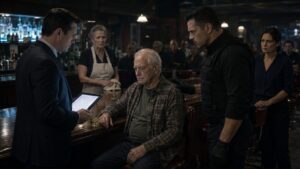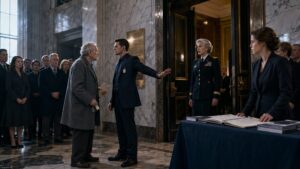
They Tried To Remove The Elderly Guest Until His Name Appeared Above Every Door In The Building
Chapter 1: The Message Before The Gala Doors
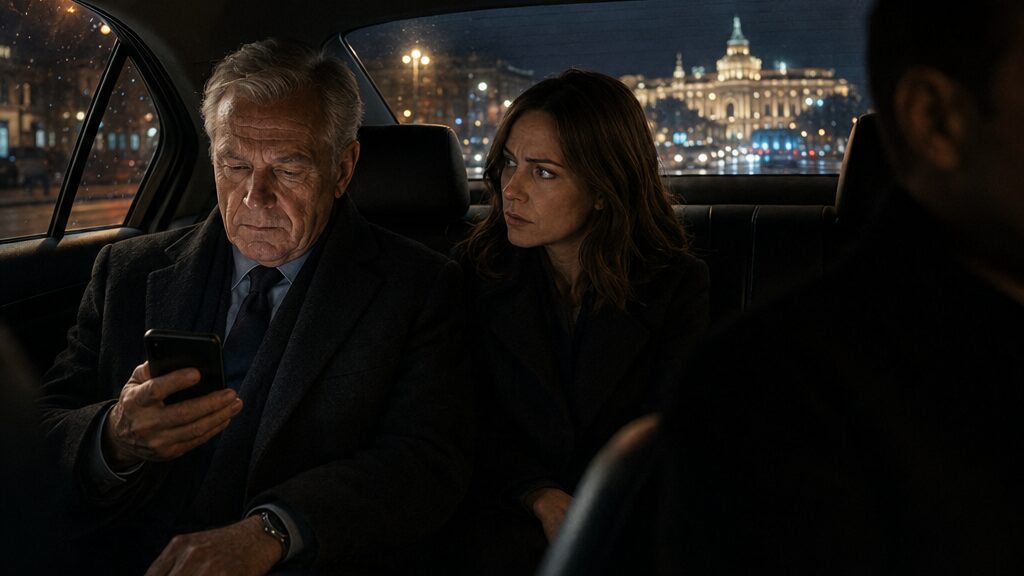
The message arrived while the car was still three blocks from the foundation.
Stephen Walker did not react immediately.
The phone lit the deep lines of his face for a second before he lowered it toward his lap.
Sarah, seated beside him, noticed the change anyway.
“What is it?” she asked.
Stephen looked through the window instead of answering.
Outside, downtown lights reflected across the glass. Black sedans rolled toward the same destination as theirs. The city museum and military heritage foundation had spent months advertising tonight’s anniversary gala. Veterans, donors, officers, and politicians were expected.
Stephen had almost declined.
Sarah still wasn’t sure why he had changed his mind.
The phone remained in his hand.
A second vibration came.
Stephen read it.
This time Sarah caught a glimpse before the screen went dark.
Guest removal failed. He’s still coming.
Her stomach tightened.
“What’s that supposed to mean?”
Stephen slipped the phone into his coat pocket.
“Probably nothing.”
“That didn’t look like nothing.”
The answer never came.
The driver stopped at a light.
For a moment the interior of the car filled with red reflections from the traffic signal. Stephen’s face looked older in that light. Not weak. Just tired.
His dark overcoat had been repaired more than once. The collar showed wear. His shoes were polished but old.
Nothing about him looked important.
That had always irritated Sarah.
People saw an old man before they saw her father.
“You should’ve let them send a car,” she said.
“They offered.”
“You could have accepted.”
“I didn’t need one.”
She laughed softly.
“You never need anything.”
Stephen finally looked at her.
“That’s not true.”
The answer surprised her.
For a moment she thought he might continue.
Instead he turned back toward the window.
The silence returned.
Sarah had spent most of her life discovering pieces of her father’s past from other people.
Not from him.
Former officers would stop him in airports.
Strangers would shake his hand.
Old veterans occasionally sent letters.
Stephen rarely explained any of it.
After retirement he had disappeared into ordinary life with almost unnatural determination.
The gala tonight marked the fiftieth anniversary of the Walker Defense Foundation.
Even the name made Sarah uncomfortable.
Her father had argued against it when it was founded.
The board had kept the name anyway.
Yet for years he had attended almost nothing connected to it.
Now he was going.
And somebody apparently wanted him removed.
The phone buzzed again.
Stephen glanced down.
Sarah watched carefully.
This time she saw only part of the text.
Jason confirms no accommodation.
Then the screen locked.
“Who’s Jason?”
No answer.
“Dad.”
Stephen sighed.
“Event staff.”
“What event staff sends messages like that?”
“The kind that’s worried about appearances.”
Sarah frowned.
“What does that mean?”
The driver turned toward the museum district.
Ahead, banners hung from streetlights.
WALKER DEFENSE FOUNDATION — 50 YEARS OF SERVICE.
Stephen stared at one of the banners.
Not proudly.
Almost sadly.
“Things change,” he said.
“What things?”
“People remember accomplishments.”
His voice was quiet.
“They forget reasons.”
Before Sarah could ask what he meant, the car entered the security lane.
Several vehicles waited ahead.
A police officer directed traffic toward the museum entrance.
The foundation occupied the restored military history wing attached to the building.
It was larger than Sarah remembered.
Brighter.
More polished.
More expensive.
The closer they came, the more uncomfortable Stephen seemed.
Not nervous.
Something else.
Like a man approaching a grave.
The driver pulled to the curb.
An attendant opened the door.
“Welcome, sir.”
Stephen nodded.
No one recognized him.
The attendant immediately turned toward a younger couple arriving behind them.
Sarah noticed.
Stephen did not appear surprised.
They entered the broad stone plaza leading toward the museum.
Guests moved through security checkpoints.
A string quartet played somewhere inside.
The foundation logo appeared on banners, signs, and electronic displays.
The evening looked flawless.
Too flawless.
Stephen stopped walking.
For a second Sarah thought his old knee had begun bothering him again.
Instead he looked toward a bronze dedication wall near the entrance.
Hundreds of names covered it.
Donors.
Directors.
Benefactors.
His eyes lingered on the wall.
Then he continued walking without saying anything.
“You okay?”
“Fine.”
“You don’t sound fine.”
“I’m here.”
That was all he offered.
Near the entrance doors, groups of guests gathered beneath bright lights.
Expensive suits.
Military uniforms.
Board members.
Photographers.
The contrast between them and Stephen’s worn coat could not have been clearer.
Sarah noticed several people glance past him as if he were merely another elderly veteran invited to fill a seat.
The foundation bearing his name seemed strangely uninterested in him.
The thought bothered her.
Inside the first security checkpoint, a young clerk checked registrations.
Guests presented invitations.
The line moved quickly.
Stephen reached into his coat.
His fingers hesitated around an envelope that looked decades older than everything around it.
The paper had yellowed.
The corners were worn.
Sarah noticed it immediately.
“What is that?”
“An invitation.”
“That thing looks older than I am.”
A faint smile appeared.
“Almost.”
Before she could inspect it, he returned it to his pocket.
Another clue.
Another question.
The line advanced.
Stephen’s phone vibrated once more.
He looked down.
The screen reflected briefly in his glasses.
Sarah caught only three words.
He’s still coming.
Nothing else.
No sender.
No context.
Just those words.
Stephen read the message.
Locked the phone.
And slipped it away.
His face never changed.
That frightened her more than panic would have.
The clerk waved forward the guests ahead of them.
The main entrance doors opened.
Warm light spilled into the night.
Music drifted outward.
The event had begun.
Stephen stood motionless for a second.
Then he adjusted the sleeve of his old coat.
Sarah noticed a faint scar along his wrist.
One she had never asked about.
One of many.
“Last chance,” she said. “Tell me what’s going on.”
His eyes remained on the doors.
For a long moment he said nothing.
Then he spoke quietly.
“I expected this.”
Sarah stared at him.
The doors opened again.
Guests disappeared inside.
And for the first time all evening, she wondered whether her father had come to the gala knowing someone would try to keep him out.
Chapter 2: The Man Who Was Not On The List
The problem began before Stephen even reached the registration desk.
A security guard stepped slightly into his path.
“Invitation, sir.”
The guard’s tone remained polite.
Stephen handed over the envelope.
The guard looked confused almost immediately.
“This isn’t the current format.”
“It was sent to me.”
The guard turned the envelope over.
Sarah saw the old foundation seal pressed into the paper.
Not printed.
Pressed.
Like something from another era.
The guard hesitated.
“I’ll need registration confirmation.”
“Of course.”
The line behind them continued moving.
Guests entered.
Names were checked.
Badges were printed.
Everything flowed smoothly.
Until Stephen.
The guard typed.
Paused.
Typed again.
A crease formed across his forehead.
“I don’t see your name.”
Sarah stepped forward.
“Check again.”
The guard looked uncomfortable.
“What name, sir?”
“Stephen Walker.”
The guard froze.
Only for a second.
Then he returned to the screen.
More typing.
More confusion.
Finally he shook his head.
“I’m sorry. There’s no registration under that name.”
Sarah laughed in disbelief.
“That’s impossible.”
The guard seemed increasingly nervous.
Before he could respond, another man approached from inside the entrance.
Young.
Sharp suit.
Perfect posture.
Badge clipped to his lapel.
Jason Roberts.
Operations Director.
His attention immediately settled on Stephen’s coat, then the invitation.
A quick evaluation.
A quick conclusion.
“What seems to be the issue?”
The guard explained.
Jason extended a hand.
“May I?”
Stephen passed him the invitation.
Jason inspected it.
His expression changed from confusion to irritation.
“This invitation isn’t valid for tonight’s event.”
“It came from the foundation.”
“It may have years ago.”
“It arrived six weeks ago.”
Jason looked up.
For the first time he truly studied Stephen.
Not as a person.
As a complication.
“The guest list is final.”
“Then perhaps the list is mistaken.”
Jason smiled politely.
The kind of smile designed to end conversations.
“The list isn’t mistaken.”
Stephen remained calm.
“You can check the name again.”
Jason folded the invitation.
“Sir, tonight’s attendance is restricted.”
Sarah stepped forward.
“Restricted from who?”
“From unregistered attendees.”
“My father isn’t unregistered.”
“According to the records—”
“Your records are wrong.”
Several nearby guests had begun watching.
Jason noticed.
That seemed to bother him more than the dispute itself.
“We can discuss this away from the entrance.”
Stephen spoke before Sarah could answer.
“That’s not necessary.”
Jason blinked.
“I beg your pardon?”
“If I don’t belong here, you should be able to explain why.”
The words were calm.
No anger.
No challenge.
Somehow that made the tension worse.
Jason glanced toward the growing crowd.
Board members were arriving.
Donors.
Important guests.
Everything depended on smooth appearances.
An elderly man arguing at the entrance was exactly the sort of disruption he feared.
“Sir, I’m trying to help.”
“No,” Stephen replied gently. “You’re trying to move me.”
For a moment neither spoke.
The security guard shifted uncomfortably.
Sarah watched Jason’s patience thin.
The man wasn’t cruel.
But he was accustomed to being obeyed.
And Stephen was not cooperating.
Jason handed back the invitation.
“I’ll need you to step aside.”
The words landed harder than they should have.
Because everyone nearby heard them.
An elderly veteran.
A worn coat.
A public dismissal.
Stephen accepted the invitation without argument.
He stepped aside.
Sarah stared at him.
“That’s it?”
He looked at her.
“What would you like me to do?”
“Tell them who you are.”
A shadow crossed his face.
Then disappeared.
“No.”
Jason was already directing attention elsewhere.
The situation, in his mind, had been solved.
Except it hadn’t.
A few minutes later, one of the security staff approached Stephen again.
“Sir, may I see the invitation one more time?”
Jason turned.
Annoyed.
The guard pointed toward a symbol stamped in the corner.
A symbol none of them had noticed before.
An authorization mark.
Old.
Nearly faded.
The guard frowned.
“I’ve never seen this code.”
Jason took the invitation again.
His expression changed slightly.
Not recognition.
Concern.
“Where did you get this?”
“You’ve already asked.”
Jason ignored the answer.
The symbol bothered him.
It shouldn’t exist.
Not on a standard guest invitation.
Sarah saw uncertainty enter the situation for the first time.
A small victory.
But only a small one.
Jason called over the registration clerk.
The clerk stared at the mark.
Then whispered something.
Jason’s jaw tightened.
“What does it mean?” Sarah asked.
Neither answered.
The clerk hurried back to the desk.
A moment later she returned carrying an old binder from a locked cabinet.
Pages turned.
Names checked.
Nothing.
Then her phone buzzed.
She glanced at the screen.
Her eyes widened.
“Jason…”
“What?”
She handed him the phone.
Jason read.
Color drained slightly from his face.
Not fear.
Confusion.
The message contained only a verification notice from foundation records.
Authorization level confirmed.
Legacy status active.
No further explanation.
No name.
No source.
Just confirmation.
Jason looked from the phone to Stephen.
For the first time all evening, uncertainty replaced certainty.
And Sarah realized someone inside the foundation had just contradicted him.
Chapter 3: Names Hidden In Old Photographs
Amanda Hill almost ignored the photograph.
She was carrying a stack of archival folders through the museum’s lower records room when a call from the registration desk interrupted her work.
“Can you verify a legacy authorization code?”
Amanda stopped walking.
“A what?”
The clerk repeated the number.
Amanda frowned.
Nobody used legacy codes anymore.
The foundation had digitized nearly everything years ago.
“Where did you find it?”
“On an invitation.”
“What kind of invitation?”
“I don’t know.”
The hesitation caught Amanda’s attention.
Most administrative mistakes were boring.
This one sounded different.
She set down the folders.
“I’ll come look.”
Ten minutes later she stood beside the registration desk examining Stephen’s invitation.
The paper alone made her uneasy.
Nobody printed invitations like this anymore.
The seal matched early foundation records.
So did the authorization mark.
Jason stood nearby, visibly impatient.
“Can we resolve this?” he asked.
Amanda ignored him.
She turned the invitation over.
Her eyes narrowed.
“Where’s the guest?”
Jason pointed toward a waiting area near the entrance.
Stephen sat quietly beside Sarah.
Neither seemed interested in causing trouble.
Amanda studied him from a distance.
Something about his face felt familiar.
Not personally familiar.
Historically familiar.
Like a photograph she had seen before.
She couldn’t place it.
Yet.
“Has anyone checked the original records?” she asked.
Jason folded his arms.
“The digital records.”
“No. The originals.”
“Why would we need those?”
Amanda looked up.
“Because whoever issued this invitation wasn’t using current systems.”
Jason’s patience visibly thinned.
“We’re already behind schedule.”
“And if you’re wrong?”
The question lingered.
Amanda took the invitation and headed toward the archive level.
Jason reluctantly followed.
The archive occupied a quiet section beneath the museum galleries.
Few guests ever visited.
Rows of cabinets lined the walls.
Boxes of documents stretched back decades.
Amanda unlocked a records room.
Inside, dust and history shared the same air.
She found an index binder from the foundation’s earliest years.
The authorization symbol appeared three pages in.
Her heartbeat quickened.
“That’s impossible.”
Jason leaned closer.
“What?”
Amanda pointed.
The code wasn’t assigned to donors.
Or board members.
Or sponsors.
It belonged to a category no longer used.
Founding Access.
Jason frowned.
“What does that mean?”
“It means whoever carries this invitation isn’t a regular guest.”
“Then why isn’t he in the system?”
Amanda kept turning pages.
The answer wasn’t there.
Neither was the name.
Several records appeared missing.
Entire references jumped from one page to another.
As though sections had been removed decades ago.
“That’s strange.”
Jason looked annoyed rather than concerned.
“We don’t have time for strange.”
Amanda wasn’t listening.
She was staring at an old photograph attached to one of the folders.
A group of officers stood beside the unfinished foundation building.
Construction equipment surrounded them.
The image had faded.
Most faces were difficult to identify.
Except one.
Amanda slowly picked up the photograph.
The man looked younger.
Broader.
Standing straight beneath the sun.
Yet the eyes were unmistakable.
Stephen Walker.
The elderly man sitting upstairs.
Amanda felt a chill.
Not because she knew who he was.
Because she suddenly realized he belonged in the picture.
Not beside it.
In it.
“Jason.”
He barely glanced over.
“What now?”
She held up the image.
“That’s him.”
Jason studied it.
“No.”
“It is.”
“The guest?”
“Yes.”
Jason looked again.
His confidence weakened slightly.
“Maybe he served with the foundation.”
Amanda shook her head.
“No.”
Something larger hid inside the missing records.
She could feel it.
The photograph should have contained identifying information.
Instead, the caption had been removed.
Carefully.
Deliberately.
The space beneath the image had been cut away.
Someone had altered the archive.
Jason noticed it too.
“Who would do that?”
Amanda answered honestly.
“I don’t know.”
For the first time all evening, uncertainty reached both of them.
A few minutes later Amanda located another file.
Then another.
The same pattern repeated.
Missing names.
Missing signatures.
Missing references.
Not erased entirely.
Just disconnected.
As if somebody had separated a man from his history without destroying the history itself.
The pieces remained scattered.
Incomplete.
Difficult to see unless someone looked carefully.
A foundation employee entered the archive room.
“Board members are asking questions.”
Jason rubbed his forehead.
“Of course they are.”
The employee handed him a printed note.
Jason read it.
His expression tightened.
“What?”
“The verification notice got forwarded.”
“To whom?”
“The board.”
Amanda blinked.
“Already?”
Jason nodded grimly.
Now people were paying attention.
The situation could no longer be quietly dismissed.
He looked toward the staircase.
Then toward Stephen’s invitation.
Then back toward the photograph.
For the first time he seemed less concerned about appearances and more concerned about being wrong.
Amanda carefully placed the photograph inside a protective sleeve.
There was something else.
Something she had missed.
At the bottom corner of the image, partly hidden by age and damage, another figure stood beside Stephen.
The face was difficult to see.
But the uniform wasn’t.
A general officer.
And beneath the damaged caption remained one surviving word.
COMMANDER.
Amanda stared at it.
The room suddenly felt smaller.
Jason stepped closer.
“What is it?”
She handed him the photograph.
His eyes moved to the surviving word.
Silence followed.
Neither knew exactly what it meant.
Only that the elderly man upstairs had somehow been connected to the foundation long before most of its current leadership arrived.
And somebody had gone to considerable effort to make that connection difficult to find.
Amanda slipped the photograph into a folder.
Then made a decision.
“I’m bringing this upstairs.”
Jason didn’t stop her.
Because for the first time that evening, he wanted answers too.
Chapter 4: The Foundation Nobody Remembered Correctly
The whispers began before Amanda reached the ballroom.
Guests who knew nothing about the situation sensed something had changed.
Board members gathered in small groups.
Phones appeared.
Messages circulated.
Questions multiplied.
At the center of it all sat Stephen Walker.
Exactly where Jason had reluctantly allowed him to wait.
Not inside the gala.
Not fully outside it.
A compromise that satisfied nobody.
Sarah saw Amanda approaching first.
The archivist carried a folder pressed tightly against her side.
Behind her walked Jason.
He looked less certain than before.
That alone caught Sarah’s attention.
Amanda stopped in front of Stephen.
“Mr. Walker.”
Stephen looked up.
His expression softened slightly.
Not recognition.
Something closer to resignation.
“You found something.”
Amanda hesitated.
“You knew we would.”
Stephen gave a faint smile.
“Eventually.”
Sarah stared at him.
“Dad, can you please stop talking like that?”
Amanda opened the folder.
The old photograph rested inside.
For the first time Sarah saw the younger version of her father.
She had seen military portraits before.
But never this one.
The man in the photograph looked impossible.
Confident.
Focused.
Carrying responsibility large enough to reshape a room.
Stephen glanced at the image.
Then looked away.
Jason noticed.
“That’s you.”
Stephen said nothing.
“Why aren’t you in the records?”
Still silence.
Jason’s frustration returned.
Not anger.
Confusion.
Every answer seemed trapped behind a door Stephen refused to open.
“Help me understand this.”
Stephen studied him for several seconds.
Then he asked a question instead.
“How long have you worked here?”
Jason blinked.
“Three years.”
“And before that?”
“Corporate events.”
Stephen nodded.
“As I thought.”
The answer irritated Jason.
“What does that mean?”
“It means you inherited something.”
Stephen looked around the building.
The guests.
The banners.
The polished displays.
“The question is whether you know what.”
Before Jason could respond, a board member approached.
The older woman carried a tablet and an increasingly worried expression.
“We need to talk.”
She pulled Jason aside.
Their conversation quickly became tense.
Sarah watched from a distance.
The board member repeatedly pointed toward the photograph.
Then toward the foundation logo displayed above the ballroom entrance.
Jason’s confidence seemed to shrink with every sentence.
Inside the gala hall, the evening schedule continued.
Announcements echoed through speakers.
Guests took seats.
The celebration moved forward.
Yet attention kept drifting toward the elderly man near the entrance.
Toward the problem that refused to disappear.
A short time later Jason returned.
“This doesn’t make sense.”
Amanda folded her arms.
“Which part?”
“The charter references him.”
Sarah’s head snapped up.
“What?”
Jason looked almost offended by the discovery.
“The foundation charter mentions Stephen Walker.”
The words hung in the air.
Even Amanda hadn’t found that yet.
“But there are no complete records.”
“There should be.”
“Exactly.”
The mystery deepened.
Not resolved.
Deepened.
Stephen remained silent.
Sarah finally lost patience.
“Why won’t you tell us?”
Her father looked at her.
A flicker of regret crossed his face.
“I came to attend a memorial.”
“Then attend it.”
“I intend to.”
“People are treating you like you don’t belong.”
His answer came softly.
“That happens.”
Sarah looked away.
The response made her angrier than any argument could have.
Because it sounded practiced.
As though this had happened before.
Across the room, another announcement echoed through the speakers.
A presentation honoring the foundation’s founders would begin shortly.
Several board members exchanged uneasy glances.
The timing could not have been worse.
Or more revealing.
Amanda requested access to additional records.
A staff member hurried away.
Minutes later he returned carrying a thin folder.
Too thin.
Amanda opened it.
Inside sat only three documents.
The first was a copy of the foundation charter.
The second was an old dedication page.
The third was a partially damaged event program from decades earlier.
The name Stephen Walker appeared in all three.
Not prominently.
But undeniably.
Amanda looked up.
The room seemed to tilt.
The foundation hadn’t simply known Stephen.
It had been built around decisions connected to him.
Yet somehow his role had faded from memory.
Not entirely erased.
Just neglected.
A worse fate, perhaps.
Forgotten.
Jason stared at the documents.
His voice dropped.
“Why would nobody tell me this?”
The board member answered.
“Because most of us didn’t know.”
Silence followed.
The realization unsettled everyone.
An institution had spent years celebrating its own history without fully understanding it.
Then a disturbance near the ballroom entrance interrupted the moment.
Guests began turning.
Whispers spread.
Someone important had arrived.
Not a politician.
Not a donor.
A uniformed officer.
Then another.
And another.
Amanda watched the reaction move through the crowd like a wave.
The lead officer entered the ballroom.
His eyes crossed the room once.
Stopped.
And fixed immediately on Stephen Walker.
The expression on his face changed.
Recognition.
Instant.
Complete.
Stephen slowly rose from his chair.
Sarah followed the officer’s gaze.
The room grew quiet.
And Jason realized the man walking toward them already knew exactly who Stephen was.
Chapter 5: The General Behind The Missing Signature
The officer crossed the ballroom without hesitation.
Conversations died around him.
People moved aside instinctively.
Not because he demanded space.
Because his purpose was obvious.
He stopped in front of Stephen Walker.
For a second neither man spoke.
Then the officer smiled.
Not the smile of someone meeting a celebrity.
The smile of someone seeing a mentor.
“General Walker.”
The title landed like a stone in still water.
Silence spread outward.
Stephen sighed softly.
“Good evening, Raymond.”
Sarah stared.
Amanda stared.
Jason looked as though the floor had shifted beneath him.
The officer extended his hand.
Stephen accepted it.
The gesture was simple.
Yet the respect inside it was unmistakable.
“I didn’t know you were coming,” Raymond Martin said.
“I wasn’t sure I would.”
“You should have told someone.”
Stephen glanced toward Jason.
A look.
Nothing more.
But Raymond followed it.
And immediately understood enough.
His expression hardened.
Only briefly.
Then professionalism returned.
“I see.”
Jason felt every eye in the area move toward him.
He opened his mouth.
No words came.
Raymond turned toward the board members.
“Has General Walker been checked in?”
Nobody answered immediately.
That answer was answer enough.
Raymond looked back at Stephen.
“What happened?”
Stephen saved them.
“It was a misunderstanding.”
Jason visibly relaxed.
Only a little.
Because Raymond’s eyes suggested the conversation was not over.
Amanda stepped forward holding the folder.
“I found these.”
Raymond accepted it.
The moment he saw the charter page, his expression changed.
Recognition became certainty.
He carefully unfolded the document.
“There it is.”
Amanda leaned closer.
“There what is?”
Raymond pointed toward a signature line.
One name remained visible.
Several others had faded with time.
A space beneath them sat empty.
Or appeared empty.
Until Raymond angled the page toward the light.
An impression surfaced.
A signature once pressed deeply into the paper.
Not erased.
Only hidden by age.
Stephen Walker.
Raymond smiled.
“The missing signature.”
Jason looked confused.
“What does that mean?”
Raymond closed the folder.
“It means this foundation exists because of decisions he made.”
And suddenly the room became very quiet.
Chapter 6: The Promise He Never Broke
The silence after Raymond’s statement lasted only a few seconds.
It felt much longer.
People began gathering closer.
Not aggressively.
Curiously.
A few board members moved toward Stephen. Others looked through copies of the charter Amanda had found.
Jason remained where he was.
The certainty that had carried him through the evening was gone.
In its place sat a growing realization that he had made a mistake large enough to be remembered.
Raymond closed the folder.
“He won’t explain it himself,” he said quietly.
Stephen gave him a look.
Raymond smiled faintly.
“I learned that part from you.”
Sarah watched the exchange.
“You knew all this?”
“Some of it.”
“Not all?”
Raymond shook his head.
“General Walker never cared much for talking about himself.”
Stephen glanced toward the ballroom stage.
The evening program was continuing despite the disruption.
Videos played.
Speeches began.
The foundation celebrated its history.
Yet much of that history stood quietly near the back wall.
Unrecognized until tonight.
A board member approached.
“General Walker, we’d like to move you to the front.”
“No.”
The answer came immediately.
The woman blinked.
“It would be appropriate.”
“Not yet.”
She looked confused.
Stephen’s attention drifted beyond the ballroom.
Toward a hallway leading into the memorial wing.
A place most guests would never visit tonight.
Sarah noticed.
“That’s where you wanted to go.”
Stephen nodded.
Not toward the stage.
Not toward recognition.
Toward the memorial.
Without waiting for permission, he began walking.
Sarah followed.
Raymond followed.
After a moment, Amanda did as well.
The memorial wing felt different from the rest of the building.
The noise faded.
The lights softened.
Names covered dark stone walls.
Photographs rested behind glass.
Letters.
Maps.
Stories.
The reasons behind the institution.
Stephen moved through the exhibits slowly.
As if revisiting old conversations.
He stopped before a display case near the center of the hall.
Inside rested a faded photograph.
Sarah recognized him immediately.
Much younger.
Standing beside another officer.
Both smiling.
She had never seen that expression on her father’s face.
Not quite.
The second man appeared about the same age.
The display plaque beneath the photograph read:
PAUL HERNANDEZ
1948–1987
Amanda quietly stepped closer.
The exhibit described a humanitarian evacuation mission decades earlier.
One that had ultimately led to the creation of the foundation.
Stephen stared at the photograph.
For a long time he said nothing.
Then Sarah understood.
“This is why you came.”
He nodded.
“Yes.”
She looked back toward the display.
“He was your friend.”
“My closest.”
The answer emerged softly.
Almost reluctantly.
Raymond lowered his head.
He knew the name.
Many officers did.
Paul Hernandez had become part of military history.
But the display omitted something.
Stephen noticed it immediately.
“They shortened the story.”
Amanda looked surprised.
“What do you mean?”
Stephen pointed toward the plaque.
“It says he died during the final operation.”
“That’s true.”
“Yes.”
He looked at the photograph again.
“But it doesn’t explain why he stayed.”
Nobody spoke.
After a moment Stephen continued.
“The evacuation wasn’t complete.”
His voice remained calm.
Controlled.
Yet Sarah heard something underneath it.
Old grief.
“The order was to withdraw.”
Amanda listened carefully.
Stephen rarely volunteered information.
When he did, every word mattered.
“He refused.”
Raymond nodded.
“I remember reading about that.”
Stephen’s eyes remained on the photograph.
“He said civilians were still trapped.”
A pause.
“He stayed behind.”
Sarah swallowed.
The memorial hall suddenly felt smaller.
“He saved them?”
Stephen nodded.
“Most of them.”
Silence followed.
Then Sarah asked the question that had lived between them for years.
“Were you there?”
Stephen looked away.
For the first time all evening he seemed older.
“Yes.”
The answer carried weight.
Not because of what it revealed.
Because of what it didn’t.
Amanda noticed it too.
There was more.
Far more.
But Stephen wasn’t ready to tell it.
A few minutes later Raymond discovered another plaque nearby.
Unlike the public exhibit, this one sat deeper in the memorial archives.
Few visitors would ever see it.
It listed the original mission committee responsible for establishing the foundation afterward.
Names filled the bronze plate.
Paul Hernandez.
Several civilian leaders.
Military planners.
And at the very top:
GENERAL STEPHEN WALKER
Sarah stared.
There it was.
Undeniable.
Not hidden.
Not celebrated either.
Simply forgotten by most people.
Amanda looked troubled.
“Why isn’t this information included in the public displays?”
“No idea,” Raymond replied.
“Records were reorganized decades ago.”
Stephen smiled faintly.
“It happens.”
Sarah turned toward him.
“No. It shouldn’t.”
For the first time that evening, she sounded angry on his behalf.
Stephen studied her.
Then looked back toward the photograph.
“History isn’t memory.”
“What does that mean?”
“It means records survive.”
His eyes remained on Paul Hernandez.
“People don’t always.”
The words settled over them.
Quiet.
Painfully simple.
A staff member entered the memorial wing.
Breathless.
“There you are.”
Everyone turned.
The staff member addressed Stephen directly.
“The board would like you to speak.”
Stephen immediately shook his head.
“No.”
“They insist.”
“No.”
The staff member looked helpless.
“General Martin already agreed.”
Raymond smiled apologetically.
Stephen sighed.
“You shouldn’t have.”
“They need to hear it.”
“They don’t need another speech.”
Raymond’s expression grew serious.
“No.”
His gaze moved toward Paul Hernandez’s photograph.
“They need the right story.”
The words struck harder than any formal request.
Stephen stood silently for several moments.
Then he looked once more at the photograph of his friend.
At the man who had remained behind.
At the promise made decades earlier.
A promise Sarah had never known existed.
Finally he nodded.
Not because he wanted recognition.
Because something unfinished had followed him into the room.
And because silence, for once, might leave the wrong story standing.
Without another word, Stephen turned and began walking toward the ballroom.
Chapter 7: The Name Above Every Door
By the time Stephen reached the ballroom, the entire room knew something had happened.
Not everyone knew what.
But they knew enough.
Conversations softened.
Heads turned.
The board members stood near the stage waiting.
Jason stood apart from them.
Watching.
Thinking.
The confidence that had defined him earlier was gone.
In its place sat something more uncomfortable.
Reflection.
Stephen stopped near the front row.
The chairman approached immediately.
“General Walker, thank you.”
Stephen gave a small nod.
The chairman gestured toward the stage.
A microphone waited beneath bright lights.
The same lights Stephen had spent most of his life avoiding.
For a moment he considered refusing.
Then he noticed something mounted on the wall behind the stage.
A historical display.
Large enough for everyone to see.
The photograph Amanda had found.
The younger version of himself.
And beside him, Paul Hernandez.
Someone had already moved it from the archives.
Stephen stared at it.
Then slowly stepped onto the stage.
The room grew quiet.
Not dramatic silence.
Attentive silence.
The kind that arrives when people realize they may have misunderstood something important.
Stephen rested one hand on the podium.
He looked across the crowd.
Veterans.
Donors.
Officers.
Employees.
Students.
Guests.
People who believed they had come to celebrate a foundation.
Most had never considered the people behind it.
He cleared his throat.
“I wasn’t planning to speak.”
A few quiet laughs drifted through the room.
Even Jason smiled faintly.
“It appears that plan failed.”
More smiles.
The tension eased.
Only slightly.
Stephen glanced toward the photograph.
Then back to the audience.
“This evening has involved a great deal of discussion about my name.”
The room remained still.
“That is unfortunate.”
Several people exchanged confused looks.
Stephen continued.
“The foundation was never supposed to be about one person.”
His voice was steady.
Years of command still lived there.
Not loud.
Certain.
“When it was created, many people carried responsibilities larger than themselves.”
His eyes moved toward Paul Hernandez’s photograph.
“Some of them never came home.”
Silence deepened.
Stephen let it.
Then he spoke again.
“There is a temptation in every institution.”
The room listened.
“To remember titles and forget people.”
No one moved.
No phones appeared.
No whispers interrupted.
“Tonight, many of you learned things about me.”
A brief pause.
“That isn’t the lesson.”
His gaze drifted toward Jason.
Not accusing.
Simply direct.
Jason lowered his eyes.
Stephen continued.
“The lesson is much smaller.”
The room waited.
“You shouldn’t need to know someone’s rank before treating them with respect.”
The words landed gently.
Which made them impossible to ignore.
Across the ballroom, Sarah felt tears threaten for the first time all evening.
Not because her father had been recognized.
Because he had turned the moment away from himself.
Exactly as she knew he would.
Stephen looked around the room.
“When I arrived tonight, some people assumed I didn’t belong here.”
A ripple of discomfort spread through the audience.
Jason stood motionless.
Stephen spared him.
“I’ve made similar mistakes myself.”
Heads lifted.
That admission surprised everyone.
Including Sarah.
Stephen smiled faintly.
“Age doesn’t make people wise.”
A few quiet chuckles emerged.
“It only gives us more opportunities to learn.”
The room relaxed again.
Then Stephen’s expression softened.
“There is one person I would like remembered tonight.”
He turned toward the photograph.
Paul Hernandez.
For the first time all evening, Stephen allowed emotion into his voice.
Just a little.
“Without him, this foundation wouldn’t exist.”
The ballroom remained silent.
“He stayed behind when others could leave.”
A pause.
“He believed service meant responsibility.”
Stephen looked at the crowd.
“He was right.”
Nothing more.
No dramatic story.
No long explanation.
Only truth.
The chairman slowly rose to his feet.
Not because Stephen had been a general.
Because everyone finally understood what the evening was really about.
Others followed.
One by one.
The standing ovation arrived gradually.
Earned.
Human.
Stephen accepted it politely.
Then sat down.
The applause faded.
The program continued.
And somehow the evening felt different afterward.
More honest.
Later, as guests departed, Jason found Stephen near the entrance.
The same entrance where everything had begun.
The same doors he had nearly been denied.
Jason looked exhausted.
“I’m sorry.”
Stephen studied him.
The younger man meant it.
That much was obvious.
“For which part?” Stephen asked.
Jason winced.
“Fair question.”
Neither smiled.
After a moment Jason said, “I judged you before I listened.”
Stephen nodded.
“Yes.”
“I don’t expect forgiveness because of who you are.”
The words came carefully.
“I know.”
Jason hesitated.
Then added, “I should have treated you better before I knew.”
Stephen finally smiled.
A small one.
“Now you’re apologizing for the right reason.”
They shook hands.
Nothing more was needed.
A few weeks later the foundation board approved a simple policy change.
No guest could be removed solely because of appearance, age, or assumptions about status.
Verification would come before judgment.
A small rule.
Yet meaningful.
The kind of change Stephen preferred.
Months afterward, visitors entering the foundation often paused beneath a renovated display.
The photograph of Stephen Walker and Paul Hernandez hung prominently near the entrance.
Not as a monument.
As a reminder.
Below it rested a simple inscription:
SERVICE BEGINS WITH SEEING PEOPLE CLEARLY.
Stephen visited only once.
He wore the same old coat.
Walked through the same doors.
Spent a few quiet minutes in the memorial wing.
Then left without announcing himself.
Most visitors never noticed him.
That was fine.
The point had never been recognition.
The point was memory.
And this time, the right names remained attached to the story.
The story has ended.