He Fed the Farm’s Best Vegetables to the Goats—Then His Father Revealed What They Were Really Losing
Chapter 1: The Crates Raymond Ordered Back
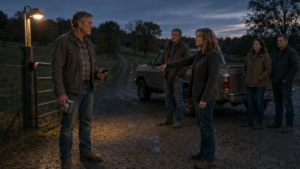
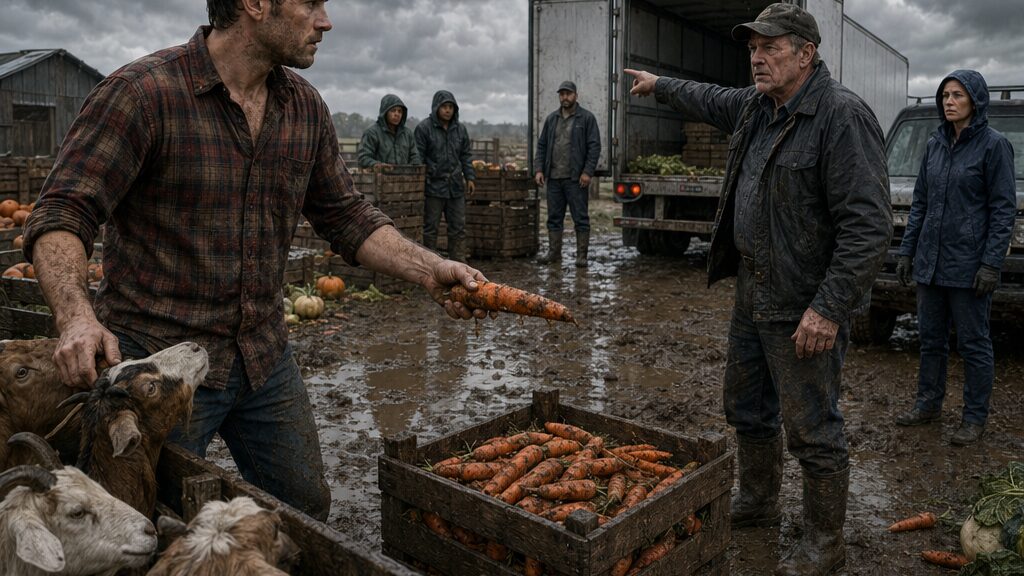
Ryan Mitchell was throwing the farm’s best-looking carrots to the goats when his father came out of the loading shed and told him to put them back on the truck.
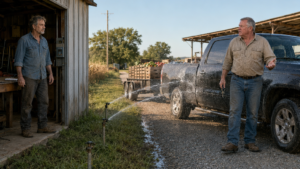
The goats surged against the low fence, hooves sinking into the churned mud. A pumpkin rolled from a split crate and stopped beside Ryan’s boot, bright orange against the gray morning. Behind him, the refrigerated truck idled with its rear doors open while two seasonal workers stood beside the loading ramp, unsure whether to keep moving.
Raymond crossed the yard without a coat, his dark cap pulled low against the rain.
“What are you doing?”
Ryan lifted another carrot from the mud-streaked crate. It was straight, firm, and clean enough on the outside to sit in a grocery display.
“Taking these out of the load.”
“I can see that.” Raymond pointed toward the truck. “Put them back.”
Ryan lowered the carrot through the fence. A brown goat caught it between its teeth and jerked it from his hand.
The truck driver looked away.
Raymond stopped close enough that Ryan could see rain beading in the silver hairs along his jaw. “Those are first-grade vegetables.”
“They came from the lower field.”
“They were washed.”
“That doesn’t change where the water came from.”
Raymond glanced toward the workers. His voice dropped. “You don’t make this kind of decision in front of everybody.”
“I made it before anybody got here.”
“That is not what I said.”
Ryan reached for the next crate. Raymond caught its edge before he could tip it.
For a moment neither moved. The crate rested between them, heavy with carrots, its wooden slats stained dark from runoff and mud.
The previous night’s storm had flooded the lower rows for less than an hour. Ryan had watched the water cross the ditch, spread through the carrot beds, and retreat before dawn. From the farmhouse hill, it had looked almost harmless.
Up close, it had carried an oily sheen and gray foam.
Ryan had told the crew to separate everything harvested from that section. He had not told Raymond why. By the time his father came down to the wash shed, the vegetables had already been rinsed, sorted, and stacked among the contract load.
Raymond pulled the crate toward him. “We have an order to fill.”
“We have other crates.”
“Not enough.”
“Then the truck leaves light.”
“The truck does not leave light.”
One of the seasonal workers shifted his weight. The driver climbed into the cab but left the door open.
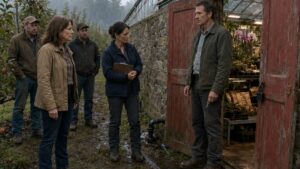
Near the loading shed, a woman in a navy rain jacket had stopped beside her county cooperative vehicle. Ryan recognized Rebecca Lewis before she removed her hood. She handled produce contracts for six farms in the county and had arrived early to check the load after storm delays.
Raymond saw her too.
His grip tightened.
“Get those vegetables back on the pallet,” he said.
Ryan looked at the carrots between them. “No.”
Raymond’s face changed less than his posture did. His shoulders squared. His pointing hand rose toward the truck.
“If you cannot follow a direct instruction on this farm, you are not managing it.”
The words crossed the yard more cleanly than a shout. The workers heard them. Rebecca heard them. Even the driver turned his head.
Ryan felt heat rise under his wet collar.
For six years he had handled planting schedules, workers, fuel deliveries, market calls, and every breakdown that happened after Raymond went home at dusk. Yet the deed remained in his father’s name, and one sentence could return him to the status of a hired son.
He picked up the carrot Raymond had tried to reclaim.
“You want to know why I won’t load it?”
“I want you to stop making a spectacle.”
Ryan bent the carrot with both hands. It resisted, then snapped.
The pale center was streaked with dark grit. Water seeped from a split near the crown, carrying a faint chemical smell that rain had not washed away.
Rebecca stepped closer. “Where was that harvested?”
“The lower field,” Ryan said.
Raymond answered at the same time. “It was surface exposure only.”
Rebecca looked from one man to the other. “Exposure to what?”
Ryan held out the broken carrot. “Runoff came through the upper drainage ditch.”
“That ditch crosses the old storage pad,” she said.
Raymond released the crate. “The pad hasn’t been used in years.”
“That is not the same as being clean,” Ryan said.
Rebecca took a pair of disposable gloves from her vehicle. She examined the carrot without touching it directly, then looked toward the truck.
“How many crates from that field?”
Ryan glanced at the pallet. “At least twelve.”
“Eight,” Raymond said.
“Four were mixed after washing.”
Raymond turned sharply. “You don’t know that.”
“I saw the tags moved.”
Rebecca’s expression hardened. “Stop loading.”
No one moved.
“I said stop loading,” she repeated.
The seasonal workers stepped away from the pallet. The driver shut off the engine, and the sudden silence made the rain sound louder against the metal roof.
Raymond walked toward Rebecca. “You do not need to freeze an entire shipment over one damaged carrot.”
“I need traceability.”
“You have it.”
“Then show me.”
Raymond looked toward the office.
Ryan watched the hesitation. It lasted only a second, but it was enough.
Rebecca took a numbered seal from a pouch in her vehicle and closed the rear doors of the truck. The plastic strip clicked through the latch.
“Nothing leaves until I review the harvest and wash records,” she said. “Field numbers, pick times, crate tags, crew sheets, all of it.”
Raymond’s eyes stayed on the seal. “This load is due by noon.”
“Then I suggest we move quickly.”
She handed Ryan an evidence bag for the broken carrot. He placed both halves inside. Mud from his fingers marked the clear plastic.
Raymond turned on him once Rebecca walked toward the office.
“You had no right to do this.”
Ryan looked at the goats finishing the vegetables behind the fence. “I had no right to let it go.”
“You think being careful is the same as being in charge.”
“No. I think being in charge means knowing when not to sell something.”
Raymond’s gaze shifted to the waiting truck, the stopped workers, and Rebecca standing beneath the office awning.
For the first time, his anger looked smaller than something else.
Fear, Ryan thought.
Then Raymond pointed at the office door.
“Bring every field record from this week.”
Ryan started toward the farmhouse, but Rebecca called after him.
“And the original crate tags.”
He stopped.
The tags should have been stapled to the sorting sheets.
He had seen them that morning, stacked beside the wash line.
Now, through the open shed door, he could see the empty hook where they had hung.
Chapter 2: The Field They Stopped Discussing
The lower-field gate had been chained from the inside.
Ryan stood in the road with rainwater running from the brim of his cap and stared at the new padlock threaded through the rusted links. The gate had never needed a lock. It opened onto thirty acres of carrots, squash, and feed corn, with nothing beyond it but drainage ditches and an abandoned chemical storage pad on the neighboring rise.
Someone had decided that morning that the field needed protecting.
Or hiding.
He climbed the fence.
The storm had flattened leaves across the first rows. Water still filled the tire ruts, brown and motionless. Ryan followed the harvest path toward the lowest section, where the carrot tops had been cut before dawn.
The flood line remained visible against the posts: a dirty stripe nearly a foot above the soil.
He crouched beside the drainage ditch. Bits of straw, plastic twine, and pale foam clung to the weeds. Farther uphill, the concrete storage pad showed through the grass. His grandfather had kept fertilizer and fuel drums there decades earlier. The tanks were gone, but a dark stain remained along one cracked corner.
Ryan took the evidence bag from his pocket and set the split carrot beside the runoff line.
The smell was stronger there.
Not enough to identify. Enough to know he had been right.
He photographed the field posts, the foam, the ditch, and the old pad. Then he called the county extension office and described the exposure without naming the farm. The agent told him to isolate the crop, preserve records, and avoid feeding it to animals until they knew what had been in the runoff.
Ryan looked back toward the farmhouse.
Even the goats had been a mistake.
A defensible one made in anger, perhaps, but still a mistake.
He had wanted to make the vegetables unusable before Raymond could force them onto the truck. He had not stopped to consider whether the animals should eat them. Moral certainty had carried him past procedure as quickly as Raymond’s fear had.
When Ryan returned to the wash shed, Ruth Mitchell was standing at the sorting table with her purse tucked beneath one arm.
She wore her reading glasses low on her nose and held a bundle of blank crate cards.
“Rebecca is in the office,” she said. “Your father went into town.”
“With the ledger?”
Ruth looked toward the workers.
Ryan waited until they had stepped outside.
“Why is the lower field locked?”
“I don’t know.”
“That means you do.”
“It means I don’t want to answer for Raymond.”
“You’ve been answering for him since Mom died.”
Ruth flinched, almost invisibly. She placed the blank cards on the table.
“Don’t use your mother to pry information out of me.”
Ryan ran a hand over his wet hair. “Where are the original tags?”
“I came to ask you.”
“They were here before loading.”
Ruth examined the hook where the tags should have hung. A few staple marks remained in the wood beneath it.
“How many crates did you isolate?” she asked.
“Twelve. Then I found four mixed into the wash line.”
Ruth’s lips tightened.
“What?”
“The crew was supposed to stop when the water crossed the field.”
“They didn’t.”
“I know.”
“How?”
She removed her glasses. “Raymond called before sunrise. He told them the flood had receded and to keep washing anything that looked sound.”
Ryan stared at her. “He knew?”
“He knew there had been water. I don’t believe he knew about the old pad.”
“He grew up here.”
“The pad has been empty thirty years.”
“The ground didn’t forget.”
Ruth folded her glasses and placed them on the table. “He thought aggressive sorting would be enough.”
“Based on what?”
“Based on needing the crop.”
The answer landed more heavily than Ryan expected.
“Needing it for what?”
Ruth picked up the blank tags again. “You should speak to him.”
“He’s not here.”
“That may be why.”
Rebecca appeared in the doorway carrying a clipboard. “The crew sheets account for twenty-six crates from the upper field and nineteen from the west rows. The truck held fifty-seven.”
Ryan turned. “Twelve unaccounted for.”
“Exactly the number you said came from the lower field.”
“Then the records prove it.”
“They prove there are twelve crates without listed origin. They do not prove where they came from.”
Ruth’s gaze dropped.
Rebecca noticed. “Is there something else?”
“The harvest tags are missing,” Ryan said.
“I know. So are the wash timestamps.”
Rebecca set the clipboard down. “Your contract requires field-level traceability. Without it, I have to treat the entire load as potentially affected.”
Raymond had argued that Ryan was wasting twelve crates.
Now all fifty-seven were at risk.
Ryan looked at the crate stack. The mud-stained slats were mixed among clean ones, differences blurred by washing and handling.
“What happens next?” he asked.
“I collect samples. The cooperative places the farm on temporary hold. If the records were deliberately altered, that becomes a separate issue.”
“By whom?”
“I’m not assigning blame yet.”
“You froze the truck because I fed vegetables to goats.”
“I froze it because you showed me contamination that your paperwork did not show.”
The distinction was fair, and Ryan disliked it for that reason.
Rebecca picked up the evidence bag. “Do not destroy any more produce. Do not feed it to animals. Keep everyone out of the lower field until the county assesses the runoff.”
“The gate’s locked.”
Her eyes narrowed. “By you?”
“No.”
Ruth gathered her purse. “I’ll check the office files.”
Ryan followed her across the yard. Inside the farmhouse office, drawers stood open and folders covered the desk. The weekly field binder was present, but several pages had been cut cleanly from its rings.
Ruth searched the cabinet beneath the printer.
“Where’s the main ledger?” Ryan asked.
She did not answer.
He checked the shelf where the thick green book had sat for as long as he could remember. It held fuel purchases, seed orders, loan payments, auction receipts, and every private number Raymond distrusted computers to remember.
The shelf was empty.
“Ruth.”
She lowered herself into the desk chair. For once, she looked older than Raymond.
“He took it before dawn.”
“Why?”
“He said he needed figures for the bank.”
“What bank?”
Her silence changed the room.
Ryan glanced at the cut pages, the open drawers, and the empty ledger shelf.
“This isn’t about one truck,” he said.
Ruth pressed her fingertips against her forehead.
“No,” she said. “It hasn’t been for a long time.”
Chapter 3: A Contract Built on Silence
By nine the next morning, Miller Farm had disappeared from the auction board.
Ryan stood beneath the electronic display in the cooperative hall and watched the lots advance from Nelson Produce to Garcia Farms without the six Miller entries that had been scheduled between them. Buyers moved along the inspection tables, checking squash stems and carrot color as if the missing name meant nothing.
On the far wall, someone had taped a printed notice over Miller’s assigned stall:
LOAD HELD—TRACEABILITY REVIEW.
The words were large enough for everyone to read.
Thomas Garcia approached with two paper cups of coffee. He offered one to Ryan, then reconsidered and kept both.
“You picked a bad week to make a point,” he said.
“I didn’t make a point.”
Thomas glanced toward a group of buyers. “That’s not how it sounds.”
“How does it sound?”
“That you fed a contract load to goats because you and Raymond got into it.”
Ryan turned to him. “Who said that?”
“I heard it from three people.”
“You were at our yard yesterday.”
“I came after the truck was sealed.”
“You saw the field samples.”
“I saw Rebecca collecting dirt and everybody pretending not to look at each other.”
Thomas drank from one cup. “People fill in what nobody tells them.”
Ryan almost laughed. It was the same habit he had condemned in Raymond and practiced himself.
Across the hall, Rebecca emerged from the cooperative office and motioned him over.
Inside, four board members sat around a narrow table. Raymond occupied the chair nearest the door, cap in his hands. The green farm ledger rested on the floor beside his boot.
Ryan stopped when he saw it.
Rebecca closed the door. “The county has not completed testing. Until it does, yesterday’s load remains isolated.”
One board member adjusted his glasses. “The larger concern is whether compromised produce was intentionally entered under another field number.”
“It wasn’t,” Ryan said.
Raymond spoke without looking at him. “My son made an unauthorized judgment before confirming any hazard.”
Ryan felt the words before he understood them.
Rebecca folded her hands. “Mr. Mitchell, did you instruct the wash crew to continue processing lower-field produce?”
“I instructed them to sort for visible damage.”
“After flood exposure?”
“Brief surface water. Nothing had been established as contamination.”
Ryan leaned forward. “The runoff crossed the old storage pad.”
“I did not know that at the time.”
“You knew where the ditch came from.”
Raymond finally looked at him. “I knew where it had come from thirty years ago.”
A board member raised a hand. “This is not a family hearing.”
“No,” Ryan said. “It’s a contract hearing, and he’s making it sound like I destroyed safe produce without cause.”
“You did not document your concern,” Rebecca said.
“I told the crew to isolate the crates.”
“Verbally.”
“Yes.”
“And then you fed part of the isolated crop to livestock.”
Ryan’s face warmed. “That was wrong.”
The admission quieted the room.
He continued before Raymond could use it. “But it doesn’t make the crop safe.”
Rebecca pulled a single-page notice from a folder. “This was sent after last month’s storms.”
Ryan recognized the cooperative letterhead.
The notice advised growers to separate produce with visible flood damage, remove soil-contact crops from standing water areas, and consult local authorities where contamination was suspected.
“‘Suspected,’” Raymond said. “We had no confirmed contamination.”
Rebecca looked at him. “The notice did not clearly state that all edible portions exposed to floodwater should be held pending assessment. That guidance should have been stronger.”
One board member shifted. “Are we acknowledging fault?”
“We are acknowledging ambiguity,” Rebecca said. “Not responsibility for missing farm records.”
It was a small concession, but it altered the shape of the room. Raymond had not invented the uncertainty. The cooperative had left space for frightened growers to interpret caution as permission.
Ryan looked at his father. “Why not call?”
“Because I knew what they would say.”
“Then you knew enough to stop.”
Raymond set his cap on the table. “You want the truth? I knew they would hold everything, not just twelve crates. I knew they would take days to test it while the contract expired and the vegetables softened in storage. I knew no one in this room would cover the loss.”
His voice stayed low, but the board members stopped moving.
“I made a sorting decision,” he said. “Ryan made a different one. He had no authority to destroy inventory.”
There it was: not only defense, but separation. Raymond was placing the act, the judgment, and the potential breach entirely on him.
Ryan looked toward the ledger by Raymond’s boot.
“You took the tags.”
Raymond’s expression did not change.
“Did you?” Rebecca asked.
“No.”
“Did you remove pages from the field binder?”
“No.”
“Then where are they?”
“I don’t know.”
Thomas’s voice carried faintly through the wall outside. Ryan imagined the story spreading through the hall: the son who lost his temper, the father who tried to save a shipment, the farm too poorly managed to know which field its own vegetables came from.
Rebecca ended the meeting with a temporary suspension from cooperative sales. The board would reconvene after testing and record review.
When Raymond stood, the ledger caught against the leg of his chair and fell open on the floor.
Several loose papers slid from between its pages.
Ryan bent automatically to gather them. Fuel invoices. Equipment statements. A feed account stamped PAST DUE.
Then he saw the envelope.
It bore the name of a regional agricultural lender and the words NOTICE OF DEFAULT in a narrow black window.
Raymond reached for it, but Ryan had already pulled the page free.
The amount past due was greater than the value of yesterday’s entire shipment.
Below it, in smaller type, was a scheduled date for review of collateral property.
The lower acreage was listed first.
Chapter 4: What the Farm Had Already Lost
Ryan found the unpaid auction invoices beneath a stack of feed receipts in a wooden vegetable crate under the farmhouse desk.
The crate was one of the old mud-stained ones from the lower field, scrubbed dry but never clean. Raymond had used it as a filing box. Envelopes stood on edge between the slats—fuel statements, equipment notices, insurance premiums—most unopened, several stamped past due.
Ryan lifted the lender’s notice from the top.
The lower acreage had been pledged as collateral eighteen months earlier. Payments had been missed twice. A third failure would allow the lender to begin possession proceedings.
The date for the property inspection was three days away.
He heard the kitchen door open behind him.
Raymond entered carrying a grease-marked thermos. He stopped when he saw the crate on the table.
“You went through my office.”
“It was under the desk.”
“That doesn’t make it yours.”
Ryan placed the lender’s notice beside the auction invoices. “Neither does hiding it.”
Raymond set down the thermos with care. “You saw what happened at the cooperative. This is not the time.”
“This is exactly the time.”
“The crop test is not back.”
“The lender is.”
Raymond removed his cap and rubbed the flattened hair above his forehead. He looked tired rather than caught, which angered Ryan more.
“How much?” Ryan asked.
“You have the paper.”
“That’s the overdue amount. How much altogether?”
Raymond pulled out a chair but did not sit. “Enough.”
“Enough to lose the lower field?”
“If we cannot bring the account current.”
“And the equipment?”
Raymond looked toward the window.
Ryan understood.
He crossed the kitchen and opened the door to the equipment shed. The tractor stood inside with dried mud on its tires. Beside it, the washer unit and refrigerated trailer appeared unchanged, but small numbered stickers had been attached near their serial plates.
Inventory tags.
“They’ve already been here,” Ryan said.
“An appraiser came last month.”
“You told me he was checking insurance values.”
“He was.”
“For the lender.”
“For both.”
Ryan returned to the kitchen. “How long have you known?”
“Known what?”
“That we were this close.”
Raymond gave a humorless breath. “Close is where farms live.”
“Not this close.”
“You think because you run the schedule, you know the whole operation.”
“I thought I did.”
“You knew what I needed you to know.”
The words were nearly identical to the logic Ryan had used when he kept the runoff concern to himself. He felt that resemblance and rejected it.
“You needed me loading vegetables from mortgaged ground without knowing one failed shipment could cost us the field.”
“I needed you farming.”
“I was managing.”
“You were working.”
Ryan shoved the crate with his knee. Envelopes shifted against the slats. “Then why threaten to take management away if I never had it?”
Raymond’s jaw tightened.
Before he answered, Ruth came through the back door carrying a folder. She saw the crate and stopped.
“You told him,” Raymond said.
“I didn’t have to.”
Ryan turned to her. “You knew about all of it?”
“Not all.”
“How much?”
Ruth placed the folder on the table. “The operating loan. The equipment delays. The lower-field mortgage.”
“And you let me think yesterday’s load was just another contract.”
“I thought Raymond could bring the payment current.”
“With contaminated carrots?”
“With the full harvest.”
Ryan looked between them. “What else is in the folder?”
Ruth sat down. Her hands remained on the cover.
“Payroll transfers,” she said. “Medical invoices. Feed accounts.”
Raymond reached for the folder. Ruth held it.
“His workers were paid every Friday,” she continued. “Even when the auction checks came late.”
Ryan said nothing.
“Last winter,” Ruth said, “I had surgery. Insurance covered less than expected.”
Ryan’s attention moved to the scar visible above the collar of her blouse, something he had trained himself not to ask about because she always said she was fine.
“Raymond paid the balance,” she said.
“You told me there was a payment plan.”
“There was. His.”
Raymond took the folder from her. “That had nothing to do with the farm.”
“You used farm credit,” Ryan said.
“I used what I had.”
“And said nothing.”
“You were already working fourteen-hour days.”
“That wasn’t your decision to make.”
Raymond’s eyes hardened. “Every decision was mine to make. That is what ownership means when things go wrong.”
“No. That’s what control means.”
The refrigerator motor clicked on, filling the pause with a low mechanical hum.
Ruth drew a breath. “There was also the expansion.”
Ryan looked at Raymond. “What expansion?”
“The packing shed upgrade,” Raymond said.
“We never built it.”
“We ordered equipment. The cooperative projected higher volume. Then two buyers consolidated.”
“You borrowed against the field for equipment we don’t have?”
“The supplier kept the deposit when we canceled.”
Ryan sat because his legs had begun to feel unsteady.
The story he had told himself was simple: Raymond had chosen money over safety. The papers complicated it without clearing him. His father had been covering wages, Ruth’s bills, failed expansion costs, and the daily expenses of land that did not care whether anyone could afford to keep it.
Yet he had still ordered the washing to continue.
Understanding entered without forgiveness.
A truck door slammed outside.
A woman wearing a dark business coat crossed the yard with a clipboard. Behind her, a man photographed the equipment shed.
“The lender,” Ruth said.
Raymond looked at the clock. “They were not due until Friday.”
The woman knocked once and entered after Raymond called for her.
“We had an opening,” she said. “Given the cooperative suspension, the bank advanced the collateral review.”
Raymond’s face went still. “The suspension is temporary.”
“We understand. We are documenting present condition only.”
The man outside moved toward the lower road.
Ryan stood. “He can’t enter the field. The county has it isolated.”
“That affects valuation,” the woman said.
“Then note why.”
Raymond cut in. “The crop has not been declared contaminated.”
Ryan looked at him.
Even now, Raymond was protecting the appearance of value.
The woman placed an inspection schedule on the table. “We’ll return in forty-eight hours with a full assessment team. Please make all loan records available.”
After she left, Raymond gathered the loose papers from the crate.
Ryan watched him stack each notice squarely, as though neat edges could change the numbers.
“You should have told me,” Ryan said.
“And you should have told me you were leaving.”
Raymond reached beneath the ledger and pulled out a folded sheet.
He placed it on top of the lender’s notice.
Ryan recognized the agricultural safety agency letterhead before he saw the interview date.
Chapter 5: The Offer Ryan Never Declined
Raymond laid Ryan’s printed interview email between them as if it were another overdue bill.
The message confirmed a final interview for an agricultural safety position two counties away. The salary was higher than anything the farm had paid him, with health insurance, regular hours, and a state vehicle.
Ryan had printed it in the farmhouse office three weeks earlier, then forgotten to clear the printer tray.
“You went through my papers,” he said.
Raymond looked at the crate of debt notices. “That argument feels thin today.”
“I haven’t taken the job.”
“You applied.”
“I was asked to interview.”
“And accepted.”
Ryan folded the email once along its existing crease. “I hadn’t decided.”
“You decided enough not to tell me.”
Ruth rose from the table. “Neither of you has room to make secrecy a moral advantage.”
Raymond ignored her. “When were you planning to leave?”
“I said I hadn’t decided.”
“The interview is Monday.”
“I know the date.”
“Does the agency?”
Ryan stared at him.
Raymond picked up his cap. “We have an inspection in two days, a frozen contract, and fields that may not be usable. That seems like a convenient week to discover you have somewhere else to be.”
He left through the back door.
Ruth waited until his truck started.
“You should go after him.”
“He didn’t go after me when he blamed me in front of the board.”
“No. He didn’t.”
The agreement in her voice took away Ryan’s defense.
He carried the printed email back to his trailer at the far edge of the property. Inside, a clean empty crate sat beside the bed. He had packed two work shirts, a pair of jeans, tax records, and the framed photograph of his mother that usually hung above the sink.
Not enough to prove he was leaving.
Too much to call the thought harmless.
He sat on the edge of the bed and read the interview message again. The job involved inspecting flood exposure, training growers, and translating safety rules into decisions farms could actually follow. Work that mattered. Work with defined authority.
Work where being responsible did not require inheriting every silence in a family.
His phone rang.
Rebecca.
“The preliminary field results found petroleum residue and elevated chemical markers,” she said. “We need full laboratory confirmation, but the lower-field produce cannot enter human or animal feed channels.”
Ryan looked toward the goat enclosure through the trailer window. “I fed some of it to the goats.”
“I know.”
“What do I need to do?”
“Call a veterinarian. Isolate the animals. Document what and how much they ate.”
He closed his eyes.
“You were right to stop the shipment,” Rebecca said. “You were wrong to improvise disposal.”
“I know.”
“I need a written contamination statement by ten tomorrow morning. Timeline, decisions, crew instructions, missing records. Signed.”
“By me?”
“By whoever accepts operational responsibility.”
Ryan understood the choice she had placed in the sentence. He could blame Raymond. Raymond could blame him. Or one of them could describe what had actually happened.
“I’ll send it,” he said.
At dawn the next morning, Ryan met Thomas Garcia at the roadside diner near the cooperative. Thomas had asked to talk somewhere away from both farms.
He arrived late and placed his phone facedown on the table.
“That picture came from my yard,” he said.
Ryan waited.
“One of my workers took it when we stopped for pallets. You holding the carrot. Raymond pointing at the truck.”
“The picture buyers were passing around.”
Thomas nodded. “I sent it to a group chat.”
“Why?”
“Because people were asking why the Miller load disappeared.”
“So you told them I fed a contract load to goats.”
“I told them what I saw.”
“You saw Rebecca collecting samples.”
“I saw your father trying to ship and you making sure he couldn’t.”
“That was the part you chose.”
Thomas pushed his coffee away. “The cooperative was already talking about tightening storm rules. If buyers thought one farm had mixed exposed produce, they might hold every grower in the drainage area.”
“So you gave them someone to blame.”
“I gave them a reason to see it as a Miller problem.”
Ryan leaned back.
Thomas did not look proud. He looked practical, which was worse.
“My squash was on the next truck,” Thomas said. “I have workers too. Loan payments too. I protected my contract.”
“With half a story.”
“Yes.”
The directness drained some of Ryan’s anger.
Thomas looked through the window toward the road. “Then the field results came back.”
“You heard already?”
“Rebecca called the growers. She had to.”
“And now?”
“Now everybody knows you stopped something bad. That doesn’t erase what they think about your management.”
Ryan almost asked which part. Feeding unsafe vegetables to goats? Failing to document the field? Fighting with the owner in front of a buyer? All of it was true enough to resist easy defense.
“I need a favor,” he said.
Thomas gave a cautious laugh. “That’s generous.”
“Tell me if Raymond contacts a private buyer.”
Thomas’s expression changed. “Why would he?”
“Because the lender moved up the inspection.”
“You think he’d sell held produce?”
“I think he believes the farm cannot survive being honest at the wrong time.”
Thomas considered this. “I’ll call.”
Ryan returned home before nine. He wrote the contamination statement at the kitchen table with Ruth beside him.
He described the flood, his verbal isolation order, the continuation of washing, the missing tags, his confrontation with Raymond, and his decision to feed part of the crop to livestock. He did not soften his own mistake.
When he reached the line asking who had operational authority, he stopped.
Ruth read over his shoulder. “What will you put?”
“The truth.”
“That has not been a simple category around here.”
Ryan typed: Daily operations were managed by Ryan Mitchell, while final sale authority remained with owner Raymond Mitchell. Conflicting instructions were given.
He signed it.
At nine thirty, the lender’s inspection vehicle turned into the yard.
Ryan went outside to find Raymond.
The farmhouse was empty. His truck was gone. His thermos remained beside the sink.
In the office, the green ledger lay open on the desk, but several invoices had been removed. The keys to the lower-field gate were missing.
Ryan called his father. The phone rang from the mudroom.
Ruth opened the equipment shed. “The flatbed is gone.”
Ryan looked toward the lower road.
Fresh tire marks ran beyond the barn, deep and angled toward the chained gate.
Chapter 6: The Truck at the Lower Gate
The chain hung open from the lower-field gate, and fresh tire tracks cut through the mud toward the county road.
Ryan left the lender’s inspection team in the yard without explanation and drove the utility truck down the access lane. Ruth sat beside him holding the green ledger against her knees. Neither spoke.
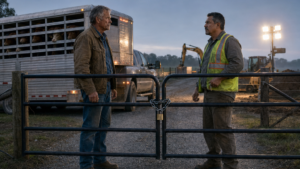
At the field’s far edge, the farm flatbed stood behind an unmarked box truck. Twelve mud-stained vegetable crates had been stacked between them.
Raymond was tightening a strap across the top row.
Ryan braked hard enough to throw mud against the fence.
His father looked up but did not stop working.
“What are you doing?” Ryan called.
“What it looks like.”
“These crates are under hold.”
“They are not going through the cooperative.”
“That doesn’t make them safe.”
“The buyer knows they were flood-exposed.”
Ryan climbed out. “Does he know the preliminary results?”
Raymond pulled the strap tighter. “He knows there may be a concern.”
“Petroleum residue and chemical markers are not a concern. They’re contamination.”
“The load is being sold for processing.”
“Into what?”
Raymond did not answer.
Ruth stepped from the truck. “Where are the invoices you took?”
Raymond’s gaze flicked toward her. “Go back to the house.”
“No.”
A vehicle appeared on the county road and slowed at the gate. The private buyer had arrived earlier than Raymond expected.
Ryan walked to the nearest crate. The carrots inside looked firm and clean after washing. A shopper could have picked one up and seen nothing but good color.
He lifted the crate.
Raymond caught the opposite handle. “Leave it.”
“No.”
“We need the deposit today.”
“The lender inspection is already at the house.”
“Then you understand.”
“I understand why you’re scared.”
Raymond’s grip tightened. “You think fear is an insult because you have an exit.”
Ryan looked at him across the crate.
“I may take the job,” he said.
Ruth inhaled softly behind them.
Raymond’s face closed.
Ryan continued. “I may leave part of this work. I may not spend the rest of my life pretending the farm gets to decide everything for me.”
“Then put down the crate.”
“But I will not leave this way.”
He pulled. Raymond resisted for one second, then released the handle.
Ryan carried the crate toward the utility truck.
The buyer parked and approached in work boots and a clean tan jacket. “Which one of you is Raymond?”
“I am,” Raymond said.
The buyer glanced at Ryan. “We agreed on twelve bins.”
“They’re not for sale,” Ryan said.
Raymond stepped between them. “He does not own the crop.”
“No,” Ryan said. “But I signed the contamination statement this morning, and I’m reporting this attempted transfer.”
The buyer’s expression sharpened. “You said it was cosmetic flood damage.”
“I said it had been exposed,” Raymond replied.
“You said testing was precautionary.”
Ryan opened the evidence report on his phone and held it out. The buyer read the first lines and backed away from the crates.
“I’m not taking that.”
Raymond said, “You agreed to partial payment.”
“Before you had results.”
“We need ten thousand today. Take six crates. Hold the rest until confirmation.”
The offer left the air still.
Ryan stared at his father. “You were going to tell him after he paid.”
“I was going to repay him if the tests failed.”
“With what?”
Raymond looked toward the lower field.
The answer was the land itself.
“One sale,” Raymond said. “One sale gives us time. Forty years of clean deliveries, and this is what ends us? Water in one field and a cooperative letter nobody could read straight?”
“It doesn’t end forty years,” Ryan said. “This does.”
Raymond’s voice rose. “You think honesty keeps people employed? You think a clean conscience pays fuel? I have spent my life doing this right.”
“And you thought one dishonest load could preserve that.”
“I thought one imperfect decision could preserve everything else.”
The buyer returned to his truck. “Do not contact me again.”
His tires spun as he pulled onto the road.
Raymond watched him leave. Something in his stance collapsed, though he remained upright.
Ryan loaded the first crate into the utility truck. Then he drove it back toward the goat enclosure with Raymond following in the flatbed.
The lender’s team and Rebecca were both waiting in the yard when they arrived. The county inspector stood beside her vehicle.
Ryan carried the crate to the goat pen and set it outside the fence, exactly where the first confrontation had begun.
The goats crowded forward. He did not feed them.
Rebecca looked at the crate, then at Raymond. “Was this produce moved for sale?”
Ryan answered before his father could.
“Yes.”
Raymond’s head turned toward him.
“I found my father transferring the held crates to a private buyer,” Ryan said. “The buyer refused after seeing the preliminary report.”
Rebecca’s expression did not change. The lender’s representative wrote something on her clipboard.
Ryan felt the cost of each word as he spoke it.
“The sale was not completed. The crop is back under control. I accept responsibility for failing to secure it and for feeding part of it to livestock yesterday.”
“You are not the owner,” the lender’s representative said.
“No. But I was acting manager.”
Raymond stepped forward. “The attempted sale was mine.”
Everyone looked at him.
He removed his cap.
“My instructions,” he said. “My arrangement. He stopped it.”
It was not an apology. It was not reconciliation. It was the first complete truth Raymond had offered in front of other people.
Rebecca asked the inspector to secure the crates. The lender’s representative closed her folder.
“The attempted transfer materially affects the review,” she said. “The bank will suspend discretionary restructuring until it receives the full report.”
“What does that mean?” Ruth asked.
“It means the farm may no longer qualify to retain all pledged acreage.”
Raymond looked toward the faded sign above the yard.
MILLER FARM, the boards said, though one of the painted letters had peeled nearly away.
Ryan took out his phone.
He called Rebecca’s office number even though she stood twenty feet from him. He wanted the report logged, recorded, and impossible to reshape later.
When the voicemail answered, he gave his name, the time, the attempted sale, and the location of every disputed crate.
Then he ended the call and faced his father.
“I don’t know whether I’m staying,” he said quietly. “But I’m done disappearing while I’m still here.”
Chapter 7: The Smaller Name on the Same Land
The workers took down the Miller Farm sign before the lender arrived.
One man steadied the ladder while the other backed out the last rusted screw. The board tipped forward, shedding flakes of white paint into the grass. For more than sixty years, the name had hung above the yard in letters large enough to be read from the county road.
Now it rested facedown beside the loading shed.
Ryan watched from the office window as the lender’s vehicle turned through the gate.
Six weeks had passed since the attempted sale. The lower-field crop had been destroyed under county supervision. The goats showed no lasting effects, though the veterinary bills remained in Ruth’s folder beside the testing invoices and contract penalties.
The cooperative had reinstated the farm provisionally, but only for reduced volume. Every crate would require a field code, harvest time, wash record, and signed release. One missing line could hold an entire load.
The lender’s restructuring proposal was less forgiving.
Sell the lower acreage. Surrender the refrigerated trailer. Reduce seasonal payroll. Keep the farmhouse, upper fields, barn, and livestock operation under a five-year repayment plan.
It was not the farm Raymond had inherited.
It was the portion that could still survive.
Ruth placed three copies of the proposal on the kitchen table. “They’ll want an answer today.”
Raymond stood at the sink, looking toward the fallen sign. Since the cooperative hearing, he had spoken to Ryan mostly through work: a fence post needed replacing, the west rows needed turning, the feed delivery was short two bags.
He had admitted the attempted sale in writing. He had accepted the suspension. He had not apologized for blaming Ryan publicly.
Ryan had stopped waiting for one.
The lender’s representative entered with the same dark folder she had carried during the inspection. Rebecca arrived minutes later for the cooperative’s portion of the meeting.
They sat around the kitchen table where bills, contamination reports, and Ryan’s interview email had once competed for space.
The lender’s representative opened the folder. “The proposed sale of the lower acreage would satisfy the delinquent portion and reduce the secured balance. The equipment surrender covers most of the remaining deficiency.”
“Most,” Raymond said.
“The farm would continue under monitored repayment.”
“And if next year is bad?”
“Then the plan would be reviewed.”
Raymond pushed the proposal away. “That means no.”
“It means the bank is not promising protection from another failed season.”
“We lose the best ground and the cold trailer, then you expect us to meet payments with half the volume.”
“The lower ground is currently restricted pending remediation.”
“For one season.”
Rebecca spoke carefully. “Possibly longer. The county will retest after spring runoff.”
Raymond looked at Ryan. “And you think this is a farm?”
Ryan had spent the previous week building a different plan with Ruth. Fewer acres. Direct sales to two local grocers. A smaller cooperative commitment. Goats and feed corn retained. No speculative expansion. No volume they could not document.
He slid the figures across the table.
“It’s what the land can support without us borrowing against the next good year.”
Raymond did not touch the papers. “You cut production by forty percent.”
“Forty-three.”
“You eliminated the auction surplus.”
“Because surplus has been losing money after hauling and fees.”
“You cut two workers.”
“Seasonal weeks, not both positions.”
“You sold the trailer.”
“The lender already requires that.”
Raymond’s palm flattened against the table. “Then there is nothing here that belongs to us. It is a bank plan with your name under it.”
Ryan felt the old answer rise—the quick, hard one that would have made his father the only obstacle in the room.
He let it pass.
“It belongs to us if we choose it,” he said. “It belongs to the bank if we pretend nothing changed.”
Raymond stood.
The lender’s representative closed her folder. “We can return tomorrow.”
“No,” Raymond said. “You have your answer.”
Ruth looked up sharply.
Raymond walked out through the mudroom.
The kitchen stayed silent until the screen door struck the frame.
Rebecca gathered her documents. “The cooperative deadline is Friday. If the farm cannot confirm next season’s operating structure, the provisional contract expires.”
Ryan nodded.
The lender’s representative left the restructuring copies on the table. “The full liquidation notice will be prepared if we do not hear from you by noon tomorrow.”
After the vehicles departed, Ruth turned to Ryan.
“You could sign without him if ownership transferred through the restructuring.”
“He’d have to agree to the transfer.”
“He might agree if the other choice is auction.”
“That isn’t agreement. That’s surrender.”
Ruth looked toward the yard. “Sometimes surrender is the name people give survival when they are ashamed of it.”
Ryan spent the afternoon marking crates.
He burned a field code into each wooden end panel, then added a narrow strip for human food, livestock feed, compost, or hold. The system was simple enough that no worker could mistake one stack for another.
Thomas arrived near dusk carrying a box of replacement tag clips.
“These lock once,” he said. “Break them and you know somebody changed the card.”
Ryan examined one. “You use these now?”
“Started last week.”
“For all loads?”
Thomas nodded. “After what happened.”
It was the nearest thing to an apology Thomas had offered.
Ryan accepted the box.
“My growers’ group is adopting a shared flood report,” Thomas added. “One notice goes to every farm in the drainage area. Nobody gets to make it someone else’s problem.”
“Rebecca suggest that?”
“I did.”
Ryan looked at him.
Thomas shrugged. “A half-story traveled fast. Figured the full warning ought to.”
They worked until the crate ends showed neat rows of letters and numbers. The original mud-stained crate sat apart from the others, too warped for market use. Ryan had kept it because throwing it away felt like another attempt to erase what had happened.
Thomas left before dark.
Raymond had not returned.
Ryan found him the next morning at the goat enclosure. He stood outside the fence with the fallen farm sign propped against a post.
“You left this in the rain,” Raymond said.
“It’s been in the rain forty years.”
Raymond turned the board upright. The faded name faced them.
“I read your plan.”
Ryan waited.
“It won’t carry the original debt.”
“No. The land sale does that.”
“It won’t support two full incomes.”
“No.”
“You’ve accepted the safety job.”
“Part-time. Three days a week. I’ll handle farm operations the other four.”
Raymond looked toward him. “You made that arrangement already?”
“I told them I would not accept unless the schedule was written clearly.”
“And you didn’t tell me.”
“I’m telling you now, before I sign.”
The distinction settled between them.
Raymond ran a thumb across the peeling M.
“I rejected the plan because it makes me an employee on my own ground.”
“You would remain an owner.”
“Of less.”
“Yes.”
“And you?”
“Same.”
Raymond leaned the sign against the fence again. “I have one change.”
He handed Ryan the top restructuring page. A line had been added beneath the ownership section in Raymond’s block handwriting.
Operating ownership to be shared between Raymond Mitchell and Ryan Mitchell upon completion of the land sale.
Ryan read it twice.
“This gives me half.”
“It gives you responsibility where people can see it.”
“You don’t have to do that.”
“I should have done it before I used the word manager.”
Ryan folded the paper along its center.
The apology was not in the sentence. It was inside the transfer Raymond had resisted for years.
“What about the sign?” Ryan asked.
Raymond lifted one end. “That’s the other change.”
Together they carried it into the shed.
A week later, the lender approved the reduced operation. The lower acreage went to a neighboring conservation buyer at a price that covered less than Raymond wanted and more than Ryan feared. The refrigerated trailer left on a flatbed. Two empty spaces remained in the equipment shed.
The cooperative contract returned at half its former volume, with stricter reporting than any other farm in the county. Rebecca did not apologize for that. Ryan did not ask her to.
By the first autumn shipment, every crate carried a permanent field mark and a sealed tag. Ruth kept the digital records and the green ledger side by side, neither trusted alone.
Above the yard hung a narrower sign.
MITCHELL FARM
RAYMOND & RYAN
The new lettering could be read from the road, though it did not fill the board as confidently as the old name had.
One evening, Ryan found a rejected carrot in the final sorting crate. A deep split ran beneath its crown. It was safe but too damaged for sale.
Raymond stood beside the goat pen repairing a loose latch.
Ryan held up the carrot.
“Feed grade,” he said.
Raymond examined the field code on the crate, then the intact tag.
“Feed grade,” he agreed.
Ryan lowered it over the fence. A goat stretched forward and took it gently from his hand.
This time no truck waited behind them. No one pointed toward the loading ramp. The rejected crate stood clearly marked beside the fence, carrying exactly what it claimed to carry.
Raymond rested both hands on the repaired latch.
“You working at the agency tomorrow?”
“Until four.”
“West rows need checking after.”
“I put it on the schedule.”
Raymond nodded.
They remained beside the pen as the goats pushed through the straw for the last pieces. The farm was smaller now. The debt was not gone. Some of the trust between them had returned only as procedure—written authority, shared signatures, labels that could not be quietly removed.
It was not forgiveness completed.
It was truth made difficult to undo.
The story has ended.