The Lavender Harvest Ledger And The Scent Of Silent Retribution
CHAPTER 1: THE VIOLET DUST OF SEQUIM
The late July sun beat down on the alluvial floor of the Dungeness Valley, drawing a heavy, intoxicating hum of honeybees from fifty sloping acres of blooming Royal Imperial lavender. To the south, the jagged peaks of the Olympic Mountains rose like slate blades against a cloudless Pacific Northwest sky, shielding the basin in an arid rain shadow. To the north, the salt air from the Strait of Juan de Fuca swept across the gravel flats, cooling the purple blossoms and locking the high-terpene aromatic oils deep within their velvety calyxes.
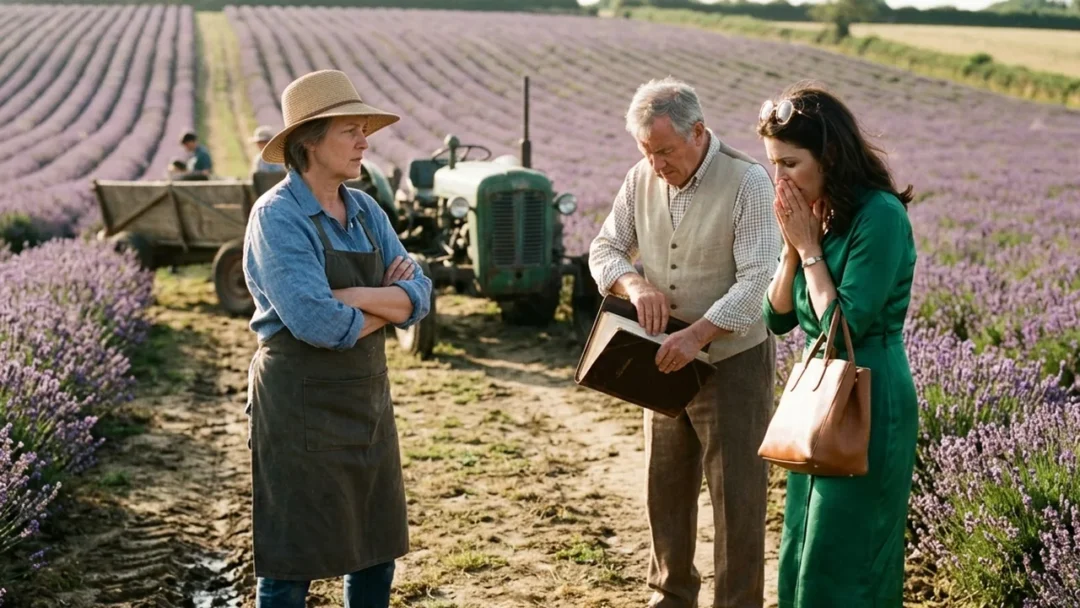
Beside a weathered cedar sorting table at the head of Row Fourteen, Evelyn Lin stood with her calloused fingers buried in fresh-cut stalks. She wore an indigo work shirt with the sleeves rolled past her forearms, a dirt-stained canvas apron tied double at her narrow waist, and a frayed straw sunhat that cast a deep rim of shadow over her cheekbones. Her slate-grey eyes were fixed on the delicate purple sprigs, discarding damaged stems with the silent, rhythmic efficiency of a woman who had measured her life in harvest cycles. Beside her wooden bench rested three hand-woven split-oak wicker baskets filled to the brim with prime cuttings, along with a slender amber glass flask containing the morning’s first distillation run of pure essential oil.
The sharp crunch of fine limestone gravel shattered the midday stillness. A sleek black town car had pulled halfway onto the tractor verge, kicking up a rooster-tail of dry white dust that drifted directly over the lower terraces. The rear passenger door flew open, and a woman stepped into the heat, her stiletto heels sinking immediately into the soft loam of the irrigation ditch.
Victoria Sterling, Chief Procurement Officer of Manhattan-based Sterling & Croft Parfums, brushed an invisible fleck of dust from the lapel of her tailored emerald silk wrap dress. She adjusted her oversized tortoiseshell sunglasses, grimacing at the sharp tang of tractor diesel and crushed herbs that hung thick in the warm air. In her right hand, she clutched a stiff calfskin portfolio; on her wrists, three heavy gold Cartier bangles clinked together with aggressive brilliance.
“Unbelievable,” Victoria muttered loudly, clicking her heels impatiently as she picked her way around a shallow puddle left by the morning drip lines. “Five hours on a puddle-jumper to Seattle, an hour on a ferry, and a two-hour drive along logging roads, only to find the access road blocked by a table of field scrap.”
Evelyn did not look up from her sorting tray. She trimmed a woody nodule from an English hybrid stem with her shears, laying the clean flower cleanly across the sorting rail.
Victoria stopped two feet from the wooden table, tapping the manicured tip of her index finger against her leather portfolio. “Excuse me. I’m speaking to you, picker. Clear this bench immediately. I have a three-o’clock inspection meeting with the estate’s trustees, and my driver needs this turn-around lane clear before the truck from Port Angeles arrives.”
“The access apron is two hundred yards east, through the double iron gates,” Evelyn said evenly. Her voice was low, dry, and flat as river stone. “This lane is reserved for the hand-cut harvest carts until the noon heat peaks. If your driver turns around here, his rear tires will crush the surface feeder roots on the hybrid rows.”
Victoria lowered her sunglasses to the tip of her sharp nose, staring at the middle-aged woman with cold amusement. “Let me explain something very simple about the global commodities market, old woman. Sterling & Croft does not navigate around farm junk. We hold the exclusive wholesale contract for every ounce of fragrance oil produced in this valley. That means every petal, every drop of steam, and every inch of this dirt exists solely because my family writes the wire transfer at the end of the season. Now move your filthy baskets out of my path before I have the farm manager dock your seasonal wages.”
“The harvest stays on the table,” Evelyn replied without looking up. She reached for the glass amber flask, checking the color of the settling fluid against the pale sky. “The essential oil oxidizes if moved into direct direct engine heat. Find another road.”
Victoria’s jaw tightened. Color flooded into her powdered cheeks. With a sharp, venomous step forward, she swung her leather portfolio with both hands, striking the edge of the nearest wicker harvest basket.
The heavy basket pitched violently sideways. Ten pounds of hand-selected Royal Imperial stalks spilled across the tractor path, tumbling into the dry tire ruts where crushed gravel and black mud instantly coated the fragrant blossoms. In the same violent motion, Victoria’s gold bracelet caught the neck of the slender amber flask. The heavy glass cylinder spun through the air in a blinding flash of golden light and struck an exposed granite boulder beside the ditch.
The amber flask shattered into jagged shards. A concentrated shockwave of pure, unadulterated lavender absolute—thick as honey, sweet with camphor and mountain pine—exploded into the heat, pooling uselessly in the dust.
“Oops,” Victoria sneered, checking her gold bracelet for scratches before looking down with icy contempt. “There’s your precious oil. Now get down on your knees in the mud and clean it up before the real owners of this estate arrive to fire you.”
Evelyn set her brass pruning shears down on the cedar wood with absolute stillness. She did not yell. She did not gasp. Her breath remained steady, her pulse cold as glacial runoff. Slowly, her right hand moved to the knot of her canvas apron, untying the faded cotton straps.
Down the long, straight dirt lane between Rows Ten and Eleven, frantic footsteps broke through the dry heat. Arthur Pendelton, the senior General Manager of the cooperative, was running as fast as his sixty-year-old legs could carry him, his linen waistcoat unbuttoned and flapping in the wind. In his white-knuckled grip, he clutched a massive, leather-bound volume stamped with the gold seal of the Washington State Agricultural Trust.
“Stop! Stop right now!” Arthur shouted, his face grey with terror as he stumbled onto the gravel verge.
Victoria turned to him, an entitled, triumphant smirk curling her red lips. “Ah, Arthur. Perfect timing. You need to discipline your seasonal help. This peasant had the audacity to block the inspection route with her weeds, and when I told her to move, she grew hostile. I want her trespass notice served before we sign the harvest renewal.”
Arthur did not look at Victoria. He did not look at the town car. His eyes dropped to the broken glass and the pool of dark amber oil seeping into the gravel, then traveled upward to the woman standing quietly behind the table.
Arthur dropped to his right knee in the dust, his hands trembling violently as he picked up the brass pruning shears and placed them reverently on the table. When he looked up, his voice was choked with horror. “Madam Lin… Merciful God, Madam Lin. Forgive us. The gate sensor didn’t chime in the office.”
Victoria’s smirk froze. Her designer sunglasses slipped another fraction of an inch down the bridge of her nose. “What did you just call her, Arthur?”
Evelyn Lin lifted her straw hat from her head, setting it beside the cedar bench. Her silver-streaked dark hair caught the noon sun. Around the middle finger of her left hand sat a worn, unpolished band of solid oxidized silver—engraved with the three-bladed sickle and blooming lavender crest of the Dungeness Land Trust. It was the master signet of the valley, an heirloom and legal seal that Victoria’s own father had spent the last two decades of his life trying to track down through private investigators.
“Her name is Dr. Evelyn Lin,” Arthur whispered, standing up and opening the massive leather ledger with a resounding crack that echoed across the quiet field. “She is the sole deed-holder of the four hundred acres of this valley. She holds the federal patent on the Royal Imperial varietal. And she is the senior majority creditor holding the first-priority lien on Sterling & Croft’s manufacturing plant in Grasse.”