The Biker At The Chapel And The Sins Of Blackwood Creek
CHAPTER 4: FIRE ON THE MOUNTAIN
The abrupt silence from the severed telephone connection was swallowed instantly by the roaring mountain gale outside the cabin. Richard jumped to his feet, knocking his chair backward onto the pine floorboards. His pulse pounded in his temples like a trip-hammer.
“They’re moving faster than we are,” Richard said, his legal instincts locking into survival mode. “If Colter’s enforcers are executing lawyers in Richmond, they aren’t trying to win this in probate. They’re liquidating every witness before the courthouse opens on Friday morning. They know the digitalis will trace back to Colter’s racing stables.”
Hammer stood up with deliberate, measured power, uncoiling his massive frame. He walked across the wide planks to the heavy gun cabinet on the far wall, unlocked the quarter-sawn white oak frame with a small brass key from around his neck, and retrieved a 12-gauge Remington shotgun and two boxes of heavy high-brass buckshot.
“We have to get the original 1974 survey deeds,” Hammer said, tossing a box of shells to Richard, who caught them against his chest. “The copy Cole filed with the county clerk was burned in the courthouse fire of ’76. The only valid, legal original that proves your blood title is locked in the subterranean stone vault beneath White Rock Chapel. James designed it himself.”
“Beneath the chapel?” Richard asked, chambering a red shell into the shotgun with awkward, unfamiliar hands, the cold steel biting into his palm. “Why put it there?”
“James had the parish elders build a floor safe under the communion altar during the bicentennial renovation,” Hammer explained, checking the slide action on a customized .45 semi-automatic pistol before holstering it beneath his leather vest. “The parish deed is anchored to that vault. If we get those original hand-drafted surveys and Cole’s geological core logs, Colter’s fraudulent development petition is legally dead on arrival. The federal registry requires the wet-ink original.”
Suddenly, the night shattered into violence.
A high-velocity rifle round tore through the double-paned living room window, obliterating the kerosene lamp in a shower of flaming oil, brass shards, and shattered glass. Richard hit the floorboards instantly, his cheek slamming into the cold pine as a second and third round chewed through the hand-hewn logs above their heads with deafening, splintering thuds. Pine splinters showered over their necks like hail.
Flames from the spilled kerosene spread rapidly across the woven braided rug, licking hungrily at the dry cedar walls and sending acrid black smoke rolling across the ceiling beams.
“Out the back tunnel!” Hammer barked, grabbing Richard by the collar of his suit jacket and hauling him toward the heavy stone hearth.
Behind the stone wood box, Hammer kicked open a hidden timber access door leading into an old root cellar that emptied into the dark mountain laurel thicket behind the workshop. They scrambled through the muddy drainage culvert on hands and knees, the heat of the burning cabin radiating against their backs as smoke billowed up into the black, rain-swept pines. The wet mud soaked through Richard’s tailored wool trousers, but he didn’t feel the chill—only the burning fire of survival.
From the safety of the dense tree line fifty yards away, Richard looked back through the wet branches. Three unmarked black pickup trucks sat idling in the cabin clearing, their high-intensity roof racks illuminating the burning structure in stark, theatrical brilliance. Four men in dark tactical parkas and night-vision optics were advancing on the front porch with suppressed assault rifles, moving in coordinated tactical pairs.
“The bikes are in the rear shed,” Hammer whispered, his voice steady as iron, unaffected by the destruction of his home. “We take the logging road over the gap. It bypasses the county highway checkpoints.”
They slipped into the darkness of the cedar equipment shed, where the air was heavy with the smell of two-stroke oil, cured hemlock sawdust, and weathered harness leather. Hammer threw a heavy leg over his custom shovelhead chopper, kicking the starter pedal with savage force. The big twin-cylinder engine roared to life in the enclosed space, vibrating the rafters and shaking loose dust, followed immediately by Richard firing up a secondary 1,200cc Sportster. They blew through the wooden shed doors in a shower of splintered cedar, knobby rear tires biting into the slick mountain mud, rocketing down the overgrown timber trail before the tactical shooters could pivot their fire.
They navigated the treacherous descent through the switchbacks, dodging fallen tree limbs, mudslides, and deep washouts where mountain runoff tore across the rocky trail like foaming cataracts. The freezing rain stung Richard’s face like birdshot, his forearms cramping against the vibrating handlebars, keeping his front wheel locked into Hammer’s rooster-tail of spray.
Thirty minutes later, soaked to the bone, their faces numb from the freezing wind and driving rain, they crested the final granite ridge overlooking the White Rock Chapel valley.
The sight that greeted them turned Richard’s blood to ice.
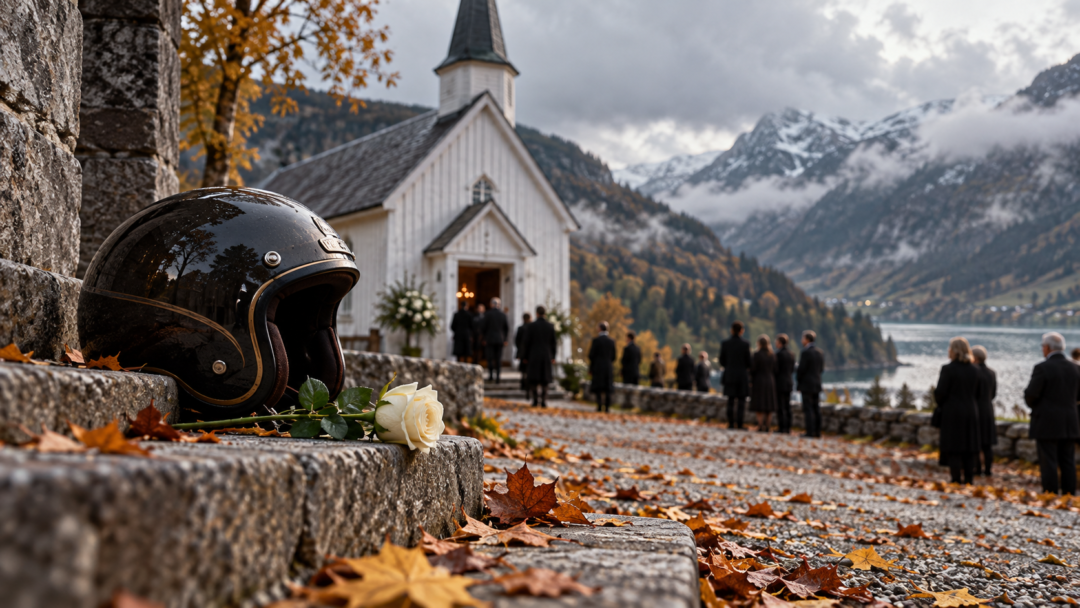
The white country chapel was completely surrounded by four county sheriff cruisers and an unmarked black armored tactical transport. Flames were already licking at the stained-glass windows of the parish hall. Huddled near the church portico, tied to a heavy wooden support column with thick industrial plastic zip-ties, was young Toby Miller, the altar boy.
Standing on the chapel lawn with a bullhorn, his silver hair gleaming under the revolving red emergency lights, was Judge Vance Colter.
“Richard Sterling!” Colter’s amplified voice boomed across the valley floor, bouncing off the mountain granite. “I know you are on this mountain! You have three minutes to bring me the Miller boy’s envelope, or my men will ignite the parish hall with Toby inside! The clock is running, counselor!”