The Broken Promise Of Blackwood Farm And The Old Rider’s Debt
CHAPTER 5: THE CINCINNATI MILL
Cole didn’t flinch. Decades of heavy structural rigging in steel mills and naval yards had forged an instantaneous spatial instinct in his bones. He dropped the eight-pound sledgehammer, wrapped both scarred hands around the stainless-steel cylinder, and dived headlong beneath the massive four-ton knee of the Cincinnati universal milling machine.
The blazing twelve-by-twelve white oak center beam crashed onto the machine’s hardened steel worktable with a deafening, concussive boom that sent seismic vibrations rippling through the reinforced concrete foundation. The massive cast-iron mill held against the catastrophe. Engineered in 1948 to withstand thousands of pounds of cutting force without flexing a tenth of a thousandth of an inch, its two-inch-thick nickel-chromium alloy table absorbed the multi-ton structural impact, deflecting the burning roof timber aside and creating a small, triangular pocket of survivable space beneath the heavy casting.
Cole coughed violently, acrid white pine smoke and vaporized machine oil searing his trachea as the wet wool blanket began to sizzle and scorch against his leather cut. The air temperature two feet above his back exceeded four hundred degrees.
From outside, through the roaring crescendo of the blaze, came the thunderous, earth-shaking crash of the machine shop’s eastern wall being violently breached.
Miller had backed his heavy four-wheel-drive diesel Ford F-350 dually through the burning corrugated tin wall, dragging two heavy half-inch Grade 70 transport recovery chains hooked securely to the shop’s rear rolling timber frame. With an ear-splitting shriek of tearing structural steel and popping fasteners, the three-ton diesel truck ripped the entire burning eastern bay completely out of its footings, opening a twelve-foot breach of cool, clean Kentucky afternoon air that sucked the black smoke upward like a chimney draft.
“Cole!” Dutch’s voice roared through the swirling smoke and falling cinders. “Follow the daylight! Get your ass out of there! The west wall is buckling!”
Cole scrambled forward on his hands and knees from beneath the machine casting, clutching the stainless-steel cylinder tightly against his ribs with his left arm while shielding his face with the smoldering wool blanket. He vaulted through the smoking tangle of twisted conduit and shattered joists, tumbling out of the breached wall onto the damp, dew-soaked grass of the horse pasture just as the remaining rafters collapsed inward in an immense, volcanic geyser of crimson sparks and black soot.
Dutch and Miller caught Cole by the shoulders of his scorched leather vest, dragging him twenty yards across the lawn away from the heat radius.
Cole rolled onto his back, chest heaving, coughing up dark phlegm as he ripped the smoldering wool blanket from his shoulders. His face was blackened with soot, his silver beard singed down to the stubble along his jawline, his forearms blistered from steam, but inside his scarred arms, undamaged and cold to the touch, rested Elias Boone’s stainless-steel vault.
Dutch knelt beside him, unscrewing the cap on a bottle of spring water and pouring it over Cole’s burning hands. “You got it, brother?”
Cole sat up, his breathing ragged but steadying. With steady, soot-stained fingers, he unscrewed the heavy knurled brass end-cap on the cylinder, breaking the airtight rubber O-ring seal, and tipped the contents carefully into his open palm.
Out slid two heavy rolls wrapped in waterproof paraffin oilcloth: the original 1952 master deed to Blackwood Farm signed by the Commonwealth of Kentucky, establishing the 640-acre parcel as an indivisible master machinist apprentice trust, and Elias’s holographic last will and testament, dated three years prior, explicitly naming Cole Mercer as lifetime executive trustee and deeding the six-hundred-acre limestone quarry to a permanent vocational foundation for troubled youth.
Folded inside the deed was a second document that made Cole’s blood run cold—a municipal filing receipt from the Nelson County Chancery Court records annex, date-stamped this morning at 9:15 AM.
“Look at the timestamp on this clerk’s stamp,” Cole rasped, his voice raw from smoke and particulate inhalation, pointing to the purple ink with a blackened fingernail. “Julian didn’t just hire these two drunks to burn the shop and the records. He filed a fraudulent quitclaim deed with the county probate clerk this morning while Elias was still lying in the ambulance on the highway.”
Dutch’s eyes widened with dark, explosive fury. “The county courthouse closes at four o’clock sharp on the first Monday of the month, Cole. Once a quitclaim deed is stamped and indexed into the state land registry computer queue tonight, it becomes an official muniment of title. It takes two to three years of high-court civil litigation to undo it, and Julian will have the bulldozers scraping that limestone quarry by Friday morning.”
Cole checked the heavy stainless-steel diver’s watch on his wrist. The hands read 3:15 PM. Exactly forty-five minutes remained before the county offices locked their doors.
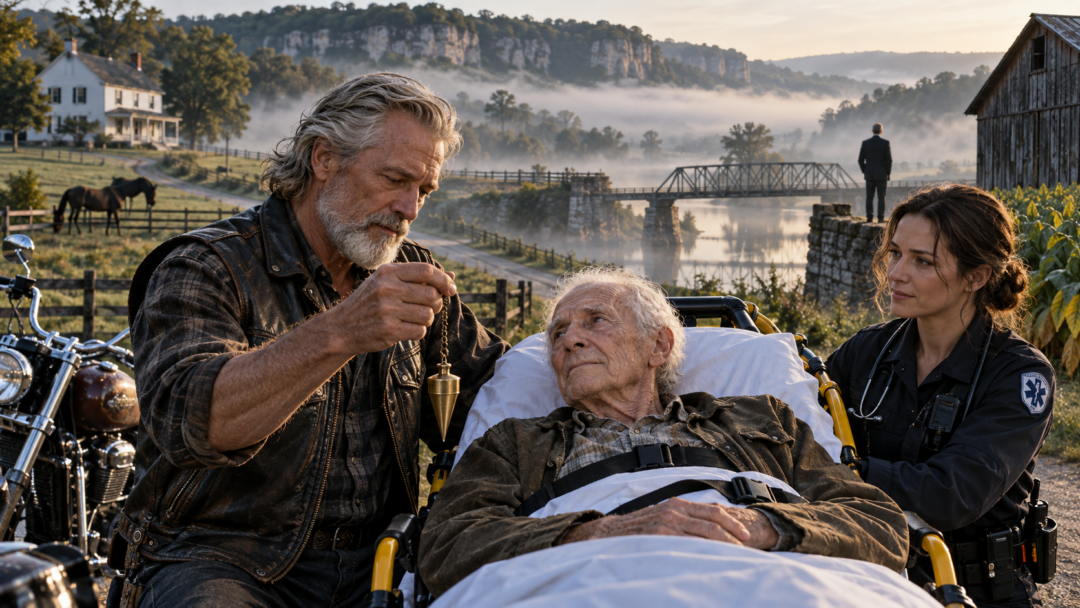
He stood up, his tall frame uncoiling with lethal, quiet purpose. He wiped the ash and soot from his eyes with his sleeve, buckled his leather cut tight over his scorched flannel shirt, and walked with long, deliberate strides toward his chopper. His leather vest was blackened, his silver beard smelled of charred white oak, but his gray eyes burned with the unyielding, crushing finality of an iron vise.
“Brothers,” Cole commanded, his voice cutting cleanly through the hiss of the dying fire and the murmur of the river. “Mount up. We’re riding to the courthouse in Bardstown, and we’re not stopping for red lights.”