The Hydrant Line That Broke Calder’s Glass Empire
CHAPTER 3: ORDERS IN BLUE PAINT
Detective Price converted the plaza from an emergency scene into a joint fire investigation without slowing the attack. He sealed Calder Civil’s truck, called the county prosecutor, and separated the contractor crew. Most claimed they had come for curb measurements. One young foreman, Luis Benton, kept looking at the burning roof as though calculating how long evidence could survive.
Eli gave his statement beside the ambulance. He described the warning, the thrown coffee, the locked doors, and Calder’s attention to the falling gauge. Facts only. The discipline felt familiar: report what you saw, what you did, and what changed. Leave anger out because anger gave defense lawyers room.
Price showed Benton the painted wrench. “Did you close the valve?”
“No.”
“Did someone on your crew?”
Benton swallowed. “We had an order to exercise it. Half turn each direction.”
“From Public Works?”
“Work order came through our system.”
He produced a tablet. The order bore Reed’s electronic signature, but Reed was standing ten feet away and had never seen it. Metadata showed it had been uploaded at 4:12 that morning from an administrator account belonging to Calder Redevelopment.
Calder’s lawyer called it a clerical error. Benton looked at Calder and then asked for an attorney of his own.
The canal relay finally delivered full pressure. Firefighters drove the kitchen flames back, yet thermal cameras showed a second heat source near the shared records corridor. Ortiz ordered the wall opened from the daycare side. Eli went with her because he knew the building plan from volunteer inspections.
Before entering, they studied the accountability board. Every name tag had to return. Ortiz paired crews, assigned air limits, and established an emergency team at the door. Eli changed into borrowed turnout gear and tested the seal on his mask. His ribs remembered older armor, older lists of names. He forced those memories into the narrow place where they could sharpen attention without owning it.
They moved through knee-high smoke. Water darkened the bright rugs and alphabet cards. At Mara’s office, the door stood open, although she had said she locked it during evacuation. The steel file cabinet had been pulled from the wall. A clean rectangle marked where the red lease box had rested.
Ortiz swept her light toward the fire door. Something red lay beyond its wired-glass window on the restaurant side.
“There,” Eli said.
The lease box had been placed against the base of the door where the secondary fire burned. Someone had carried it away from the daycare office and set it beside a stack of oily kitchen towels. The placement was too exact for panic.
Ortiz radioed the discovery and told investigators to photograph from the safe side. Before they could open the door, the ceiling groaned. Eli pulled her back as a steel track and burning drywall collapsed across the corridor. Sparks rolled over the wet carpet.
They retreated, marking the location for the suppression crew. Outside, Mara confirmed the box. “That has every original tenant letter. Calder’s offers, the inspection threats, all of it.”
“Any copies?” Price asked.
“Some scans. Not the signed statements.”
Calder stood beneath an umbrella his lawyer held. “A fire moves objects. People panic. No one knows who carried what.”
Toby, the boy with the toy tug, tugged Mara’s sleeve. “The shiny-shoe man had the red box.”
Adults went still around him.
Price lowered his voice and moved everyone else back. He asked Toby only whether he felt safe and whether he could wait with his mother. Suggestion could ruin a child’s honest memory, so Price avoided names and repeated questions. Mara wanted to press for details, but Eli gently stopped her. The best protection for the boy was to let a trained interviewer receive the account once, cleanly.
Fire investigators meanwhile mapped burn patterns around the kitchen. The primary fire had begun beneath a fryer with a disabled gas shutoff. The secondary heat by the lease box lacked a natural path from that origin. Two fires, separated by a rated door, demanded two explanations. Ortiz radioed that fact to Price in the flat cadence of a person refusing to speculate beyond evidence.
Calder paced behind the tape and watched each evidence flag appear. His calls had stopped after officers requested his phone. He now held it tight against his chest, screen turned inward. When Price asked him to preserve it voluntarily, Calder tried to hand it to his lawyer, who declined to touch it.
Mara knelt. “When did you see that?”
“Before the loud bell. He came through our back door. He told Mr. Denny he was checking pipes.”
Mr. Denny was the plaza maintenance supervisor. No one had seen him since the alarm.
Price asked Toby no more than necessary. A trained child interviewer would handle the formal account. But the boy’s statement redirected the search. Firefighters checked bathrooms, storage closets, and the roof. Calder claimed Denny had resigned that morning.
Ortiz studied the thermal image of the restaurant. One cool human-shaped void appeared behind the hot metal body of the walk-in freezer, in a narrow service chase no customer could enter.
“There’s space back there,” Eli said. “Old utility passage from the steel-market days.”
Crews forced the exterior access hatch. They found Denny’s cap, a broken flashlight, and blood on the concrete. The passage extended under the smoking kitchen, blocked midway by fallen ductwork.
Price obtained an emergency warrant for Calder’s vehicle data. The sedan’s system recorded door openings and location pings even when the engine was off. At 4:06 that morning, its passenger door had opened at the rear service entrance. At 11:41, minutes before the alarm, the trunk had opened there again.
The red lease box was still visible through the fire door, its paint blistering.
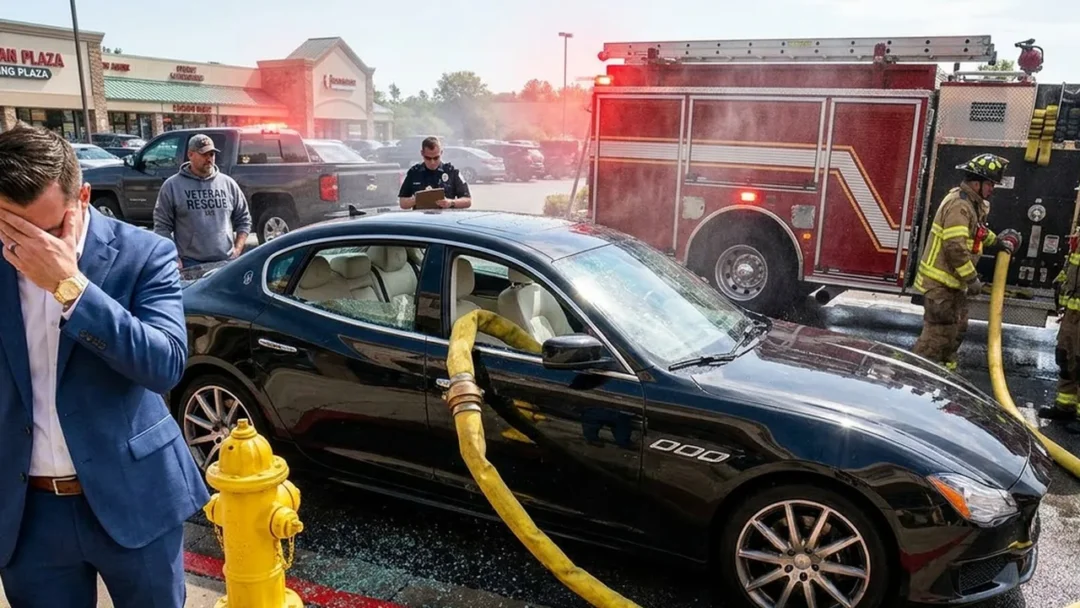
On Calder’s passenger carpet, beneath the charged yellow hose, Price found one small brass key tagged LITTLE HARBOR RECORDS.
The key was wet, but a dark thumbprint remained inside its protected bow.
Price ordered it dried under controlled conditions rather than wiped.
That choice preserved whatever the water had spared.