The Hydrant Line That Broke Calder’s Glass Empire
CHAPTER 6: WHAT THE WATER KEPT
Calder swung the excavator bucket toward the valve chamber. If he collapsed the old brick roof, tons of soil would bury the records and everyone still inside. Price shouted for officers to clear the pit. Ortiz ran for the emergency cutoff, but the machine’s diesel engine ignored her command.
The arrested Voss was already in a cruiser, so Calder had no ally left to impress. His act was not strategy but the final reflex of a man who had always made other people absorb consequences. He tore the bucket through a fence panel, spraying sparks over wet weeds. Officers could not fire safely through the cab with Eli on the track and fuel lines behind it. Ortiz ordered them to hold.
Below ground, firefighters carried archive cartons up the stairs in a human chain. Each box gained weight from water. Reed stood at the chamber entrance and checked labels against a salvage list, choosing original stamped documents before duplicates. The work continued beneath the excavator because evidence and lives shared the same narrow exit.
Eli climbed the track.
Calder saw him through rain-streaked glass and jerked the controls. The boom swept sideways. Eli flattened against the steel housing, fingers locked around a handrail slick with hydraulic oil. The bucket struck a stack of pipe and sent iron lengths rolling toward the canal.
“Get off!” Calder shouted through the cab. “You have no idea what this town owes me.”
Eli pulled the cab’s external emergency-stop cable. Calder had wired it open. The excavator pivoted again, placing the counterweight above the valve-pit vent.
Ortiz attacked the problem as machinery, not theater. She directed a firefighter to close the fuel isolation valve behind the service panel while Price’s officers covered the cab. Eli ripped away the bent panel with a Halligan bar. Diesel sprayed his glove, then stopped when Ortiz drove the valve shut. The engine coughed, lost power, and died with the bucket suspended inches above the pit roof.
Calder locked the cab. Price broke the lower glass with his baton, reached through, and opened it. Officers pulled Calder into the mud. He kept talking as they cuffed him: the records were obsolete, Voss was unstable, Denny had stolen company documents, Mara had endangered children by resisting relocation.
Price waited until the stream ended. “Your car logged you at the service entrance. Your account forged the valve order. Your messages instructed Voss. Your shoe carries the paint. And your escape attempt is on six cameras.”
Calder looked toward Eli. “This is because of a parking space.”
“No,” Eli said. “The parking space is where you finally stopped hiding.”
By dawn, the plaza fire was out. Denny survived surgery and confirmed Voss’s account from a hospital bed. The flash drive contained Calder’s demolition schedule, payments to a city development clerk, and drafts of insurance claims prepared before the fire. Toby’s mother surrendered the boy’s tablet to investigators. He had been recording his toy tug in the daycare hallway when Calder and Voss entered. Their voices were clear enough to place both men beside the records room and capture Calder ordering Voss to delay the engine “until the paper is ash.”
Eli visited Denny after the detectives finished. Tubes crowded the bed, and bruises ringed the maintenance man’s wrists. Denny apologized for not warning Mara earlier. Calder had threatened to cancel his health insurance while his wife underwent chemotherapy. Eli told him coercion explained silence but did not have to define what followed. Denny had hidden copies, protected the drive, and named the valve pit while he could barely breathe. Courage did not always arrive before fear.
In the hallway, Mara organized meals for Denny’s wife and temporary classrooms for the daycare. Her response to being targeted was to make a larger circle of care. That choice affected Eli more than Calder’s arrest. Destruction concentrated power; community distributed it.
The county prosecutor charged Calder with arson conspiracy, attempted murder, evidence tampering, public-utility sabotage, and unlawful imprisonment. Voss faced the same core charges and agreed to testify. A judge froze Calder Redevelopment’s assets and barred the company from contacting plaza tenants.
The consequences spread beyond one fire. State engineers reviewed every permit tied to the riverfront tower. The missing rejection letter reappeared in the valve-yard archive with its receipt stamp intact. Bellweather canceled the development agreement and recovered the public money Calder had drawn through false infrastructure certifications.
Mara and the other tenants formed a cooperative. With restitution funds and a community lender, they purchased the plaza at the court-supervised sale. Little Harbor reopened in a renovated unit with two fire-rated exits, a new sprinkler riser, and a playground where Calder’s sales pavilion had been planned.
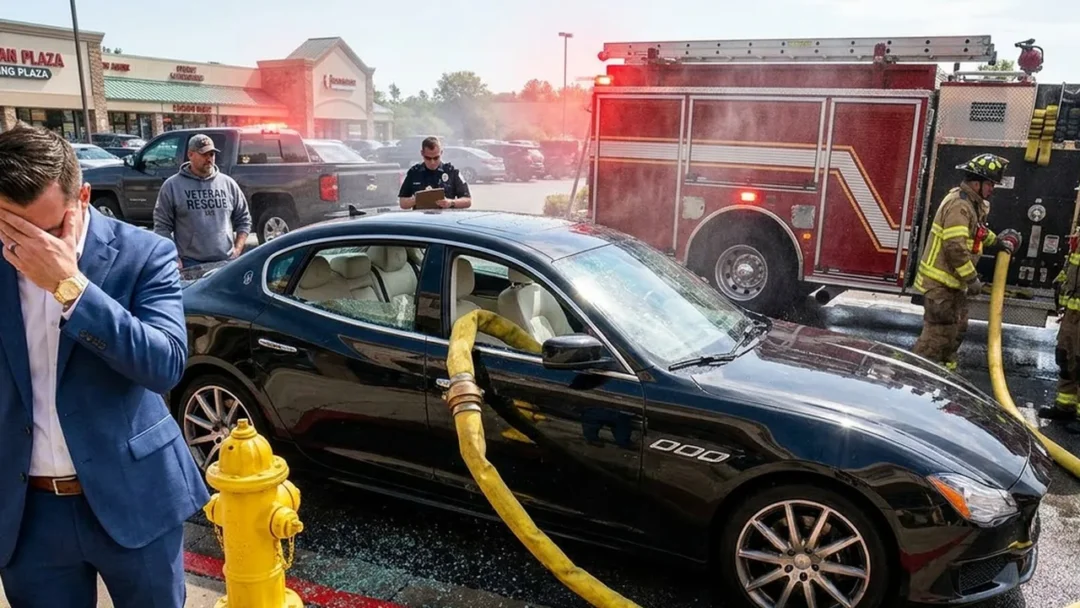
Eli returned to the hydrant three weeks later with a wire brush and a can of approved yellow paint. The damaged curb had been repoured. The black sedan was gone, held as evidence, but tiny cubes of safety glass still glittered in a crack near the drain.
Ortiz joined him carrying two coffees. “Public Works says that hydrant now delivers fifteen hundred gallons a minute.”
“About time.”
She handed him a cup. “Price says your pressure photographs made the fraud timeline possible.”
Eli had taken those photographs because he disliked unexplained failures. He had not expected anyone to care. For years after the Navy, he had trusted immediate work—pressure on a wound, air in lungs, a body carried out. Paperwork felt pale beside it.
Across the lane, Mara hung children’s paintings in the daycare window. One showed a yellow hydrant taller than the engine, with a thick hose passing through a black rectangle. Another showed a gray-shirted figure holding a child’s hand. The proportions were wrong, but the order of importance was not.
“Evidence is rescue work too,” Ortiz said, following his gaze.
Eli rolled fresh paint around the hydrant cap. “Took me long enough.”
At Calder’s preliminary hearing, the developer arrived without a gold watch. Tenants filled the benches behind the prosecutor. Denny entered slowly with a cane. Mara carried the red lease box, its scorched lid preserved under clear evidence film.
Calder looked back once, perhaps expecting anger he could dismiss as envy. He found people who had learned the price of silence and refused to pay it again.
Months later, the cooperative installed a brass plaque beside the hydrant. It did not mention Calder or the ruined car. It listed the names of the firefighters, officers, teachers, public workers, and children who had made it out. Beneath them were five plain words: KEEP THE WAY CLEAR.
On opening morning, Toby parked his toy tug beside the curb, considered the plaque, and moved it two feet away from the hydrant. Eli laughed. The lesson had cost Bellweather smoke, water, and broken glass, but it had held. Public safety was not pocket change. It was a promise, and everyone finally understood who had to keep it.