The Hydrant Line That Broke Calder’s Glass Empire
CHAPTER 2: THE BURIED VALVE
Ortiz called for a second alarm and ordered the crew to conserve tank water. The engine carried five hundred gallons, enough for minutes, not for a spreading commercial fire. Bellweather’s nearest alternate hydrant stood across four lanes of traffic and drew from the same aging grid. The canal industrial main lay eight hundred feet downhill.
“Relay from the canal,” she told the second engine over the radio. “Reverse lay up Foundry Street. Police shut every lane.”
Eli helped Mara count children beneath the grocery awning. All twelve were breathing, though two coughed soot into paper masks. He checked lungs, pupils, and pulse, then turned toward the pumper. The supply gauge bounced each time Ortiz’s crew opened a nozzle.
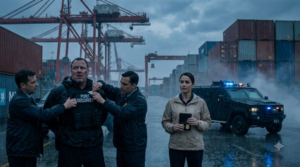
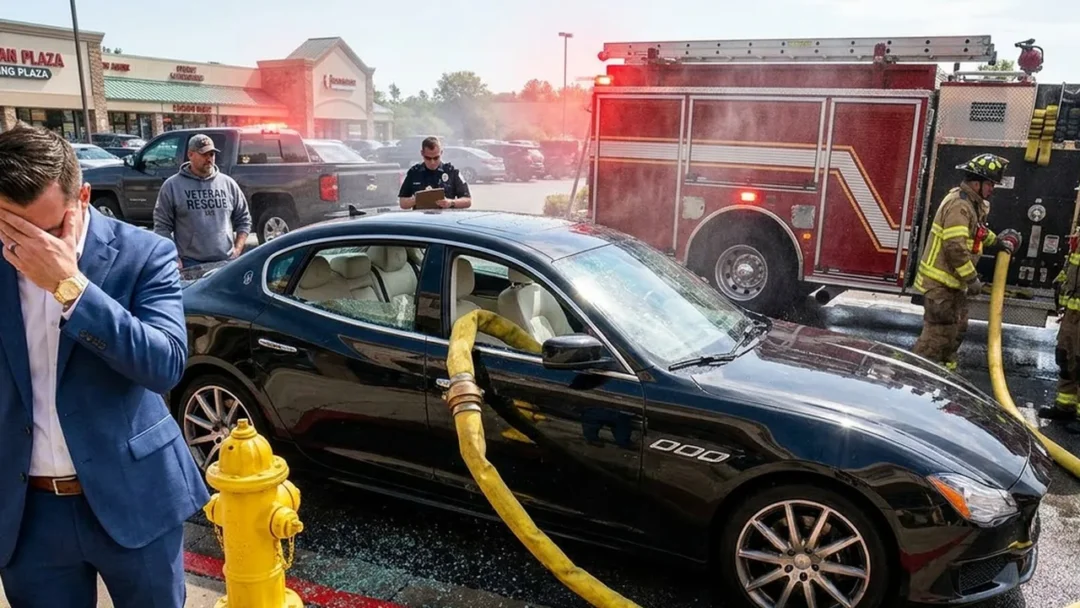
Calder stood with Price beside the ruined sedan. “Your department destroyed private property because its equipment doesn’t work.”
Price kept his body camera centered. “You blocked the hydrant.”
“And yet they reached it. So explain the pressure.”
Price did not accept the invitation to debate. He photographed the fire-lane signs, measured the six-inch gap between the hydrant and passenger door, and asked a grocery employee to preserve exterior camera footage. The method made a chain no expensive argument could easily break. Eli recognized it as the civilian version of triage: establish what could still be saved, label it, and move in order.
At the restaurant entrance, firefighters forced the hood system into manual discharge. White suppressant rolled over the cooking line, but heat continued behind the wall. Grease had entered a vertical duct whose inspection plate carried bolts polished by recent removal. Ortiz bagged one loose bolt without interrupting suppression. Fire could be accidental; altered protection systems were choices.
The answer came from below ground. Eli followed the main’s route behind the plaza, where a strip of fresh asphalt crossed the older pavement. Three months earlier, Calder Redevelopment had cut that trench while relocating utilities for a planned luxury tower. Eli had photographed muddy discharge at the hydrants afterward. Public works had blamed sediment.
At the corner he found a blue valve box newly painted around its rim. He knelt and brushed grit from the iron lid. Two parallel scars crossed the paint, bright enough to be recent. Somebody had seated a long key there and turned the buried valve.
A Calder Civil truck sat beyond the dumpsters. Its rear rack held survey rods, cones, and a T-handled valve key.
Eli waved Price over. “Photograph this before anyone touches it.”
Price crouched. “What am I looking at?”
“District isolation valve. It should be locked open. Those marks are new.”
Calder approached until Price raised a palm. “That is part of an active redevelopment site,” Calder said. “Your volunteer should stop inventing crimes.”
Eli looked at the developer’s shoes. Gray grit clung to the polished edges, and a crescent of blue paint marked one sole. “Then you won’t mind telling him why you walked across wet valve paint.”
Calder stepped back.
The canal relay arrived with hose beds roaring empty. Firefighters stretched twin lines uphill. Traffic locked across Bellweather while Price summoned a public-works supervisor. Inside the restaurant, flames had climbed the grease duct and entered a concealed ceiling void. Ortiz’s team pulled tiles and punched openings, buying time with short bursts from the failing line.
Eli joined engineer Simone Reed at the valve box. She lowered a locator probe, read the stem position, and swore under her breath. “Three turns off seated. Somebody almost closed it.”
“Can you open it?”
“If the stem isn’t stripped.” She inserted the municipal key. It stopped after half a turn. “Fresh damage. They forced it against load.”
The second engine began feeding from the canal main. Pressure rose slowly, enough for Ortiz to resume an interior attack. She directed a crew to cut open the restaurant roof while another protected the daycare wall.
Mara stood beside Eli, her face streaked by rain from the hose spray. “Calder wanted us gone by Friday. He said the fire inspector would find something fatal if I didn’t sign his buyout.”
“Did you report it?”
“To the city development office. They forwarded my complaint to his lawyer.”
She showed Price the reply on her phone. The message thanked her for supporting “orderly revitalization,” although she had opposed the plan. Attached was a relocation agreement she had never requested. Signing it would waive claims for interrupted business, damaged property, and improper inspection. Price forwarded a forensic copy to his department account and switched the phone to airplane mode to preserve its state.
Eli remembered Calder visiting the volunteer station two months earlier with a ceremonial donation. He had asked oddly specific questions about response times and which hydrants fed the plaza. At the time, the chief had called it civic interest. Eli now told Price, who wrote the date beside the photographed valve scars.
Price heard her and asked for the email. Mara said the originals were in a red lease box inside her office, along with notices from other tenants. Her cloud password was written in the same box because she distrusted password managers.
Calder interrupted from behind the police tape. “Those papers are irrelevant. Her lease terminates after any casualty that makes the premises unusable.”
Mara stared at him. “How do you know where I keep them?”
For the first time Calder had no polished answer.
Public Works removed the damaged valve cap. Beneath it, wet paint carried a stamped contractor symbol: a narrow C inside a square, the field mark used by Calder Civil on every barricade and machine in the redevelopment zone.
Price photographed it. Ortiz emerged through smoke and pulled off her mask. “Fire’s moving behind the cooler. We found the sprinkler control chained half shut.”
The cut end of the chain shone silver. This was maintenance performed as sabotage, not neglect.
Calder’s lawyer arrived and demanded that every question cease.
Then Reed lifted the valve key from the contractor truck. A smear of fresh blue paint circled its socket, and someone had tried to wipe it clean with a white leather detailing cloth.