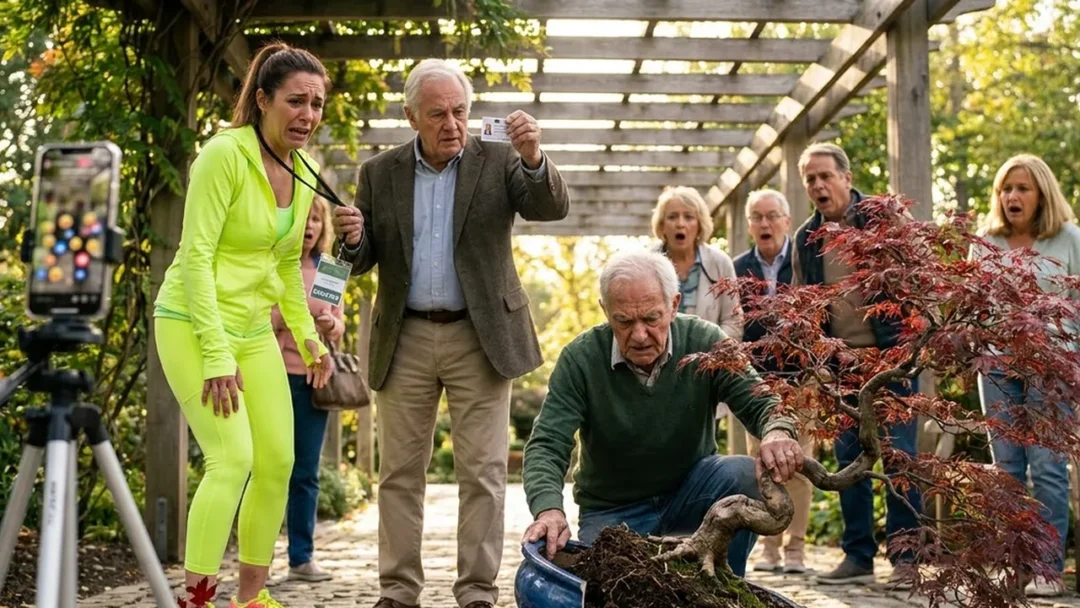
The Shattered Exhibition Bonsai And The Banned Fitness Livestream Influencer
CHAPTER 7: THE AUTUMN PEACE OF THE CONSERVATORY
Two weeks later, the Pacific Botanical Conservatory reopened the Japanese Heritage Pavilion for the autumn gala.
The crimson Japanese maple sat at the center of the exhibition pavilion on a raised platform of polished volcanic basalt. It was housed in its temporary cedar training box, surrounded by a bed of fine white river gravel raked in concentric ripples representing ocean waves. Beside the tree stood a brand-new, polished bronze monument bearing a newly cast historical plaque:
THE SATOH MAPLE
PLANTED IN 1956 BY ICHIRO SATO
PRESERVED THROUGH SEVENTY YEARS OF ARTISTIC DEVOTION
A LIVING MONUMENT TO CULTURAL ENDURANCE AND RESILIENCE
Standing beside the platform, Dr. Arthur Sterling addressed an audience of three hundred conservatory patrons, civic leaders, and horticultural scholars.
“True art is not manufactured for ephemeral digital validation,” Dr. Sterling declared, his voice echoing under the soaring glass roof. “True art is forged through decades of patience, humility, and reverence for the natural world. In recognition of Master Kenji Sato’s lifetime of extraordinary contribution to American horticulture, the Board of Trustees has unanimously voted to establish the Kenji Sato Permanent Botanical Conservation Endowment, funded through full civil restitution paid by the Davenport corporation.”
The crowd erupted in long, thunderous applause as Kenji Sato stepped forward to receive the honor.
Kenji smiled gently, bowing with humble grace, his hands resting lightly on the bamboo railing. He looked up at the delicate red leaves of his father’s tree, glowing softly beneath the gallery spotlights like embers of ruby fire.
Outside, the cool autumn rain washed over the weeping cedar boughs of King County, cleaning the stone paths and nourishing the soil. Inside the quiet pavilion, beneath the shelter of the glass dome, the seventy-year-old maple breathed peacefully, rooted deep in the enduring soil of honor, history, and truth.
The cultural philosophy underlying the art of bonsai is rooted in the concept of wabi-sabi—the appreciation of beauty that is imperfect, impermanent, and incomplete. A bonsai is never finished; it is a continuous journey through time, bearing the physical scars of storms, droughts, and human touch, yet continuing to grow toward the light with quiet, unbroken resilience. The catastrophic trauma inflicted upon the Sato maple became part of its living story—a physical testament to the enduring power of patience, craftsmanship, and community over the fleeting, hollow vanity of modern influencer culture.
The permanent conservation endowment established in Kenji Sato’s name ensured that the conservatory’s educational programs and historic bonsai collections would be funded for generations to come. As the autumn gala concluded and the last visitors walked down the damp flagstone paths, Kenji remained in the quiet pavilion, sitting beside his father’s tree. The cedar rafters above echoed with the gentle patter of Pacific Northwest rain, and the red leaves of the miniature maple trembled softly in the evening draft. The storm had passed; the roots held firm; and the ancient tree stood proud, peaceful, and unbroken in the quiet sanctuary of the garden.
As the evening shadows deepened across King County, the lights of the Pacific Botanical Conservatory glowed softly against the dark emerald hills. The glass pavilion stood like a shining beacon of peace, sheltering centuries of living history from the noise and chaos of the outside world. Inside the Japanese garden, Master Kenji Sato knelt beside his father’s tree, his heart filled with deep, abiding gratitude. The rain fell gently on the cedar rafters, a soothing lullaby that nourished the soil and washed away the sorrow of the morning. In the quiet darkness of the garden, the seventy-year-old maple stood strong, proud, and free, its roots anchored deep in the timeless earth.