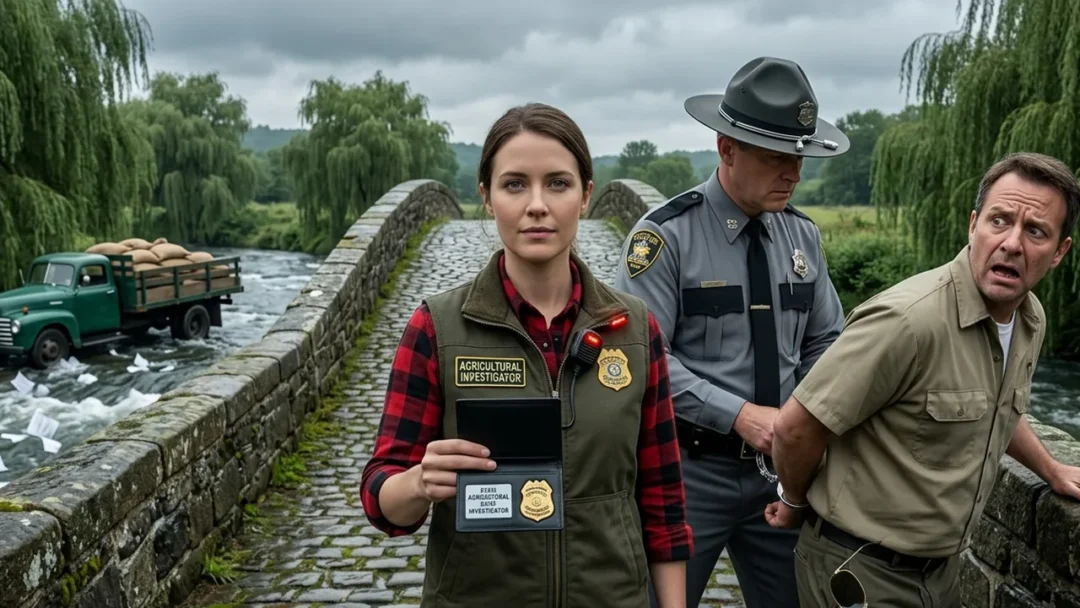
The Stone River Bridge Toll And The State Investigator Shield
CHAPTER 5: THE RAID ON CEDAR RUN HALL
While the grain convoy surged north along the valley highway with its police escort, Agent Maya Sterling arrived outside the historic Cedar Run Town Hall at the head of a joint state and federal tactical entry team.
The municipal building was a stately two-story red-brick colonial structure dating back to the nineteen-twenties, flanked by majestic sugar maples on the central green. But beneath its tranquil, small-town facade, the building was a hub of systematic corruption. Through the frosted glass windows of the basement foundation, acrid grey smoke was already billowing into the afternoon air, carrying the distinct, oily stench of burning paper and melting vinyl binder covers.
“Entry team, move!” Maya commanded, snapping on her tactical gloves and drawing her department-issued sidearm.
Two state marshals stepped up to the reinforced rear basement entrance with a twenty-pound steel battering ram. BOOM! The heavy oak frame splintered on the first strike. On the second impact, the brass deadbolt sheared in half, and the heavy door flew inward with a violent crash.
Maya entered first, ducking beneath the swirling layer of suffocating smoke. The beam of her tactical weapon light sliced through the haze, illuminating the cramped concrete basement. At the far end of the room stood an industrial cast-iron furnace, its door swung wide open, radiating intense orange heat.
Kneeling before the open furnace was Township Administrator Brenda Higgins—the sister of corrupt inspector Lyle Higgins and cousin to Mayor Arthur Vance. She was frantically shoving armfuls of green ledger books, carbon-copy transit receipts, and printed wire transfer sheets into the roaring flames.
“Federal and state agents! Step away from the incinerator!” Maya’s voice cut through the roar of the furnace with razor sharpness. “Put the papers down and get on the floor! Now!”
Brenda shrieked, dropping a thick leather-bound binder onto the concrete floor. She stumbled backward against a metal shelving unit, coughing violently as the thick smoke burned her throat. “You have no right to come in here! I’m the municipal records custodian! These are obsolete township transit logs scheduled for routine destruction under the county retention schedule!”
“Destroying subpoenaed records during an active federal felony investigation is obstruction of justice and destruction of evidence under Title 18 of the United States Code,” Maya said, keeping her weapon leveled while two investigators rushed forward with industrial carbon-dioxide extinguishers.
With a deafening hiss of pressurized white vapor, the investigators blasted the interior of the furnace, knocking down the flames and smothering the burning ledgers in a thick blanket of frozen foam.
Maya holstered her sidearm and knelt beside the dropped leather binder that Brenda had dropped in her panic. The outer edges were scorched and curled by heat, but the heavy gold-stamped title on the front cover was completely intact:
CEDAR RUN BRIDGE SPECIAL TRANSIT ASSIGNMENT REVENUE – CONFIDENTIAL.
Maya opened the binder, her eyes scanning the meticulous handwritten rows. Every single transaction over the last forty-two months was recorded in Brenda’s neat, cursive handwriting: the date, the name of each local farmer, the license plate and gross vehicle weight of each truck, and the exact cash amount extorted at the bridge checkpoint—adding up to over seven hundred and forty thousand dollars.
Beside each entry, a column titled DISBURSEMENT SPLIT clearly mapped where the stolen money had flowed: sixty percent transferred directly into an offshore commercial bank account in Grand Cayman under the name Vance Capital Holdings Inc., twenty-five percent wired to Walter Croft’s corporate logistics account, and fifteen percent paid out in bi-weekly cash envelopes to Lyle Higgins under the code name Bridge Safety Inspector Bonus.
“Routine records retention, Brenda?” Maya asked, holding up the open ledger before the trembling administrator. “You kept a dual-entry bookkeeping system for an offshore extortion racket right here in the municipal basement. That makes you an active co-conspirator in federal racketeering and wire fraud.”
Brenda collapsed against the shelving, tears streaking through the black soot on her cheeks. “Arthur told me the state would never look into the township books! He swore the regional inspectors in Richmond were on his payroll! He made me write down every dollar so he could prove Walter Croft wasn’t skimming from his cut!”
Behind them, postal inspectors and state forensic agents were already tagging rows of filing cabinets with fluorescent evidence barcodes, seizing hard drives from the municipal server rack, and securing boxes of correspondence.
Just then, Maya’s department radio squawked with high-priority static. It was Special Assistant Attorney General Diaz from the courthouse in Front Royal.
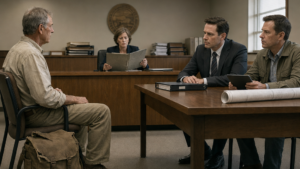
“Maya, we have a major emergency,” Diaz’s voice came over the speaker, tight with tension. “Arthur Vance’s defense counsel just filed an emergency motion for dismissal before Judge Hayes. They’re claiming the state bridge seizure was illegal without an original, wet-ink town charter deed from 1882 proving state sovereign easement over the riverbed. If we don’t have that original deed physically on the bench in Front Royal in thirty minutes, Judge Hayes may be forced under township precedent to order the bridge re-closed to all commercial freight until a six-month title hearing!”
Maya looked down at the charred filing cabinets against the basement wall. Somewhere inside this room, buried under decades of municipal dust, was the nineteenth-century charter deed that would either liberate the valley or leave the farmers trapped at the riverbank.