The Ten Feet That Brought Blackstone Ridge Down
CHAPTER 2: THE COURTESY LINE
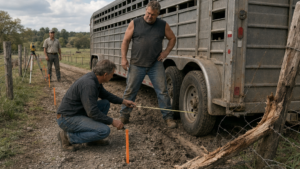
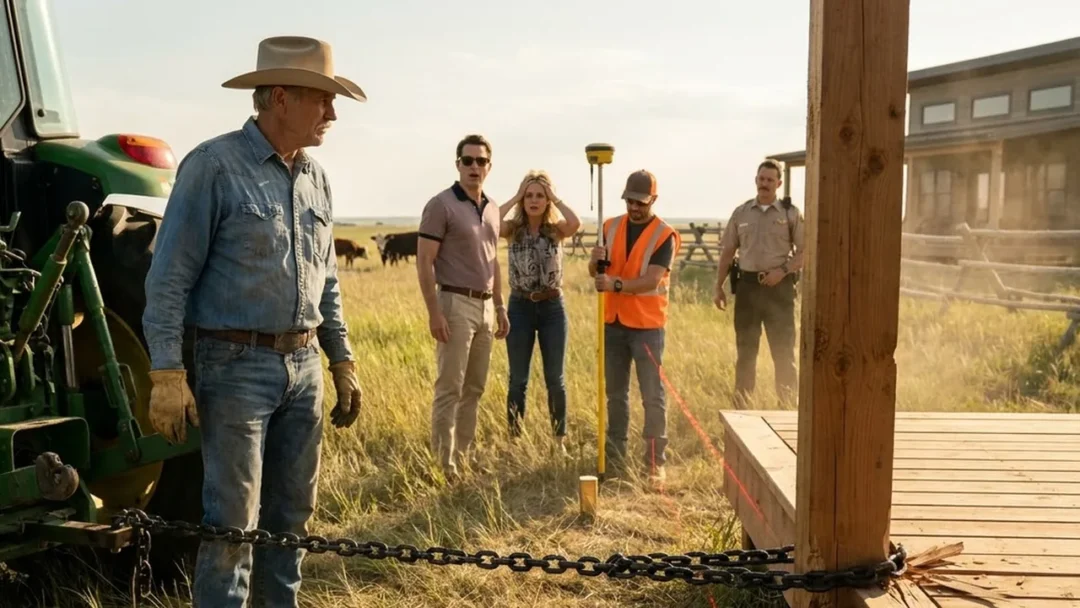
By dusk, the county had wrapped red evidence tape around the brass monument and the unmarked irrigation box. Eli’s chain remained on the ground. Victor paced behind the tape, calling lawyers. Celeste sat on the cabin steps with both hands around a glass she never drank from.
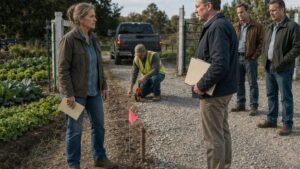
Nora followed the wet seam downhill. The soil probe sank easily where the rest of the pasture had hardened like fired clay. Twenty feet beyond the deck, water seeped among rabbitbrush roots.
“Our lateral is losing at least twelve gallons a minute,” she said. “Maybe more when their pump runs.”
Eli looked toward the stock trough. Forty cow-calf pairs had crowded it that morning. The float valve had hissed without catching up. A July high-pressure ridge was expected tomorrow, with temperatures near one hundred.
“We expose the pipe,” he said.
Lena shook her head. “Not until the utility locator clears it. Their permit shows buried power. If the drawing is false, we don’t know where anything is.”
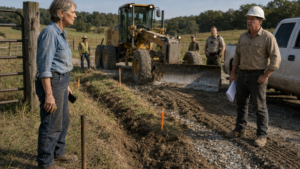
A black SUV rolled through the open gate. Grant Vale stepped out wearing boots too new for the dust and a charcoal shirt with the sleeves folded exactly twice. Blackstone Ridge owned six hundred acres uphill, where survey flags marked future spa villas. Vale had bought three neighboring ranches through separate companies. Eli had refused four offers.
Vale studied the tape with mild disappointment, like a host noticing a stain before dinner.
“Eli, this is needless heat,” he said. “Victor relied on bad plans. Let me cure it.”
“Cure the water theft first.”
“That’s an equipment leak, not theft.” Vale turned to Nora. “You are an engineer. You understand construction contingencies.”
“I understand a pump running on the wrong side of a monument.”
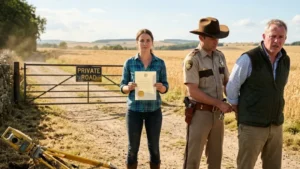
Vale offered Eli a folded paper. It was a purchase agreement for the disputed strip, the irrigation lateral, and a sixty-foot access easement. The price was enough to clear the operating note and replace the baler. The acceptance window closed at noon the next day.
“You can spend five years proving ten feet,” Vale said, “or get paid for it tonight.”
Eli read the final paragraph. By signing, he would release all claims arising from past or present water use. The phrase was buried under standard warranties.
“You knew about the pump,” he said.
Vale’s pleasant expression did not change. “I know development requires water.”
Eli tore the agreement once down the center and handed back both pieces. “Then develop rain.”
Vale let the halves fall. “Your operating note matures in October. Hay costs are up. Calf prices won’t save you if winter comes early.”
Eli felt Nora turn toward him. He had not told her Vale knew the loan terms. Vale had named private numbers to prove the ranch walls were thinner than they looked.
“My finances don’t move your property line,” Eli said.
“No. They move owners.”
Vale left before the mosquitoes came out. Victor followed him to the SUV, speaking in urgent bursts. Vale listened for ten seconds, then closed the door in Victor’s face. Celeste watched from the deck.
At the ranch house, Nora spread documents across the kitchen table. Eli brought out his father Ray’s field notebook from a steel cashbox. The pages smelled of machine oil and dust. Ray had recorded fence offsets, ditch grades, calf weights, and every handshake agreement he distrusted enough to measure.
April 17, 1989: Set courtesy fence 10.0 feet east of 17-B. Keep title to strip. No easement granted.
Nora traced the penciled bearing. “This agrees with Lena’s shot.”
“Your grandfather checked everything twice.”
“Except people.”
Eli heard the accusation beneath the words. Ray had trusted a produce broker who disappeared with a season’s payment. The debt had cost them half the winter pasture and taught Eli to endure trouble quietly until he could outlast it. Nora believed endurance had become an excuse.
She opened archived county permits. The public plat showed the correct monument, but the approval drawing in Victor’s folder moved the line twenty-one feet east. The modification had been uploaded at 2:13 a.m. under the credentials of a retired planning clerk.
“Blackstone didn’t just make a private plan,” she said. “Somebody inserted it into the review packet.”
Eli called Rusk. The deputy listened, then asked them to email copies without altering the source files.
At eleven, the cattle began bawling. Eli and Nora crossed the yard with flashlights. The stock tank was empty. Mud showed where calves had nosed beneath the float arm. Eli opened the upstream valve fully. Air coughed from the pipe, followed by a thread of water no thicker than baling twine.
Nora checked the headgate gauge. Their legal allocation was entering the lateral. Somewhere between the gate and the tank, it vanished.
They opened every valve and listened against the pipe with a mechanic’s stethoscope. At the barn riser, turbulence rasped through the diaphragm. At the pasture branch, there was only a hollow whisper. Nora calculated the missing volume on a feed invoice and reserved another neighbor’s tank. Eli moved shade panels toward the trough. Practical work held panic at a useful distance.
Her phone lit with a remote sensor alert. Flow at the Mercer turnout had dropped to zero all at once, as if a valve had closed.
Then a second notification arrived from the weather service: tomorrow’s heat warning had been upgraded. One hundred and three degrees by midafternoon.
Eli looked across the dark pasture. On the ridge, the Dane cabin glowed. Beneath the deck, the hidden pump throbbed steadily.
They had twelve hours to find water for eighty animals.