The Torn Hospital Photograph And The Brass Key To Greenhouse Seven
CHAPTER 6: THE GARDEN OF THE LIVING BROTHER
Six months later, on a radiant, sun-drenched Saturday morning in late May, the four hundred acres of Bellamy Hall were transformed into an ocean of blooming color and joyous life. The majestic stone manor on the bluffs of Rhinebeck stood with its great double oak doors thrown wide open to the spring breeze blowing off the sparkling Hudson River.
More than five hundred residents from Rhinebeck, Red Hook, and neighboring river communities—local farmers, schoolteachers, artisans, carpenters, and children running through the grass with paper kites—filled the manicured parterre gardens. The high iron security gates that had barred the public for three generations had been unbolted, swung open, and permanently welded to the stone pillars, welcoming the valley inside.
Down in the northern hemlock ravine, Greenhouse 7 had been completely restored. Its hand-rolled Victorian glass panes had been cleaned until they gleamed like liquid diamond in the morning sun, its iron ribs freshly painted deep forest green. Inside the soaring conservatory, thousands of heirloom Hudson Valley tea roses, rare climbing orchids, and medicinal river ferns flourished in rich, dark compost, filling the warm air with an intoxicating, sweet perfume.
Sitting on a rustic cedar bench inside the conservatory, surrounded by blooming white roses, was Thomas Bellamy.
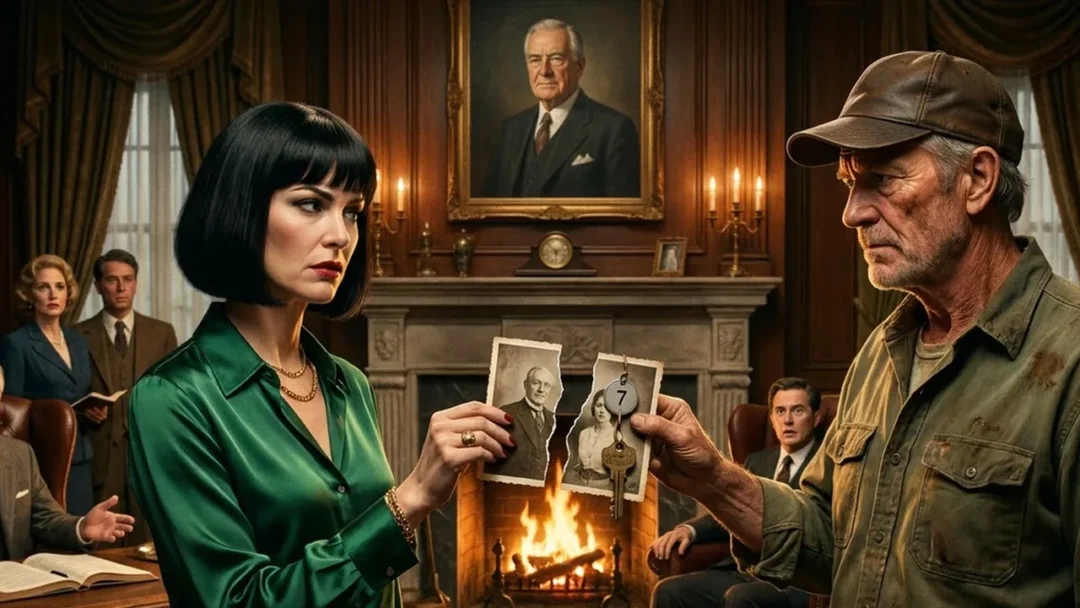
He was dressed in a comfortable cream linen shirt, clean brown canvas trousers, and his favorite leather boots. Around his neck, resting against his chest, hung the small brass key to Greenhouse 7, suspended from a sturdy silver chain. On his fourth finger, the gold Bellamy signet ring caught the sunlight, polished to a brilliant mirror finish. Beside him on the bench sat the surviving half of the torn photograph—beautifully remounted in an antique hand-carved cherrywood frame alongside a fresh color portrait of the restored greenhouse.
Walking down the brick pathway, carrying two tall glasses of fresh lemonade, was Attorney Marcus Whitfield, dressed in an open-collar linen shirt, a broad, relaxed smile warming his dignified features.
“Good morning, Mr. Bellamy,” Whitfield said warmly, handing Thomas a glass and sitting beside him on the cedar bench. “I just received the final decree from the Appellate Division in Albany. The court dismissed Sloane Bellamy’s final frivolous appeal with prejudice, assessing full legal costs against her personal accounts. The surrogate judge confirmed that your title to the entire four-hundred-acre estate and the commercial trust is absolute, irrevocable, and permanently secure.”
Thomas took a sip of the cold lemonade, looking out through the curved glass walls toward the sunlit hemlocks. “How is Sloane, Marcus?”
Whitfield sighed softly, shaking his head. “She refused the five-thousand-dollar monthly living stipend you generously offered to establish for her, Thomas. Her pride is still intact, though her fortune is gone. She is currently working as a junior retail associate at a designer boutique on Madison Avenue, living in a studio apartment in Queens. Perhaps with time, the soil will teach her what wealth could not.”
Thomas nodded slowly, his kind gray eyes filled with a gentle, patient sadness. “Pride is a bitter root, Marcus. It takes a hard winter to kill it.”
At that moment, the brass bell above the conservatory entrance chimed with a clear, musical note.
A dozen local elementary schoolchildren came trooping through the arched doors, led by their young biology teacher. They carried small wooden planter boxes, bags of potting soil, and garden trowels, their eager faces alight with curiosity as they looked up at the towering glass dome.
“Mr. Thomas! Mr. Thomas!” an eight-year-old boy called out, running up to the bench with his small hands covered in rich black loam. “You promised to show us how to graft the heirloom white roses today!”
Thomas’s face broke into a radiant, joyful smile that erased forty years of sorrow from his eyes. He set his lemonade down, stood up with the effortless vigor of a man whose spirit had been renewed, and extended his calloused hands toward the children.
“I certainly did, young man,” Thomas laughed, his rich, gentle voice echoing through the glass pavilion. “Come along, everyone. Let me show you how to take a cutting that looks small and broken, and give it the roots to grow into something magnificent.”
Attorney Whitfield leaned back against the cedar bench, watching the seventy-two-year-old master of Bellamy Hall kneel down on the red brick floor beside the children, guiding their small hands into the earth with patience and love.
High above them in the clear spring sky, a solitary wild falcon wheeled on the thermals over the Hudson River, its wings catching the morning sun as it banked toward the mountains. And down in the warm, fragrant greenhouse, Thomas Bellamy worked with the earth, knowing that the long winter of silence was broken forever, the brother’s promise was kept, and the garden was finally, unconditionally free.
The morning sun rose higher, warming the glass pavilion until the iron ribs expanded with soft, metallic clicks. From the high bluffs of Rhinebeck, the broad sweep of the Hudson River glistened like beaten silver, carrying tugboats and pleasure craft toward the ocean. For two hundred years, Bellamy Hall had been a fortress of exclusion, its stone walls and iron gates designed to keep the world at bay. Today, the gates were open, the soil was shared, and the children of the valley were learning that true nobility is not inherited through arrogance, but cultivated through humble, loving hands in the earth.