The Torn Hospital Photograph And The Brass Key To Greenhouse Seven
CHAPTER 1: THE ASH ON THE CHERRYWOOD MANTLE
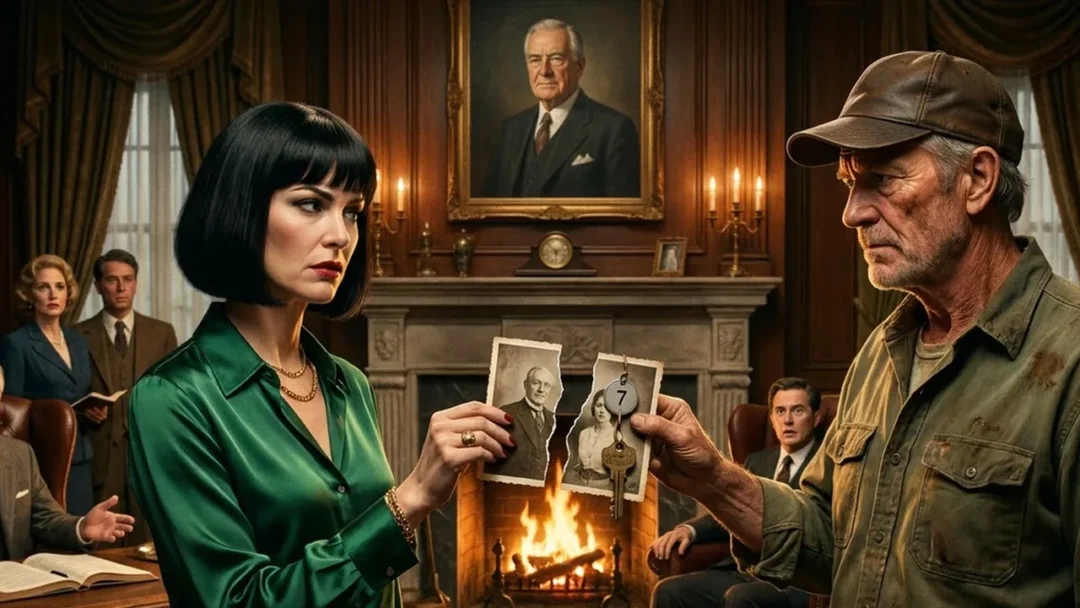
The two-story private library of Bellamy Hall was an imposing cathedral of dark American cherrywood, leaded cathedral glass, and inherited arrogance. Outside, the slate-gray autumn rain lashed against the tall mullioned windows, stripping the golden leaves from the century-old sugar maples that lined the carriage bluffs above the Hudson River. Inside, a roaring fire of seasoned white oak logs leaped within a massive limestone fireplace, casting dancing amber flames across thirty leather-bound wingback chairs arranged in a formal semicircle. Above the mantle, an oil portrait of Arthur Bellamy—the real estate and timber titan whose death six days earlier had thrown a two-hundred-million-dollar empire into uncertainty—gazed down with a stern, unyielding expression.
Standing by the hearth with a crystal flute of vintage Dom Pérignon in her manicured hand was Sloane Bellamy. At twenty-nine, Arthur’s eldest granddaughter was the absolute embodiment of Manhattan socialite triumph. She was tall, with glossy platinum-blond hair falling razor-straight to her collarbones, icy blue eyes, and high, sculpted cheekbones that radiated unblemished entitlement. She wore an ivory silk blouse that cost more than a year of property taxes, tailored black designer trousers, diamond pavé bracelets that chimed with every gesture, and four-inch red-soled Christian Louboutin heels.
Across the Persian carpet, standing with his back against the towering cherrywood bookshelves, stood Thomas.
At seventy-two, the estate’s head gardener looked like a piece of weathered oak that had survived sixty winters in the river valley. His thick hair and short, trimmed beard were white as fresh frost, his kindly gray eyes lined with the deep crow’s feet of a man who had squinted into half a century of morning sun. He wore his daily uniform: a faded olive-drab canvas work shirt with worn horn buttons, heavy brown twill suspenders, scuffed corduroy work trousers tucked into muddy leather boots, and thick leather gardening gloves tucked into his back pocket. In his calloused, soil-stained hands, held with gentle reverence, was a small, five-by-seven photographic print in a cracked silver frame.
Sloane turned, her lip curling in sudden, venomous disgust as her blue eyes landed upon the elderly gardener.
“Attorney Whitfield,” Sloane said, her voice sharp as broken ice, carrying clearly over the crackle of the fireplace to the twelve cousins, uncles, and board trustees seated around the room. “Why is the groundskeeper standing inside my grandfather’s private library? This is a formal testamentary proceeding for direct descendants and corporate beneficiaries. Servants belong in the potting shed, not at the will reading of Arthur Bellamy.”
Thomas did not step backward. He looked at Sloane with calm, unhurried dignity, his voice quiet, deep, and gentle. “Your grandfather asked me to be here, Miss Sloane. In his final hours at St. Luke’s Hospice, he made me promise I would attend.”
Sloane let out a loud, mocking bark of laughter, glancing toward her cousins on the sofa, who smirked in unison. She walked across the Persian rug, her red-soled heels clicking aggressively against the parquet border, until she stopped inches from the old man.
“My grandfather had vascular dementia for six months, you pathetic old parasite,” Sloane hissed, her eyes narrowing to slits. “He probably mistook you for a nursing orderly. What is that pathetic little prop you’re holding? Did you come to show us an invoice for trimming the hydrangeas?”
With a sudden, violent movement of her left hand, Sloane reached out and wrenched the silver frame from Thomas’s fingers.
The flimsy metal backing snapped. Sloane pulled the glossy photographic print from the frame.
The photograph showed Arthur Bellamy in the final week of his life, propped against four white pillows in his hospice bed, wearing his favorite burgundy fleece robe. His gaunt face was smiling, his tired gray eyes alight with warmth, while Thomas—dressed in this exact olive work shirt—sat on the edge of the mattress, gently holding a spoon of warm broth to his brother’s lips. It was a portrait of pure, unadorned human devotion, stripped of every ounce of corporate vanity.
Sloane looked at the image, her face contorting with revulsion. “Disgusting sentimental filth. You think a photograph of you spoon-feeding a dying old man buys you a piece of this estate?”
Before Thomas could speak, Sloane took the photograph in both of her hands.
RIIIIIIIP.
With a vicious, deliberate wrench of her wrists, Sloane tore the photograph straight down the center.
The sound tore through the quiet room like a gun blast. The tear severed the image in two—on the left side remained Arthur’s smiling face in his burgundy robe; on the right side remained Thomas holding the spoon.
Sloane raised the left half of the photograph—the piece showing her dying grandfather—and casually tossed it into the open flames of the fireplace.
The dry photographic paper caught instantly, curling into blackened ash and drifting up the stone flue in a flurry of orange sparks.
Sloane lifted her champagne flute toward Thomas in a mocking, triumphant salute. “There. Your memory is where it belongs, old man. You trimmed his roses for forty years. Don’t confuse that with being family.”
Thomas did not yell. He did not curse. His face remained calm, sorrowful, and unbroken.
As Sloane raised her glass, the surviving right half of the photograph slipped from her careless fingers, fluttering down toward the hearth rug.
Thomas moved with surprising, graceful speed. His weathered right hand shot out, catching the falling piece of paper inches from the floor.
As Thomas turned the torn print over in his calloused palm, his thumb brushed against a strange, hard ridge on the reverse side.
Taped securely to the back of the surviving paper with yellowed cellophane was a small, heavy antique brass key, stamped with the numeral 7, its aged metal stained with a distinctive crust of dark red clay. Attached to the key was a tiny, faded luggage tag inscribed in Arthur’s shaky, dying cursive:
GREENHOUSE 7 — UNLOCK THE TRUTH.
Thomas looked at the fireplace where the ash of Arthur’s face was disappearing into the flue. For forty years, he had tended the four hundred acres of this valley, planting the dogwood groves that shaded the south lawns and trimming the grand cedar hedges that kept the wind off the greenhouse glass. He had never complained when Arthur entertained ambassadors and governors while Thomas ate his supper from a tin plate on the back porch of the potting shed. He had loved Arthur because Arthur was his blood, and because in the quiet of the dawn before the household woke, the two brothers would walk the rose gardens together in silence, breathing the clean river air as boys who had shared the same father. Now, the mask of the great family was crumbling, and Thomas felt only a vast, abiding stillness in his soul.