The Torn Hospital Photograph And The Brass Key To Greenhouse Seven
CHAPTER 4: THE NO-CONTEST TRIGGER
The words struck the room like a physical shockwave. Sloane Bellamy stood frozen against the limestone mantle of the fireplace, her breathing coming in shallow, ragged gasps, her icy blue eyes wide with wild, uncomprehending terror. The broken crystal of her champagne flute glittered across the Persian rug at her feet, surrounded by pale gold wine that was slowly soaking into the fringes of the carpet.
“Clause Nine…?” Sloane whispered, her voice trembling violently. “You’re lying. Grandfather would never cut me off completely! I am a Bellamy! My name is on the deed of this house!”
“Your name has never been on the deed of this house, Miss Bellamy,” Attorney Whitfield replied with clinical, devastating precision. He picked up a certified copy of the Dutchess County property registry and extended it across the table. “Bellamy Hall has been held in an unencumbered testamentary trust since 1924. Under the terms of the original charter established by Charles Bellamy, title to the four hundred acres and the primary residence passes exclusively to the living heir designated by the primary trustee.”
Whitfield looked down at the parchment bearing Arthur Bellamy’s wax seal. “Arthur exercised that power thirty days ago. As of midnight on the day of his passing, legal and equitable title to Bellamy Hall, the surrounding four hundred acres of timberland, and the sixty percent controlling equity in Bellamy Commercial Holdings transferred unconditionally to Thomas Bellamy.”
Sloane’s cousins and aunts were already on their feet, murmuring frantic apologies as they gathered their coats and handbags, desperate to distance themselves from Sloane before the forfeiture clauses could engulf their own small subsidiary stipends. Within two minutes, the twelve extended relatives had slipped through the library doors, leaving Sloane standing completely alone before the hearth.
Sloane lunged toward the table, her hands flat against the polished cherrywood, her manicured fingers clawing at the paper. “Thomas! Listen to me! You don’t know how to run a commercial real estate conglomerate! You spend your days with dirt under your fingernails! You don’t know banking covenants, you don’t know bond underwriters, you don’t know Wall Street! Sign a management proxy over to me! I will give you five million dollars! You can live in the main house, you can have a dozen servants—”
Thomas looked at her. His kinds gray eyes were filled not with anger, but with an immense, sorrowful pity that seemed to cut Sloane deeper than any insult.
“Sloane,” Thomas said softly, his voice steady as granite. “For forty years, I watched you grow up from a child on this lawn. I watched your grandfather buy you horses, sports cars, and private planes, hoping that each gift would buy an hour of your company. But the more he gave you, the colder your heart became. You didn’t come to his bedside because you didn’t care if he lived or died. You only cared about what was written on this paper.”
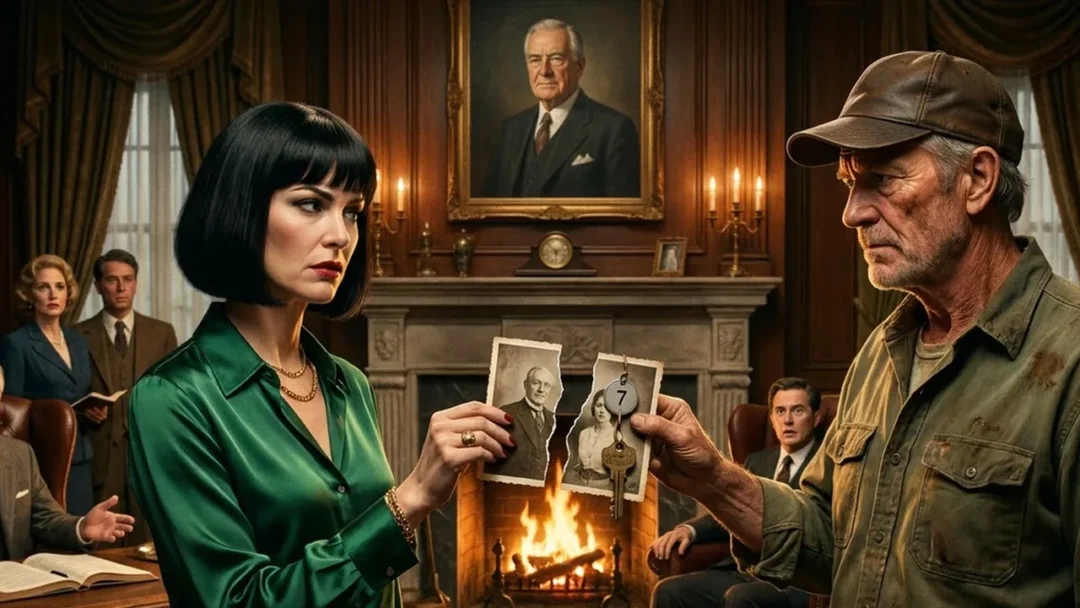
Thomas reached into his olive work shirt and pulled out the surviving half of the torn photograph. He held it up before her eyes.
“You tore my brother’s face in half and threw him into the fire,” Thomas whispered, his voice trembling with quiet, righteous grief. “A woman who would burn her grandfather’s face for a piece of gold is not fit to manage this home.”
Thomas looked past her toward the doorway. “Deputy Ward.”
Deputy Caleb Ward stepped forward, his leather duty belt creaking as he stopped beside Sloane’s chair.
“Miss Bellamy,” Deputy Ward said, his country drawl firm and unyielding. “Attorney Whitfield has presented certified court orders declaring Thomas Bellamy the sole lawful possessor of this real property. Mr. Bellamy has requested that you vacate the premises immediately. Your personal luggage will be packed by third-party bonded movers and forwarded to your Manhattan address. Please step toward the front entrance.”
Sloane stared at the deputy, then at Thomas, her porcelain composure completely collapsing into hysterical, weeping humiliation. “You’ll regret this, old man! I will sue you into bankruptcy! I will burn this entire valley to the ground before I let a gardener sit in my grandfather’s chair!”
“Move, Miss Bellamy,” Ward said, gently but firmly taking her elbow and escorting her through the heavy library doors. Her heels clicked in frantic, uneven strides down the marble hallway until the front entrance doors slammed shut behind her, cutting off her screams in the rainy night.
The library fell into a deep, peaceful quiet, broken only by the crackle of the fireplace and the steady drum of rain against the glass.
Attorney Whitfield walked around the table, standing beside Thomas. The attorney’s dignified face was softened by an expression of profound, quiet respect. He extended his right hand.
“Congratulations, Mr. Bellamy,” Whitfield said warmly. “You are home.”
Thomas shook the attorney’s hand with his calloused palm, then reached into his pocket and pulled out the small antique brass key stamped with the numeral 7, laying it on the table between them.
Whitfield’s eyes widened as he looked at the key. He picked it up, examining the brass tag and the crusted red clay clinging to the grooves.
“Thomas… where did you get this?” Whitfield asked, his brow furrowing in deep perplexity.
“It was taped to the back of the photograph Arthur gave me the night before he slipped into a coma,” Thomas answered. “The tag says Greenhouse Seven. But I have managed every garden, every nursery, and every hotbed on this estate for forty-two years. There are only six greenhouses on Bellamy Hall.”
Whitfield looked from the key to the estate survey map hanging on the library wall, his voice dropping to an astonished whisper. “Then Arthur left a secret property that doesn’t exist on any county map.”
Deputy Caleb Ward kept his hand firmly on the brass doorknob as Sloane’s weeping subsided down the marble corridor. In a rural river county like Dutchess, the law was not an abstract theory debated in law journals; it was a matter of deeds registered in leather volumes at the county seat, surveyed by chain and compass, and paid for with the sweat of generations. Caleb had known Thomas since childhood; he had watched the old gardener help neighbors rebuild collapsed stone retaining walls after winter floods, never asking for a dollar. The town knew who truly belonged to this land. The paper had finally caught up with the soil.