Her Children Put the House on the Market Before Their Mother Put Down Her Keys
Chapter 1: The Sign Went Up Before Ruth Said Yes
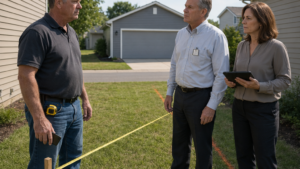
The realtor was standing in Ruth Bennett’s yard before the dew had dried.
At first Ruth thought he was a delivery driver who had missed the neighbor’s house. He wore a navy jacket too clean for yard work, held his phone sideways, and stepped backward across her grass as if the lawn belonged to a magazine instead of to a woman who still knew every low spot by the way rain collected there.
She watched from the kitchen window with one hand wrapped around her coffee mug and the other pressed to the pocket of her cardigan, where her house key rested against her hip.
The man took another picture.
Then another.
He lowered the phone and looked toward the porch, where her late husband’s old wind chime hung from the corner beam. It had not sounded right since February. One of the silver tubes had fallen off during a storm, and Ruth had tied it back with fishing line because she could not bear the silence of the empty hook.
The man smiled at the porch as though the house had already agreed to something.
Ruth set her mug in the sink. The coffee left a brown ring she would wipe later. She opened the drawer by the stove, removed the blue keychain from habit, then frowned at herself because she was already inside the house. Still, she kept the key in her hand as she walked to the front door.
The keychain was worn almost white along one edge. Samuel had given it to her and Frank thirty years ago after they paid off the last of the mortgage. A cheap plastic rectangle from a hardware store, bright blue then, with a little brass ring that had stained her fingers green the first summer. Frank had said they should get something nicer. Ruth had said, “Why? This one knows the way home.”
The front door stuck near the bottom, as it always did when the morning was damp. Ruth pulled it open with a hip bump and stepped onto the porch.
The man in the yard looked up. His smile widened too quickly.
“Mrs. Bennett?”
“That depends,” Ruth said. “Who’s asking from my grass?”
He gave a polite laugh, the kind men gave when they wanted an old woman to know she had been amusing but not difficult. “I’m with Turner Home Group. Just getting a few exterior shots.”
“For what?”
His eyes flicked to the porch rail. Ruth followed his glance.
A sign leaned against the white post beside her steps.
COMING SOON.
The letters were red, tall, eager. Beneath them was the realtor’s name, his smiling face, and a phone number. The metal legs were folded against the back, ready to be pushed into the ground.
For a moment Ruth heard nothing. Not the morning traffic beyond the hedge. Not the small click of the realtor’s phone locking. Not the wind chime tapping weakly above her.
Only Frank’s voice, from years ago, standing in the same doorway with sawdust on his hair: We’ll know when it’s time. Not them. Us.
Ruth stepped down one stair.
The realtor raised both hands slightly, as if calming a dog. “I’m sorry. I thought your son had spoken with you.”
“My son has spoken about many things.”
“He said we were okay to get started with preliminary marketing.”
Ruth looked at the sign again. “Preliminary.”
“Yes, ma’am. Nothing active yet. Just preparing. He mentioned the family was moving toward a decision.”
“The family.” Ruth descended the second step. Her knees objected, but she did not grab the rail. “Did the family mention I live here?”
The man’s smile thinned. “Of course.”
“Did the family mention I own it?”
He looked down at his phone. “Mrs. Bennett, I don’t want to step into anything. I was told Samuel Bennett was coordinating.”
“My son does not coordinate my front yard.”
The realtor’s face colored. He glanced toward the street, perhaps hoping Samuel’s car would appear and rescue him from one small woman in a faded cardigan. Ruth came down the last step and walked to the sign. It was heavier than she expected. She lifted it with both hands. The metal edges were cold, and one corner scraped her wrist.
“Let me get that for you,” he said.
“I have it.”
“I really apologize. There must have been a misunderstanding.”
Ruth looked at him over the top of the sign. “There was.”
The man swallowed. “I can call him.”
“You do that.”
She carried the sign to the porch. It bumped against her shin once, hard enough to sting. She did not stop. She leaned it flat against the house, face down, so the red letters stared at the floorboards instead of the street.
The realtor stood in the grass, useless with his phone in his hand.
“Please delete the photographs,” Ruth said.
“They were just exterior reference shots.”
“Then reference your memory.”
He hesitated. She held his gaze. He tapped at the screen.
“All right,” he said. “Done.”
Ruth did not believe him, not entirely, but she nodded once. “Good morning.”
He took the dismissal, backing toward his car at the curb. Only after he drove away did Ruth allow herself to sit on the porch step.
The key had made a mark in her palm.
She opened her fingers slowly. The blue keychain lay there, dull and scratched. For a strange second she wanted to call Frank into the yard, to point at the place where the sign had been and say, Look what they tried. She could almost see him by the garage, one hand on the old ladder, his mouth tightening before he decided whether anger was worth the energy.
Instead, her phone buzzed inside the house.
Ruth stayed where she was for three rings. Then she rose, went back through the stubborn door, and found the phone on the kitchen counter beside her cooling coffee. Samuel’s name filled the screen.
She let it ring once more before answering.
“Mom,” he said, with no hello. “Please don’t be upset.”
Ruth looked through the window at the flattened ovals in the grass where the realtor’s shoes had pressed the dew away. “That’s an ambitious opening.”
“I was going to tell you tonight.”
“After the sign learned before I did?”
A pause. In it, she heard him inhale through his nose, the way he did when he was trying not to sound impatient. He had done that at twelve when she reminded him to take out trash. He did it now at fifty-four when she reminded him she was not a chair to be moved.
“It wasn’t a For Sale sign,” he said. “It was just preliminary.”
“So I’ve heard.”
“Mom, you know we have to start thinking practically.”
“I think practically every day. I thought practically when I changed the furnace filter last month. I thought practically when I paid the insurance. I thought practically when I told you no.”
“That wasn’t a final no.”
Ruth turned from the window. The house around her had its morning sounds: refrigerator hum, clock tick, the faint creak of old pipes. They were not impressive sounds. No one would photograph them for a listing. But they were hers.
“Samuel,” she said, “a no from the woman who owns the house is final until she changes it.”
“You’re making this harder than it has to be.”
The sentence landed cleanly because he had said it softly. Not cruelly. Almost sadly. As if she were the one causing pain by refusing to be managed.
Ruth looked at the coffee ring in the sink. She reached for a dishcloth and wiped it away.
“I found a sign on my porch,” she said. “Do not tell me I’m the one making things hard.”
“I’ll come by tonight.”
“Is that a request?”
“It’s dinner. Ashley’s coming too. Joseph said he can make it.”
“All of you decided that?”
“We need to talk as a family.”
Ruth pressed the cloth flat beside the sink. “Then come hungry, not armed.”
Samuel sighed. “Mom—”
“I’ll make chicken.”
She ended the call before he could soften his voice again.
For a while Ruth stood in the kitchen with the phone in her hand. Then she placed it beside the blue keychain on the counter. The two objects looked too small for the size of what had entered the house.
Outside, the wind shifted. The damaged chime gave a thin, uneven note.
Ruth went to the porch, lifted the sign, and carried it to the hall closet. She did not hide it. She stood it upright beside the vacuum and the winter coats where anyone opening the door would see it.
Then she locked the front door, though it was broad daylight.
The key turned with its familiar scrape.
In her pocket, the phone buzzed again.
A text from Samuel appeared.
Don’t make this harder than it has to be.
Ruth read it twice. Then she turned the screen face down and began taking chicken from the freezer.
Chapter 2: The Kitchen Table Became an Intervention
Ruth cooked the way she did when she was angry: carefully.
She trimmed the chicken with a small sharp knife, salted each piece, and placed them skin-side up in the old roasting pan Frank had once dented by dropping it on the basement stairs. She peeled potatoes without wasting flesh. She snapped green beans into a chipped yellow bowl. She set four places at the kitchen table, then a fifth because Ashley had always preferred the chair near the back door, even when she was little and her sneakers left half-moons of mud beneath it.
At six-fifteen, Joseph arrived with grocery-store rolls still in their plastic bag. He kissed Ruth’s cheek and smelled faintly of rain and the peppermint gum he chewed when he was nervous.
“You didn’t have to cook all this,” he said.
“I know.”
He looked around the kitchen, eyes catching on the clean table, the folded napkins, the water glasses. “Where’s Samuel?”
“Not here yet.”
Joseph set the rolls beside the stove. “You talk to him today?”
“He talked. I listened in places.”
Joseph winced but said nothing.
Ashley came next, wearing jeans and a white sweatshirt, her hair pulled back loosely as though she had driven with the window down. She hugged Ruth longer than usual.
“You okay?” she whispered.
“I am standing in my kitchen with a chicken in the oven. That is close enough.”
Ashley smiled, but the smile did not settle. She saw Joseph by the counter and gave him a cautious hello.
Samuel arrived last.
He carried a leather folder under one arm and a bottle of wine in the other. Ruth watched him come through the back door without knocking, the way her boys always had. He wiped his shoes carefully on the mat. He had worn a sport coat.
Ruth looked at the folder first, then at the wine.
“Dinner or deposition?” she asked.
Samuel glanced at Joseph, then at Ashley. “Mom, please.”
“Chicken will be ready in ten minutes.”
“We can talk while it rests.”
“Chicken doesn’t need us to talk while it rests. That’s why it’s chicken.”
Ashley made a small sound that might have been a laugh if the room had been kinder. Samuel did not smile.
They ate first because Ruth insisted. She passed the potatoes. She asked Ashley about work. She asked Joseph whether his roof still leaked over the laundry room. She asked Samuel if Christine’s knee had healed after the fall on their driveway. Christine was not present, but Ruth had no intention of letting anyone pretend concern traveled only one direction in this family.
The conversation behaved for twelve minutes. Then Samuel put down his fork.
“Mom,” he said, “we all love you.”
Ruth set her water glass down very gently. “There it is.”
“Please don’t start defensive.”
“I didn’t start this.”
Samuel opened the leather folder. Joseph looked at his plate. Ashley straightened.
“We’re worried,” Samuel said. “That’s all this is. The house is getting harder to maintain. The front steps need work. The upstairs bathroom still has that loose tile. You told Joseph the basement light went out and you waited three days before asking anyone.”
“I changed the bulb.”
“You stood on a chair.”
“I stood on the second step of a ladder.”
“You shouldn’t have to.”
Ruth folded her napkin once, then again. “There is a difference between shouldn’t have to and must not be allowed.”
Joseph rubbed his thumb along the edge of his fork. “Mom, nobody’s saying you can’t do anything.”
“The sign said plenty.”
Samuel’s mouth tightened. “I apologized for that.”
“No, you told me not to be upset.”
Ashley looked at him. “You put a sign up?”
“It wasn’t up,” Samuel said. “It was leaning. And it wasn’t a listing sign.”
“It had a phone number on it,” Ruth said.
Samuel removed papers from the folder and placed them on the table beside Ruth’s key, which lay near her plate. She had put it there without thinking, or perhaps because she had thought of nothing else all day.
The top page bore the Turner Home Group logo.
Ashley leaned forward. “Are those listing papers?”
“Drafts,” Samuel said. “For review.”
Ruth looked at the white pages, the black lines, the empty signature spaces waiting with the patience of traps.
Joseph finally spoke. “It wouldn’t mean everything happens tomorrow.”
“But it would mean it starts,” Ruth said.
Samuel slid another brochure from the folder. This one showed a smiling gray-haired couple walking along a garden path. The building behind them had stone columns and wide windows. Assisted Living and Independent Care Options, the cover read.
Ruth did not touch it.
Ashley stared at the brochure as if it had made a noise. “You brought that to dinner?”
“We need to discuss realistic options,” Samuel said.
“With Grandma or at Grandma?”
Samuel turned to her. “Ashley, you’re young. You don’t understand what it means to manage an aging parent’s safety.”
Ruth felt the words move through the room like cold air. Aging parent. Not mother. Not Ruth. A category.
Ashley’s face flushed. “I understand when someone is being cornered.”
“No one is cornering anyone,” Samuel said. “We’re sitting at a kitchen table.”
Ruth looked at the table. Frank had sanded it twice. Once after Samuel pressed a hot pan into the varnish when he was sixteen. Once after Joseph carved his initials underneath where he thought no one would see. The table had held birthday cakes, bills, homework, medicine bottles, sympathy casseroles after Frank died, and now papers that made her house sound like a problem.
Joseph cleared his throat. “Mom, the market is good right now. That’s part of it. If we wait too long, repairs eat into everything.”
“Everything,” Ruth repeated.
He looked ashamed before he looked away.
Samuel tapped the listing agreement. “This isn’t about money first.”
“But money made the guest list.”
“It’s about you being safe. It’s about not waiting until something happens.”
“Something will always happen,” Ruth said. “That’s not a plan. That’s weather.”
Samuel leaned back, exasperation breaking through his polished calm. “You fell in the garden last spring.”
“I tripped on the hose.”
“You didn’t tell us for two days.”
“Because I was embarrassed, not unconscious.”
“That’s exactly what I mean. You hide things.”
Ruth placed both hands on the table. Her fingers were not as straight as they used to be. The knuckles had thickened, and sometimes jars defeated her. She hated that Samuel saw those things before he saw her.
“I hide very little in this house,” she said. “You simply stopped asking where things are.”
Silence came down hard.
Ashley’s eyes moved to Ruth, then to the papers. “Grandma, do you want to move?”
Everyone looked at Ruth then. Samuel as if the question were too simple. Joseph as if the answer might save him. Ashley as if she would accept whatever Ruth said and fight the room with it.
Ruth wanted to say no with the full force of her bones.
But the true answer was heavier. Some mornings the stairs looked taller than they had the night before. Some nights she checked the stove twice, then once more from bed. Some bills seemed printed in smaller type every month. There were hours when she missed Frank so sharply that the house felt less like shelter than echo.
Still, none of that gave her sons permission to turn her life into a schedule without her.
“I do not want to be pushed,” Ruth said. “I do not want to be tricked into agreeing. I do not want my house photographed before I have chosen how to leave it, if I leave it. And I do not want my children to call pressure love because it sounds nicer.”
Joseph shut his eyes.
Samuel’s voice lowered. “Mom, nobody is trying to trick you.”
Ruth picked up the realtor folder and set it back in front of him. Then she placed her blue keychain in the empty space where the folder had been.
“This key still opens my door,” she said. “That means the conversation starts with me.”
Samuel looked at the key as if it had insulted him.
Ashley reached for the assisted living brochure and turned it face down.
Joseph whispered, “Sam.”
Samuel ignored him. “There is an offer window.”
Ruth turned to Joseph.
His face went pale.
“What does that mean?” Ashley asked.
Joseph pushed back from the table slightly, not enough to leave, only enough to show his body wanted to. Samuel rubbed his forehead.
“It means,” Samuel said, “there are buyers looking in this neighborhood right now. Serious buyers. We were advised that waiting could cost us.”
“Us,” Ruth said.
Samuel’s eyes met hers. “You know what I mean.”
“No,” Ruth said. “I think I finally don’t.”
The oven timer rang. Its bright, ordinary sound startled everyone but Ruth. She stood, took two pot holders from the drawer, and opened the oven. Steam rose into her face.
No one spoke while she set the roasting pan on the stove.
The chicken was browned exactly right.
Chapter 3: The Boxes Were Labeled Before the Rooms Were Empty
The boxes arrived on Wednesday in the back of Samuel’s SUV.
Ruth saw them through the lace curtain in the front room: flattened cardboard stacked with military neatness, a black marker tucked under a roll of packing tape, Samuel lifting everything out as though unloading supplies for a job site. Joseph’s pickup pulled in behind him. He sat there a moment before getting out.
Ruth did not go to the door.
She stayed in Frank’s chair, the one angled toward the front window. She had not sat there much when Frank was alive. It had seemed like his country, with the small table on one side for coffee and the basket on the other for newspapers he meant to recycle. After he died, she had discovered the chair held the shape of him badly. It was too wide in the shoulders, too low in the seat. She sat there on difficult mornings anyway, as if discomfort could be a kind of company.
The doorbell rang.
Then Samuel used his key.
He still had one from the year Frank’s heart surgery made everyone cautious. Ruth had never asked for it back. That, she thought as the door opened, had been one of her mistakes.
“Mom?” Samuel called.
“In here.”
He appeared carrying the boxes under one arm. “We tried calling.”
“I know.”
Joseph followed with the tape and marker. He looked at her and then away from Frank’s chair.
Samuel set the boxes near the hall. “We’re not here to fight.”
“That explains the cardboard.”
“We’re here to help make the process less overwhelming.”
“There is no process.”
“There will be,” he said, too quickly. Then softer, “Eventually. And when there is, you’ll be glad we started small.”
Ruth rose from the chair. Her right knee complained; she let it. “What rooms were you planning to start small in?”
Samuel opened one box with a practiced snap. “Just sorting. Donations, things you don’t use, things that need to be moved for repairs.”
Joseph uncapped the marker.
Ruth watched him write DONATE on the first box.
The letters looked final.
“Joseph,” she said.
He stopped halfway through the E.
“You don’t know what I use.”
Samuel exhaled. “Mom, nobody uses three sets of chipped mixing bowls.”
“I do.”
“For what?”
“For remembering which one your father used for pancake batter because he claimed it poured better, though it didn’t.”
Joseph lowered the marker.
Samuel’s patience thinned. “That’s exactly what I’m talking about. Every object has a story, so nothing can move.”
Ruth walked to the hall and stood between the boxes and the staircase. “If stories annoy you, stop trying to sell a house full of them.”
He flinched, but anger covered it fast. “This is not about stories. It’s about the fact that the upstairs hallway rug is a tripping hazard, the garage shelves are overloaded, and the back room hasn’t been touched in years.”
“The back room is not your concern.”
“It is if it affects resale or safety.”
“Resale came first that time.”
Samuel dragged a hand across his jaw. “I can’t say anything right with you.”
“You can. Start with, ‘May I?’”
The words seemed to embarrass him. He looked past her toward the staircase. “May I help clear the upstairs hallway?”
“No.”
“Mom—”
“No.”
Joseph put the marker down on top of the box. “Maybe we should slow down.”
Samuel turned on him. “We have slowed down for two years.”
Ruth heard the number as if it had been dropped on the floor.
“Two years?” she asked.
Samuel looked back, caught.
Joseph said, “Sam.”
“No,” Ruth said. “Let him finish.”
Samuel’s face had the strained look of someone deciding whether honesty would make him look cruel. “Since Dad died, yes. We’ve been waiting. Giving you time.”
“Giving me.”
“You know what I mean.”
“I’m discovering that I often don’t.”
He looked tired then, not just irritated. For a moment Ruth saw the boy who had carried all the grocery bags in one trip because he wanted praise and did not know how to ask for it.
“We watched you shrink your whole life down to three rooms,” he said. “Kitchen, bedroom, porch. You barely go upstairs. You don’t drive after dark. The gutters need cleaning. The porch rail is loose. Every time I come here, I find one more thing Dad used to handle.”
The mention of Frank’s name changed the air.
Ruth’s voice stayed even. “Your father handled things because he lived here.”
“And now he doesn’t.”
Joseph made a small sound, like a breath cut short.
Samuel’s eyes reddened almost at once, which made Ruth angrier than if he had stayed cold. Grief had a way of walking into a room late and asking to be treated like the guest of honor.
“I know he doesn’t,” Ruth said.
“I’m not trying to hurt you.”
“You are trying to hurry me.”
“Because I’m scared!” Samuel snapped.
The word struck him too. He looked down at the boxes.
For a few seconds, no one moved.
Then Joseph picked up the tape and turned it in his hands. “Mom, maybe we just do the garage shelves today. Nothing personal.”
Ruth looked at him. “You think your father kept impersonal things in the garage?”
Joseph’s mouth tightened.
Samuel seized the compromise. “Fine. Garage. We’ll start there.”
Ruth should have refused. She knew that as soon as Samuel lifted the first box. But some old mothering reflex, worn but still alive, saw fear in both her sons and wanted to give them a smaller battle. The garage was not the bedroom. Not the back room. Not yet.
“Garage only,” she said.
Samuel nodded. “Garage only.”
They moved through the kitchen to the side door. Ruth followed slowly. Her phone lay on the counter near the breadbox. She picked it up without thinking and slipped it into her cardigan pocket with the house key.
The garage smelled of dust, motor oil, and cardboard. Frank’s tools hung above the workbench in outlines he had traced with black marker decades ago. Hammer. Wrench. Pliers. Each thing had its place, though after his death Ruth had used the system imperfectly. A screwdriver lay where the level belonged. A jar of nails sat open.
Samuel looked around with the brisk sadness of a man determined not to feel anything for too long.
“This is what I mean,” he said. “Half this can go.”
Joseph studied the shelves. “Maybe not half.”
Samuel took down a cracked plastic flowerpot. “Donate.”
“It’s cracked,” Joseph said.
“Trash, then.”
Ruth sat on the wooden stool near the door. She had painted it green one summer and never finished the second coat. The phone in her pocket pressed against the house key whenever she shifted.
The brothers worked for twenty minutes. At first they asked. Then they asked less. Joseph opened boxes and Samuel decided. Old extension cords. Empty paint cans. A stack of license plates Frank had meant to hang and never did. Ruth corrected them twice, then saved her strength.
When Samuel reached the top shelf, Ruth stood.
“Not that one.”
He had pulled down a narrow metal cash box. Gray, dented on one corner, with a strip of masking tape across the lid. The tape was yellowed. Frank had written BACK ROOM in black marker.
Samuel shook it lightly. Something slid inside.
“This is exactly the kind of thing we need to sort.”
Ruth crossed the garage faster than she should have. “Give it to me.”
Samuel held it away by instinct, then looked ashamed of himself. “Mom, what is it?”
“Mine.”
“That’s not an answer.”
“It is the only one you need.”
Joseph stepped between them, palm up. “Sam, just give it to her.”
Samuel looked from Joseph to Ruth. The resistance in his face did not disappear, but it changed shape. He handed her the box.
Ruth held it against her chest.
The small lock had been broken for years. She knew what was inside: receipts, repair estimates, Frank’s blocky handwriting, a folded plan she was not ready to show. None of it was treasure. None of it would impress a court. But it was proof of a conversation that had continued after Frank was gone, because Ruth had continued it.
Samuel pulled another box from the shelf with more force than necessary.
“This is impossible,” he muttered.
Joseph said, “Don’t.”
“No, she needs to hear it. We are trying to keep her from getting buried in all this.” He gestured around the garage. “Every shelf, every room, every broken thing becomes sacred. How are we supposed to help?”
Ruth’s phone shifted in her pocket. A small chime sounded.
All three of them froze.
Ruth took it out. The screen had lit up. Voice Memo Recording, it read.
She must have pressed it when she grabbed the phone from the counter. The red timer had been running for twenty-eight minutes.
Joseph saw it. Samuel did too.
Ruth looked at the glowing screen, then at her sons.
“Turn it off,” Samuel said.
His voice was quiet, but not gentle.
Ruth did not move.
“Mom,” he said. “Turn it off.”
She pressed the stop button. The recording saved itself under the date.
No one spoke for a long moment.
Then Samuel gave a short laugh without humor. “Great. Now we’re recording each other in Dad’s garage.”
Ruth slipped the phone back into her pocket, beside the key. “Apparently we are listening, at least.”
Joseph capped the marker and set it down.
“I think we should go,” he said.
Samuel stared at the half-filled boxes. “Fine.”
They left the garage messier than they had found it. Ruth did not follow them to the door. She stood among the tools and cardboard, holding the gray cash box until the front door closed.
Only then did she sit on the green stool.
Her hands were trembling.
After a while, she took out the phone. The saved recording sat at the top of the list, plain and silent, named only by date and time.
From inside the house, her old wall clock struck four.
Chapter 4: Ashley Learned Why Her Grandmother Stayed Quiet
Ashley came back on Saturday with a paper bag of lemon muffins and the kind of anger that made her forget to close her car door.
Ruth heard the chime from the porch, then the slam after Ashley realized. A moment later, her granddaughter came up the steps too fast, saw Ruth sitting in the wicker chair, and slowed as if the porch itself had asked for quiet.
“I brought breakfast,” Ashley said.
“It’s almost noon.”
“Then I brought forgiving lunch.”
Ruth looked at the bag. “From the bakery near your apartment?”
Ashley nodded and set it on the small table between them. “They had the ones with the sugar on top.”
Ruth did not reach for one. She had been sitting there since ten, watching the neighbor across the street edge his lawn in neat strips. Her old phone lay in her lap. The blue keychain hung from the hook beside the front door, close enough that she could see it every time the screen went dark.
Ashley sat in the other wicker chair. She was wearing the same white sweatshirt from dinner, or one just like it. Her hair was tied back, but short pieces had escaped around her face.
“Grandma,” she said, “I need you to tell me what happened in the garage.”
Ruth watched the neighbor shake grass from the edger blade. “You talked to your father.”
“I talked to Joseph first.”
“That means Samuel told him what to say and Joseph repeated half of it.”
Ashley’s mouth pressed tight. “He said you recorded them.”
“I recorded my garage.”
“That is not what they’re saying.”
“I imagine not.”
“They’re making it sound like you’re paranoid. Like you’re keeping evidence against your own family.”
Ruth turned the phone over in her hand. The case was cracked near one corner. Samuel had offered to replace it three times. She had refused because this one still fit in her palm, and because newer phones always seemed designed to make old people feel late to something.
Ashley leaned closer. “Are you?”
Ruth looked at her.
Ashley’s cheeks flushed. “I don’t mean— I just mean, did you do it on purpose?”
“No.”
“Is there something on it?”
“Yes.”
Ashley waited.
The porch boards creaked as Ruth shifted. In the yard, the yellow leaves under the maple had begun to gather along the walk. Frank used to rake them into piles too high and let Ashley jump into them when she was small, even after Ruth said the leaves were damp and would stain her clothes. Ashley had shrieked with laughter then. Now she sat with her hands clenched between her knees.
“I haven’t listened to all of it,” Ruth said.
“Why not?”
“Because I heard enough while it was happening.”
Ashley swallowed. “Grandma.”
Ruth unlocked the phone and opened the voice memo list. The recording from Wednesday sat on top, labeled only with the date and time. Twenty-eight minutes, sixteen seconds.
She handed the phone to Ashley.
Ashley stared at it but did not press play. “I can help you. If they’re trying to force you, I can call someone. I can post about it, I can—”
“No.”
“They shouldn’t get to just do this quietly.”
“That is exactly what they think about me,” Ruth said. “That quiet means something is missing.”
Ashley looked hurt. Ruth regretted the sharpness but not the words.
“I’m not saying you’re missing anything,” Ashley said.
“I know. But you think noise fixes what silence allowed.”
Ashley looked down at the phone.
Ruth reached into the bakery bag and took out a muffin. The sugar stuck to her fingers. She broke it in half and offered the larger piece. Ashley took it automatically, like she had as a child.
“For years,” Ruth said, “your grandfather and I talked about this house as if it were another person at the table. When the roof needed patching, he would say she had a headache. When the furnace went, I said she had a fever. Foolish, maybe.”
Ashley shook her head.
“After he died, everyone wanted me to decide things quickly. What to do with his clothes. Whether to move the bed. Whether to sell his truck. They meant well.” Ruth looked toward the yard. “Most of the time.”
“Dad said they waited two years.”
“Yes. He said it as if waiting was the same as listening.”
Ashley pressed her thumb against the muffin paper. “Did Grandpa ask you to keep the house?”
“No.”
That surprised her.
Ruth smiled faintly. “Your grandfather was not a sentimental man when it came to lumber and shingles. He said houses were meant to serve the living, not trap them. He told me, more than once, that if I wanted a smaller place, I should sell and not let anyone make a shrine out of our plumbing.”
Ashley laughed once, softly.
“But the week before he went into the hospital for the last time, he was sitting right there.” Ruth nodded toward the porch steps. “He had that old gray sweater on. The one with the stretched cuffs. He told me, ‘Ruth, promise me you won’t make a decision from fear. Not fear of being alone. Not fear of the boys. Not fear of the house getting older with you.’”
Ashley’s face changed.
“So I promised,” Ruth said. “Not that I would stay forever. Only that I would decide when I could do it without fear.”
The wind lifted the bakery bag and made it crackle.
Ashley looked toward the blue keychain by the door. “And now they’re making you afraid.”
“They’re trying to make fear sound like paperwork.”
The phone still sat in Ashley’s hand. “Let me listen.”
Ruth nodded.
Ashley pressed play.
At first there was only garage noise: cardboard scraping, Samuel’s voice muffled by distance, Joseph saying something about the shelves. Then Ruth’s own voice came through, thinner than she expected.
“Garage only.”
Samuel answered, “Garage only.”
The recording continued. Boxes, tape, small decisions. Donate. Trash. Keep. Then Samuel’s voice, clearer, sharpened by frustration.
“We have slowed down for two years.”
Ashley went still.
A minute later came his words about watching Ruth shrink her life down to three rooms. Then Ruth’s quiet answer. Then Samuel again, scared, angry, human. The recording caught everything without mercy.
Ashley did not speak until it ended.
“He sounds awful,” she said.
“He sounds scared.”
“He sounds like he thinks being scared gives him permission.”
Ruth took the phone back. “That is closer.”
“You need to use this.”
“For what?”
“To stop them.”
Ruth looked at her granddaughter’s young, fierce face and saw love wearing armor. “Ashley, if I use it only to shame them, then the recording becomes another box. A thing to throw at someone.”
“Maybe they deserve it.”
“Maybe. But the house deserves better than becoming a weapon.”
Ashley leaned back. “Then what are you going to do?”
Before Ruth could answer, a white truck slowed at the curb. The mail carrier stepped out and walked up the path with a certified envelope in hand.
Ruth stood, smoothing crumbs from her cardigan.
“Mrs. Bennett?” the mail carrier asked. “Signature required.”
Ashley rose behind her.
Ruth signed on the small electronic screen with her fingertip. Her signature looked shaky and strange, more mountain range than name. She took the envelope and waited until the truck pulled away before opening it.
The paper inside was formal, cold, and full of words that did not belong on her porch.
Property disposition.
Care planning.
Mediation.
Ashley read over her shoulder. “They scheduled this?”
“Apparently.”
“At the courthouse?”
Ruth folded the letter once along its original crease. Her hands were steadier now than when she had signed.
Ashley said, “Grandma, please tell me you’re bringing the recording.”
Ruth looked at the key by the door, then at the phone in her hand.
“I’m bringing myself,” she said. “The rest can come if needed.”
Chapter 5: The Marble Counter Made Ruth Look Small
The courthouse smelled of floor polish and old paper.
Ruth had expected the building to feel grander. From the outside, it had columns and stone steps and flags snapping in the wind. Inside, it was mostly fluorescent light, security trays, and people trying not to look worried in public.
Ashley walked beside her through the metal detector. She had offered her arm twice in the parking lot, then stopped offering after Ruth gave her a look. Instead, she carried the gray cash box in a canvas tote and kept Ruth’s old phone in the front pocket of her sweatshirt, because Ruth had asked her to hold it until they were inside.
“Do you want a minute?” Ashley asked.
“No.”
“Water?”
“No.”
“To tell me to stop asking questions?”
Ruth almost smiled. “Nearly.”
They found the mediation room on the second floor, past a hallway of framed county judges. Samuel stood near the door with Joseph and Jack Harris. Jack was the only one Ruth had not met. She knew him immediately anyway.
He had the kind of suit that looked expensive because it did not try to. Gray, pressed, quiet. His shoes were black and polished enough to catch the overhead lights. He held a leather portfolio in one hand and spoke to Samuel in a low voice, turning only when Ruth approached.
“Mrs. Bennett,” he said, extending his hand. “Jack Harris.”
Ruth looked at his hand long enough for him to lower it.
“I know who you are,” she said.
Samuel stiffened. “Mom.”
“I mean because your name is on the letter.”
Jack recovered with a professional smile. “Of course. We’re just here to clarify options.”
“People keep bringing me options I didn’t ask them to arrange.”
Joseph looked worse than he had on Wednesday. His eyes were shadowed, and he had shaved badly, missing a narrow line along his jaw. He gave Ruth a small nod. She nodded back.
The mediator called them in before Samuel could begin softening the air.
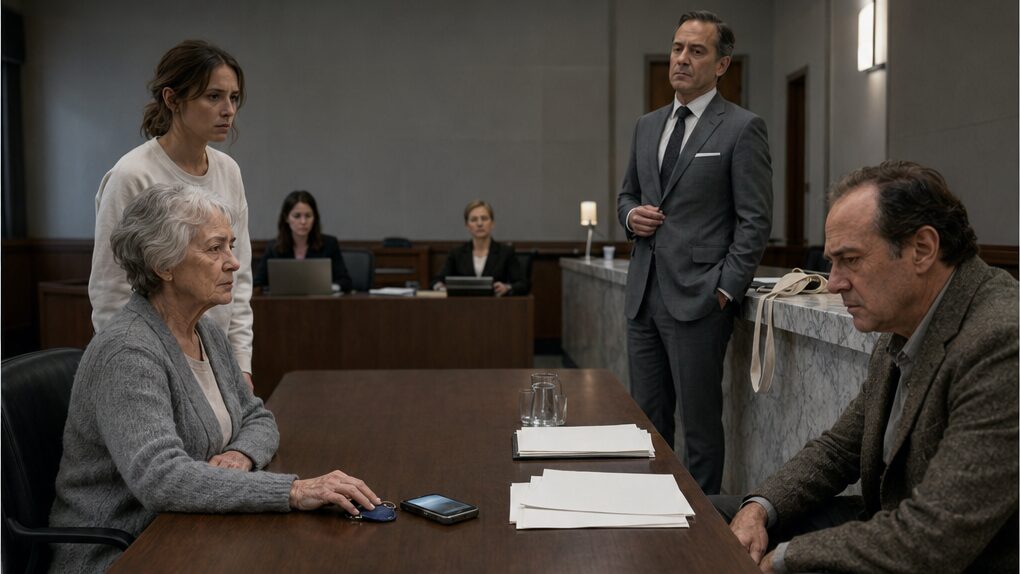
The room was smaller than Ruth expected. A long table took up the center. A marble counter ran along one side beneath a window, and a clerk’s desk sat near the door, where Angela Reed typed with quick, even taps. A water pitcher sweated on a tray. There were chairs along the wall for extra family or observers, though only two people sat there, both strangers waiting for some other case.
Ashley stayed close.
Ruth placed her blue keychain on the table in front of her before sitting. The house key made a small click against the polished wood. Ashley set Ruth’s phone beside it.
Samuel saw the phone. So did Jack.
The mediator began with names, procedures, and a careful explanation that no final sale could be ordered in that room without proper filings. Samuel nodded gravely, as though that had been his understanding all along. Jack opened his portfolio and slid a packet forward.
“We are not here to force anything,” Jack said. “The family’s concern is immediate planning. Mrs. Bennett’s home has deferred maintenance issues, and there is a reasonable question about whether remaining there alone is sustainable.”
Ruth looked at the water pitcher. A bubble rose through the glass and vanished.
The mediator turned to her. “Mrs. Bennett, do you agree there are maintenance concerns?”
“Yes.”
Samuel’s shoulders eased, as if she had finally decided to cooperate.
Ruth added, “My porch rail is loose. The upstairs tile needs fixing. The gutters need cleaning. None of these facts signed a listing agreement.”
Angela Reed’s typing paused for half a second, then resumed.
Jack smiled without warmth. “No one is suggesting a gutter signs anything.”
“No. That job seems taken.”
Ashley looked down quickly.
Samuel leaned forward. “Mom, we’re trying to avoid a crisis.”
Ruth turned to him. “Then stop creating one.”
The mediator lifted a hand. “Let’s keep this productive.”
Jack slid photographs across the table. Ruth recognized her own house from angles she had not approved: front porch, side yard, garage, upstairs hallway, the loose tile enlarged in cruel detail.
Ashley reached for one. “Who took these?”
Samuel said, “They’re for documentation.”
“Who took them?”
Jack answered. “The exterior photos were preliminary. Interior concerns were provided by family.”
Ruth looked at Joseph. He looked at the table.
The words inside her did not rush. They lined up slowly, each one taking its place.
“You photographed my hallway?”
Samuel said, “Mom, we needed to show—”
“You used your key.”
“I’m your son.”
“That is not a search warrant.”
Jack’s voice cooled. “Mrs. Bennett, no one is accusing you of wrongdoing. But when adult children are trying to protect a parent, documentation matters.”
“Protect me from the hallway?”
“From preventable harm.”
Ruth reached for the keychain, then stopped. She would not clutch it like a child.
Jack continued, “There is also the issue of capacity to manage the property.”
Ashley’s head snapped up. “Capacity?”
Samuel said, “Jack.”
“It is the word the county uses,” Jack said smoothly. “Not an insult.”
Ruth looked at him. “Most insults have paperwork if you pay someone enough.”
The mediator said, “Mrs. Bennett, do you have counsel present?”
“No.”
Ashley leaned in. “We can get someone.”
Ruth shook her head once.
Jack glanced at Ashley’s sweatshirt, then at the old phone beside the key. “I understand emotions are high, but this is exactly why practical steps matter. Memory, grief, attachment—these can cloud judgment.”
The sentence landed in the room like dust.
Ruth felt Ashley shift beside her.
“My grandmother’s judgment is fine,” Ashley said.
Jack turned to her with a patient expression. “And you are?”
“Ashley Bennett.”
“The granddaughter.” He said it as if naming a decorative branch on a tree. “I appreciate your concern, but this is primarily between Mrs. Bennett and her adult children.”
“She asked me to be here.”
“Of course.”
Ashley’s hand moved toward the phone. Jack stepped closer to the marble counter where she had set it after rearranging the papers. His polished shoe came down near the device, pinning the edge of Ashley’s tote strap against the floor. It did not crush the phone. It did not need to. The gesture was small enough to deny and clear enough to understand.
“Let’s not turn this into a recording session or a family performance,” Jack said.
Ruth looked at the shoe first. Then at the phone. Then at Ashley’s face, pale with anger.
The old humiliation tried to rise in Ruth: the embarrassment of being discussed in third person, the shame of needing time, the fear that if she trembled someone would call it evidence. Across the table, Samuel looked away from the shoe. Joseph looked at it and winced.
Angela Reed had stopped typing.
Ruth placed her palm over the blue keychain.
“Mr. Harris,” she said.
He looked at her.
“If this was care, why did you need me quiet?”
No one moved.
Ruth extended her other hand toward Ashley. “The phone, please.”
Jack did not shift his foot.
Ashley bent carefully, tugged the tote strap free, and picked up the phone. Her hand shook when she gave it to Ruth.
Samuel said, “Mom, don’t do this.”
Ruth looked at him. “Do what?”
“Turn a family matter into—”
“Evidence?” Ashley said.
The mediator leaned forward. “Mrs. Bennett, if there is something relevant, you may present it, but I want everyone to remain calm.”
Ruth unlocked the phone. The screen glowed blue-white against the marble light. Her thumb found the voice memo list. For a moment the words blurred. She blinked once and brought them back.
The recording from Wednesday waited at the top.
Jack gave a soft laugh. “A private garage argument taken out of context is hardly—”
Ruth pressed play.
At first the room heard cardboard.
Then Samuel’s voice filled the polished silence.
“Garage only.”
Ruth’s own voice answered, smaller but clear.
“Garage only.”
Samuel shifted in his chair. Joseph shut his eyes.
The recording moved forward through the harmless sounds first: tape tearing, boxes scraping, Joseph saying maybe not half. Then Samuel’s voice again, more impatient now.
“This is exactly what I’m talking about. Every object has a story, so nothing can move.”
Ruth watched the mediator’s pen pause above the page.
The audio continued.
“We have slowed down for two years.”
Angela Reed’s eyes lifted from her keyboard.
Samuel whispered, “Enough.”
Ruth did not touch the phone.
On the recording, his voice sharpened.
“We watched you shrink your whole life down to three rooms.”
The words sounded worse in the courthouse than they had in the garage. Cleaner. Less excusable. No dust, no grief, no tools on the wall to soften them.
Then came Ruth’s recorded voice.
“I hide very little in this house. You simply stopped asking where things are.”
Joseph put a hand over his mouth.
Jack’s smile had disappeared.
The recording was not finished. It had not reached the cash box, the demand to turn it off, the final sentence Ruth had not known would matter.
On the phone, the red line crept forward.
Angela Reed stared at the screen as if something in the small device had changed the temperature of the room.
Chapter 6: The Recording Did Not Sound Like Confusion
No one interrupted until Samuel’s recorded voice said, “Turn it off.”
Then the living Samuel pushed back his chair.
“That’s enough.”
The mediator held up a hand. “Mr. Bennett, sit down.”
Samuel remained half-standing, palms flat on the table. “This is a family argument. People say things when they’re upset.”
Ruth paused the recording.
The sudden silence was worse than the sound.
Jack adjusted his jacket. “The recording demonstrates tension, certainly. It does not establish that Mrs. Bennett can safely remain alone or manage the property without assistance.”
Ashley made a small disbelieving sound.
Ruth looked at her phone. Her reflection was faint in the darkened portion of the screen: white hair, lined mouth, eyes that looked tired even to herself. She wondered how many rooms she had entered in her life where someone else decided what her face meant before she spoke.
The mediator turned to Ruth. “Mrs. Bennett, did you know the home had been photographed for possible marketing before the realtor came Monday?”
“No.”
“Did you authorize preliminary listing work?”
“No.”
Samuel sat slowly. “We never listed it.”
Jack said, “Correct. No active listing was filed.”
Ruth looked at him. “You keep pointing at the lock and ignoring the door.”
Angela Reed’s fingers returned to the keyboard, quieter now.
The mediator wrote something down. “Mrs. Bennett, are there additional recordings?”
Samuel’s face changed. Not fear exactly. Calculation, then regret.
Ruth opened the list. There were many voice memos, most of them ordinary. Notes to herself about groceries. Reminders about the plumber. One labeled by date from the night after the kitchen dinner. She had recorded that one on purpose, sitting at the table after everyone left, because Samuel’s words had kept moving around in her head like moths.
She tapped it.
Her own voice came out, low and steady.
“This is Ruth Bennett. It is Wednesday night. I understand that Samuel and Joseph want me to sell the house. I understand their reasons include safety, repairs, and money. I do not consent to a listing. I do not consent to photographs inside my home. I do not consent to anyone using the key I gave for emergencies to prepare my house for sale. I am not refusing help. I am refusing to be moved by surprise.”
Ashley’s eyes filled, but she stayed quiet.
Ruth stopped the memo.
The room had changed. Not dramatically. No one gasped. No one apologized. The water pitcher still sweated on its tray. Somewhere down the hall, another door opened and closed. But the center of the conversation had shifted several inches, enough for Ruth to feel air return to her lungs.
The mediator looked at Samuel. “Mr. Bennett, was an emergency key used to obtain interior photographs?”
Samuel rubbed both hands over his face. “I took pictures of unsafe areas.”
“That is not what I asked.”
“Yes,” he said.
Ruth closed her eyes for one second.
Joseph spoke then, voice rough. “I sent some to the realtor too.”
Samuel turned toward him. “Joe.”
“No,” Joseph said. “She should know.”
Jack’s jaw tightened.
The mediator asked, “Mrs. Bennett, were you informed that interior photographs had been sent to any real estate professional?”
“No.”
Jack leaned forward. “Again, no listing was activated. The family was gathering information.”
Ruth looked at Samuel. “You gathered my hallway. You gathered my porch. You gathered my garage shelves. Did you gather me at any point?”
Samuel’s eyes shone, but his voice came out hard. “You make it sound like we’re stealing from you.”
“Are you?”
The question struck Joseph harder than Samuel. He looked down at his hands.
Samuel said, “No.”
Ruth waited.
“No,” he repeated, but softer, as if the second answer had less floor beneath it.
The mediator folded her hands. “For today, I am recommending that no further marketing, photography, property access, or sale preparation occur without Mrs. Bennett’s written consent. I will note that there appears to be a dispute about consent and use of an emergency key.”
Jack said, “That seems premature.”
“It seems precise,” the mediator said.
Ashley glanced at Angela Reed, whose face remained professionally neutral except for her eyes. They were still on Ruth, not with pity, but attention.
Samuel leaned toward Ruth. “Mom, you don’t understand the position this puts us in.”
There it was. Us.
Ruth set the phone down beside the key. “Then explain it without using my age as a curtain.”
Joseph inhaled sharply.
Samuel did not answer.
The mediator said, “Mrs. Bennett, what would you like entered into the record today?”
For several seconds Ruth could not speak. Not because she did not know. Because she had been waiting so long for someone to ask the question directly that the room seemed to tilt around it.
She placed the keychain flat on the table. The blue plastic was scratched, ordinary, nearly ugly under the courthouse lights.
“I want it entered,” Ruth said, “that I do not consent to selling my home at this time. I want all photographs removed from any file used for marketing. I want my sons to return or stop using any emergency key unless I ask for help. And I want it clear that accepting repairs, or help, or age itself, is not the same as giving up my right to decide.”
Angela typed. The sound filled the room like rain.
Jack closed his portfolio.
Samuel stared at the table.
Joseph whispered, “Mom, I’m sorry.”
Ruth looked at him. She wanted to soften. She wanted to be the mother who made apology easy because her children had never liked sitting in the discomfort of their own wrongs. Instead she said, “Not here.”
He nodded once, wounded but accepting it.
The mediator gave instructions for follow-up documentation. There would be no final ruling in the grand way television taught people to expect. No gavel. No declaration that Ruth was right and everyone else was wrong. Only notes, recommendations, copies, signatures, and a warning that further action without consent could complicate any future petition.
It was enough to stop the rushing.
It was not enough to heal what had made the rushing possible.
When the meeting ended, Ashley picked up the phone, but Ruth held out her hand.
“I’ll take it.”
Ashley gave it to her.
In the hallway, Samuel caught up before they reached the elevator.
“Mom.”
Ruth stopped.
He looked older than he had that morning. Not elderly, not frail, but worn at the edges. “I was scared,” he said.
“I heard you the first time.”
“I don’t know how to do this.”
Ruth looked at him, her firstborn, the boy who used to bring broken toys to Frank and stand there expecting fathers to know everything.
“You could begin,” she said, “by not doing it behind my back.”
The elevator opened. Ashley stepped in first. Ruth followed.
Samuel stayed in the hallway.
As the doors began to close, Joseph moved toward them, then stopped beside his brother.
Ruth held the phone in one hand and the key in the other.
The doors shut before anyone said goodbye.
Chapter 7: Ruth Opened the Room They Had Already Packed
The house sounded different after the courthouse.
Not quieter. Not peaceful. Just aware.
Ruth noticed it the next morning as she moved through the kitchen with a cup of tea. The refrigerator hummed. The old clock ticked. A pipe clicked somewhere in the wall as the heat came on. Ordinary sounds, the same as before, yet each one seemed to ask whether it still belonged to her.
She had slept badly. Not because she regretted playing the recording. She did not. But victory, even a small and temporary one, had a way of leaving its own mess. The phone sat on the kitchen table beside the blue keychain, both of them looking too innocent for what they had done.
At ten, Samuel knocked.
He did not use his key.
Ruth stood on the other side of the door for one breath longer than necessary. Then she opened it.
Samuel held a paper grocery bag. “I brought coffee.”
“I have coffee.”
“I brought the kind you like from Miller’s.”
Ruth looked at the bag, then at his face. “That was your father’s favorite.”
“I know.”
The porch light was still on from the night before, forgotten in the courthouse exhaustion. Samuel glanced at it but did not comment.
“I came for the boxes,” he said. “The ones in the garage. I’ll take them out of your way.”
Ruth stepped aside.
He entered carefully, as if the house had become someone else’s church. His coat was unbuttoned, and he had not shaved. Ruth led him through the kitchen without offering coffee. The table still held the key and phone. Samuel saw them. His mouth tightened.
In the garage, the boxes stood where he and Joseph had left them: half-filled, badly labeled, accusing no one and everyone.
Samuel picked up the one marked DONATE. “I’ll go through these again before I take anything.”
“No,” Ruth said. “You’ll empty them.”
He looked at her.
“Everything goes back where it was unless I tell you otherwise.”
“Some of it really should be thrown out.”
“I didn’t ask what the box thinks.”
He almost smiled. Almost.
Then he set the box down and began taking things out. The cracked flowerpot. The old license plates. A jar of screws. Extension cords wound badly. Each item returned to a shelf, not always the right shelf, but no longer condemned by marker.
Ruth stood by the workbench and watched. She had not brought the phone. She had brought the key.
Samuel lifted the gray cash box last.
His hands changed when he touched it.
“Do you want this in the back room?” he asked.
Ruth took the box from him. “Yes.”
He waited, unsure whether he was included in that answer.
She walked toward the kitchen. After a moment, his steps followed.
The back room was off the narrow hall behind the stairs. For years it had been called the sewing room, though Ruth had not sewn anything more ambitious than a button since Ashley was in high school. Frank had later used it for receipts, warranties, paint samples, and the household notebooks he kept in careful stacks. After he died, Ruth closed the door and opened it only when she had a reason.
Samuel had labeled one of the boxes BACK ROOM without ever asking what the room held.
Ruth stopped before the door. The blue keychain felt warm from her hand.
“This key opens the front door,” she said. “Not this room. Your father lost the room key ten years ago and pretended he didn’t.”
Samuel stared at the knob. “Then how do you open it?”
Ruth reached above the doorframe and slid down a small brass key taped to the top edge. The tape had gone brittle. It came away with a dry whisper.
Samuel looked at it, startled into boyhood. “He hid it there?”
“After blaming me for misplacing it.”
She put the brass key in the lock. It resisted, then turned.
The air inside smelled like paper, old wood, and the lavender sachets Ashley had once made at summer camp. Light came through one narrow window. Dust hung in it, not thick, just visible.
Samuel stood in the doorway.
The room was not packed with grief. That was the first thing Ruth wanted him to see. It was not a shrine. There were shelves, a small desk, two file boxes, Frank’s green banker’s lamp, a folding chair, and a corkboard with receipts pinned in uneven rows. Against one wall sat a stack of labeled folders.
ROOF.
PORCH RAIL.
GUTTERS.
BATH TILE.
BASEMENT LIGHT.
HANDRAIL QUOTES.
Samuel took one step inside.
“What is all this?”
Ruth set the gray cash box on the desk. “The things you were too busy photographing to ask about.”
He picked up the folder marked PORCH RAIL. Inside were three estimates, each clipped to notes in Ruth’s handwriting. One contractor had written a start date for the following month. Another had penciled in a senior discount. Samuel’s face went still.
“You got estimates?”
“I know how telephones work.”
“For all of it?”
“For enough.”
He opened the HANDRAIL QUOTES folder. “Why didn’t you tell me?”
Ruth sat in the folding chair. She did not feel steady, and she would not pretend for pride’s sake when the chair was there. “Because every time I mentioned one thing needing repair, you treated it as evidence for selling everything.”
Samuel lowered the folder.
“I wanted to help.”
“You wanted the problem solved. I was part of the problem.”
He did not deny it quickly enough.
Ruth opened the gray cash box. The broken latch scraped. Inside were receipts, a bank envelope, a list in Frank’s blocky handwriting, and a newer list in Ruth’s. She took out Frank’s first.
His paper had softened at the folds. Samuel recognized the handwriting immediately. Ruth saw it hit him.
“What is that?”
“Your father’s annoying way of continuing conversations.”
Samuel came closer.
The top of the paper read: IF RUTH STAYS.
Below it, Frank had listed practical things, not poetry.
Fix porch rail.
Add downstairs grab bar.
Move good dishes lower.
Ask Ashley about phone with big buttons.
Do not let boys bulldoze.
Ruth knows her mind even when she is tired.
Samuel read the last line twice.
His face broke in a small, contained way. Not tears, not yet. Something worse for him: recognition without a place to put it.
Ruth took out her own list and placed it beside Frank’s.
IF I STAY THIS YEAR.
Porch rail first.
Tile second.
Gutters before winter.
Give Ashley emergency contact card.
Change locks after mediation if needed.
Accept help without surrendering house.
Samuel’s eyes lifted at that line.
“You were going to change the locks?”
“I still might.”
He nodded slowly, as if he deserved that and hated that he did.
“Mom,” he said, “when Dad died, I didn’t know what to do with you.”
The words were ugly in their honesty. Ruth let them stand.
He sat on the edge of the desk, then seemed to remember where he was and stood again. “That came out wrong.”
“No,” Ruth said. “It came out clear.”
He looked around the room. “I kept seeing everything he used to handle. The ladder. The gutters. The bills when the insurance changed. And you kept saying you were fine.”
“I was not fine. I was alive.”
“I know.”
“Do you?”
He pressed thumb and forefinger to his eyes. “I thought if I could get you somewhere safe, I could stop waiting for the call.”
“What call?”
“The one where you fell. Or left the stove on. Or some neighbor found you. Or—” He stopped. “I know that sounds awful.”
“It sounds frightened.”
He looked at her then.
Ruth folded Frank’s list along its old crease. “Fear is not a deed, Samuel. It does not transfer ownership.”
His mouth trembled once. He looked away toward the window.
The room held them without softening the truth. The folders were still there. The photos had still been taken. The realtor had still stood in her yard. The phone had still had to speak because her own children had stopped hearing her.
Samuel picked up the porch rail estimate. “Let me pay for this.”
“No.”
“Mom—”
“No,” she repeated. “You may help me choose the contractor if I ask. You may drive me to the bank if I ask. You may stand on the porch while the work is done if I ask. But you will not buy your way back into deciding.”
He absorbed that slowly.
“What can I do?”
Ruth looked at the open door. Beyond it were the hall, the kitchen, the front of the house, all the rooms he had walked through as a boy without wondering who allowed it.
“You can return your key,” she said.
The request struck him harder than she expected.
For a moment, she almost took it back. Motherhood rose in her like a reflex: comfort him, make it smaller, say not forever.
She did none of those things.
Samuel reached into his pocket. His key ring jingled. He separated the brass house key from the others with clumsy fingers. It took longer than it should have. When it came free, he held it in his palm.
“I used it wrong,” he said.
“Yes.”
He placed it on the desk beside Frank’s list.
Ruth picked it up and closed her fingers around it. The metal was warm from his hand.
At the front of the house, someone knocked lightly.
Samuel turned. “Are you expecting someone?”
“No.”
They walked back together. Through the glass, Ruth saw Joseph on the porch, shoulders hunched, holding nothing in his hands.
Samuel opened the door but did not invite him in.
Joseph looked past him to Ruth. “I need to tell you why I pushed.”
Ruth held Samuel’s returned key in one hand and her own blue keychain in the other.
“Then come in,” she said. “And start with the truth.”
Chapter 8: The House Stayed Because Ruth Chose the Terms
Joseph did not sit at first.
He stood in Ruth’s kitchen near the back door with his hands in his coat pockets, looking like a man who had misplaced the right version of himself somewhere outside. Samuel stood by the sink. Ruth sat at the table, not because she wanted the advantage of position, but because she was tired and done pretending tiredness weakened her argument.
The old phone lay near her elbow. The blue keychain lay beside it. Samuel’s returned key sat apart from both, a small brass fact.
Joseph looked at the returned key, then at Samuel.
“You gave it back?”
Samuel nodded.
Joseph swallowed. “I brought mine.”
He took it from his pocket and placed it on the table without being asked.
Ruth looked at the two keys. For years she had thought of them as safety. Now they looked like doors she had left open too long.
Joseph sat across from her.
“I owe money,” he said.
Samuel shut his eyes.
Ruth did not move.
Joseph rushed on, as if stopping would make him unable to continue. “Not gambling. Nothing like that. Business debt. The shop expansion went wrong, and the loan rate adjusted, and I kept thinking I’d catch up before anyone knew. Then Sam started talking about the house, and I didn’t start it, but I didn’t stop it either.”
Samuel said, “Joe.”
“No. She asked for truth.” Joseph looked at Ruth. “When Samuel said the market was good, I heard a way out. I told myself it was still mostly about you. The stairs, the repairs. But part of me was counting money that wasn’t mine.”
The kitchen clock ticked over the silence.
Ruth had expected this and still felt the bruise of it.
“Were you going to ask me?” she said.
Joseph’s face crumpled, then tightened. “I told myself I would after the sale. That I’d borrow from my share if you decided to give us anything.”
“My share,” Ruth repeated.
He nodded, miserable. “I know.”
Samuel gripped the counter. “I didn’t know how bad it was.”
“You knew enough,” Joseph said.
Samuel did not argue.
Ruth looked from one son to the other. She could see them at six and eight, mud on their knees, fighting over whose turn it was to hold the flashlight for Frank under the sink. She could see them at thirty, carrying casseroles into the house after Frank’s funeral, too loud with helpfulness. She could see them now, grown and frightened and selfish in ways that did not cancel love but certainly damaged it.
“I am sorry you are in trouble,” she said to Joseph.
His eyes filled.
“I am also not your solution.”
He nodded once, hard.
Ashley arrived an hour later because Ruth called her and asked her to come, not because anyone summoned her behind anyone else’s back. She entered cautiously, saw Samuel and Joseph at the kitchen table, and stopped.
“Is this safe?” she asked Ruth.
“Emotionally or structurally?”
Ashley blinked, then gave a small laugh that nearly became a sob. “Either.”
“We’re working on both.”
They spent the afternoon making lists. Not Samuel’s kind, written like instructions for other people. Ruth’s kind, written in her own hand on yellow legal paper.
First: locks changed.
Samuel offered to arrange it. Ruth said she would call the locksmith and tell him the time. Samuel could be present if invited. He accepted the distinction.
Second: all photographs deleted from realtor files and personal devices. Jack Harris would receive a written notice through the mediator. Samuel would send confirmation. Joseph would do the same.
Third: porch rail repaired before the month ended. Ruth would choose the contractor from her estimates. Samuel could drive her to the bank, but he would not pay unless Ruth asked for a loan in writing, which made him wince and nod.
Fourth: upstairs tile, gutters, basement light.
Fifth: Ashley would receive a spare key in a sealed envelope for emergencies only, along with a card listing Ruth’s doctor, pharmacy, neighbor, and preferred hospital. Ashley protested the envelope.
“I don’t need it sealed,” she said.
“I need it sealed,” Ruth answered.
Ashley accepted that too.
As daylight shifted across the kitchen floor, the house seemed to loosen around them. Not forgive. Loosen. The rooms were still marked by what had happened: the folder at the table, the boxes in the garage, the memory of a sign leaning against the porch. But the air no longer belonged entirely to fear.
At one point, Samuel picked up the assisted living brochure from where Ruth had left it in a drawer and set it on the table.
Ruth looked at him sharply.
“I’m not pushing it,” he said. “I just think we should talk about what kind of help you would accept if the house gets harder later.”
Ashley opened her mouth, ready to defend.
Ruth raised one finger, and Ashley closed it.
“That,” Ruth said to Samuel, “is a question.”
He nodded. “I’m trying.”
Ruth looked at the brochure. The smiling couple on the cover still irritated her. “I will not move because you are afraid of stairs.”
“I understand.”
“I will not promise never to move.”
All three of them looked at her.
Ruth smoothed the edge of the legal pad. “This house is mine. That means staying is my choice. Leaving, if it comes, will also be my choice. I won’t make a prison out of a promise to your father. But I won’t let anyone use his absence to rush me.”
Joseph wiped his eyes with the heel of his hand.
Ashley whispered, “Grandma.”
Ruth wrote one final line on the legal pad.
Review again in six months, with Ruth leading.
She underlined her own name.
Two weeks later, the “Coming Soon” sign was still in the hall closet, face turned toward the wall. Ruth had considered throwing it away, but had not. Not yet. Some things needed to remain visible until their lesson had finished working.
The locksmith came on a Thursday morning. Samuel stood on the porch while the work was done, hands in his pockets, saying nothing unless Ruth asked. When the locksmith handed Ruth the new keys, she counted them herself.
One for her blue keychain.
One sealed in an envelope for Ashley.
No others.
The porch rail was repaired the following Monday. Ruth chose the contractor with the senior discount and the kind eyes, though she did not tell anyone the second reason. Samuel drove her to the bank and waited in the car while she handled the cashier’s check. When he asked whether she needed help on the steps, he said, “Would you like my arm?” and accepted when she said, “Not this time.”
Joseph came on Saturday to empty the last of the boxes. He did not ask to keep anything. He placed each item in Ruth’s hands first, even the cracked flowerpot.
“Trash?” he asked.
Ruth turned it over. The crack ran all the way down one side. “Trash.”
He smiled sadly. “You sure?”
“It has no story worth injuring a geranium over.”
They threw it away together.
Ashley visited Sunday evening. Ruth gave her the sealed envelope with the spare key and watched her granddaughter turn it over in both hands.
“For emergencies,” Ashley said.
“For emergencies.”
“Not for deciding things.”
“Correct.”
Ashley tucked it carefully into her bag. “I’m proud of you.”
Ruth looked toward the kitchen window, where the last light touched the sill. “I’m proud of me too. I don’t say that often, so don’t make a fuss.”
Ashley crossed the kitchen and kissed her cheek anyway.
After Ashley left, Ruth walked through the house alone.
In the back room, Frank’s list lay beside hers on the desk. She had not put them away yet. The folders were stacked neatly. PORCH RAIL had a check mark on it now. GUTTERS waited. So did BATH TILE. Life, Ruth thought, had always been a list of repairs. Some wood, some wiring, some pride.
She picked up the old phone. For a moment, she considered deleting the recordings. Then she set it back down. Not because she planned to use them again. Because there were days when memory needed a witness, especially when other people tried to rewrite it politely.
At dusk, she carried a cup of tea to the porch.
The new rail was smooth beneath her hand. The wind chime moved in the evening air, still missing its perfect sound, but trying. Across the street, the neighbor lifted a hand. Ruth lifted hers back.
Inside, on the hook by the door, the blue keychain held one new brass key.
Ruth stood and went to it. She touched the key once, not to check that it was there, but to remind herself what it meant now. Not defiance. Not loneliness. Not proof that she needed no one.
Permission.
Hers.
She turned on the porch light before the dark fully came. Then she opened the front door, stepped outside, and sat where she could see the yard, the repaired rail, the quiet street, and the place where the sign had never touched the ground.
The house stayed.
Not because she was afraid to leave.
Because Ruth Bennett had chosen to remain.
The story has ended.