The Ring on the Counter
The Ring on the Counter
Part I — The Price of Milk
By the time Nolan reached the register, he already knew he was short.
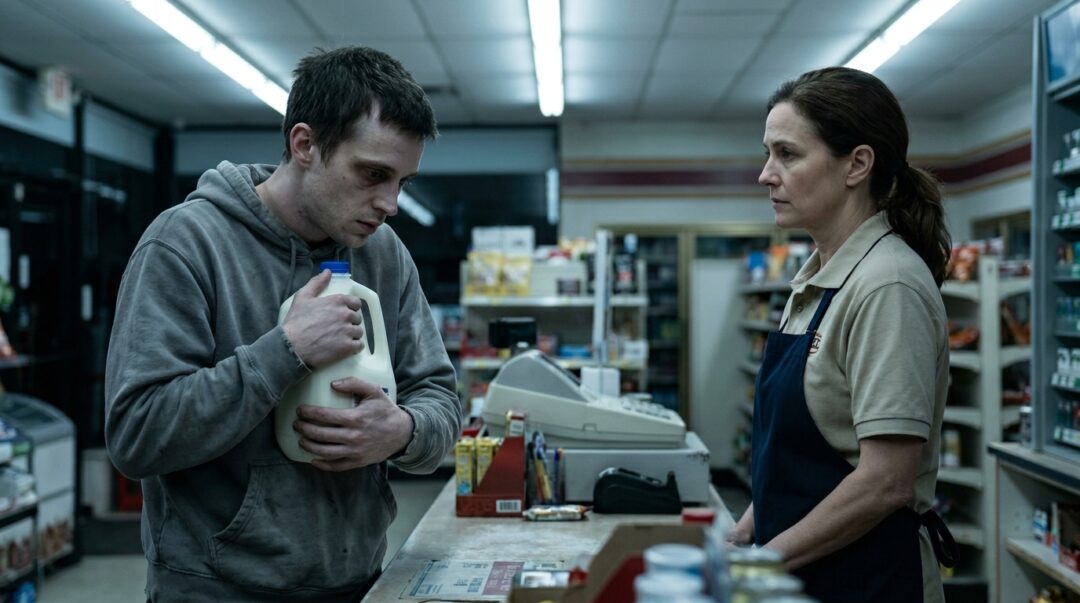
He knew it in the weight of the coins sweating in his palm. He knew it in the way he held the gallon of milk too close to his chest, like somebody might try to take it from him before he had the chance to beg. Most of all, he knew it in the look on the cashier’s face before the woman even said a word.
It was past midnight, the dead hour when the city felt scrubbed down to its bones. The convenience store hummed under hard fluorescent lights. Refrigerators breathed cold air into the aisle. A coffee machine clicked somewhere behind him. Everything looked too bright, too clean, too indifferent for the kind of shame Nolan had brought through the door.
He set the milk on the counter and opened his hand.
Quarters. Dimes. Nickels. Two singles folded so many times they looked tired.
The cashier—her name tag was turned slightly, but he could make out Marlowe—looked at the money, then at him.
“You’re short again.”
She did not say it loudly. She did not need to. The words landed with all the force of public humiliation precisely because she said them in the calm, practiced tone of someone who had seen this kind of thing before and had learned not to make it personal.
Behind Nolan, the store door sighed open and shut. Someone walked in, paused by the chips, then kept moving. The whole store seemed to hear him fail.
Nolan dropped his eyes to the counter. “My baby’s waiting.”
That was the truth of it. Not a line, not a trick. At home, in the studio apartment over the muffler shop on Calder Street, his son was awake again. He had left Theo in a borrowed bassinet beside the radiator with the last scoop of formula already gone. The baby had cried until his face turned dark pink and his tiny fists shook with outrage, and Nolan had done what he always did when there was nothing else to give: carried him, rocked him, whispered apologies into soft hair that smelled faintly of soap and sleep.
Then Theo had rooted against Nolan’s shirt, desperate and trusting, and Nolan had understood with a dull, sinking certainty that the morning was too far away to wait for.
So he had put on his hoodie, checked every pocket in the apartment, pried loose the coins from the jar above the sink, and walked three blocks in the cold because babies did not care whether a man’s pride was intact.
At the register, Marlowe reached toward the milk with two fingers.
“Then leave it.”
Nolan’s grip tightened before he could stop himself. It was a stupid reflex, the kind that turned a bad moment into a worse one. He loosened his hand immediately, ashamed of the panic that had flashed through him.
For a second neither of them moved.
Marlowe was probably in her mid-forties. Neat dark hair pulled back, beige store polo under a navy apron, face composed into the kind of weary firmness that came from long hours and worse customers. Nolan had seen her before. She worked nights most weeks. She never wasted words. He doubted she remembered him, even though he remembered her: the woman who sold him cold medicine when Theo had a fever; the woman who let him buy half a pot of old coffee for a dollar one morning when he came in after a double shift; the woman who always looked like she had somewhere better to be and no realistic plan of ever getting there.
She tried again, gentler this time, nudging the milk with her fingertips.
“Rules are rules.”
Nolan almost laughed at that. Not because it was funny, but because rules had become the background music of his life.
Rules said the warehouse had every right to cut his hours after the back injury, because technically he was still employable.
Rules said the landlord could wait exactly three days before taping red notices to his door.
Rules said his wife had been allowed to leave whenever she wanted, and maybe she had needed to. Maybe that, too, was a kind of rule. People could only live pressed against fear for so long before they began to reach for air.
Mia had not left because she was cruel. That was the part Nolan was still learning to admit.
She had left because exhaustion could hollow a person out so cleanly that love no longer had a place to rest.
She had cried when she packed. She had kissed Theo until he woke, blinking and confused, and then cried harder. She had said she was going to her sister’s “for a little while,” which was the sort of sentence adults used when they were trying to make collapse sound temporary. That had been six weeks ago.
Since then Nolan had learned how much a child needed, and how often. He had learned that diapers disappeared like smoke. He had learned that sleep could turn into a myth you told yourself you once believed in. He had learned that a baby’s hunger could make a room feel smaller than a coffin.
He had also learned something uglier: there were very few humiliations he would refuse on behalf of his son.
He looked at the coins again, then at the milk, then at the plain metal band around his finger.
It was not gold. It had never been worth much. They had bought matching rings online because a real set had been beyond them even when life was better. But it was the last object in Nolan’s life that still belonged to a version of himself who had believed in permanence.
His thumb went to it before his mind caught up.
Marlowe watched as he twisted the ring free.
The fluorescent lights hit the metal and made it look cheaper than it was. Or maybe sadder.
He set it beside the coins.
“Take this too.”
Now the silence changed.
Until then, it had been the ordinary silence of transaction. A customer short on cash. A cashier enforcing policy. A problem with a simple answer. But the ring made the scene unbearable in a different way. It stripped the dignity off the moment and laid the raw nerve underneath.
Nolan kept his eyes on the counter. He could not look at her. He could not bear to watch her decide what his marriage was worth under the lights of a convenience store.
He heard no movement from the register. No rustle of the milk being taken away. No impatient sigh.
Only the low hum of the refrigerators. His own breath. The blood in his ears.
Then Marlowe said, quietly, “Keep it.”
Nolan looked up.
Her face had not softened in any theatrical way. There was no sudden warmth, no smile, no grand moral revelation. But something in her posture had changed. The firmness was still there, but it no longer belonged to the store.
She pushed the milk back toward him.
“Go feed him.”
For a moment Nolan did not move. His body seemed to have forgotten what came after mercy.
When he finally reached for the gallon, his hand shook so badly he had to steady it against the counter.
“Thank you,” he said, and hated how broken his own voice sounded.
Marlowe looked past him toward the coffee machine. “Just go.”
So he went.
But the story of that night had started long before he stood under those lights with a ring on the counter, and it did not end when he carried the milk into the cold.
Part II — What Hunger Does
The first time Theo smiled, Nolan almost missed it.
The baby was only a few weeks old, all drowsy limbs and strange little sounds, and Nolan was standing at the sink with one hand under warm water and the other balancing a bottle he was trying not to spill. Mia had laughed from the couch and said, “You’re doing too much.”
He remembered turning toward them and seeing his son’s mouth open in that accidental, dreamlike baby grin. It lasted less than a second. Just enough to feel like a promise.
Back then, hunger had still been manageable.
There had been notices on the table and overdue bills stuck to the fridge with magnets, yes. Nolan’s hours were already thinning. Mia was already moving through the apartment with the drawn face of someone measuring every expense in units of panic. But there was still formula in the cupboard. There was still bread. There was still the illusion that next week might somehow correct what this week had broken.
Then the warehouse cut him from full-time to “on-call.” Then Mia stopped sleeping. Then Theo developed reflux and started burning through more formula than the pediatrician’s pamphlet had predicted. Then the muffler shop downstairs got fined, and the owner passed the pain along to the tenants upstairs in the form of a rent increase nobody could really fight.
Life rarely collapsed with cinematic grace. It frayed.
A missed payment here. An argument there. A phone call unanswered because there was no answer worth giving. A dinner skipped because someone had to pretend they weren’t hungry. A bottle stretched with more water than it should have had. A marriage reduced, slowly and almost politely, to a series of exhausted negotiations.
The night Mia left, she and Nolan had not even screamed.
That was the worst part.
There had been a time when they could destroy each other with volume. By the end, they were too tired for anything that wasteful. She stood by the door in her coat with a small duffel bag at her feet while Theo slept in the next room, and Nolan understood before she spoke that some lines, once said aloud, ended more than arguments.
“I can’t do this if everything is always falling,” she whispered.
Nolan wanted to say I know. He wanted to say stay anyway. He wanted to say I’m scared too. Instead, he said the only thing pride would permit.
“So go.”
He heard the damage as soon as he said it, but by then the sentence had already crossed the room and struck her.
She nodded once. Picked up the bag. Cried while she kissed the baby. Then closed the door behind her so softly it felt like politeness had become cruelty.
After that, Nolan’s world narrowed to essentials.
Find work.
Keep the electricity on.
Keep Theo fed.
The first two failed often enough that the third became sacred.
He took whatever he could get—overnight stocking, unloading supply trucks, helping a contractor tear out cabinets in condemned apartments, moving furniture for cash. Every job cost him some piece of his body. Every paycheck arrived pre-spent.
By the week of the ring, he had nineteen dollars to his name and a landlord who had started smiling in that overly patient way people smiled when they were preparing to become merciless.
That same week, Theo had started crying differently.
Nolan had learned his son’s noises the way other men learned machinery. There was the fussy cry that meant tired. The sharp cry that meant diaper. The shocked, offended howl that meant cold wipes or sudden light or a world not arranged to his liking. But hunger was its own thing. Hunger sounded thin at first. Then angrier. Then frightened.
By midnight that night, Theo had reached frightened.
Nolan had searched the apartment for money like a man searching a wreck for survivors. Coat pockets. Couch cushions. A coffee mug near the sink. The shallow dish where he dropped screws and receipts and keys. He found enough for milk if milk had still cost what it used to.
It didn’t.
He almost woke the neighbor across the hall—a woman named Patrice who had already loaned him diapers once and never mentioned repayment. But some blend of shame and stubbornness stopped him. There were only so many times a man could knock on another person’s door carrying his failure in both hands.
So he went to the store.
What he did not know, walking there through the brittle cold, was that Marlowe had once stood in a place close enough to his that the distance no longer mattered.
She had a son too. Grown now. In the army, then out, then drifting from one state to another with the restlessness of men who came home from places nobody else wanted to imagine. She had raised him mostly alone. Not heroically. Not gracefully. Just persistently.
Years earlier, when that boy had been three and sick with an ear infection and fever, Marlowe had stood in a pharmacy at one in the morning with antibiotics in one hand and a wallet she had not realized was empty in the other. Her ex had promised to send money and vanished for three days instead. Her checking account had overdrafted on automatic payments she had forgotten to cancel. The cashier that night had looked at her, then at her son sweating against her shoulder, and said, “Do you want me to call the manager?”
It had not been cruelty, not exactly. But the question had flayed her alive.
A woman behind Marlowe in line had paid without making eye contact. Marlowe had thanked her, shaking with shame, and then sat in her car afterward and cried so hard she could not turn the key.
Some humiliations did not leave scars where anyone could see them. They simply stayed in the body, waiting.
So when Nolan set the ring on the counter, Marlowe did not just see a cheap piece of metal.
She saw what came before it.
The skipped meals. The swallowed pride. The private bargains. The moment a person crossed from inconvenience into desperation and still tried to stand upright while doing it.
That was why her hand stopped halfway to the register.
That was why her voice changed.
That was why she told him to go.
Part III — The Small Mercies
Theo was still crying when Nolan opened the apartment door.
Not the full-throated scream from earlier. This was thinner now, ragged from repetition, exhausted by its own need. The sound hit Nolan with such force that for one panicked second he thought he might drop the milk.
“I’m here,” he said to the room, to the baby, to himself. “I’m here.”
The apartment smelled faintly of radiator heat and old detergent. He set the milk on the counter, scrubbed his hands at the sink, and moved with the speed of someone who had practiced urgency enough times for it to become choreography. Water. Powder. Shake. Test on the wrist. Cross the room.
Theo’s face was blotchy from crying. His lashes were wet. He rooted blindly the moment Nolan lifted him.
“It’s okay,” Nolan whispered, though it clearly had not been okay for some time. “It’s okay.”
The baby latched onto the bottle with desperate, furious relief.
That was the strange thing about infants: they forgave instantly. Nolan could spend ten minutes, twenty minutes, feeling like the worst man alive, and all Theo asked in return was warmth, milk, and arms steady enough to trust.
Nolan sat on the edge of the bed while the baby drank. Outside, a siren moved somewhere beyond the window and faded. The radiator clanked. Theo’s fists unclenched one finger at a time.
Nolan looked down at his bare ring finger and felt the absence like a bruise.
Then he remembered.
Marlowe had said, Keep it.
He checked his hoodie pocket with his free hand.
The ring was there.
He had shoved it in without thinking, too stunned to process the mercy fully until now. When his fingers touched the metal, something in his chest gave way. Not dramatically. Not with sobs. Just a quiet collapse inward, like a wall finally admitting it had been load-bearing all along.
He bent over Theo and cried soundlessly into the baby’s blanket.
The next morning, sunlight came through the blinds in thin, dusty stripes. Nolan had slept sitting up, Theo on his chest, the empty bottle on the floor by the bed. Everything hurt.
At noon, Patrice knocked and handed him a folded flyer she’d pulled from the laundromat board: a church pantry open Wednesdays, no questions asked.
“You should go,” she said.
Nolan looked at the paper for a long second. Six weeks ago he might have bristled at the suggestion. That morning, he only nodded.
“Thanks.”
She glanced at Theo, then back at Nolan. “You don’t have to do all the starving parts alone.”
It was such an oddly phrased sentence that he almost smiled.
A week later he went back to the convenience store, not because he needed milk that day but because the ring on his finger had become impossible to wear without remembering the counter, the coins, the command to go feed him.
Marlowe was there, restocking gum by the register.
For a second he considered leaving. Gratitude was one thing in private. In public, it could feel dangerously close to exposure.
But she looked up, recognized him, and gave the smallest nod, as if to say: yes, I remember, and no, we do not have to make it a scene.
Nolan set two dollars on the counter.
She looked at the bills. “What’s this?”
“The difference,” he said.
Her expression tightened with something almost like annoyance. “I didn’t ask for it.”
“I know.”
She stared at him a moment longer, then took the money and slid it into the register without counting.
“How’s the baby?”
The question startled him. Not because it was intimate, but because it was simple. Clean. As if his worst night in months had not turned him into a cautionary tale in her mind, only a father with a child.
“He’s good,” Nolan said. “Loud.”
That earned a brief sound from her—not quite a laugh, but close enough to warmth.
“Means he’s healthy.”
Nolan nodded. Then, before he could lose his nerve, he said, “You helped more than you know.”
Marlowe adjusted the gum display. “Someone once did the same for me.”
She said it casually, eyes on the shelf, but Nolan understood the gift buried in the sentence. Not explanation. Not pity. Recognition.
He walked out feeling lighter than two dollars should have made him feel.
There was no miracle after that.
Bills did not vanish. Mia did not return in a rush of repentance. Work did not suddenly become steady and noble. Life remained what it had been: expensive, unpredictable, often humiliating.
But something shifted anyway.
Patrice introduced him to a cousin who needed help on a remodeling crew. The work was rough but regular. The pantry kept the kitchen from going completely bare. Theo learned to laugh—a full, breathless baby laugh that made Nolan feel as though some hidden room in the world had opened.
Months later, when spring softened the city and Theo could sit up on his own, Mia came by to see the baby.
She stood in the doorway looking thinner, older, frightened by how much time had passed. Nolan let her in. They spoke carefully at first, then honestly, which was harder. Nothing was repaired in an afternoon. But for the first time since she left, they talked about fear instead of blame.
When she noticed the ring still on his finger, she looked away quickly.
“I thought you’d stopped wearing it.”
Nolan rested a hand on Theo’s back, feeling the baby sway and wobble on the blanket between them.
“I almost did.”
He did not tell her the rest. Not then. Some stories were not ready to be used as evidence. Some mercies deserved to remain private until they had done their work.
That night, after Mia left, Nolan rocked Theo to sleep and stood by the window for a while, watching the lights come on one by one across the street.
He thought about counters and rules. About how little separated a person from humiliation, and how little sometimes separated humiliation from grace. A line spoken in a different tone. A hand that stopped instead of taking. A stranger who saw not just the failure in front of them, but the cost behind it.
The ring felt warm against his skin.
It was still cheap. Still plain. Still no more valuable on paper than it had been the night he almost traded it for milk.
But now, when Nolan looked at it, he did not see what his life had lost.
He saw what it had survived.
And years later—after Theo was old enough to ask hard questions, after Nolan had steadier work and a kitchen with more than one chair and a refrigerator that did not hum like a warning—he would remember that night not as the moment he had come closest to breaking.
He would remember it as the moment he learned how often people stayed alive inside the small mercies no one else saw.
A ring on a counter.
A gallon of milk sliding back across it.
A voice saying, with no softness and all the kindness in the world:
Go feed him.