He Inherited His Uncle’s Wyoming Ranch—Then Found Three Vacation Cabins Making Money Behind His Back
Chapter 1: The Cabin He Never Knew Existed
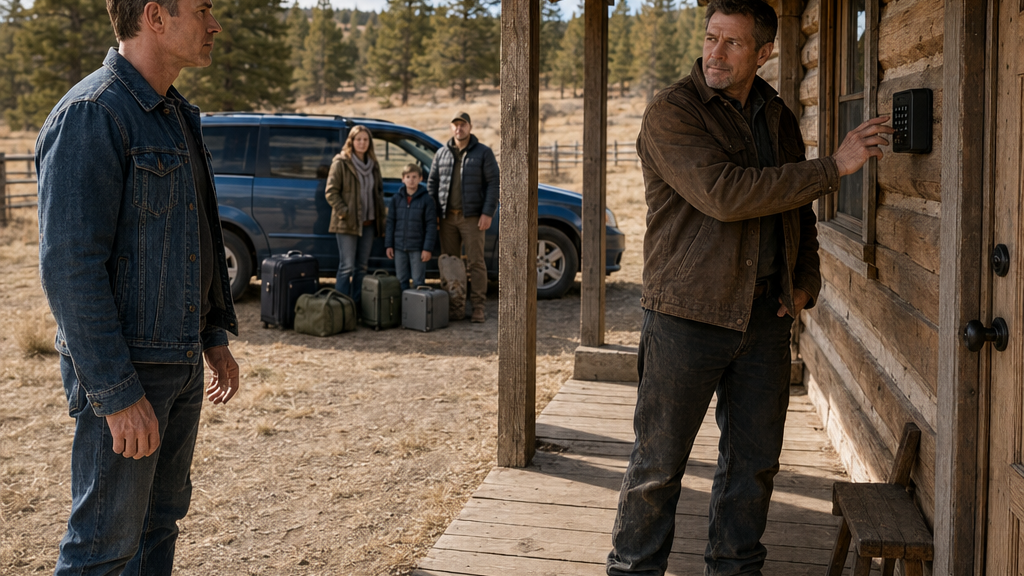
The woman at the cabin door entered four numbers into a black metal lockbox, pulled out a key, and let herself into a building Daniel Harris had never seen before.
He stopped halfway down the narrow two-track lane.
For several seconds, he simply watched.
The woman carried a grocery bag inside. A man followed with two duffels and a small cooler. Their dark crossover sat beside the porch, Colorado plates dusted pale from the gravel road. They moved with the ordinary confidence of people arriving somewhere they had every right to be.
Daniel looked past them at the cabin.
Rough-cut siding. Green metal roof. Covered porch. Split firewood stacked neatly beneath one window.
Two days earlier, the deed to all 280 acres had transferred to him after his uncle’s estate closed.
Nothing in the inventory had mentioned a furnished cabin.
Daniel shut off the pickup and stepped out.
The late-October air had a hard edge to it. Cottonwoods along the creek had already lost most of their leaves. Beyond the cabin, dark timber climbed toward the ridge his uncle had always called the north bench.
The woman noticed him and raised a hand.
“Hi.”
Daniel returned the gesture automatically.
“Afternoon.”
She glanced at his pickup, then at him. “Are you with the property?”
The question landed strangely.
Daniel rested one hand on the open truck door. “I suppose you could say that.”
She smiled, apparently taking the answer as confirmation. “The directions were actually pretty good once we found the cattle guard.”
Daniel looked at the lockbox.
“Who gave you the directions?”
She lifted her phone. “They came with the booking.”
“Booking?”
Her smile faded slightly.
“The cabin.”
Daniel let the silence sit long enough that the man carrying the cooler stopped on the porch.
“We rented it for four nights,” the woman said. “Is there a problem?”
Daniel had spent most of the morning walking fence lines, making notes about a sagging corral rail and a stock tank that needed draining before a hard freeze. He had expected the ranch to contain surprises. His uncle had been seventy-eight and had kept tools until they became archaeological artifacts.
He had expected old machinery.
He had expected deferred repairs.
He had not expected tourists.
“No,” Daniel said finally. “Not a problem you caused.”
He asked the name of the listing.
The woman checked her phone.
“High Ridge Retreats. Cabin Two.”
Daniel stared at her.
“Cabin Two?”
She nodded.
He wished them a good afternoon and walked back to his truck before he said something he would regret.
His uncle’s farmhouse sat nearly a mile away, low and weathered against a long stretch of pasture. Daniel had grown up visiting summers there. He knew the barn, the machine shed, the calving lots and the old road that crossed the dry creek.
Or he had thought he did.
Instead of returning to the farmhouse, he kept driving.
Past the first cabin, the lane narrowed into lodgepole pine.
Two hundred yards farther in, another roof appeared.
Daniel slowed.
The second building was larger, with a deck facing west toward the open basin. Two empty Adirondack chairs sat beneath the railing. A propane cylinder stood beside a newly built enclosure, and a small metal plaque near the door held another coded lockbox.
He drove another hundred yards.
A third cabin stood beyond a shallow draw.
This one had a compact SUV parked outside and towels draped over the porch rail.
Daniel leaned back against his seat.
Three cabins.
Not abandoned hunting shacks. Not old ranch buildings somebody had fixed up casually.
Three maintained guest properties.
He had spent the previous week sorting through estate documents with the attorney, reading equipment lists and bank statements, trying not to think about how many years he had let pass between visits.
His uncle had become a voice on the phone. Then shorter phone calls. Then hospital updates.
Now Daniel owned the place where that silence had accumulated.
And someone else seemed to know part of it better than he did.
He returned to the first cabin and photographed the exterior from the lane.
The black lockbox caught his attention again.
It was such a small object.
Four buttons. Hinged cover. A key locked behind a code Daniel did not know.
He took a close photograph of it.
Back at the farmhouse, he found enough cell signal near the kitchen window to search the name the woman had given him.
High Ridge Retreats appeared before he finished typing.
Three listings.
Professional photographs showed the same cabins in summer light: beds neatly made, coffee mugs beside windows, sunset views across the pasture, fire rings arranged with split wood. One listing called the location a secluded Wyoming ranch escape.
Daniel opened another.
Dozens of reviews.
Beautiful views.
Quiet.
Perfect weekend.
Wonderful host.
He scrolled upward.
The operator profile did not carry his uncle’s name.
The contact was Brian Campbell.
Daniel opened the calendar.
Gray blocks covered most Fridays and Saturdays through November.
December looked worse.
One cabin had only a single weekend open before Christmas.
Daniel sat at his uncle’s kitchen table with the phone in his hand.
There was an old coffee ring in the wood near his elbow. He remembered his uncle sitting in that same chair twenty years earlier, making lists with a dull carpenter’s pencil.
Daniel opened Cabin Three.
Booked.
Cabin One.
Booked.
Cabin Two.
The couple he had just met occupied four nights, and another reservation began less than twenty-four hours after they were scheduled to leave.
Daniel checked the other calendars.
Nearly every weekend through the end of the year belonged to somebody else.
Chapter 2: The Man Who Already Had the Code
Brian Campbell did not ask which cabin Daniel meant.
When Daniel called the number on the rental profile and said his name, Brian answered, “I figured you’d find them sooner or later.”
Daniel stood beside Cabin One with the phone pressed to his ear.
“That’s an interesting way to put it.”
Brian gave a short laugh. “Your uncle never was much for explaining things.”
Daniel looked at the lockbox beside the door.
“Did he authorize you to rent these?”
“Of course he did.”
“How?”
There was a pause.
“We had an arrangement.”
“What arrangement?”
“I handled the cabins. Cleaning, bookings, repairs, guests. Your uncle got his share.”
Daniel watched a raven lift from the roofline.
“And where is that agreement?”
Another pause, shorter this time.
“You just got there, right?”
“That doesn’t answer the question.”
Brian sighed. “Daniel, I’ve been doing this for years. Nobody’s sneaking around.”
“Then bringing me the paperwork should be easy.”
“I can come out.”
Brian arrived forty minutes later in a white pickup with a magnetic property-services sign on the door.
He was in his early fifties, broad through the shoulders, wearing a brown work jacket that looked genuinely used rather than purchased for effect. He parked beside the cabin, got out, and extended a hand.
Daniel shook it.
Brian looked toward the farmhouse road.
“Sorry about your uncle.”
“Thank you.”
“He was a good man.”
Daniel nodded once.
Brian seemed to wait for more warmth than Daniel offered.
Then he walked straight to the cabin door.
“What are you doing?” Daniel asked.
“Showing you the place.”
Brian flipped open the black lockbox cover and entered four digits without hesitation.
The mechanism clicked.
He removed the key.
Daniel watched his hand.
“You know the code.”
Brian glanced at him. “I know all the codes.”
Something in Daniel tightened.
Brian opened the door.
Inside, the cabin was clean and carefully maintained. Wool throws lay across two chairs. The kitchen had matching dishes. A binder sat on the counter beside a small basket of packaged coffee.
Brian pointed toward the ceiling.
“I replaced the smoke detectors in spring. New water heater last year. Your uncle knew about both.”
Daniel stepped inside.
“Who paid?”
“Depends on the repair.”
“That’s not an answer either.”
Brian’s patience thinned.
“Look, I understand this is new to you. But it wasn’t new to him.”
Daniel turned.
Brian continued.
“The first cabin barely had plumbing when I started. We fixed it up. Then the second. Your uncle needed income that wasn’t tied to cattle prices or hay. This worked.”
“How much income?”
“I can show you numbers.”
“Show me the agreement first.”
Brian rubbed his jaw.
“We didn’t operate that way.”
Daniel stared at him.
Brian spread one hand toward the room. “You’re standing in the agreement.”
Before Daniel could answer, tires crunched on the lane.
A blue minivan approached slowly and stopped near the porch.
Two adults climbed out. A child opened the rear door and immediately pointed toward the trees.
Brian’s expression changed.
Not guilt.
Professional concern.
“Those are Cabin One guests,” he said.
Daniel looked at him.
“You booked them?”
“Months ago.”
Brian walked toward the minivan before Daniel could stop him.
“Afternoon. You found it all right?”
The driver nodded. “Eventually.”
Brian smiled and took the conversation over with the smooth competence of someone who had done it hundreds of times.
He showed them where to park. Warned them not to leave food outside. Pointed out the firewood.
Then he walked to the lockbox.
Daniel stayed near the steps.
Brian entered the code.
The small metal door opened.
He handed the key to the guest.
Daniel said, “Brian.”
Brian looked back.
The guests went quiet.
Daniel kept his voice level.
“Who authorized you to issue tomorrow’s access code under my ownership?”
Brian’s hand remained on the lockbox.
For the first time since arriving, he looked uncertain.
The guest holding the key glanced between them.
Brian lowered his voice. “Can we not do this in front of customers?”
“They’re standing on my land using a code you control.”
“They paid for a reservation.”
“I’m not blaming them.”
“Good.”
Daniel stepped closer, but not enough to crowd him.
“I asked who authorized you after the ownership changed.”
Brian looked toward the guests and then back at Daniel.
“Nobody gave me some new letter, if that’s what you mean.”
“So you knew it changed.”
“Of course I knew.”
“And kept taking bookings.”
“The operation didn’t stop because probate finished.”
Daniel felt anger rise, sharp and immediate.
He forced it down.
Brian seemed to mistake restraint for movement in his favor.
“You’re inheriting income here,” he said quietly. “You really don’t need to make this complicated.”
Daniel looked at the open lockbox between them.
Then he looked at the family waiting beside their luggage.
“No,” he said. “They don’t need me to make their trip complicated.”
He stepped aside.
“Let them settle in.”
Brian’s shoulders loosened.
Daniel added, “But you’re not taking another reservation until we settle who gave you that right.”
Brian’s face changed again.
“That’s not realistic.”
“It’s very realistic.”
“I have bookings scheduled months out.”
“Existing bookings are one question. New ones are another.”
Brian shut the lockbox.
“You don’t understand the business.”
“And you don’t understand what changed this week.”
For several seconds neither man spoke.
The child from the minivan dragged a small suitcase toward the porch, the wheels rattling over the boards.
Brian finally said, “Your uncle trusted me.”
Daniel heard something defensive beneath the statement now.
Maybe even hurt.
“I’m asking you to prove what he trusted you to do.”
Brian looked away.
“He let me run the cabins.”
“For how long?”
“We never set an end date.”
“Did he sign a lease?”
“No.”
“An easement?”
Brian frowned. “No.”
“Management contract?”
“We didn’t need one.”
Daniel watched him carefully.
“Why not?”
Brian’s answer came too quickly.
“Because we were friends.”
“That isn’t the same thing as authority over my property.”
Brian stepped closer, voice low.
“I put years into this place. Repairs. Marketing. Guests. Your uncle didn’t have the time or the money to build it himself. Don’t come in after forty-eight hours and act like nobody did anything before you got here.”
The words struck harder because there was truth inside them.
Daniel had not been there.
Brian had.
That did not make Brian right.
But it prevented Daniel from dismissing him as easily as he wanted to.
“Bring me whatever records you have,” Daniel said.
Brian gave a humorless laugh.
“You want receipts?”
“I want everything.”
“And while you’re deciding?”
“No new bookings.”
Brian shook his head.
“You’re going to cost both of us money.”
Daniel glanced at the cabin.
“At the moment, I don’t even know if any of that money belongs to me.”
Brian opened his truck door.
Before getting in, he said, “Your uncle never needed paperwork between friends.”
Daniel watched the truck disappear down the gravel lane.
The sentence stayed with him long after the engine faded.
Not because it sounded reassuring.
Because it sounded like the kind of sentence people used when paperwork might have told a different story.
Chapter 3: Nothing Filed Against the Land
The county clerk placed the property file on the counter, and Daniel’s first thought was that it was much too thin.
Brian had described years of investment, income, improvements and cooperation.
The file looked as if nothing of consequence had happened to the ranch in decades.
Daniel opened it.
The deed transferring ownership to him sat near the top.
He checked the legal description against the copy from the estate attorney.
Same parcel.
Same acreage.
Same boundaries.
“What exactly are you looking for?” the clerk asked.
“Anything giving someone else the right to operate commercial lodging on the property.”
The clerk pulled the folder closer.
“Recorded lease?”
“Yes.”
She searched.
Nothing.
“Recorded easement?”
“Anything that might apply.”
Nothing.
Daniel leaned one forearm against the counter.
“Management agreement?”
“That usually wouldn’t necessarily be recorded here.”
“But if someone had a long-term property interest?”
“If they recorded one, we’d see it.”
They did not.
No recorded cabin lease.
No recorded easement tied to guest access.
No document granting Brian Campbell a continuing interest in the land.
Daniel left the office carrying certified copies and feeling something dangerously close to vindication.
By noon, he had convinced himself he finally understood the situation.
Brian had history.
Daniel had title.
History was not ownership.
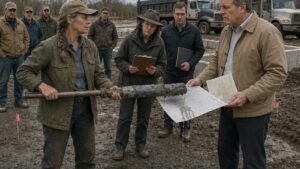
He met Pamela Wilson at the ranch just after one.
She arrived in an older SUV carrying a tablet, measuring wheel, camera and a canvas document bag. She had been recommended by the estate attorney as someone who understood rural property use without turning every disagreement into a courtroom fantasy.
Daniel handed her the county copies.
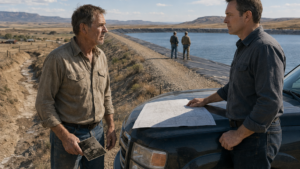
She reviewed them on the hood of her vehicle.
“No lease,” Daniel said.
“I see that.”
“No easement.”
“I see that too.”
“No recorded right for Brian at all.”
Pamela looked up.
“And?”
Daniel frowned.
“And that tells us quite a lot.”
“It tells us what’s recorded.”
“That’s what I said.”
“No, you said it tells us Brian has no right.”
Daniel crossed his arms.
“Doesn’t it?”
“Maybe. Maybe not.”
He disliked the answer immediately.
Pamela tucked the papers back into the folder.
“People make private agreements every day without recording them against title. Sometimes written. Sometimes badly written. Sometimes oral.”
“So the county records mean nothing?”
“I didn’t say that.”
“Then what do they mean?”
“They mean nobody put a continuing property interest on record where a buyer or heir would easily find it. That matters. But it doesn’t prove your uncle never agreed to anything.”
Daniel looked toward the cabins.
“He’s renting property that now belongs to me.”
“Correct.”
“And he admitted I never authorized him.”
“Also relevant.”
“So what are we arguing about?”
Pamela started walking.
“We’re not arguing. I’m trying to keep you from turning one useful fact into ten conclusions.”
They inspected the first cabin.
Pamela photographed the exterior, foundation, propane line, utility connections and parking area.
Daniel photographed the lockbox again, this time beside a small numbered plaque.
At the second cabin, Pamela measured setbacks and noted a newer deck.
At the third, she stopped beside a buried utility marker and asked Daniel whether he knew when the septic system had been installed.
“No.”
“Permits?”
“I don’t know.”
“Occupancy approvals?”
“No idea.”
“Insurance?”
Daniel looked at her.
“My uncle had ranch insurance.”
“That wasn’t my question.”
By midafternoon, his clean ownership dispute had become a list of things he had never considered.
Commercial use.
Guest liability.
Wastewater.
Fire access.
Insurance classification.
Road maintenance.
Tax treatment.
None of it made Brian more authorized.
But all of it made the situation larger.
Daniel stood beside Cabin Two while Pamela photographed the lockbox.
“What would you do?”
She lowered the camera.
“If this were mine?”
“Yes.”
“I’d stop assuming I knew the whole story.”
“That’s not an action.”
“It’s the action before the action.”
Daniel exhaled.
Pamela looked toward the farmhouse.
“Ask for Brian’s records. Look at your uncle’s accounts. Find out when this began. Figure out whether money changed hands. Then decide what you’re actually dealing with.”
Daniel’s phone buzzed.
A notification from the rental site.
He opened the app.
Cabin Three had a new review posted that morning.
Five stars.
The guest thanked the host by name.
Brian.
Daniel felt his patience snap tighter.
“He’s still operating publicly as if nothing changed.”
Pamela glanced at the screen.
“That doesn’t mean you should move faster than the facts.”
“He knew ownership changed.”
“Yes.”
“He admitted I never authorized him.”
“Yes.”
“What exactly am I waiting for?”
Pamela studied him.
“Enough information that tomorrow you don’t regret what you do today.”
Daniel did not answer.
An hour later, after Pamela left, he sat at his uncle’s kitchen table and opened the rental platform’s dispute form.
He attached the deed.
He attached the county records.
He attached photographs showing all three cabins inside the parcel.
He wrote that he was the titled owner and had not authorized Brian Campbell to continue making reservations.
He requested that new bookings be suspended pending verification.
Then he sent a similar notice to the county planning office asking for confirmation of any commercial lodging permissions associated with the property.
For several minutes, Daniel felt better.
He had done something concrete.
No threats.
No confrontation.
Just documents.
Then his phone rang.
Pamela.
“I found something.”
Daniel sat straighter.
“What?”
“I was reviewing the cabin photos against historic imagery and the improvement notes you gave me.”
“And?”
“These aren’t recent.”
“I know Brian said years.”
“I mean I can establish commercial-style use going back almost six years.”
Daniel looked toward the dark kitchen window.
“How?”
“Parking patterns, deck additions, utility upgrades, plus archived listing references I pulled after I left.”
Daniel said nothing.
Pamela continued.
“If Brian invented this after your uncle got sick, that’s one story.”
Daniel tightened his grip on the phone.
“But six years means my uncle was alive, active, and managing this ranch for most of it.”
“Yes.”
Daniel stared at the certified deed on the table.
That morning, the absence of paperwork had felt like an answer.
Now it felt like only the edge of another question.
Pamela said, “Before you decide Brian lied about everything, Daniel, you need to find out whether your uncle was getting paid.”
Chapter 4: The Money Was Keeping the Ranch Alive
The first transfer Shirley Martin pointed to was for $2,480.
Daniel had seen it twice already and ignored it both times.
The description in his uncle’s account ledger was only four letters and a month. No company name. No note about cabins. Nothing that connected it to Brian Campbell.
Shirley tapped the line with one fingernail.
“That was him.”
Daniel looked up from the old desk in the farmhouse office.
“Brian?”
She nodded.
Shirley had kept his uncle’s books for nearly fifteen years. She was in her sixties, compact and practical, with reading glasses hanging from a cord around her neck. She had arrived carrying two file boxes Daniel had not known existed.
He pushed the statement toward her.
“How do you know?”
“Because I entered it.”
“You knew about the cabins?”
“I knew about the income.”
“That isn’t what I asked.”
Shirley removed her glasses.
“No. It isn’t.”
The room seemed smaller after that.
Daniel had called her because Pamela wanted bank records traced before they made any more assumptions. He had expected Shirley to identify expenses, maybe explain an unfamiliar vendor.
He had not expected her to become part of the answer.
“How long?” Daniel asked.
“Brian started sending money about six years ago.”
Daniel leaned back.
“So everybody knew except me.”
“That’s not fair.”
“No?”
“Your uncle didn’t tell everybody his business.”
“He apparently told Brian enough.”
Shirley let that pass.
She opened another folder.
“The first year wasn’t much. One cabin. Mostly hunting season, some summer weekends. Then Brian fixed up another.”
“With whose permission?”
“Your uncle’s.”
“You heard him give it?”
“I paid invoices he approved.”
Again, not quite the answer Daniel wanted.
Shirley turned the ledger toward him.
There were transfers almost every month during the warmer seasons. Some were under two thousand dollars. Others approached four.
Daniel traced them with his finger.
“What was his share?”
“It changed.”
“That sounds convenient.”
Her expression hardened.
“I’m not here to defend Brian.”
“Then help me understand why nobody thought any of this belonged in the estate records.”
“I sent the financial records that were requested.”
“The cabins weren’t listed as a business.”
“They weren’t your uncle’s business.”
Daniel stared at her.
“He owned the buildings.”
“Yes.”
“He owned the land.”
“Yes.”
“He took income.”
“Yes.”
“And somehow that wasn’t his business?”
Shirley sighed.
“Brian handled the guests. Brian collected the money. Brian paid cleaning, repairs, supplies, platform fees. Your uncle got a percentage for use of the cabins and land.”
Daniel looked down again.
That sounded far more organized than Brian’s vague description of an arrangement between friends.
“Where’s the contract?”
“I never saw one.”
Daniel almost laughed.
“Of course.”
Shirley closed one folder and opened another.
“You keep hearing that as proof it wasn’t real.”
“It’s proof nobody bothered to protect the property.”
“Maybe.”
“Maybe?”
She slid an old invoice across the desk.
It was for fencing materials.
Daniel recognized the year. A spring storm had taken down nearly half a mile of west pasture fence. His uncle had mentioned it during one of their infrequent calls.
Daniel remembered saying he was busy and would come out later in the summer.
He never did.
Shirley pointed to the total.
Then to a bank deposit four days earlier.
The amounts were nearly identical.
“Brian’s transfer,” she said.
Daniel said nothing.
“Your uncle was short that month. Cattle prices were poor, and he’d already paid for a tractor repair.”
“So?”
“So the cabin money paid for most of that fence.”
Daniel stared at the invoice.
He remembered his uncle telling him the fence was handled.
Nothing else.
Shirley brought out another statement.
“This one covered propane.”
Another.
“Part of the property tax.”
Another.
“Winter feed after that early snow.”
The transactions stopped looking like mysterious deposits.
They became fence posts, heating fuel, hay, taxes.
Things that kept a ranch functioning while its owner grew older.
Daniel pushed back from the desk.
“He could have told me.”
Shirley was quiet.
“He could have asked me.”
“He was proud.”
“So was I.”
The answer came before Daniel could stop it.
Shirley looked at him for a moment but did not offer comfort.
Daniel stood and walked to the window.
From there he could see the roof of the machine shed and, farther off, the line of timber hiding the cabins.
His anger had been easier when he imagined Brian extracting money from a sick old man.
Now the numbers refused to cooperate.
His phone buzzed on the desk.
Then again.
And again.
Daniel turned.
Three messages had arrived through the rental platform.
The first was from a guest scheduled for the following week.
We received a notice that our reservation may no longer be authorized. We already purchased flights. Can you tell us if we still have a place to stay?
The second came from a family due in November.
The third was angrier.
We booked six months ago. Why are we only hearing about an ownership dispute now?
Daniel read all three.
His non-authorization notice had done exactly what he had intended.
It had interrupted the operation.
He just had not pictured the interruption reaching people who had never heard of Brian’s arrangement or Daniel’s inheritance.
Shirley watched him.
“What happened?”
“The platform contacted guests.”
“You asked them to?”
“I asked them to stop treating Brian like he had authority.”
“That’s different from canceling reservations.”
“Apparently not different enough.”
Daniel put the phone down.
Shirley began stacking the statements.
“Brian should have stopped taking new bookings when the property changed hands.”
“I know.”
“But people who booked before that didn’t create this problem.”
“I know.”
She glanced toward the old desk drawer.
“There’s something else you should understand.”
Daniel looked at her.
“About the money?”
“About the paperwork.”
She hesitated, and that hesitation sharpened his attention more than anything she had said all afternoon.
“What?”
“Brian asked for a lease.”
Daniel stopped.
“When?”
“More than once.”
“And my uncle refused?”
“Yes.”
Daniel came back to the desk.
“Why?”
Shirley shook her head.
“He never gave me a full explanation.”
“But you knew he refused.”
“I typed one draft for him. He tore it up. Brian brought another proposal later. Your uncle put it in a drawer and never signed it.”
Daniel stared at her.
“So he wanted the income.”
“Yes.”
“He wanted Brian running the cabins.”
“For a time, yes.”
“But every time Brian tried to make it permanent—”
“Your uncle said no.”
The room went still.
Daniel looked at the transfers again.
For two days, he had been trying to answer whether Brian’s story was true.
Now he had the answer.
Part of it was.
That was worse.
Because the next question was harder.
Why had his uncle willingly taken the money for six years while repeatedly refusing to give Brian the one thing he apparently wanted most?
Chapter 5: What His Uncle Refused to Sign
The unsigned lease was underneath a stack of livestock vaccination records.
Daniel nearly missed it.
He had spent Saturday morning emptying the bottom drawers of his uncle’s desk, looking for whatever Shirley remembered typing years earlier. Most of what he found was ordinary ranch debris: equipment manuals, seed receipts, old tax notices, veterinary paperwork.
Then a folded document slipped from between two folders and landed against his boot.
Across the first page was a proposed five-year lease covering the three cabins and their access road.
Brian Campbell’s handwriting filled the margins.
Daniel sat down.
The revisions were detailed.
Renewal options.
Maintenance responsibilities.
Guest parking.
A percentage formula.
Permission for Brian to replace furnishings without separate approval.
Near the end, a handwritten clause proposed giving Brian first right to continue the rental operation after any transfer of the ranch.
Daniel read that paragraph twice.
There was no signature from his uncle.
No initials.
Nothing.
Brian’s initials appeared beside several handwritten changes.
Daniel called him.
“I found your lease.”
Silence.
Then Brian said, “Which one?”
That answer told Daniel there had been more than one.
“Come out.”
Brian arrived before noon.
Daniel waited at the largest cabin instead of the farmhouse.
No guests were staying there that day, and the porch faced the long meadow where frost had flattened the grass to silver.
Brian climbed the steps.
Daniel held out the lease.
Brian recognized it immediately.
“Where’d you find that?”
“In my uncle’s desk.”
Brian took it but did not pretend surprise.
“That was an early version.”
“It gives you five years.”
“That was the idea.”
“And renewal rights.”
Brian said nothing.
“And this.”
Daniel tapped the transfer clause.
Brian’s jaw tightened.
“You already know he didn’t sign it.”
“I know that now.”
“He didn’t like legal documents.”
“He signed deeds. Loans. Equipment notes. Insurance forms.”
“That’s different.”
“Why?”
Brian folded the lease once.
“Because those people weren’t friends.”
Daniel let the answer hang.
“Did you ask him again?”
“Yes.”
“How many times?”
Brian looked toward the trees.
“Three, maybe four.”
“And every time he said no?”
“He said he didn’t want to lock the ranch into anything.”
“That isn’t the same thing as disliking paperwork.”
Brian’s expression hardened.
“You think I don’t know that?”
There it was.
Not denial.
Recognition.
Daniel leaned against the porch rail.
“Then you knew.”
“I knew he didn’t want a long lease.”
“You knew he wouldn’t give you permanent rights.”
“I knew he wanted flexibility.”
“Those are careful words.”
Brian looked at him.
“I was trying to build something that worked.”
“For you.”
“For both of us.”
“For him.”
Brian’s voice rose for the first time.
“You saw the books, didn’t you?”
Daniel did not answer.
Brian gave a short nod.
“Shirley showed you.”
“She showed me enough.”
“Then you know I wasn’t stealing from him.”
“I never said you were.”
“You treated me like I was.”
Daniel looked toward the lockbox beside the cabin door.
Brian had rested one hand on it without seeming to notice.
“You kept taking bookings after ownership changed.”
“I had an operating calendar.”
“You had no authorization from me.”
“I had years of established business.”
“That isn’t authorization.”
Brian took his hand off the lockbox.
The movement was small, but Daniel noticed it.
“So what do you want?” Brian asked.
“The truth.”
“You have it.”
“No. I have pieces.”
Daniel nodded toward the unsigned document.
“Why did my uncle keep taking the income while refusing every lease you brought him?”
Brian stared at the meadow.
When he answered, his voice was lower.
“He said the ranch wasn’t his to tie up forever.”
Daniel felt something shift.
“What does that mean?”
“He knew it would go to you.”
Daniel said nothing.
“He told me years ago. Said when he was gone, whoever inherited it should get the ground clean. No lease they didn’t choose. No obligation they didn’t agree to.”
“Then why keep the cabins running?”
“Because he needed the money.”
The bluntness of it removed any romance.
Brian continued.
“He hated that part. But he needed it. Taxes went up. Repairs got worse. One bad winter could eat everything he made on cattle. Those cabins gave him steady cash.”
“And you thought because he needed you, I would too.”
Brian looked at him.
“At first? Yes.”
The answer was more honest than Daniel expected.
“I’d spent six years building the listings. Reviews. Repeat guests. Contractors. Cleaning schedules. I put money into those cabins too.”
“You were paid.”
“Yes.”
“You profited.”
“Yes.”
“So did he.”
“Yes.”
Brian folded the lease smaller.
“That’s why I thought we’d sit down and keep going.”
“Without asking me first.”
Brian looked away.
“I should have.”
Daniel waited.
Brian rubbed his thumb over the paper edge.
“I told myself probate was paperwork. The business existed before you owned the place and would exist after. I told myself stopping reservations would damage something your uncle wanted kept alive.”
“Did you believe that?”
Brian did not answer immediately.
“Enough to keep going.”
“That isn’t what I asked.”
Brian looked directly at him.
“Not completely.”
The admission changed the scene more than anger would have.
Brian had known the boundary was uncertain.
He had crossed it anyway.
Not because he thought Daniel had no rights.
Because he expected momentum to become permission.
Daniel took back the lease.
“How far out are the bookings?”
Brian hesitated.
“How far?”
“Spring.”
Daniel felt his stomach tighten.
“Define spring.”
“End of April.”
“You took April reservations after my uncle died?”
“Some.”
“After you knew the ranch was transferring to me?”
Brian nodded once.
Daniel turned away.
He had expected December.
Maybe January.
Not half a year.
“How many?”
“Across all three cabins?”
“Yes.”
Brian gave him the number.
Daniel looked back.
“That many people?”
“They’re not all full weeks. Mostly weekends.”
“That doesn’t make it better.”
“I know.”
“No, you knew before.”
Brian’s face tightened.
“I also have cleaners depending on the work. A contractor who does snow access. Guests who bought flights. Deposits already processed. You can call it entitlement if you want, but there are people downstream of this.”
Daniel almost told him that none of those people changed title.
Then he thought of the messages on his phone.
Families who had booked months earlier.
People who had no idea two men in Wyoming were arguing over the meaning of six years of informal permission.
Daniel walked to the cabin door.
The lockbox sat inches from his hand.
He did not touch it.
“Stop taking new bookings.”
Brian nodded.
“I mean it.”
“I heard you.”
“I’ll verify.”
Brian gave him a tired look.
“I figured you would.”
Daniel folded the unsigned lease and put it inside his jacket.
He finally understood his uncle’s position.
Take the income.
Use the cabins.
But never bind the next owner.
The boundary had existed all along.
Brian had simply decided that enough years of standing beside it gave him permission to step across.
Daniel’s problem now was that pushing him back across it would not affect Brian alone.
By evening, the platform had sent Daniel a preliminary list of reservations under review.
He scrolled through dates, party sizes, arrival notes.
November.
December.
Christmas week.
January.
March.
April.
Dozens of people had made plans around cabins they believed were legitimately theirs for a few nights.
Daniel had wanted a clean solution.
The list made one thing painfully clear.
There wasn’t one.
Chapter 6: The Bookings Daniel Could Have Canceled
The first reservation on the cancellation list belonged to a family already driving west.
Daniel knew because the guest had written it in the message field.
We left Iowa this morning. Please tell us before tonight if we need to find somewhere else.
He read the message twice.
Then he scrolled.
A couple arriving by air the next afternoon.
A family coming for Thanksgiving.
Two men who had booked a hunting weekend months earlier.
A December reservation that mentioned grandparents traveling with them.
The platform representative had divided the bookings into categories: upcoming, near-term, and future reservations requiring ownership verification.
Daniel had spent days insisting that Brian had no right to treat momentum as authority.
Now Daniel himself had authority.
And the easiest way to prove it was to cancel everything.
He hated how satisfying that had sounded forty-eight hours earlier.
Pamela sat across the farmhouse table with the county response open on her laptop.
“There’s a path that doesn’t require you to recognize Brian’s continuing rights,” she said.
Daniel looked at the reservation list.
“Go ahead.”
“You assume control of the operation during a defined transition. No new bookings. Existing near-term guests can be honored under your permission.”
“And the spring reservations?”
“That depends how far you want to extend the transition.”
“I don’t.”
“Then don’t.”
Daniel looked at her.
“That simple?”
“No.”
She turned the laptop toward him.
“You need insurance confirmed for commercial guest use. You need to handle the platform account correctly. You need written access terms for anyone working on-site. You may need county follow-up depending on how the cabins were classified.”
“So not simple.”
“No. But possible.”
His phone rang.
Brian.
Daniel almost let it go to voicemail.
Instead he answered.
“What?”
“I got locked out of the booking dashboard.”
“The platform froze management changes.”
“Did you ask them to?”
“Yes.”
Brian breathed out.
“Daniel, listen to me before you do anything else.”
“I’ve done a lot of listening.”
“I’ll sign something.”
Daniel looked at Pamela.
“What?”
“A management agreement. Short-term. Whatever you want.”
“No.”
“A month-to-month arrangement.”
“No.”
“Give me through April.”
Daniel stared at the list.
“That’s exactly what my uncle refused to give you.”
“This is different.”
“How?”
“Because bookings exist now.”
“Bookings you kept taking.”
Brian went quiet.
Daniel continued.
“I told you ownership was under review.”
“I know.”
“You took more anyway.”
“I know.”
“So spring is your risk.”
“And the guests’.”
That stopped him.
Brian knew it had.
“You can be angry with me,” Brian said. “Fine. But canceling all of it doesn’t just hit me.”
Daniel rubbed his forehead.
“I’m aware.”
“Then let me finish the calendar.”
“No.”
“Daniel—”
“No.”
His voice stayed quiet.
“That would put you right back where you were. Controlling access, money and dates while I pretend it’s temporary.”
“What are you proposing?”
“I’ll tell you when I’ve decided.”
He ended the call.
Pamela watched him.
“You know he’s right about one thing.”
“That innocent people are involved.”
“Yes.”
“I know.”
“And you’re right about the other thing.”
Daniel waited.
“Letting him keep control because unwinding it is inconvenient would recreate the problem.”
Daniel looked again at the list.
He called the platform representative.
By late afternoon, the outline had taken shape.
Reservations through the end of the year would be honored if the guests wished to keep them.
No new reservations would be accepted.
January bookings would receive an option to continue only after Daniel completed the insurance and county checks.
Spring reservations would be canceled with full refunds rather than treated as obligations against the property.
Brian would no longer control the calendar or issue access codes.
The first consequence arrived immediately.
Brian came to the ranch before sunset.
“You’re taking the account.”
“Yes.”
“You don’t know how to run it.”
“I don’t need to run it forever.”
“You’re going to destroy the ranking.”
“Maybe.”
“You’ll lose repeat guests.”
“Maybe.”
Brian stared at him.
“You’re willing to throw away six years.”
“No.”
Daniel held up the printed transition sheet.
“I’m willing to stop pretending six years gives you the next six.”
Brian read the page.
His jaw worked as he reached the line requiring surrender of booking administration.
“You expect me to hand over everything.”
“I expect you to stop controlling a business operating on property you don’t own.”
“I built the listings.”
“And you’ll keep records showing your work. I’m not erasing that.”
“Feels like it.”
Daniel did not answer.
They walked together to Cabin One.
The family from Iowa was due after dark.
Daniel opened the lockbox cover.
For the first time since inheriting the ranch, Brian stood beside him without reaching for it.
Daniel entered the existing master sequence, followed the reset instructions Brian had reluctantly provided, and created a new owner code.
The small mechanism beeped.
He tested it once.
Then again.
Brian watched.
“That code will run tonight’s guest key?” he asked.
“Yes.”
“You’re still letting them stay.”
“Yes.”
Something in Brian’s expression loosened despite himself.
Daniel created the temporary guest code and wrote it on the arrival sheet.
“The people who booked before this mess didn’t cause it.”
Brian nodded slowly.
Daniel closed the lockbox.
“But you don’t issue another code.”
“I understand.”
“I need you to actually understand, not just wait for me to change my mind.”
Brian looked at the black metal box.
“I understand.”
Headlights appeared far down the lane.
The Iowa family.
Daniel felt the old impulse to retreat into paperwork, let the platform handle everything, make ownership clean by making the consequences somebody else’s problem.
Instead he stayed.
The vehicle pulled in.
Daniel greeted the guests and explained only what they needed to know: management had changed, their reservation would be honored, and future communication would come through the updated account.
No accusation.
No story about Brian.
No inheritance dispute dumped onto people carrying luggage.
The family thanked him and began unloading.
When Daniel returned to the porch, Brian was still there.
“You handled that all right,” Brian said.
Daniel glanced at him.
“That surprise you?”
“A little.”
Daniel almost smiled but did not.
They watched the cabin door close.
Brian shoved his hands into his jacket pockets.
“So what happens to me?”
“You surrender the calendar tonight. Tomorrow you send me the vendor contacts and maintenance records.”
“That’s not what I meant.”
Daniel knew.
The question had been waiting underneath every argument.
Brian had spent six years turning three neglected buildings into something people crossed state lines to use.
He had also spent the last several months acting as though that work entitled him to decide what happened after ownership changed.
Both things were true.
Brian looked at the lockbox one last time.
“Is there any place for me here after the old bookings are gone?”
Daniel did not answer immediately.
For the first time since finding the cabins, the question was no longer who had control.
It was whether anything useful could remain once the entitlement was removed.
Chapter 7: The Last Code Belonged to the Owner
The final reservation made under Brian’s old calendar ended on a Tuesday morning in early December.
Daniel watched from the farmhouse window as the guests loaded two suitcases into their SUV, checked the cabin one last time, and drove toward the cattle guard.
When the vehicle disappeared, his phone showed no more inherited reservations.
For the first time since he had arrived at the ranch, every occupied night ahead would exist only if Daniel chose it.
Brian pulled up twenty minutes later.
He carried a toolbox instead of a laptop.
Daniel noticed that immediately.
“Water heater?” he asked.
“Cabin Two,” Brian said. “Pilot keeps dropping.”
“You’re not scheduled.”
Brian looked toward the cabins.
“You said to send maintenance problems through you. I did.”
“You did.”
“You didn’t answer.”
Daniel had seen the message at six that morning and left it unread while finishing feed chores.
“That’s on me.”
Brian nodded.
The exchange was awkward in a different way now. The fight over authority had ended, but neither man knew what should replace it.
They walked toward Cabin Two.
The old lockbox remained beside the door, but the code inside Brian’s head no longer opened it.
Daniel entered the owner sequence himself.
Brian waited.
Three weeks earlier, that small reversal would have felt like victory.
Now it mostly felt administrative.
Inside, Brian removed the water-heater panel and crouched beside the unit.
Daniel watched him work.
He was efficient. No unnecessary movement, no performance. Within minutes he had found a corroded connection.
“You’ve fixed this before?”
“Not this part.”
“You know where everything is.”
Brian glanced up.
“I’ve been crawling around these cabins for six years.”
Daniel leaned against the counter.
“That’s what makes this complicated.”
Brian returned to the heater.
“No. What made it complicated was me thinking that meant something it didn’t.”
Daniel said nothing.
Brian tightened the connection and relit the pilot.
The flame caught.
“That’ll hold,” he said.
Daniel looked around the cabin.
It was the smallest of the three. More practical than picturesque, with a mudroom large enough for work boots and an exterior spigot close to the equipment lane.
He had already decided this one would not return to the rental calendar.
He had not told Brian yet.
Back at the farmhouse, Shirley had left one final box of records on the kitchen table.
Daniel opened it after Brian finished the repair.
Most of the contents were ordinary: receipts, feed invoices, tax statements.
At the bottom sat his uncle’s spiral expense notebook.
Daniel had seen it before.
He had avoided opening it.
The pages were filled with cramped handwriting, figures down the margins, short reminders and scratched-out totals.
Fence.
Propane.
Hay.
Cabin split.
Tax due.
The entries made the last years of his uncle’s life look less mysterious than exhausting.
Daniel turned slowly through them.
Near the back, one sentence had been written beside a note about Brian’s lease proposal.
No long bind. Daniel decides later.
That was all.
No explanation.
No final message.
No sentimental letter from a dying man who had somehow anticipated every question his nephew would ask.
Just six words.
Daniel read them again.
No long bind.
Daniel decides later.
He sat at the table until Brian appeared in the doorway.
“Everything all right?”
Daniel closed the notebook.
“My uncle wrote about the lease.”
Brian’s face tightened.
“What’d he say?”
Daniel showed him.
Brian read the sentence.
For a moment, neither man spoke.
Then Brian nodded.
“Sounds like him.”
“You knew this.”
“Not those words.”
“But the idea.”
“Yes.”
Daniel leaned back.
“And you still booked spring.”
Brian stared at the notebook.
“Yes.”
No excuse followed.
Daniel realized he had been expecting one.
Brian pulled out a chair but did not sit until Daniel nodded.
“I kept thinking if I made the business valuable enough,” Brian said, “you’d have no reason to stop it.”
“That was the mistake.”
“I know.”
“You thought usefulness would become a right.”
Brian looked toward the window.
“I guess I did.”
Daniel considered the sentence.
Three weeks earlier, he would have wanted Brian to admit more—to acknowledge disrespect, arrogance, maybe greed.
Now the simpler admission seemed more accurate.
Daniel had made his own version of the same mistake.
He had thought title alone made every decision simple.
“Two cabins are staying seasonal rentals,” he said.
Brian looked back at him.
“Two?”
“Cabin Two comes out.”
“Why?”
“I need a place for ranch use. Seasonal help, contractors, maybe family. It sits closest to the equipment lane.”
Brian nodded slowly.
“And the other two?”
“Limited calendar. No year-round bookings. No reservations more than four months ahead until I’m comfortable with how this works.”
Brian absorbed that.
“Who manages them?”
“I do.”
“You don’t want to do that.”
“No.”
Brian almost smiled.
Daniel continued.
“I’m hiring platform administration separately if I need it.”
The small smile disappeared.
“So that’s it.”
“Not necessarily.”
Brian waited.
Daniel slid a single-page agreement across the table.
It was deliberately plain.
Maintenance work.
Cabin inspections.
Snow access when requested.
Hourly rate.
No booking authority.
No independent guest communication.
No access except codes issued by Daniel for specific work.
Either side could end it on written notice.
Brian read the page twice.
“This isn’t management.”
“No.”
“It’s basically maintenance.”
“Yes.”
Brian looked up.
“You think that’s all I’m good for?”
“No.”
“I built the listings.”
“I know.”
“I know the guests. The contractors. The seasonal patterns.”
“I know that too.”
“Then why cut me down to this?”
Daniel tapped the old notebook.
“Because if I give you back the same control with a new piece of paper, then neither of us learned anything.”
Brian looked away.
The silence lasted long enough for the furnace to kick on.
Finally he said, “I don’t like it.”
“You don’t have to.”
“But the rate’s fair.”
“It is.”
“And you’ll reconsider later?”
“No promises.”
Brian gave a short breath that might have been a laugh.
“At least that part’s clear.”
He signed.
That afternoon they walked to Cabin One together.
Daniel had printed an access sheet for the maintenance binder.
Owner access.
Guest access.
Vendor access.
Each separated.
Each temporary where it needed to be.
Brian stood beside the lockbox while Daniel created a maintenance code.
“This one expires Friday at six,” Daniel said.
Brian nodded.
“If I need back in?”
“You ask.”
“And you issue another.”
“Yes.”
Brian looked at the lockbox.
For years, he had opened these doors without asking anyone.
Daniel could see that the new arrangement cost him something beyond money.
But Brian entered the temporary code once, tested it, and handed the key back.
“That works.”
No argument.
No assumption.
Just a defined permission.
Daniel locked the box.
By mid-December, Cabin Two had disappeared from the rental platform.
Daniel moved spare ranch supplies into its mudroom and cleared one bedroom for visiting help.
Cabins One and Three reopened under a smaller seasonal calendar.
The first new booking came on a Thursday evening.
Daniel stared at the notification longer than necessary before accepting it.
Not because the income no longer mattered.
The ranch books made very clear that it did.
But this time the reservation existed because he had chosen the terms.
That distinction had seemed abstract when he first arrived.
Now it felt like the whole inheritance.
Late one evening, Daniel finished paperwork in the farmhouse and stepped outside.
The yard was dark except for the barn light.
Across the timber, Cabin One glowed faintly through the trees.
Guests were staying there under a reservation Daniel had approved.
The lockbox held a code he had issued.
Brian had plowed the lane that morning under a work order that ended when the job ended.
Nothing about the arrangement was permanent.
Nothing had to be.
Daniel locked the farmhouse door behind him.
He looked once more toward the cabin lights.
His uncle had left him land, debts, repairs, unfinished choices and one sentence in a notebook.
Daniel had spent weeks thinking inheritance meant discovering what his uncle had intended.
Standing there, he finally understood the part his uncle had deliberately left unanswered.
The future of the ranch was not another hidden arrangement waiting to be uncovered.
It was Daniel’s decision to make.
The story has ended.