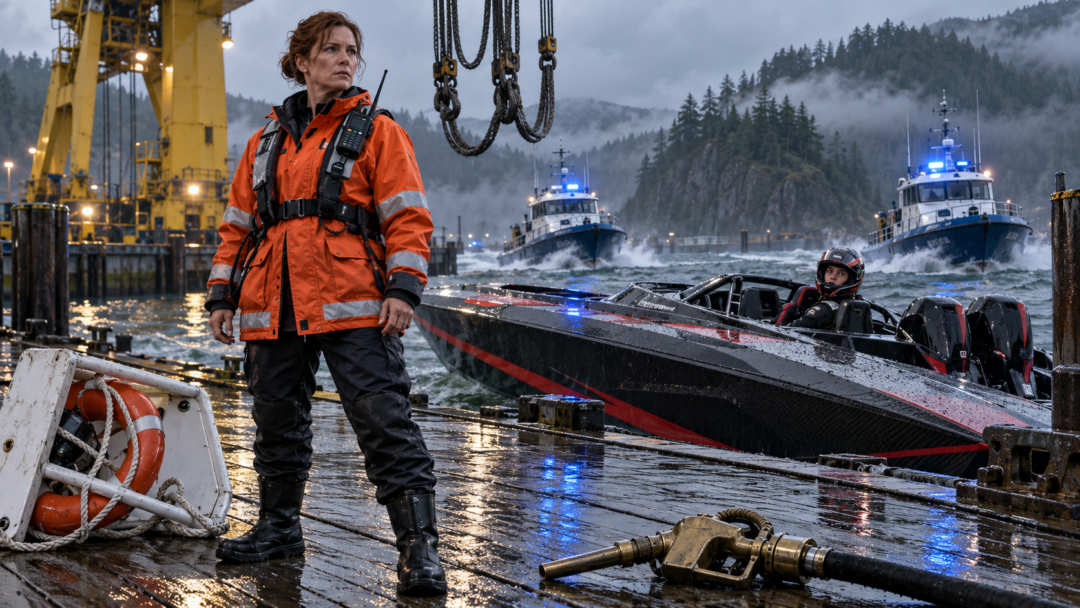
The Blocked Seaplane Dock At Puget Sound And The Harbor Director
CHAPTER 1: THE BLOCKADE AT SLIP FOUR
The low-hanging coastal fog of late autumn clung heavily to the sheer granite bluffs and dense, towering stands of Douglas fir along the northern rim of Puget Sound. A brisk, salty wind blew off the open straits, whipping dark slate-blue swells against the heavy creosote-treated pilings of the Bellingham Municipal Marine Basin. The air was cold, damp, and permeated with the unmistakable working scents of the Pacific Northwest waterfront—sharp oceanic brine, drying bull kelp exposed by the falling tide, diesel exhaust from idling commercial tugs, and the pungent aroma of wet cedar timber that had seasoned in the saltwater for half a century. The harbor operated with a steady, industrial cadence: heavy steel halyards slapping rhythmically against aluminum sailboat masts, the distant, muffled chug of a purse-seiner navigating the outer shipping channel, and the mournful bellow of the harbor entrance foghorn sounding every forty seconds across the misty bay.
Along the outer western floating pier, Slip 4 stood out as the undisputed nerve center of island emergency logistics. Unlike the pleasure craft berths tucked deeper within the sheltered inner marina, Slip 4 was a heavy-duty, deepwater fueling slip engineered with reinforced fender pilings, extra-wide aluminum gangways, and dual high-pressure aviation fuel pumps beneath a bright, illuminated overhead sign: EMERGENCY MEDEVAC BERTH — KEEP CLEAR AT ALL TIMES — AUTHORIZED FLIGHT OPERATIONS ONLY. For three decades, under a binding sovereign maritime pact between the regional counties, this single floating berth had served as the sole mainland refueling and patient-transfer portal for aeromedical floatplanes evacuating injured loggers, fishermen, and families from the isolated archipelagos of the San Juan Islands. When severe coastal storms grounded regional wheeled ambulances or blocked ferry routes across Haro Strait and Rosario Strait, Slip 4 was the only conduit between life and death for over thirty thousand island residents living without hospital access. The berth was wired with specialized explosion-proof lighting, direct underground fiber-optic telemetry lines to regional trauma dispatch, and high-volume turbine pumps capable of delivering three hundred gallons of aviation-grade kerosene or Avgas within four minutes.
Moored diagonally across this vital lifeline was a forty-two-foot carbon-fiber offshore racing catamaran, gleaming with aggressive black-and-crimson livery. Its twin six-hundred-horsepower Mercury Racing outboard motors were tilted up slightly, their polished stainless-steel propellers glistening in the gray mist, while heavy synthetic mooring lines were tied carelessly around the yellow emergency bollards. The vessel’s cockpit was an ostentatious display of wealth: dual high-definition marine GPS touchscreens, digital throttle consoles, custom red leather bucket seats, and an open cockpit refrigerator stocked with chilled energy drinks. A large vinyl banner tied across the carbon-fiber radar arch proclaimed its entry into the unsanctioned Straits Speed Challenge—a high-stakes, underground offshore race carrying a hundred-thousand-dollar private purse organized by wealthy offshore boaters.
Walking down the metal gangway with calm, measured steps was Diana Cross. She was forty-eight years old, tall, lean, and athletic, carrying herself with the quiet, centered authority of a veteran naval architect and master mariner who had earned her master’s license navigating the turbulent tidal rapids of Deception Pass, the boiling whirlpools of Cattle Pass, and the treacherous swells of the Graveyard of the Pacific. She possessed an encyclopedic knowledge of hydrodynamics, maritime administrative law, and regional port security. She wore a heavy-duty, waterproof orange maritime rescue parka with high-visibility silver reflective bands across the shoulders, dark thermal work trousers tucked into rugged neoprene deck boots, and a warm fleece beanie pulled over her tied-back auburn hair. Clipped to the chest harness of her parka was a rugged, waterproof handheld VHF marine radio transmitter, its amber display screen glowing steadily beside an encrypted digital harbor telemetry tablet that mapped every vessel movement within forty square miles of territorial waters.
Diana stepped onto the floating timber dock, her deck boots gripping the wet cedar planks with practiced ease. She glanced at the oversized racing boat blocking the fueling slip, noted the thick synthetic lines wrapped around the dedicated medevac cleat, and then looked up at the two men standing on the aft deck, laughing loudly over the bass-heavy blare of a marine stereo system that sent vibrations through the dock planks.
“Good afternoon, gentlemen,” Diana said, her voice clear, steady, and perfectly audible over the wind and the slap of the waves. “This berth is restricted by sovereign maritime regulation for incoming emergency aeromedical aircraft and island medevac vessels. You cannot moor here. Please cast off your lines immediately and relocate to the transient guest dock on Pier C.”
The man standing at the racing boat’s central helm console turned around slowly. He was Troy Sterling, thirty-six years old, square-jawed, with swept-back dark hair, wearing an expensive designer neoprene racing wetsuit, polarized sunglasses perched on his forehead, and custom leather driving gloves. He held an aluminum can in one hand, looking down at Diana from the high gunwale with open, theatrical contempt.
“And who do you think you’re bossing around, lady?” Troy sneered, stepping down onto the swim platform and hopping heavily onto the timber dock planks. “I’m prepping this boat for the Northern Straits time trials. Pier C doesn’t have the high-flow aviation fuel pumps I need for my secondary bladders. We’re fueling up right here, and we’ll leave whenever my crew is good and ready. We’ve got forty thousand dollars riding on our trial split times.”
Beside him, his throttleman, Blake Carver, stepped onto the dock, crossing his arms and smirking. “You heard him, lady. Move along and find somebody who cares. We’ve got private sponsors waiting in Victoria, and we’re not losing thirty minutes moving to some shallow backwater pier just because you don’t like our paint job.”
“Mr. Sterling,” Diana said, her voice dropping into a firmer, completely unhurried register as she pointed directly to the illuminated sign overhead. “This slip is not a commercial fueling stop for private speedboats. An emergency flight transport has already filed its approach vector with Seattle Center and Puget Sound Harbor Control. This entire slip must be completely clear within five minutes.”
Troy’s face darkened with childish, arrogant fury. He took two aggressive strides forward, stopping less than three feet from Diana, puffing out his chest to intimidate her with his physical bulk. He was used to getting his way in every marina along the coast, relying on his family’s immense wealth and legal team to steamroll local dock attendants and harbor workers.
“My father’s company owns the commercial development rights to this entire marina basin,” Troy barked, his face inches from hers, his breath smelling of caffeine and mint. “We pay more in slip lease fees than your entire department’s operating budget! You don’t tell me where to tie up my boat! I could buy this entire pier and turn it into my personal yacht slip if I felt like it, and there’s not a single clerk in this town who could stop me!”
With a deliberate, spiteful motion, Troy raised his heavy rubber-soled deck boot and shoved it against the wooden emergency life-ring stand anchored to the pier edge. The weathered wooden post snapped at its base with a sharp crack, sending the bright orange life ring and fifty feet of braided polypropylene rescue line tumbling flat onto the wet timber planks.
Before Diana could react, Troy reached over to the yellow high-pressure marine fueling pedestal, yanked the heavy brass fuel nozzle from its locked cradle, and dropped it onto the timber deck with a resounding, metallic clatter that echoed off the granite seawall.
“There’s your emergency gear!” Troy laughed mockingly, turning his back on her with absolute disdain. “One more word out of you and I’ll drop my throttles into gear, wash out this entire gangway with twelve hundred horsepower, and leave you swimming in the basin! Who’s going to stop me? A glorified dock attendant in an orange raincoat?”
Diana Cross did not flinch. She did not raise her voice, nor did she display the slightest tremor of fear or anger. She stood on the wet timber planks, her eyes tracking the fallen life ring and the heavy brass nozzle resting against the wood.
Slowly, deliberately, she reached up with her right hand, unclipped the waterproof VHF radio from her chest harness, and pressed the push-to-talk button. Her thumb tapped the secure digital channel on her harbor tablet with mechanical precision, activating the emergency override frequency for the entire maritime district.
Her voice, when she spoke into the microphone, was not an argument—it was a chilling, absolute decree of sovereign maritime command that cut through the harbor wind like an ice breaker:
“Harbor Control, this is Unit One. Code Red at Slip Four. Confirming deliberate physical sabotage and reckless obstruction of the designated medevac flight slip. Dispatch high-speed interceptor cutters to box the vessel at Pier A, and bring the fifty-ton gantry crane online immediately.”