The Blocked Seaplane Dock At Puget Sound And The Harbor Director
CHAPTER 5: THE TOUCHDOWN IN THE MIST
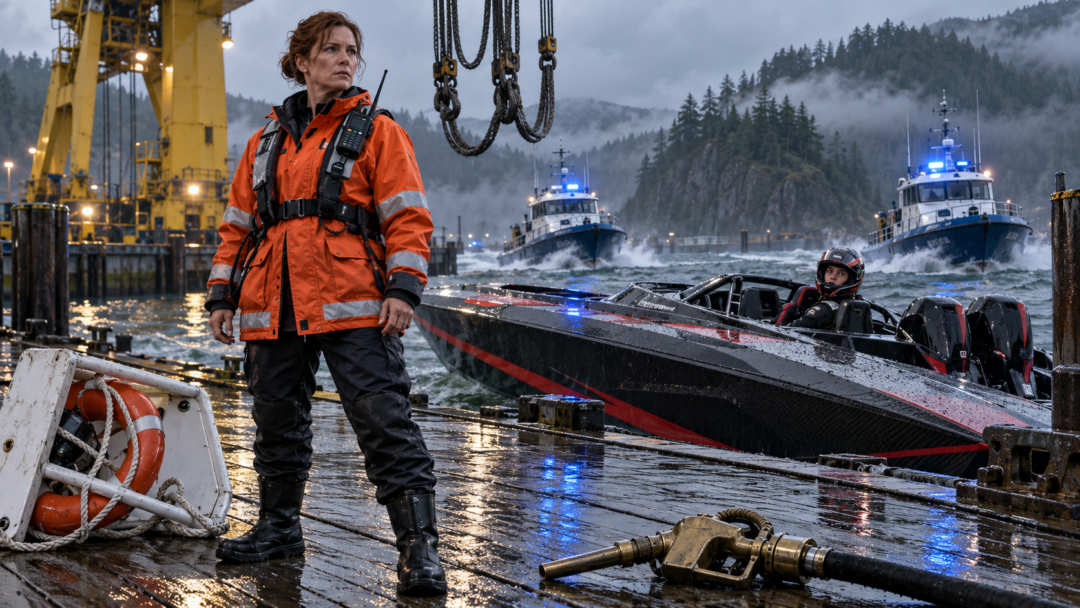
As the hoisted racing boat dangled twenty feet above the water, hanging suspended between the gray sky and the churning bay, the high-pitched whine of an incoming radial aircraft engine filled the basin with thunderous resonance.
Breaking through the low coastal fog bank, just fifty feet above the dark water, the yellow-and-white De Havilland Beaver floatplane swept into view. Its massive aluminum twin pontoons sliced through the surface of the cleared landing fairway, throwing twin rooster-tails of white spray that arced gracefully through the cold air. The aircraft decelerated with practiced, beautiful precision, its high-wing propeller windmilling as Captain Ben Vance guided the floatplane along the sheltered breakwater.
With a gentle, smooth hiss of water against metal, the floatplane glided directly into the freshly cleared, foam-blanketed waters of Slip 4.
Patrol officers and harbor line-handlers caught the aircraft’s mooring lines, making them fast to the heavy yellow cleats. The radial engine sputtered to a halt, the propeller blades ticking softly as the silence of the harbor returned.
The aircraft’s side cargo door popped open instantly.
Paramedic Sarah Lin leaped onto the floating pontoon, her face flushed with adrenaline, her tactical medical vest covered in antiseptic stains. “We need the trauma gurney right now! Patient is in critical respiratory distress! His airway is collapsing from inhalational edema!”
Two paramedics from the Bellingham Fire Department rushed down the gangway pushing a specialized pediatric intensive care stretcher equipped with life support monitors, ventilators, and emergency burn kits.
Gently, tenderly, Captain Vance and Paramedic Lin transferred the tiny, blanketed figure of nine-year-old Lucas onto the stretcher. The boy’s face was pale, his small chest rising and falling in rapid, shallow gasps, thick silver burn-dressings wrapped around his arms and torso. An automated IV pump beeped steadily beside his head as the flight paramedic held a high-flow oxygen mask over his face.
Diana Cross stepped forward, her hand resting gently against the child’s shoulder for a brief, solemn second. “Hold on, little warrior,” she whispered softly. “You’re safe now. You made it to the mainland.”
The medical team wheeled the stretcher up the wide gangway at a dead run, loading the boy into the waiting critical care mobile intensive care unit parked at the head of the pier. With a sudden wail of sirens and flashing red strobes, the ambulance tore down the port access road, speeding toward the regional burn trauma center in Seattle under heavy state police escort.
Captain Ben Vance climbed down from the aircraft pontoon, his flight jacket damp with sweat despite the freezing cold. He took off his aviation headset, wiping his brow with the back of a trembling hand.
He looked at the empty slip, then looked up at the forty-two-foot racing boat hanging suspended from the giant crane overhead, and finally looked at Diana Cross.
“Diana,” Captain Vance breathed, his voice cracking with raw, unvarnished emotion. “Our left tank ran dry forty seconds before touchdown. If that slip hadn’t been cleared… if we had been forced to orbit for even two minutes… we would have gone into the sound. That boy would have died in the freezing water.”
The veteran pilot stepped forward, wrapping his arms around Diana in a fierce, emotional embrace of profound gratitude. “You saved that child’s life today. You saved all of us.”
Diana returned the hug warmly, patting the pilot’s back. “You brought him through the fog, Ben. You’re the one who flew the impossible vector.”
Behind them, standing handcuffed between two armed patrol officers on the timber dock, Troy Sterling watched the entire scene. All his arrogance, all his bluster, and all his inherited corporate pride had completely evaporated, replaced by a hollow, sickening realization of what his selfishness had almost caused.