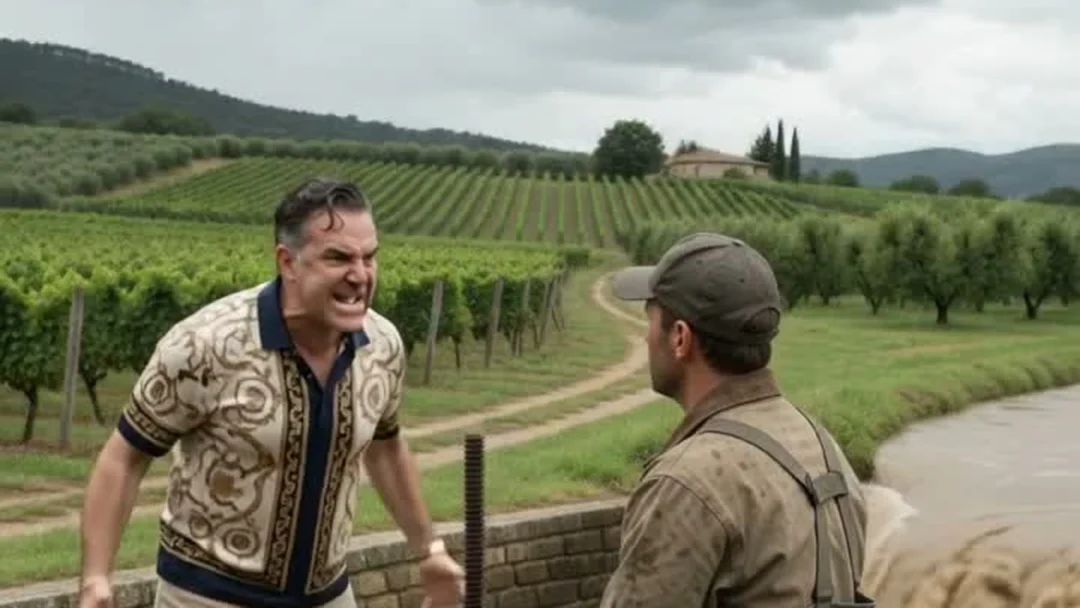
The Broken Canal Sluice And The Flooded Hillside Cellar
CHAPTER 2: THE UNPERMITTED TAP
The rain escalated from a steady mountain drizzle to a hard, drumming downpour that hammered against the corrugated steel roof of the canal district maintenance shack. By four in the afternoon, the sky had bruised into a deep slate grey, the storm clouds caught between the twin ridges of the Mayacamas Range.
Down in the muddy trench scoured by the runaway flume water, Elena Rios adjusted the beam of her high-intensity halogen inspection light. Elena was forty-one, with cropped dark hair tucked under a high-visibility hard hat and the weathered, pragmatic squint of a veteran civil engineer. She knelt on a reinforced rubber kneeling pad, scraping away thick clods of red alluvial silt from the exposed steel pipe with a brass-bladed putty knife.
“Look at the weld on this saddle clamp, Wade,” Elena said, tapping the black steel. “This isn’t utility-grade municipal iron. It’s commercial schedule-eighty carbon steel with a high-pressure electric solenoid valve. They tapped directly into the 1894 gravity conduit on the blind side of the stone culvert.”
Wade Miller stood on the trench bank above her, holding a certified pressure gauge and an electronic flow meter. “What’s the line diameter?”
“Six inches,” Elena replied, using a digital caliper to measure the outer circumference. “At full head pressure, this pipe pulls eight hundred gallons a minute. That’s more than forty-eight thousand gallons an hour, completely unmetered, bypassing every district monitoring station between here and St. Helena.”
Across the flooded access road, Julian Sterling paced frantically in the doorway of his three-car garage. He had traded his ruined silk polo for a dry cashmere zip-up sweater, but his designer riding breeches were still streaked with grey canal silt, and his manicured hands trembled as he pressed a satellite phone to his ear. Through the garage’s high glass windows, three commercial wet-vac extraction trucks could be seen idling in the courtyard, their heavy suction hoses snaking down the stairs into the submerged wine cellar, pumping out thousands of gallons of foul, wine-stained mud.
Elena climbed out of the trench, her boots suctioning in the deep mud. She walked toward Julian, pulling an official blue-bound state regulatory citation ledger from her waterproof clipboard case.
“Mr. Sterling,” Elena called out over the rumble of the diesel vac pumps. “I need to see your California Department of Water Resources diversion permit for the six-inch auxiliary line connected to Gate Seven.”
Julian lowered the satellite phone, glaring at her with bloodshot, defensive eyes. “I’m on a private call with my corporate counsel, Ms. Rios. I have an ongoing property catastrophe. My estate is under four feet of water, and you’re harassing me about irrigation plumbing?”
“That ‘irrigation plumbing’ is tapped into the public aqueduct mainline, Mr. Sterling,” Elena said coldly. “You’re drawing pressurized mountain spring runoff from a sovereign conveyance system without an agricultural allocation permit or a backflow prevention assembly.”
“That pipe was installed by the previous owners decades ago!” Julian snapped, his voice rising in an agitated pitch. “I bought the property as-is! If there’s an old line down there, it’s grandfathered under historical riparian rights!”
Wade stepped forward, shining his flashlight into the trench. “The black polyurethane coating on that pipe was manufactured in March of this year, Mr. Sterling. The serial numbers on the automated flow meter link directly to Vanguard Terraces LLC. You didn’t inherit this pipe. You trench-trenched it three months ago while the district was performing seasonal flume repairs.”
Julian’s jaw tightened, a vein throbbing along his temple. “Even if my contractors installed an auxiliary irrigation line, it’s within my deeded riparian boundary! My family holds twenty-five percent of the commercial equity in this basin!”
“Riparian rights don’t give you license to tap into a pressurized public aqueduct, Julian,” Elena said, writing briskly in her ledger. “And they certainly don’t allow you to siphon half the valley’s reserves while generational family farms three miles south are on emergency twenty-percent drought rationing.”
Elena peeled off the top white carbon copy of the citation and slapped it against the polished hood of Julian’s Mercedes. “Under Section 1052 of the California Water Code, unauthorized diversion of water is a Class A civil violation carrying fines of five thousand dollars per day, plus criminal conversion penalties. I’m issuing an immediate cease-and-desist order. This line will be severed and capped by county crews tonight.”
Julian stared at the ticket, his breathing shallow and rapid. “You touch that line, Rios, and I’ll have my lawyers freeze your district funding until you’re working out of a trailer! You have no idea who is invested in this syndicate! We have partners in Sacramento, in San Francisco, on the regional utility commission!”
“Tell it to the administrative law judge, Julian,” Elena said, turning her back on him.
She walked back to Wade’s utility truck, her face grim. As Wade opened the passenger door for her, Elena held up an electronic tablet displaying real-time seismic and geotechnical sensor readings from the upper Mayacamas reservoir.
“Wade, we have a much bigger problem than water theft,” Elena said in a hushed, urgent voice. “Look at the borehole piezometer readings from the ridge above us.”
Wade leaned in, studying the red trend lines spiking across the digital grid. “The pore water pressure in the bedrock… it’s climbing exponentially.”
“Vanguard didn’t just dig a wine cellar,” Elena whispered, her eyes dark with dread. “They excavated two hundred thousand cubic feet of sandstone directly beneath the eastern abutment of the 1894 stone retention dam to build private barrel caves and an underground tasting amphitheater. With Julian’s sluice gate stuck wide open and four inches of rain falling on the summit, that subterranean void is filling with hydrostatic pressure. If that sandstone shelf liquefies, the entire high dam will collapse—and forty million gallons of water will sweep through the lower valley before dawn!”