The Cedar Wheelchair Ramp And The Federal Approval Seal
CHAPTER 3: THE LIEN ON THE CORNER LOT
By seven o’clock that evening, the golden hour light was fading into the purple shadows of dusk. Lucas had swept every single brass screw from the brick walkway, storing them neatly in his toolbox, and was applying the final protective coat of clear matte water-sealant to the cedar handrails.
The quiet of the cul-de-sac was shattered by the aggressive roar of a high-displacement engine.
A black Range Rover Autobiography with darkened windows pulled into the driveway, coming to an abrupt halt two feet from the foot of the new ramp. The driver’s door slammed with concussive force.
Gregory Sterling stepped out onto the asphalt. He was fifty-two years old, tall, heavy-set, and broad-shouldered, wearing a bespoke navy blazer over a French-cuff white shirt, open at the collar, and polished alligator-skin loafers. His silver hair was swept back from a tanned, aristocratic face that was currently flushed with dark, litigious fury. In his left hand, he clutched a thick leather litigation portfolio tied with red ribbon.
“Mercer!” Gregory’s voice boomed across the front lawn like an artillery shell. “Get off that porch!”
Lucas set his paintbrush into the solvent jar, wiped his hands on a clean rag, and stood up calmly on the upper landing of the ramp. “Good evening, Mr. Sterling.”
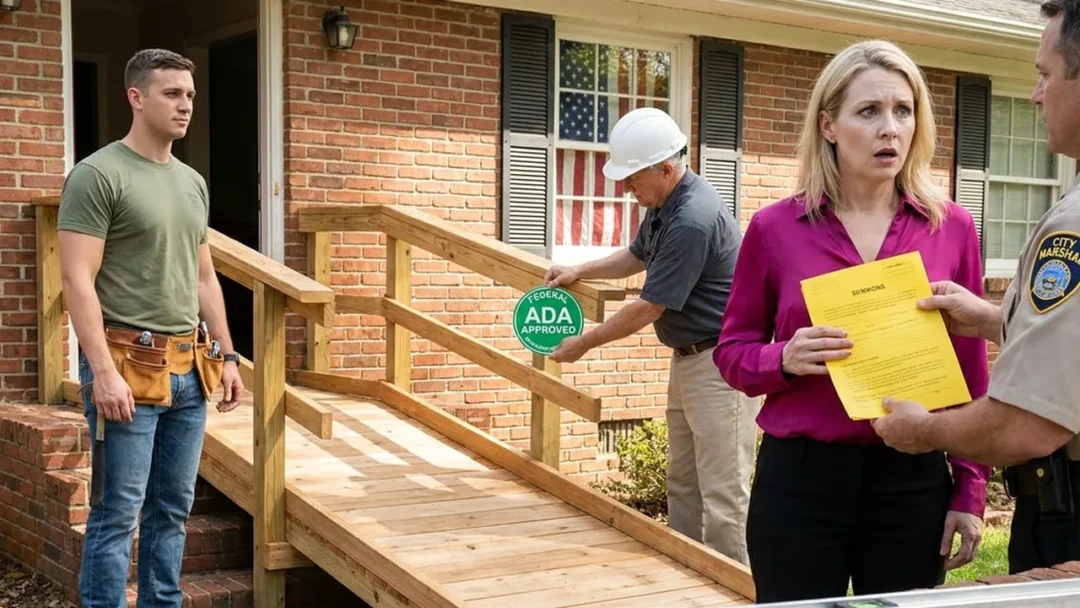
Gregory marched up the brick walkway, stopping directly in front of the cedar post where the green federal approval sticker was displayed. Gregory sneered at the green seal with supreme, arrogant disdain.
“You think you’re clever, don’t you, kid?” Gregory hissed, his voice low, venomous, and threatening. “You got some washed-up county bureaucrat to slap a green sticker on your scrap lumber and embarrass my wife in front of the neighborhood? You have no concept of who you’re dealing with.”
Gregory slapped the leather portfolio against the cedar rail.
“Inside this file is an emergency notice of special assessment and municipal setback violation. Your property sits on a corner lot governed by the Briarwood Glen Master Development Declaration. Under Section 19 of our covenants, any exterior structural addition extending beyond the established front building setback line is subject to an immediate daily fine of five hundred dollars, plus a mandatory twenty-five-thousand-dollar architectural restoration deposit.”
Gregory stepped closer, tapping the wood with a heavy gold signet ring.
“I have already filed an administrative notice of lis pendens with the Gwinnett County Superior Court. If this wooden eyesore is not completely dismantled and hauled away by noon tomorrow, the HOA will place an immediate statutory lien on your home deed. And by the end of next month, my private equity syndicate will foreclose on your mortgage and buy this lot on the courthouse steps for fifty cents on the dollar.”
Lucas looked at Gregory with steady, unwavering eyes. “This home is paid for in full, Mr. Sterling. My father bought this parcel with his military retirement savings. There is no mortgage to foreclose.”
Gregory laughed—a cold, cruel sound that lacked any trace of warmth.
“There doesn’t have to be a mortgage, you ignorant mechanic. In Georgia, an unpaid HOA priority lien takes legal precedence over an unencumbered deed. I don’t need a bank to foreclose on you; I can do it through the association. I have three corporate law firms on retainer in Buckhead. I have dinner with the presiding county commissioners every Thursday. I can keep this parcel tied up in administrative litigation until you’re bankrupt and your paralyzed father is sleeping in a county shelter.”
Gregory pointed a manicured finger toward the bay window where David Mercer’s shadow box rested.
“You want to save your family’s home, Lucas? Here’s your only exit: sign over the corner three-quarters of an acre to Sterling Land Development for seventy-five thousand dollars. I need this corner parcel to build the private security gatehouse and private clubhouse expansion for our new gated enclave. You sell me the frontage, and I will personally cancel Pamela’s ten-thousand-dollar fine, waive all HOA violations, and let you keep your little bungalow. You refuse, and I will wipe your family off this street.”
Lucas didn’t blink. He took a single step down the cedar ramp, his lean combat-engineer frame radiating quiet, lethal resolve.
“Mr. Sterling,” Lucas said softly. “My father held a bridgehead against eighty insurgent fighters with a broken femur and an empty rifle. He didn’t surrender to men with machine guns, and he certainly isn’t surrendering his front porch to a bloated suburban crook in alligator shoes.”
Lucas pointed to the end of the driveway. “Get off my property before I have Marshal Vance arrest you for felony criminal intimidation.”
Gregory’s face twisted into an expression of pure, murderous hatred. He shoved the leather portfolio back under his arm, stepping backward down the walkway.
“You just signed your own eviction notice, Mercer,” The history of Briarwood Glen was rooted in generational hard work. Many of the original homeowners had purchased their lots when the surrounding county was still rural farmland, cultivating vegetable gardens and raising families in quiet modest homes. When commercial developers began paving over the surrounding pastures with gated luxury subdivisions, they sought to erase the community’s working-class heritage through hyper-restrictive architectural rules designed to price out or drive away the original residents. Lucas remembered his father sitting on this very porch, telling him that a home was more than square footage or architectural veneer—it was the sanctuary of a family’s honor.
Gregory snarled, stepping into his Range Rover. “Enjoy your little ramp tonight. Because by sunrise, you won’t have a single plank left standing!”