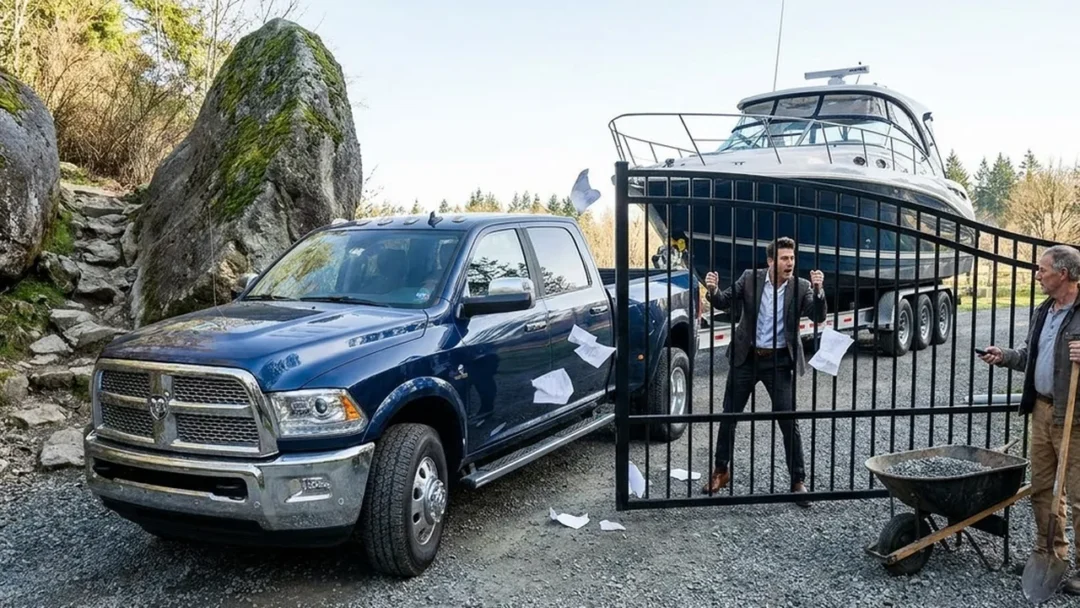
The Heavy Iron Gate Across The Lake Mountain Switchback Road
CHAPTER 1: THE FOUR-HUNDRED-DOLLAR LINE
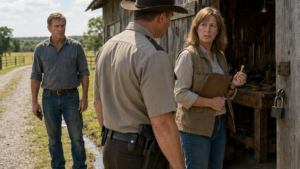
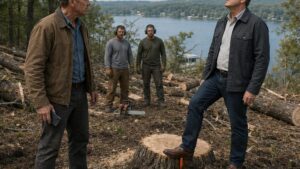
The early morning sun rose over the jagged crest of the Cabinet Mountains, setting the deep glacial waters of Lake Pend Oreille ablaze in shimmering cobalt and gold. Five hundred feet above the shoreline, on a narrow granite shelf carved into the cliff face, the scent of crushed pine needles, damp granite dust, and curing diesel exhaust hung thick in the cool mountain air. Sean Callahan stood on the newly resurfaced asphalt apron of his private driveway, leaning on the ash handle of a square-point gravel shovel beside a heavy steel wheelbarrow filled with three-quarter-inch crushed basalt. At fifty-six, Sean carried the broad shoulders and deliberate, unhurried cadence of a master timberwright who had built his own cedar-and-stone lodge thirty years ago with an antique broadaxe and a four-wheel-drive backhoe.
Across the asphalt sat the fork in the mountain road. To the right lay Sean’s private paved drive—a ten-foot-wide ribbon of smooth, engineered blacktop with concrete retaining curbs that curved gently down through the firs toward the county highway. To the left lay the original 1954 deeded access easement—a brutally steep, unpaved eight-foot-wide goat trail of loose shale, exposed granite ledges, and jagged roots that climbed between two towering boulders.
Resting on Sean’s side of the fork was a twelve-foot automated sliding gate made of heavy four-inch rectangular steel tubing, flanked by reinforced concrete pillars clad in local river rock. A bright brass plaque was bolted to the driver’s-side pillar: PRIVATE DRIVEWAY — ACCESS BY REVOCABLE PERMISSION ONLY.
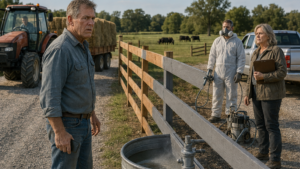
Idling across the entrance was a brand-new, six-door customized Ford F-450 Super Duty Dually, painted in metallic tuxedo black. Hooked to its heavy-duty pintle hitch was a thirty-six-foot triple-axle aluminum trailer carrying an enormous, brand-new Formula 350 Sun Sport cabin-cruiser with twin four-hundred-horsepower Mercury Verado outboards. The boat’s fiberglass radar arch cleared the low-hanging fir boughs by four inches; its overall towing weight exceeded sixteen thousand pounds.
Standing beside the driver’s door was Chad Hollister.
Hollister was thirty-eight, wearing mirrored designer sunglasses, pristine white deck shoes without socks, tailored khaki shorts, and a navy-blue technical polo shirt with the logo of a Seattle venture capital firm. He held a high-caffeinated energy drink in one hand, looking at Sean’s wheelbarrow with thin-lipped, impatient condescension.
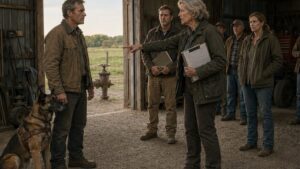
“Hey, Callahan,” Hollister barked, checking his gold Rolex with an ostentatious flick of his wrist. “Move that wheelbarrow and open the gate. I’ve got a prospective buyer meeting me down at the Hope Marina at nine o’clock sharp. If I miss that boat launch, I lose a three-hundred-thousand-dollar cash deposit.”
Sean did not rush. He set his shovel down against the wheelbarrow, reached into his flannel shirt pocket, and pulled out a clean, typed one-page document.
“Morning, Chad,” Sean said, his voice deep and measured as a church bell. “Before you haul that sixteen-ton rig down my blacktop again, we need to settle this. It’s the annual private driveway maintenance invoice. Four hundred dollars. Covers your five-percent share of the asphalt slurry seal and the snowplow service for the winter season.”
Hollister stared at the paper as if Sean had handed him a dead fish. He let out a loud, contemptuous snort that echoed off the granite cliffs.
“Four hundred dollars?” Hollister sneered, snatching the paper from Sean’s hand. “Are you out of your mind, old man? I just closed on my four-million-dollar vacation lodge up on the ridge last month. I pay sixty thousand dollars a year in Bonner County property taxes. I don’t pay subscription fees to mountain locals to drive down a paved road. It’s an access road, Callahan. You maintain it because you live here, and I use it because it’s the only way to get my boat down to the lake without scratching my gelcoat.”
“The road through the trees is my private driveway, Chad,” Sean replied evenly, pointing his calloused thumb toward the brass plaque on the stone pillar. “I bought the asphalt, I poured the curbs, and I pay the commercial liability insurance on the blacktop. Your property title holds a recorded 1954 utility easement down the old logging trail between the boulders. You signed a revocable temporary license agreement with me in July promising to pay your maintenance share in exchange for using my paved surface.”
Hollister laughed—a harsh, mocking sound. He held the invoice up before Sean’s eyes, gripped the edges with both hands, and ripped the paper in two.
He folded the halves, ripped them across again, and flung the white confetti into the damp mountain breeze.
Then, with a deliberate sneer, Hollister brought his heavy deck shoe back and kicked the steel tray of Sean’s wheelbarrow.
The wheelbarrow pitched over onto its side with a hollow, metallic clatter, spilling two hundred pounds of crushed blue basalt across Sean’s clean lawn and driveway.
“There’s your four hundred dollars, hillbilly,” Hollister snarled, turning toward his truck door. “Open the gate right now, or I’ll push it open with my steel brush guard.”
Sean looked down at the spilled gravel. His weathered face remained as still as the granite bedrock beneath his boots.
He reached into his pocket, retrieved a small black three-button remote control, and pressed the red toggle.