The Judge In Navy Wool And The Courthouse Parking Lot
CHAPTER 3: THE SANCTUARY OF COURTROOM 4A
The double mahogany doors of Courtroom 4A swung open with a muffled hydraulic hiss, admitting the quiet, sacred dignity of federal justice. Inside, the chamber was a cathedral of dark American walnut paneling, hand-rubbed brass railings, and soaring twenty-four-foot coffered ceilings lit by recessed warm floodlights that banished the freezing sleet of Arch Street. High behind the elevated judicial bench, flanked by the gold-fringed American flag and the Commonwealth standard, hung the Great Seal of the United States—its bronze eagle clutching olive branches and arrows in sharp relief against the rich wood grain.
Chief Judge Evelyn Sterling sat behind the bench, now cloaked in her full black silk judicial robes. The plain navy trench coat was gone, replaced by the ancient vestment of constitutional authority. Her reading glasses rested on the bridge of her nose, her eyes scanning an eighty-page federal presentment. Her movements were deliberate, precise, and devoid of theatricality.
To her right, seated at the clerk’s computer console, the courtroom deputy entered docket entries with steady, rhythmic keystrokes. In the oak jury box sat sixteen citizens—a cross-section of Philadelphia, ranging from postal carriers and transit mechanics to university professors—looking solemn, attentive, and fully aware of the gravity of the morning’s business.
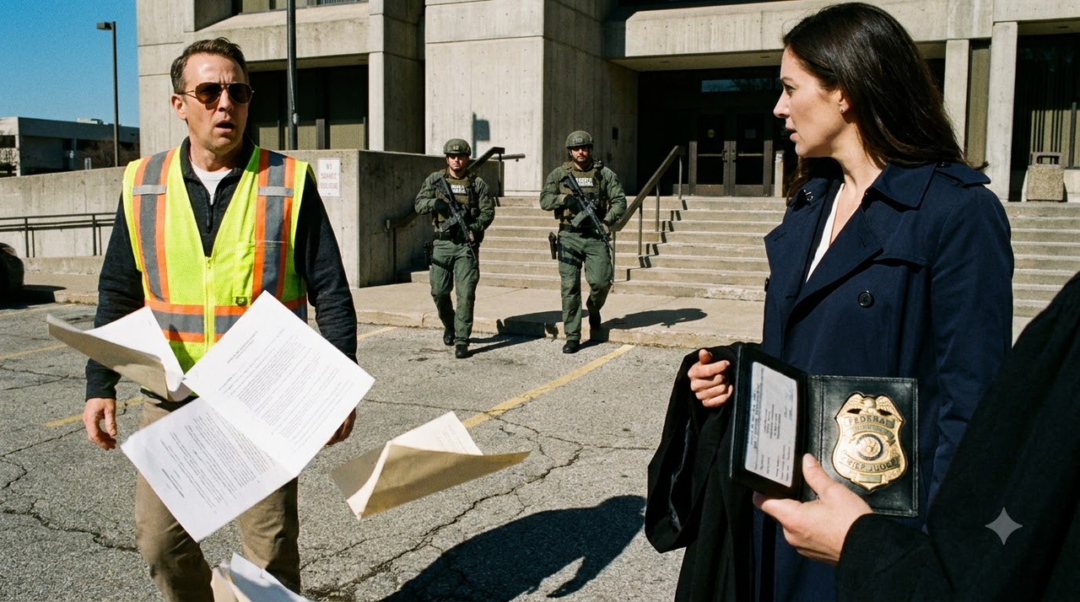
Seated at the defense table, handcuffed to a heavy steel security eyelet welded into the carpeted floor, was Gary Vane. He was still wearing his lime-green enforcement vest, but his mirrored aviators had been stripped away, revealing hollow, bloodshot eyes that stared blankly at the polished walnut table. Beside him sat an emergency federal public defender, Leonard Ross, who was frantically reviewing a freshly printed stack of charging documents with visible dread.
At the prosecution table stood Assistant United States Attorney David Vance, a thirty-six-year-old federal prosecutor with an immaculate charcoal three-piece suit, steel-rimmed glasses, and a reputation for dismantling white-collar syndicates with surgical precision.
“May it please the court,” Vance began, stepping to the wooden lectern in the center of the well. “The United States moves to unseal Indictment Twenty-Four-CR-Eight-Eighty-Two, charging fourteen individuals with conspiracy to commit Hobbs Act extortion, honest services wire fraud, and witness tampering under Title Eighteen of the United States Code.”
Judge Sterling looked down from the bench, her gaze resting squarely on the hunched form of Gary Vane. “Counsel, place the primary factual findings on the record.”
“Your Honor,” Vance stated, lifting a thick evidentiary binder bound with blue municipal seal tape. “For the past eighteen months, the defendants operated an illicit commercial enterprise known internally among city tow contractors as the ‘Hook Protocol.’ Utilizing municipal parking authority credentials and private towing contracts granted exclusively to Apex Towing and Recovery, the defendants systematically targeted citizens who lacked the financial or legal resources to contest fraudulent citations.”
Vance turned, pointing a clean, unyielding finger directly at Vane.
“Defendant Gary Vane served as the field coordinator for this syndicate. Operating under color of municipal law, Vane dispatched private tow rigs to seize legally parked commuter vehicles before statutory grace periods elapsed. He demanded immediate cash payoffs ranging from four to six hundred dollars on the roadside. If a victim protested or attempted to photograph the tow truck, Vane utilized his municipal radio to place false calls to city police dispatch reporting violent assaults, ensuring the citizen was detained on the street while their vehicle was hauled to the private impound compound on Delaware Avenue.”
A murmur of quiet, visceral fury rippled through the spectators seated in the rear gallery—over fifty local citizens who had traveled to the courthouse after receiving federal victim notification subpoenas. Among them sat nurses, delivery drivers, and elderly retirees whose lives had been thrown into chaos by Vane’s predatory shakedowns.
“Furthermore,” Vance continued, his voice hardening like tempered steel, “as discovered less than an hour ago on the asphalt outside this very building, Defendant Vane actively stalked members of the federal grand jury empaneled in this building. His personal notebook contains the license plate numbers and home addresses of jurors, which were cross-referenced with city registry databases to execute targeted vehicle seizures in an explicit effort to intimidate this grand jury into abandoning its inquiry.”
Public Defender Leonard Ross leaned toward his table microphone, his voice wavering slightly. “Your Honor… my client maintains that he was operating under administrative directives issued by his municipal superiors. He contends that he had no knowledge of any broader criminal enterprise.”
Judge Sterling leaned forward, resting her forearms on the polished mahogany bench. The courtroom fell into a silence so profound that the faint hum of the building’s ventilation system sounded like an ocean wave breaking on shore.
“Mr. Vane,” Judge Sterling said, her voice dropping into a low, resonant register that commanded the room. “An administrative directive does not authorize a public servant to throw justice into the mud. It does not give a man with a badge the right to assault citizens, steal their property, and terrorize their families under the cover of an orange sticker.”
She looked up at Supervisory Deputy Marshal Marcus Cole, who stood at parade rest beside the prisoner’s box.
“Marshal Cole, what is the status of the secondary target locations?”
Cole stepped forward, his leather boots clicking crisply on the carpet. “Your Honor, FBI tactical squads and deputy marshals are currently staged outside the Apex Towing impound facility on Delaware Avenue and the executive offices of the Philadelphia Parking Authority. We are awaiting the court’s authorization to execute federal search and seizure warrants.”
Judge Sterling picked up her heavy rosewood gavel. The polished wood caught the warm courtroom lights, steady and balanced in her hand.
“The court finds that probable cause exists to believe an ongoing criminal enterprise is actively destroying evidence of federal civil rights violations,” Judge Sterling declared. “The warrants are issued forthwith. Marshal Cole, authorize the tactical breach.”