The Midnight Camera In The Cedar Screen And The Dumped Bag
CHAPTER 3: THE TRAIL ACROSS THE CUL-DE-SAC
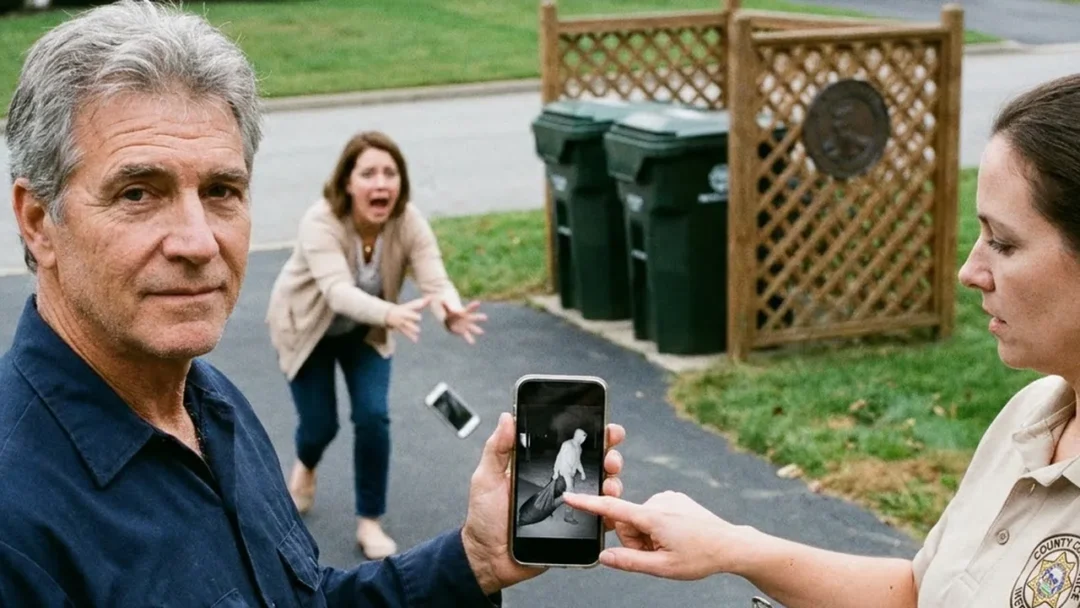
David and Officer Gonzalez crossed the asphalt together, following the chemical drip trail with slow, deliberate steps. Each step documented another bleached ring where the caustic methylene chloride had stripped the petroleum emulsion from the township road.
Evelyn scurried ahead of them, her breathing ragged, her eyes wide with mounting panic. She reached her concrete driveway apron, turned around, and spread her arms wide, blocking the walkway leading to her three-car attached garage.
“Stop right there!” Evelyn yelled, her voice trembling between rage and terror. “You are on private property! I am ordering you off my driveway! Maria, you are a county employee, and I will have you fired by the township commissioners before lunch! My brother-in-law is the vice chairman of the zoning board!”
Maria didn’t even blink. She unclipped her heavy county badge from her belt and held it steady at eye level. “Mrs. Vance, under Section 602 of the Pennsylvania Environmental Protection Code, an environmental enforcement officer possessing probable cause of an active, ongoing hazardous chemical discharge possesses immediate statutory right of administrative inspection across any contiguous property line. That chemical trail is currently evaporating volatile organic compounds into the public air. Step aside, or I will have Lower Merion Police place you in cuffs for obstruction of justice.”
Evelyn’s mouth opened and closed soundlessly, like a landed fish. Seeing the cold, unyielding resolve in the officer’s posture, she slowly lowered her arms and backed away toward the front porch steps, clutching her arms around her chest.
David walked past her without a word, his eyes fixed on the pavement. The drip trail was thicker here, pooling near the weatherstripping of the eastern garage bay door. Beside the door frame stood a large, five-gallon plastic spigot bucket marked with a handwritten label in faded black grease pencil: DISPOSAL SLUDGE – DO NOT DUMP IN SINK.
David looked up at the frosted glass window set into the top panel of the garage door. The morning sunlight was striking the glass at an acute angle, illuminating the interior shadows of the workshop bay.
“Maria, take a look through the glass,” David said, pointing toward the illuminated interior.
Maria stepped up to the window, cupped her gloved hands around her eyes to block the external reflection, and peered into the garage. Her eyes widened.
Inside the garage, the space had been stripped of any family vehicles. Instead, the entire two-car bay had been converted into an unlicensed commercial staging facility. Stacks of heavy-duty black contractor bags were piled four feet high against the interior drywall, numbering at least thirty distinct bundles. Lying on a metal work table near the center of the concrete floor was a large roll of bright yellow adhesive stickers.
David leaned in beside her. His sharp eyes immediately recognized the distinctive black-and-yellow skull-and-crossbones hazard emblem printed on the discarded backing paper. “Look at the tabletop, Maria. Those are commercial hazardous waste identification labels. The ones certified asbestos abatement contractors are required by federal law to paste onto every bag before transporting them to a licensed hazardous waste landfill in Fairless Hills.”
“They’re peeling them off,” Maria whispered, her voice tight with cold disgust. “They’re bagging commercial asbestos tiles and toxic stripper in licensed abatement bags, peeling off the warning labels, stuffing them inside regular sixty-gallon municipal trash bags, and sneaking them out a few bags at a time to avoid paying commercial tipping fees.”
“Not just tipping fees,” David said grimly. “Licensed hazardous waste disposal costs one hundred and eighty dollars a ton, plus a four-hundred-dollar manifest processing fee per truckload. If you have thirty bags of friable asbestos and caustic sludge, a certified hazmat disposal company will charge you three thousand dollars to haul and incinerate it properly. But if you dump it into your neighbors’ free residential trash pickup, it costs you nothing—while exposing the municipal sanitation workers on the back of the garbage truck to lethal asbestos fibers when the compactor blade crushes the bag.”
From the porch steps, Evelyn let out a shrill, hysterical laugh. “You don’t know what you’re talking about! Bradley is an independent licensed contractor! He has every right to store building materials on our personal property! We are remodeling our own home!”
Before David could answer, the deep, rumbling growl of an eight-cylinder diesel engine broke the quiet stillness of the cul-de-sac. A heavy, white Ford F-350 dual-rear-wheel flatbed truck rounded the corner of Whispering Willows Drive. The truck had no company logos on its doors, no commercial DOT registration numbers on its quarter panels, and its rear license plate was bent upward, partially obscured by a coating of dried gray concrete splatter.
The flatbed of the truck was loaded with fifteen large black contractor bags, wrapped tight with heavy gray duct tape. Behind the wheel sat a thick-necked, twenty-six-year-old man in a grease-stained gray hoodie and polarized sunglasses.
When the young man saw the county inspection vehicle, the uniformed compliance officer, and his mother standing trembling on the porch steps, his foot slammed on the brake. The heavy truck lurched to a halt forty feet away, its diesel engine clattering loudly in the morning air.