The Poisoned Heritage Oak Tree Along The Suburban Boundary Driveway
CHAPTER 5: THE HERITAGE LEDGER
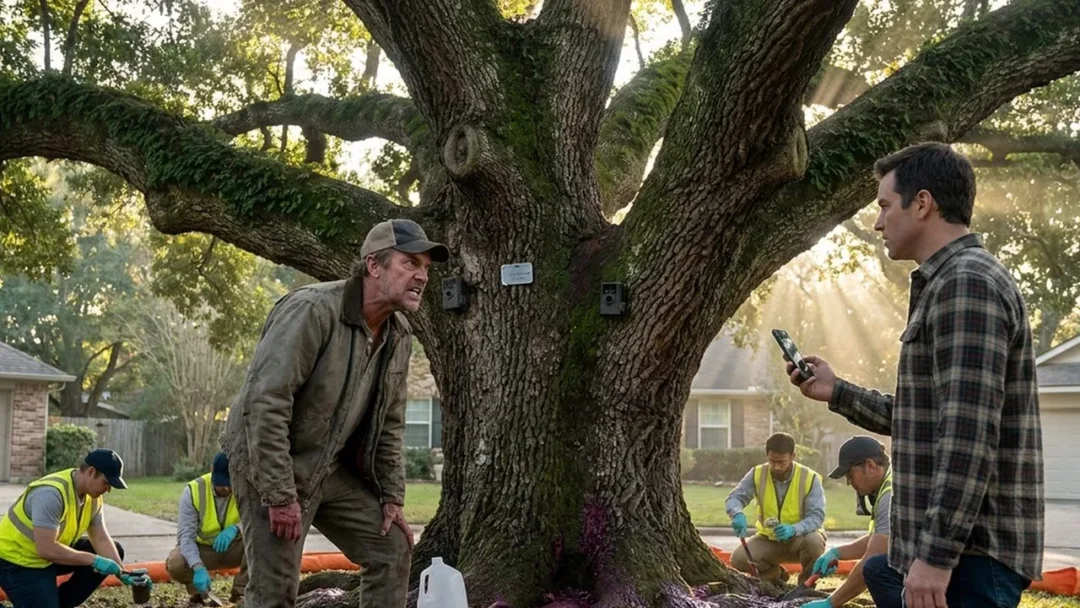
Dr. Evelyn Reed unlocked her digital appraisal workstation, pulling up the certified Trunk Formula Method worksheet utilized by certified forensic arborists across North America. Dennis Vance watched with mounting horror as Dr. Reed methodically input the biometric measurements of the towering white oak into the actuarial appraisal algorithm.
“Let me educate you on the legal mathematics of tree appraisal, Mr. Vance,” Dr. Reed said, stepping toward the boundary flags with her tablet in hand. “A replacement sapling from a local nursery costs approximately three hundred dollars. However, when an established, mature hardwood specimen cannot be replaced by standard nursery stock due to its monumental size, the law mandates the Trunk Formula Method to establish its true physical and economic value.”
She turned the high-resolution tablet screen toward Dennis, displaying the breakdown of figures:
“First, we calculate the basic trunk area: two thousand three hundred and seventy-five square inches of cross-sectional heartwood and sapwood,” Dr. Reed explained calmly. “At the standard unit cost of sixty-eight dollars per square inch established by the Mid-Atlantic Chapter of the International Society of Arboriculture, the basic functional replacement cost of this specimen starts at one hundred and sixty-one thousand dollars.”
Dennis gasped, his knees visibly buckling beneath him. “One hundred and sixty… that’s impossible! That’s insane! That’s more than my entire retirement account!”
“We then apply the species factor,” Dr. Reed continued, completely ignoring his outburst. “Quercus alba—Northern White Oak—is a keystone hardwood with a ninety-percent rating for longevity and hardiness. We apply the condition factor: prior to your chemical application, this specimen had zero cavity decay, zero fungal fruiting bodies, and perfect crown symmetry, earning a ninety-five percent structural condition rating. Finally, we apply the location rating: an eighty-five percent score based on its landmark status, environmental stormwater retention value, and historic heritage designation.
“Furthermore, we incorporate the documented functional ecosystem benefits of this specific living organism,” Dr. Reed added, tapping the screen to bring up calibrated botanical models. “This mature white oak intercepts over four thousand two hundred gallons of stormwater runoff annually, preventing severe hillside sediment erosion into the Brandywine Creek watershed basin. Over its century and a half of life, it has sequestered more than two and a half tons of atmospheric carbon, while its massive transpiration rate lowers local ambient summer temperatures across these two parcels by four point five degrees Fahrenheit. Under the Pennsylvania Department of Conservation and Natural Resources landmark protocol, these ecological services are capitalized directly into the statutory valuation ledger.”
Dr. Reed tapped the calculate button. A final bold figure appeared in bright crimson digits at the bottom of the certified report:
CERTIFIED APPRAISED SPECIMEN REPLACEMENT VALUE: $84,200.00.
“Intentional poisoning is documented,” Dr. Evelyn Reed announced, looking directly at Dennis with utter, uncompromising finality. “This tree’s replacement appraisal exceeds eighty thousand dollars.”
Dennis Vance stared at the glowing red numbers on the tablet screen, his breath catching in his throat as if all the oxygen had been sucked out of the yard. “Eighty… eighty-four thousand dollars? For a tree? You’re lying! No judge in Pennsylvania would ever enforce a ridiculous number like that!”
“Under Pennsylvania Consolidated Statutes Title 42, Section 8311,” Arthur Pendelton interjected calmly, his hands resting easily in his fleece pockets, “any person who willfully, knowingly, and intentionally trespasses upon the land of another and damages, destroys, or converts timber or trees is legally liable for statutory treble damages—three times the appraised value of the timber, plus all forensic investigation costs, legal fees, and full environmental site remediation.”
“Three times eighty-four thousand…?” Dennis whispered, his voice cracking into a horrified whimper as he did the terrifying mental arithmetic. “That’s… that’s over two hundred and fifty thousand dollars!”
Before Dennis could recover from the crushing weight of the figure, a marked dark-green Ford F-250 pickup truck bearing the gold badge of the Chester County Environmental Conservation & Agricultural Protection Division rolled quietly to a halt along the curb, its amber roof strobes flashing.