The Poisoned Heritage Oak Tree Along The Suburban Boundary Driveway
CHAPTER 4: THE RAPID EXTRACTION
The specialized environmental van backed smoothly down Arthur’s driveway, coming to a halt fifteen feet from the majestic white oak. The dual rear cargo doors swung open immediately, and two technicians stepped onto the grass wearing chemical-resistant Tyvek suits, heavy nitrile gloves, and industrial organic vapor respirators.
Leading the response team was Dr. Evelyn Reed, a forty-eight-year-old board-certified master consulting arborist with a doctorate in plant pathology from Penn State and twenty years of experience in municipal forensic tree appraisal. Behind her was Tyler Collins, a certified hazardous materials soil remediation technician carrying an array of stainless-steel core samplers, airtight sample jars, and digital pH probes.
Arthur walked over to greet them, keeping his distance from the contaminated root flare. “Good morning, Evelyn. Thank you for making it here so quickly.”
“We were staging three miles away in West Chester when your automated priority alert hit our system, Arthur,” Dr. Reed said, her voice clear and authoritative behind her protective mask. “Where is the primary discharge zone?”
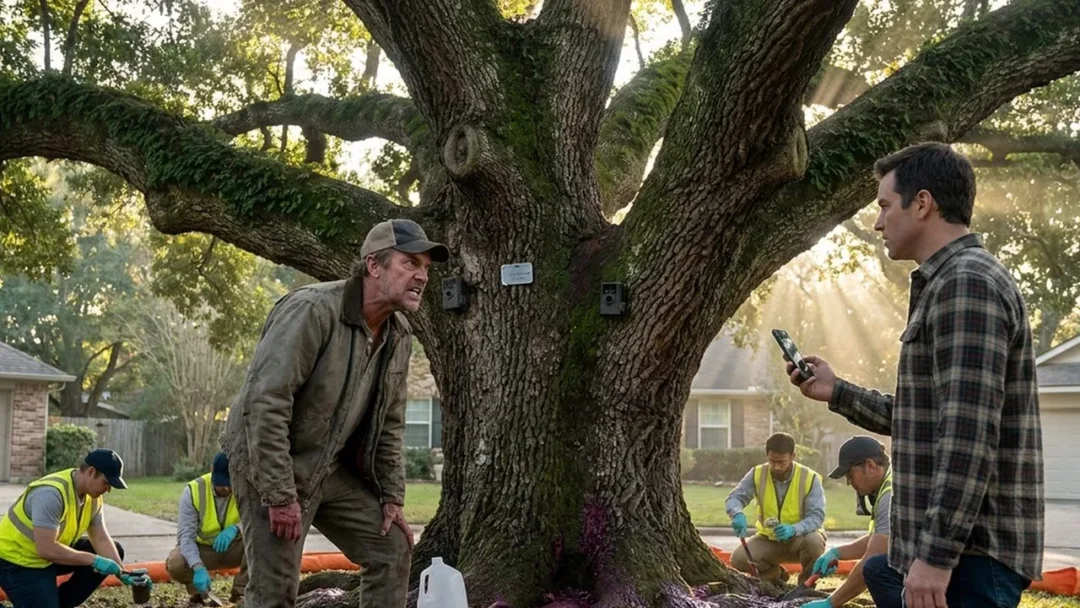
Arthur pointed toward the purple puddle glistening along the southern root flare and the discarded white container resting beside the limestone border.
Dr. Reed immediately walked toward the root zone, pulling a high-powered forensic flashlight from her tactical vest. She inspected the purple foam bubbling over the moss, then turned her light onto the empty container.
“Garlon 4 Ultra,” Dr. Reed read aloud, her brow furrowing with clinical disgust. “Triclopyr butoxyethyl ester, sixty-one point six percent active ingredient. A heavy agricultural defoliant designed to eradicate woody brush and broadleaf timber. Discharging this concentration directly over an exposed root flare without an agricultural pesticide applicator’s license is a direct violation of federal FIFRA regulations and Pennsylvania state environmental protection statutes.”
Tyler Collins moved in swiftly with an evidence collection kit. Using sterile stainless-steel tongs, he placed the discarded chemical jug into a heavy-duty, tamper-evident hazardous materials evidence bag, sealing the top with tamper-proof red vinyl tape and signing the chain-of-custody log. He then knelt beside the root flare, using a calibrated glass pipette to extract ten milliliters of the pooling purple chemical, transferring the sample into an amber glass vial for forensic chromatography analysis.
On the other side of the property boundary, Dennis Vance stood frozen on his aggregate driveway, his mouth agape as he watched the hazmat-clad team work with military efficiency.
“What is this?” Dennis cried out, his voice trembling with disbelief. “Why were they waiting down the street? You set me up!”
“I did not set you up, Dennis,” Arthur said calmly. “After you screamed at my wife last Tuesday and swore you would poison this oak before the month was out, I retained GreenShield on an emergency standby retainer. I hoped your threats were merely empty anger. But because I understand the chemistry of systemic herbicides, I knew that if you carried out your threat, we would have less than ninety minutes to intercept the chemical before it penetrated the secondary xylem.”
Dr. Evelyn Reed stepped up to the massive trunk of the white oak. She pulled a brass magnifying loupe from her pocket and examined the silver heritage registry medallion pinned to the furrowed bark. She cross-referenced the engraved registration code on her ruggedized field tablet, tapping through the county’s official historic flora registry database.
“Specimen Number HO-1864,” Dr. Reed announced, her voice carrying clearly across the driveway to Dennis. “Certified Northern White Oak, planted circa 1864. Canopy spread: ninety-two feet. Trunk circumference: sixteen feet four inches. Overall structural vitality rating prior to contamination: ninety-six percent. This tree is an irreplaceable municipal heritage monument.”
Dennis scoffed loudly, attempting to muster a final shred of defiance. “It’s a common oak tree! There are thousands of them in the woods behind our houses! You can’t make a federal case out of a common yard tree!”
Dr. Reed turned slowly, pulling off her protective safety goggles to look Dennis directly in the eyes. Her gaze was as cold and sharp as a surgeon’s scalpel.
“Mr. Vance, this is not a common yard tree,” Dr. Reed said with icy precision. “Under the Council of Tree and Landscape Appraisers’ Ninth Edition Guide for Plant Appraisal, this tree is classified as a prime landmark specimen. And under Pennsylvania law, intentional destruction of registered heritage timber carries mandatory statutory civil replacement damages.”