They Fined His Farm for Every Small Violation Until He Opened the Cooperative’s Missing-Money Ledger
Chapter 1: Four Notices at the Cattle Gate
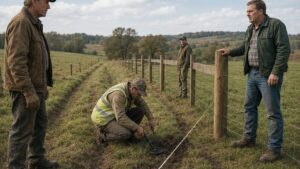
Debra Wilson was standing at Jonathan Miller’s cattle gate before the feed truck arrived.
She had parked her white pickup on the shoulder of the shared gravel lane, leaving just enough room for a car but not enough for the eighteen-wheeler Jonathan expected in less than ten minutes. One hand held a clipboard against her beige jacket. The other rested on the top rail of the gate as though she owned that too.
Jonathan slowed his tractor.
“Morning,” he said.
Debra did not return it.
“I need you to sign for this.”
She lifted a sheet from the clipboard.
Jonathan killed the tractor engine. The sudden quiet left only cattle shifting behind the fence and the distant grind of a truck changing gears on the county road.
“What is it now?”
“Fourth violation.”
“This week?”
“Since Monday.”
It was Monday.
Jonathan stared at her.
Debra corrected herself without embarrassment. “Fourth notice issued within the current seven-day period.”
“That sounds better?”
“It sounds accurate.”
He climbed down.
The notice cited two things: obstruction of the cooperative lane and improper operation of an access gate during restricted hours.
Jonathan looked past her at the gravel shoulder. His hay wagon sat six feet inside his own fence line.
“What obstruction?”
“The wagon tongue extended toward the easement yesterday.”
“Toward it?”
“Within the setback.”
“It never touched the road.”
“The rule doesn’t say it has to touch the road.”
Jonathan looked at her for a long second, then at the clipboard.
His father had always said there were two bad ways to handle a neighbor: shouting too soon and keeping score too long. Jonathan had spent most of his adult life trying to do neither.
He handed the notice back.
“I’ve got feed coming.”
“You still need to acknowledge receipt.”
“Acknowledging isn’t agreeing.”
“No one said it was.”
He signed.
Debra flipped to the second page.
Jonathan’s patience thinned. “There’s another?”
“The gate.”
“What about the gate?”
“You opened it before ten yesterday.”
He almost laughed.
“How early?”
Debra checked the sheet.
“Nine minutes.”
Jonathan waited for the rest.
There was no rest.
“Nine minutes early?”
“The Sunday equipment-access window begins at ten.”
“I opened the gate at nine fifty-one.”
“That is what the record shows.”
“My tractor was coming back from the south field.”
“The rule applies regardless.”
Jonathan stepped closer to the gate and wrapped his hand around the cold galvanized rail.
The south field had no separate road access. The cooperative lane was the only practical route between his barn and forty-two acres of hay ground. Everyone knew that. The rules had been written years earlier to prevent recreational traffic and contractors from rattling past houses before Sunday morning church hours.
Nobody had ever treated them as a stopwatch.
“Debra, the rule says machinery can enter the lane at ten. I opened my gate at nine fifty-one so I could be ready.”
“You operated the access point outside the window.”
“I didn’t enter the lane.”
“The gate was open.”
“So if I stand here at nine fifty-nine with my hand on the latch, am I in violation?”
“You’re making this difficult.”
“No. I’m asking what the rule means.”
“It means what it says.”
Jonathan folded the notice once, then stopped himself. He flattened it again.
The low diesel growl from the county road grew louder.
His feed delivery.
He nodded toward Debra’s pickup. “You need to move.”
“I’m not finished.”
“That truck weighs close to eighty thousand pounds loaded. He cannot back safely onto the county road from here.”
Debra looked toward the bend.
“Your deliveries are supposed to be scheduled.”
“They are.”
“With the cooperative?”
“With me. It’s my feed.”
“The lane is cooperative-maintained.”
“And it serves my farm.”
The truck appeared around the bend.
Jonathan could see the driver slowing.
Debra finally turned toward her pickup.
Before moving, she said, “Another violation can trigger a review of your lane-use privileges.”
Jonathan stopped.
“What does that mean?”
“It means the board can impose conditions.”
“On access to my fields?”
“On use of cooperative property.”
The truck’s air brakes hissed fifty yards away.
Jonathan kept his voice low.
“You’re talking about the only road to half my acreage.”
“I’m telling you what the bylaws allow.”
Then Debra got into her pickup and moved it.
The feed truck rolled through five minutes later.
Jonathan stood beside the gate while the tires cracked over the gravel. The driver lifted two fingers in greeting, unaware that Jonathan had just been warned his access to the same lane might be restricted because a gate had swung open nine minutes too early.
By noon, Jonathan had clipped the fourth notice to the board beside his desk.
The first had been for leaving an empty mineral tub beside a loading area overnight.
The second concerned mud tracked onto the shared lane after rain.
The third was for a drainage ditch Debra said had not been cleared deeply enough along twenty feet of frontage.
He had paid the first two.
That bothered him more now than the amounts themselves.
The cooperative charged an administrative fee to contest each citation. By the time a member paid the filing charge, missed work for the review, and risked late penalties if the appeal failed, most people simply wrote a check.
Jonathan had done exactly that.
Keep the peace.
His father’s rule.
He opened his farm ledger to record the feed invoice.
The four cooperative notices sat clipped above it like yellow flags.
He entered the delivery amount, closed the ledger, then opened it again.
Something about Debra’s threat stayed with him.
Not the fine.
The lane.
For thirty years, nobody had questioned whether Miller Farm could use that road. Jonathan’s father had helped gravel the first version of it. Jonathan himself had replaced a washed-out section with his own loader fifteen years earlier.
Now access had become something Debra spoke about as though it were permission that could be withdrawn.
Late that afternoon, Jonathan drove toward the orchard to return a borrowed fruit bin to Rebecca Green.
She was standing beside her irrigation pump when he pulled in.
“You look cheerful,” she said.
“I’ve had better Mondays.”
Rebecca took one look at the folded paper on his passenger seat.
“Another one?”
Jonathan turned toward her. “You know about them?”
She hesitated.
That hesitation told him more than an answer.
“How many did you get?”
Rebecca wiped her hands on her jeans.
“Two.”
“This week?”
“One for pallets near the turnout. One for weeds along the ditch.”
“Your ditch is cleaner than mine.”
“That isn’t saying much.”
He almost smiled, but Rebecca did not.
She looked toward the road before lowering her voice.
“I paid them.”
Jonathan felt something in him shift.
Not relief.
Not vindication.
Something colder.
“Anybody else?”
Rebecca shrugged. “I heard the grain place got one. Maybe two.”
“Why didn’t anybody say anything?”
She gave him a tired look.
“Because we still need the road.”
Jonathan looked back toward the cooperative lane running between the fields.
For the first time, the four notices did not look like four arguments between him and Debra.
They looked like part of something larger.
Chapter 2: The Road Fund That Did Not Add Up
Two nights later, Jonathan found a number that should not have existed.
He was at the old oak desk in the farmhouse office with the cooperative’s annual statement on one side and last year’s report on the other. He had opened the documents only because he wanted to know whether increased enforcement had anything to do with maintenance costs.
Instead, he kept coming back to the same line.
Road and Water Maintenance Reserve.
Last year’s ending balance had been a little over three hundred fifty thousand dollars.
This year’s opening figures should have reflected that.
They did not.
Jonathan reached for a pencil.
He had spent eleven years working agricultural loans before returning to the farm full-time. Back then, most mistakes had been ordinary: a fertilizer expense entered twice, a machinery payment posted in the wrong month, a farmer estimating cattle inventory from memory instead of counting.
Bad numbers did not always mean bad people.
That lesson had kept him from accusing anyone for two nights.
It was also why he knew these numbers deserved another look.
He started from the beginning.
Member dues.
Road assessments.
Water fees.
Equipment reimbursements.
Insurance.
Routine grading.
Culvert work.
He followed each column with the eraser end of the pencil.
The reserve now stood near two hundred forty thousand dollars.
Jonathan turned back to the previous report.
He checked the carryover.
Then again.
He found roughly sixteen thousand dollars in road resurfacing that made sense. Another nine thousand had gone toward pump maintenance. Smaller charges accounted for gravel, herbicide application, easement insurance, and administrative costs.
Even giving the cooperative generous room for expenses grouped under vague categories, the decline was far larger than the visible work suggested.
Jonathan took out a legal pad.
He wrote one number.
112,000.
Then he circled it.
He sat back.
That did not mean one hundred twelve thousand dollars had been stolen. It meant he could not see, from the statements in front of him, where approximately that amount had gone.
There was a difference.
A large one.
He went to the kitchen, poured coffee he did not need, and returned to the desk.
At the top of the annual statement, Debra’s chairwoman’s message described the cooperative as financially stable.
Jonathan read the sentence three times.
He began opening the supplemental pages.
The first maintenance invoice was ordinary enough: roadside grading, ditch clearing, gravel delivery.
The second used broader language.
Emergency access improvement.
No location.
No equipment hours.
No material quantities.
The third described storm restoration.
Jonathan frowned.
He remembered one heavy storm in spring. A maple had come down across the north stretch of the lane, and water had washed gravel into the lower ditch. He had driven that section the following afternoon.
There had been damage.
But not enough, as far as he remembered, to explain the amount billed.
He wrote another note.
Then a fourth invoice stopped him.
It was from a contractor whose name he did not recognize.
The description read: culvert stabilization and water-channel remediation.
Jonathan pictured every major culvert on the cooperative road.
One near Rebecca’s orchard had been patched the previous year.
The crossing below Brian Jackson’s grain fields had needed stone around the headwall.
There had been talk about replacing another, but Jonathan could not remember seeing fresh pipe, concrete, or excavation.
He flipped forward.
The same contractor appeared again.
Different description.
Roadway emergency support.
Then again.
Drainage rehabilitation.
Jonathan placed three fingers on the three lines.
The amounts were not identical, but they were close enough to make him uneasy.
He pulled the four violation notices from the clip above the desk and laid them beside the statement.
The fees were modest compared with the reserve discrepancy.
Still, he thought about Rebecca paying two without argument.
The grain place getting cited.
His own administrative appeal charges.
For years the cooperative had treated violations as corrective tools. A warning first. A call. Maybe a letter if somebody ignored the problem.
Now fines appeared immediately.
He opened the bylaws.
Penalty revenue went into the general maintenance account.
Jonathan stared at that sentence.
There it was.
Not proof.
A connection.
If the cooperative was short on operating cash, fines were one way to bring money in without calling a formal assessment.
He wrote:
When did enforcement increase?
Then:
Who authorized?
Then:
Where did reserve go?
His phone buzzed on the desk.
Rebecca.
He answered.
“You working?”
“Unfortunately.”
She gave a dry laugh. “Debra came by again.”
Jonathan straightened.
“What now?”
“She says my orchard bins are narrowing emergency access.”
“Are they?”
“No.”
“Did she measure?”
“She looked.”
Jonathan pinched the bridge of his nose.
“Another fine?”
“Warning this time.”
“Why just a warning?”
“That’s what I was wondering.”
He looked down at the annual statement.
“Rebecca, do you still have last year’s cooperative packet?”
“Probably.”
“Don’t throw anything out.”
There was a pause.
“What are you doing?”
“Reading.”
“That sounds dangerous.”
“It might be.”
After the call, Jonathan returned to the invoices.
He searched for contractor details in the annual report.
No phone number.
No itemized work sheet.
Only a mailing line on one payment summary and a short vendor name.
He checked the amount again.
Then the next one.
Then the third.
The contractor had received three payments under three descriptions over seven months.
Jonathan added them.
The total was large enough that proper supporting records should have existed.
He knew that because he had once required farmers to provide more documentation than this for machinery loans worth less.
He leaned back and listened to the house.
The refrigerator hummed in the kitchen. Somewhere outside, cattle bumped the metal feeder.
The anger from Monday had disappeared.
In its place came the old concentration he remembered from loan reviews: the uncomfortable feeling that numbers were trying to tell him something before he understood the language.
He opened a fresh page in the legal pad.
At the top, he wrote the contractor name exactly as it appeared on the first invoice.
Then he copied the second version.
One word had been abbreviated differently.
The third payment used a slightly altered business description.
Jonathan compared them.
Same mailing line.
Same payment destination.
Three entries made to look, at a glance, like three slightly different services.
He drew a line beneath them.
The question was no longer only why Debra had become obsessed with nine-minute gate violations and weeds beside ditches.
Now he wanted to know who had been receiving the cooperative’s money.
Chapter 3: Records Nobody Wanted Him Reading
“The invoices are internal records.”
Debra said it before Jonathan had finished asking.
They stood in the cooperative office the following Tuesday, a narrow room attached to an old equipment building where shelves held binders, road maps, pump manuals, and decades of meeting minutes. A window air conditioner rattled despite the mild morning.
Jonathan set his written request on the desk.
“I’m a member.”
“I know.”
“I’m asking to inspect maintenance invoices and payment records.”
“And I’m telling you those are internal.”
“Internal doesn’t mean inaccessible.”
Debra crossed her arms.
“You’ve been angry about your violations from the beginning. I’m not turning over financial records so you can go hunting for something to justify that.”
Jonathan felt heat rise into his face.
It irritated him partly because she was wrong.
And partly because she was not entirely wrong.
The violations were why he had started looking.
He kept his voice even.
“I’m not asking you to turn anything over. I’m asking to inspect records the cooperative keeps on behalf of its members.”
“You have the annual report.”
“The annual report doesn’t support the reserve balance.”
For the first time, Debra’s expression changed.
Only slightly.
“You’re not the treasurer.”
“No.”
“Then maybe let Brian do his job.”
Jonathan had known Brian Jackson for most of his life. Brian grew corn and soybeans on the north ridge and had served as cooperative treasurer for years because nobody else wanted the job.
Jonathan had never considered him careless.
That did not make the numbers right.
“I’d be happy to talk to Brian,” Jonathan said. “But the bylaws give members inspection rights.”
Debra’s jaw tightened.
“You’ve been reading those too?”
“I’ve had plenty of paperwork lately.”
She knew what he meant.
He did not smile.
Debra turned toward a file cabinet.
“We cannot have members wandering through confidential material.”
“I’m not asking for bank account numbers or personal information.”
“There are vendor details.”
“Vendor details are exactly what I’m requesting.”
She faced him again.
“No.”
Jonathan reached into the folder under his arm and took out a photocopied page.
He laid it on the desk.
“Section eight.”
Debra did not touch it.
“Financial books, contracts, invoices, minutes, and supporting expenditure records are available for reasonable member inspection after written request.”
He tapped the paragraph once.
Debra glanced down.
Jonathan continued.
“You cited the same section two years ago when a member challenged a ditch assessment. The meeting minutes say you told him the cooperative had nothing to hide.”
The air conditioner clicked off.
The room became very quiet.
Debra looked up.
“That situation was different.”
“How?”
“He was disputing a special assessment.”
“I’m disputing whether the financial report is complete.”
“This is becoming personal for you.”
Jonathan almost answered too quickly.
Instead he folded his hands.
“My personal problem is four notices. Those add up to a few hundred dollars. I’m asking about a reserve change that is considerably larger.”
Debra sat down.
For the first time since he had entered, she looked tired rather than irritated.
“There were costs this year you don’t know about.”
“Then the records should clear that up.”
“You think everything fits neatly into a spreadsheet.”
“No.”
Jonathan thought of drought years, sick calves, emergency machinery loans, families holding farms together with borrowed money and exhausted optimism.
“I think money spent should have a reason attached to it.”
Debra stared at him.
Finally she pulled his written request closer.
“You can inspect selected records Friday. Here. No originals leave the office.”
“That’s fine.”
“No photographs of member information.”
“Fine.”
“And if you start spreading accusations before you understand what you’re looking at—”
“I haven’t accused anyone.”
Debra stopped.
That was the truth, and they both knew it.
Friday morning, three binders waited for him.
Jonathan spent nearly four hours at the little table under the rattling air conditioner.
The first surprise came quickly.
The spring storm expenses were real.
There were equipment-hour sheets from an excavator operator. Gravel delivery tickets. A fuel surcharge. An emergency rental for a larger machine after water undercut part of the road.
Jonathan felt a knot loosen and another tighten.
He had been wrong about at least one thing.
The cooperative had spent more on storm damage than he had realized.
He copied the figures into his own ledger.
Then he found photographs attached to a culvert invoice.
Fresh stone.
Excavated banks.
A replacement section beneath the road.
He recognized the location: the crossing below Brian’s grain fields.
Jonathan stared at the images.
He had driven past it dozens of times without noticing the scale of work because most of it sat below grade.
That mattered.
It meant visible absence was not proof of imaginary work.
He wrote across the top of his notes:
Do not assume.
By midday, however, other entries remained stubborn.
One maintenance contractor had three separate payments with thin documentation. One invoice had no equipment breakdown. Another repeated labor language from the first almost word for word. A third contained a round figure large enough to deserve detail and almost none.
Jonathan asked Debra for the canceled-payment references.
She stood beside the filing cabinet.
“Those weren’t included?”
“No.”
She pressed her lips together, then produced another folder.
Jonathan noticed her hands were less steady than usual.
He did not comment.
The check references led him to a mailing address.
He copied it carefully.
That afternoon he drove to the county records office.
The clerk behind the counter helped him locate the public business filing associated with the contractor.
Jonathan expected a commercial address.
Instead, the mailing location belonged to a rural parcel six miles away.
He requested the property record.
The clerk slid the screen toward him.
Jonathan read the ownership history.
The parcel had been held for years by a family name he recognized.
Wilson.
He checked again.
Not Debra herself.
A relative.
The exact relationship was not obvious from the property filing, but the connection was close enough that Jonathan sat still for several seconds.
He thought about the invoices.
The reserve.
Debra refusing access.
Then he thought about the storm photographs proving he had already been wrong once.
He wrote the address into his ledger without circling it.
No conclusions.
Not yet.
As he closed the binder, one question had replaced all the others.
Was Debra hiding an improper vendor relationship—or was Jonathan about to mistake a family address for proof of something it did not mean?
Chapter 4: The Missing Money Was Not One Thing
The culvert Jonathan had marked in his notes as “possibly nonexistent” was large enough to stand inside.
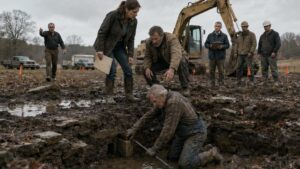
He stopped his pickup on the shoulder of the cooperative road and stared down at a newly armored bank of gray stone. A broad steel pipe disappeared beneath the gravel. Fresh riprap had been packed around both ends, and the downstream ditch had been reshaped for nearly fifty yards.
Jonathan took the ledger from the passenger seat.
He found the invoice.
Culvert stabilization and water-channel remediation.
For three days, he had treated that description as suspicious because he could not remember seeing the work.
Now he was standing on it.
An excavator was parked farther down the slope. The operator, greasing a fitting near the bucket arm, looked up when Jonathan approached.
“You work this crossing in spring?”
The operator nodded.
“After that storm?”
“About six days.”
“Six?”
“Road washed underneath. Worse than it looked from top.”
Jonathan glanced at the pipe.
“Cooperative pay you directly?”
The operator wiped his hands on a rag.
“No. I subcontracted.”
“To who?”
He named the maintenance company from Jonathan’s invoices.
Jonathan felt the neat shape of his theory bend.
“Same company supplied the stone?”
“Some of it. They handled trucks and labor.”
“How bad was the road?”
The operator gave him a look that suggested Jonathan should already know.
“Another hard rain and you’d have lost the crossing.”
Jonathan closed the ledger.
By lunchtime he had found two more repairs he had underestimated.
A drainage cut near Rebecca’s orchard had been rebuilt beneath brush that had since grown over the disturbed soil. A washed shoulder on the north road had required far more gravel than Jonathan remembered because most of the replacement material had gone below the roadbed.
The money had not all vanished.
That should have relieved him.
Instead, it made the rest harder.
He drove to Brian Jackson’s grain shed that afternoon.
Brian was standing beneath the auger, checking a belt housing. He did not seem surprised when Jonathan arrived carrying the ledger.
“You’ve been digging,” Brian said.
“Apparently not as much as the cooperative did.”
Brian gave a tired half-smile.
Jonathan opened the ledger on the hood of his pickup.
“I was wrong about some of the storm work.”
Brian looked down at the page.
“About time.”
“You could have told people what it cost.”
Brian’s expression flattened.
“We should have.”
“Why didn’t you?”
The auger fan clicked as the metal cooled.
Brian looked toward the open shed door.
“Because we were already short.”
Jonathan said nothing.
Brian rubbed a thumb against the edge of the hood.
“The spring storm hit after we’d committed money to the pump rebuild. Insurance covered less than expected. Then the lower road went. Debra wanted an emergency assessment right then.”
“And?”
“And half the members had fertilizer bills. Orchard people were already carrying frost losses. Nobody wanted another assessment.”
“So you hid the spending.”
“We delayed explaining it.”
“That’s hiding it.”
Brian looked at him sharply.
“You think I don’t know that?”
Jonathan let the silence stay.
Brian finally said, “We moved money from reserve categories. Figured we’d rebuild the balance over the year.”
“With what?”
“Normal dues. Vendor credits. Maybe a smaller assessment after harvest.”
“Penalties?”
Brian’s eyes shifted.
That was enough.
Jonathan leaned closer.
“Did the board increase enforcement because you needed cash?”
“I didn’t vote on every citation.”
“That isn’t what I asked.”
Brian stepped away from the truck.
“Debra said people had gotten sloppy. Gates, shoulders, ditch access, equipment. She said tighter compliance would cut maintenance costs.”
“And bring in penalty revenue.”
Brian did not answer.
Jonathan looked down at the ledger.
“So the reserve shortage is real.”
“Yes.”
“Some of the work is real.”
“Yes.”
“And the members weren’t told either one.”
Brian rested both hands on his hips.
“We were trying to keep the cooperative functioning.”
“You signed the payments?”
Brian’s face changed.
Not defensive this time.
Ashamed.
“Some.”
“How many?”
“I don’t know.”
“You’re treasurer.”
“I know what my title is.”
Jonathan waited.
Brian looked toward the stacked grain bins.
“Debra brought emergency approvals by when I was in the middle of harvest prep. Some invoices weren’t complete yet. She said documentation would follow.”
“Did it?”
“Not always.”
Jonathan felt his earlier certainty dissolve into something more unpleasant.
A simple thief would have been easier.
Instead he had a board that had spent real money on real emergencies, concealed the damage, borrowed from reserves, tightened penalties, and then allowed incomplete contractor bills through because admitting the truth might force an assessment nobody wanted.
That was not innocence.
But it was not the story Jonathan had been assembling in his head either.
“What about the Wilson address?” he asked.
Brian went still.
Jonathan noticed.
“You know about it.”
Brian exhaled through his nose.
“I know the family.”
“Is the contractor related to Debra?”
“You need to ask her.”
“I’m asking you.”
“And I’m telling you I don’t know enough to answer cleanly.”
Jonathan almost pushed harder.
Then he remembered the culvert.
Do not assume.
He shut the ledger.
As he turned toward his truck, Brian said, “Jonathan.”
He looked back.
Brian’s voice had lost its edge.
“I should have read everything I signed.”
It was the first thing either man had said that afternoon without defending himself.
Jonathan nodded once.
His phone buzzed before he reached the road.
A cooperative message.
Emergency member meeting. Friday evening. Attendance strongly requested.
Attached was a proposed special assessment large enough to make Jonathan stop walking.
The cooperative did not merely have a problem anymore.
Debra was about to ask every farm on the road to pay for it.
Chapter 5: Before Anyone Votes Another Dollar
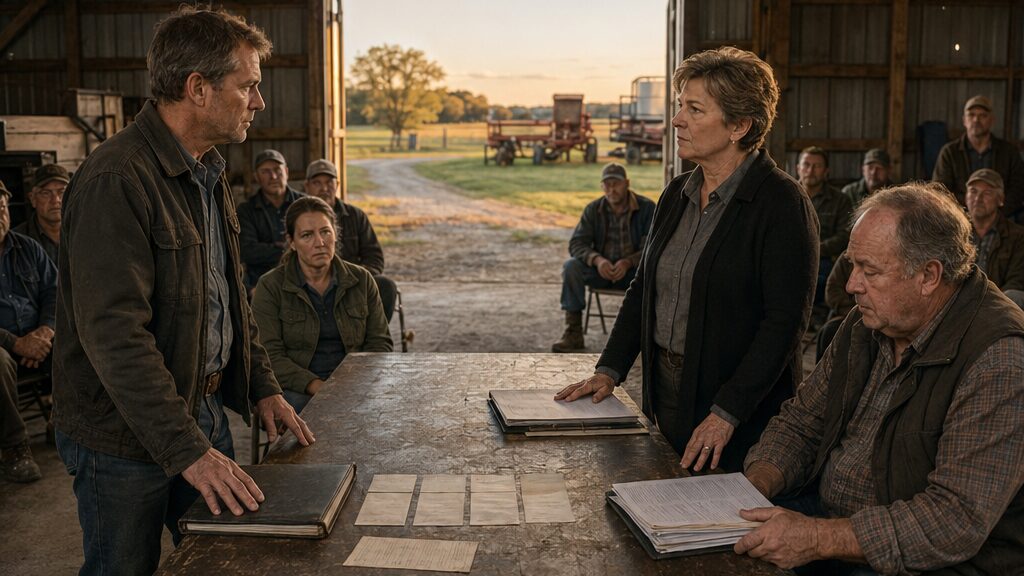
Debra announced the assessment before anyone in the equipment shed had been given a full accounting.
The folding chairs were nearly full. Farmers stood along the open double doors, some still in work clothes, dust on their boots, caps pushed back from their foreheads. A tractor sat outside with its loader raised just enough to clear the doorway light.
At the front, Debra stood behind a scarred folding table.
“The proposed assessment is necessary to stabilize the road and water reserve before winter,” she said.
A page rustled somewhere behind Jonathan.
“How much?” someone asked.
Debra named the amount.
The room changed.
Not dramatically.
No one shouted.
But several people sat straighter. One man took off his cap. Rebecca Green lowered the pen in her hand.
Jonathan had calculated what the figure meant to Miller Farm.
He had also calculated what it meant to Rebecca’s orchard, where harvest labor and packing costs were already due.
Debra continued.
“Payment can be divided into two installments. The first would be due within thirty days.”
Jonathan looked toward Brian.
The treasurer sat two chairs from the front with a binder across his knees.
He did not look back.
Debra moved toward the vote.
“We need a motion to approve—”
Jonathan stood.
The scrape of his chair against concrete carried farther than he expected.
Debra stopped.
“Yes?”
“Before anybody votes another dollar, what is the current maintenance reserve?”
Several heads turned.
Debra’s face tightened almost imperceptibly.
“The reserve is adequate for current obligations.”
“That wasn’t the question.”
“Jonathan, the full financial report was distributed.”
“The report doesn’t reconcile.”
A murmur moved through the back of the shed.
Debra placed both hands on the table.
“You have challenged almost every enforcement action issued to your property this month. I understand you’re frustrated.”
There it was.
The assumption Jonathan had expected.
This was about his fines.
He walked to the front carrying his ledger.
“I am frustrated.”
He placed the ledger on the table.
Then he laid down four penalty notices beside it.
“I paid two of these without arguing.”
Debra looked at them.
Jonathan added one maintenance invoice.
“I’m not asking anyone to cancel my fines tonight.”
That quieted the room more effectively than denial would have.
He opened the ledger.
“I’m asking you to explain three numbers.”
Debra’s mouth tightened.
Jonathan pointed to the first.
“Last year’s reserve.”
Then the second.
“Reported expenses I can verify.”
Then the third.
“Current balance.”
Someone behind him said, “What’s the difference?”
Jonathan did not dramatize it.
He gave the approximate figure.
The reaction this time was audible.
Rebecca whispered something under her breath.
Debra spoke quickly.
“That calculation ignores emergency work.”
“I know.”
She looked caught off guard.
Jonathan continued.
“I found the north culvert. I spoke with the excavator operator. I checked the grading work. Some of what I questioned was legitimate.”
A few faces that had leaned toward him shifted back.
Jonathan let them.
“I was wrong about that part.”
Debra seized on it.
“Exactly. You do not have the full accounting context.”
“No. And neither do the members.”
Brian looked up.
Jonathan slid the maintenance invoice across the table.
“This contractor received multiple payments. Some support real storm work. Others have incomplete descriptions, repeated labor language, and no detailed equipment breakdown.”
Debra did not touch the invoice.
Jonathan opened another page.
“And the contractor’s mailing address traces to property held by the Wilson family.”
The room went still.
Debra’s expression hardened.
“That proves nothing.”
“I didn’t say it did.”
A voice from the side said, “Then what are you saying?”
Jonathan looked toward the members.
“I’m saying we should not approve a new assessment until an independent person reconciles the reserve, the emergency work, and these vendor payments.”
Debra shook her head.
“You are presenting speculation as if it were evidence.”
“No.”
Jonathan tapped the ledger.
“These are questions. The difference matters.”
Rebecca stood near the back.
Everyone turned toward her.
She looked uncomfortable being watched.
“Jonathan isn’t the only person getting fined.”
Debra’s eyes moved to her.
Rebecca continued.
“I got two penalties this month. One for pallets that weren’t blocking the turnout. Another over weeds along a ditch.”
A neighboring farmer spoke from beside the door.
“I got one for equipment near the shoulder.”
Another voice added, “Same here.”
Jonathan had imagined this moment differently during the drive over.
He had imagined vindication.
Instead, hearing the others made him feel faintly ashamed.
He had known Rebecca was not alone, but he had never asked how many others had quietly paid.
Debra raised a hand.
“Enforcement is not the issue before us.”
“It might be,” Jonathan said.
She looked at him.
“If penalty revenue increased while the reserve was short, members should know whether those decisions were connected.”
“That is an accusation.”
“It is a question.”
“They all sound like accusations when you ask them in a room full of people.”
For the first time, Jonathan heard something beneath Debra’s control.
Fear.
Not fear of him.
Fear of the room.
Brian stood.
His chair legs scraped against the floor.
“The accounts are incomplete.”
Debra turned.
“Brian.”
He held up one hand.
“They’re incomplete.”
The shed went silent again.
Brian faced the members.
“Some emergency payments were approved before full supporting documents came in. I signed some of them.”
Jonathan watched several people look from Brian to Debra.
Brian continued.
“That does not mean one hundred twelve thousand dollars is missing in the sense Jonathan first suggested.”
“I didn’t say it was stolen,” Jonathan said.
“No. But people are hearing it that way.”
Brian looked directly at him.
“And some of those bills are real.”
“I know.”
“Then say that clearly.”
Jonathan felt the pull of the room.
He could have pushed.
He could have read the vendor address again, emphasized Debra’s surname, and let everyone construct the ugliest version themselves.
A week earlier, he might have.
Instead he closed one page of the ledger.
“Some of the work is real,” he said. “Some of the reserve loss is explainable. What I cannot explain is why members weren’t told, why some payments lack proper support, and why a related address wasn’t disclosed.”
Debra’s face lost color.
Rebecca saw it too.
“So there is a relationship?” she asked.
Debra looked around the room.
Nobody moved.
Finally she said, “The mailing property belongs to my brother.”
The words landed without noise.
Jonathan felt his own pulse in his neck.
Debra continued before anyone could interrupt.
“The contractor uses a building on that property. My brother does not own the company.”
“Did you know they were using his address?” Jonathan asked.
“Yes.”
“Before the payments?”
“Yes.”
“Did you disclose that to the board?”
Debra did not answer immediately.
Brian lowered his eyes.
That answered enough.
Someone near the door said, “Why not?”
Debra gripped the edge of the table.
“Because the road was failing, the storm had taken out two crossings, and they were the only crew who could mobilize immediately.”
“That doesn’t answer why you hid it,” Rebecca said.
Debra looked at her.
“I did not hide the work.”
“The relationship.”
A long pause.
Then Debra said, quietly, “Yes. I knew about the connection before I approved the payments.”
No one applauded.
No one needed to.
The meeting had already changed.
Chapter 6: What Debra Was Trying to Save
The first independent reconciliation cut nearly forty thousand dollars from Jonathan’s suspected shortfall.
He read the figure twice in the cooperative office Saturday morning.
The accountant had worked from bank records, paid invoices, fuel tickets, equipment logs, and emergency approvals. Several costs Jonathan had treated as unexplained had legitimate support buried in files that never appeared in the annual statement.
Jonathan closed his eyes for a moment.
“That much?”
The accountant nodded.
“That much.”
Across the table, Debra sat with her hands folded.
Brian stood near the filing cabinet.
Jonathan looked down at his ledger.
The page where he had once written 112,000 now contained corrections in the margins.
He drew one clean line through the original total.
Debra watched him do it.
“You were very certain,” she said.
Jonathan looked up.
“I was.”
“You stood in front of everyone.”
“I also told them some of my assumptions were wrong.”
“After you connected my name to a contractor.”
Brian shifted uneasily.
Jonathan could have defended himself.
Instead he said, “I should have separated the numbers sooner.”
Debra seemed unprepared for that answer.
The accountant pushed another sheet across the table.
“However, the remaining issues are serious.”
Debra’s gaze moved to the paper.
Duplicate labor charges.
Invoices split across categories.
Related-party disclosure missing.
Reserve transfers not reflected clearly in member reporting.
Jonathan read each line.
No dramatic theft.
No suitcase of money.
Something more ordinary and, in some ways, more damaging.
Decisions made under pressure, hidden because admitting them would be embarrassing, then disguised further when the first concealment created the need for another.
Later, Jonathan found Debra standing outside near the shared road.
A grader passed slowly in the distance.
“You wanted to know why,” she said.
Jonathan stopped.
She looked toward the road rather than at him.
“The spring storm cost almost twice what we projected. Then the pump failed. Insurance denied part of the claim because of deferred maintenance.”
“You didn’t tell the members.”
“No.”
“Why?”
“Because we had been warning about maintenance for years.”
Jonathan waited.
Debra’s voice stayed controlled.
“Every time we proposed raising dues, people said next year. Every time we proposed replacing a culvert before it failed, someone said it had lasted forty years and could last one more.”
“And you were chair.”
“Yes.”
“So eventually that became your failure too.”
Her jaw tightened.
“Yes.”
It was the first time Jonathan had heard her say it without qualification.
She continued.
“When the road washed out, I called everyone I could find. That contractor could mobilize. I knew the mailing address was on my brother’s property. I knew how it would look.”
“So you didn’t disclose it.”
“I told myself it didn’t matter because my brother wasn’t being paid.”
“And the duplicate charges?”
Debra finally looked at him.
“The first invoice exceeded what we had approved. We split part of it against drainage work. Then another bill came. By then, if I brought the whole thing to the members, they would have asked why the reserve was already down.”
“So you moved it around.”
“Yes.”
“And the fines?”
Her face hardened again, but not with the old confidence.
“We needed cash.”
Jonathan said nothing.
Debra looked away.
“I also believed people had gotten careless. Both things were true.”
“You started enforcing every little violation because penalties went into maintenance.”
“I enforced rules that were already there.”
“You enforced them differently.”
“Yes.”
The admission came so quietly that Jonathan almost missed its weight.
Debra rubbed her hands together once.
“I thought if we could get through harvest, rebuild a little cash, then do a smaller assessment later, nobody would lose access, nobody would panic, and the cooperative would survive.”
“You decided for everyone.”
“Yes.”
Jonathan thought of the cattle gate.
Nine minutes.
Four notices clipped beside his ledger.
What had felt like personal hostility had been partly something colder: a revenue mechanism.
That did not make it better.
But it made sense.
By afternoon, word of the preliminary reconciliation had spread.
Several members gathered outside the equipment shed.
One wanted Debra removed immediately.
Another wanted the county prosecutor called.
Someone had drafted a statement accusing her of stealing the entire reserve shortage.
The paper reached Jonathan near his pickup.
“Sign it,” a farmer said.
Jonathan read it.
The accusation was stronger than the evidence.
It said Debra had diverted more than one hundred thousand dollars for personal benefit.
The audit had not established that.
Rebecca stood nearby.
“What do you think?”
Jonathan held the page.
He could feel how easy it would be.
One signature.
After weeks of Debra treating rules as weapons, he could let a bad sentence become hers.
His father’s voice came back to him, but differently now.
Not the part about keeping peace.
The part Jonathan had ignored.
Keeping score too long.
He handed the paper back.
“I’m not signing that.”
The farmer stared at him.
“After what she did to you?”
“That doesn’t make this true.”
“She hid money.”
“She hid losses. She approved improper billing. That’s enough.”
“Not for me.”
Jonathan shook his head.
“If we exaggerate it because we’re angry, then we’re doing the same thing she did with the rules.”
No one answered immediately.
Rebecca looked from the paper to Jonathan.
The farmer folded it once.
“You’re defending her now?”
“No.”
Jonathan glanced through the open shed door at the corrected ledger on the table.
“I’m defending what we can prove.”
For years he had avoided conflict by saying too little.
Now the harder choice was refusing to say too much.
Chapter 7: The Gate Stayed Open This Time
“No.”
Jonathan said it before the room could turn the nomination into a vote.
The cooperative members were gathered again in the equipment shed, but the arrangement had changed. Debra no longer stood behind the scarred folding table. She sat along one side with the other members, a plain folder closed in front of her.
Brian sat two chairs away.
At the front, the independent accountant had finished presenting the reconciliation.
A farmer near the aisle looked at Jonathan.
“You haven’t even heard the motion.”
“I heard enough.”
“We need a chair.”
“You need somebody who wants the job.”
A few people smiled, but the tension remained.
Rebecca leaned back in her folding chair.
“You’re the one who found the problem.”
“That doesn’t make me the person who should run everything.”
The final review lay open on the table.
It had taken several weeks to untangle.
The reserve had not simply disappeared.
A substantial portion had gone toward legitimate emergency work: culvert replacement, road stabilization, grading, stone, pump repairs, and equipment rental.
Another portion had been concealed through poor categorization and reserve transfers that members had never been told about.
Then there were the payments that could not be defended as simple bookkeeping mistakes.
The family-linked contractor had submitted labor twice on one project. Another invoice had been split between drainage and roadway accounts even though the work overlapped. Debra had approved payments without disclosing the contractor’s connection to property owned by her brother.
The accountant found no evidence that Debra’s brother had personally received cooperative money.
That mattered.
So did everything she had hidden.
The emergency assessment had been suspended.
Debra had stepped down as chair.
Brian had resigned as treasurer.
Neither decision repaired the road or restored the reserve.
That was the part some members seemed only now to understand.
The accountant tapped the report.
“After removing unsupported charges, recovering the duplicate amount, and correcting the reserve transfers, the cooperative still faces a real maintenance deficit.”
Someone groaned softly.
“How real?”
The accountant gave the figure.
It was less than Debra’s proposed assessment.
It was not zero.
Jonathan watched the room absorb that.
Justice, apparently, still came with a bill.
A farmer near the door shook his head.
“So after all this, we still pay?”
Rebecca answered before Jonathan could.
“We used the road.”
Nobody argued with that.
Jonathan looked toward Debra.
She had not spoken since the meeting began.
The sharpness he remembered from the cattle gate was gone. She looked older without the clipboard in her hands.
A member across the aisle said, “I still want the minutes to state that she misused the reserve.”
Debra finally raised her eyes.
“I concealed the condition of the reserve.”
The member frowned.
“That sounds polished.”
“It is accurate.”
“You approved payments to a contractor tied to your family.”
“Yes.”
“And you expect us to believe none of this was theft?”
Debra’s face tightened.
“I expect the record to say what the audit says.”
Jonathan felt several people look toward him.
Weeks earlier, he would have hated that.
Now he understood that silence could become its own kind of vote.
“The audit found improper billing,” Jonathan said. “It found undisclosed related-party risk. It found concealed losses.”
He paused.
“It did not find that Debra stole the full reserve shortage.”
The member looked dissatisfied.
“So she walks away?”
“No.”
Jonathan looked toward the report.
“She lost the position. The cooperative is recovering unsupported charges. The books are being corrected. That is accountability.”
Debra turned toward him.
For a moment neither spoke.
Then she said, “I did think I was saving it.”
Jonathan knew what she meant.
The cooperative.
The road.
Her own reputation.
Probably all three.
He answered quietly.
“You were deciding what everyone else was allowed to know.”
Debra nodded once.
“Yes.”
There was no apology large enough to clean the room.
There did not need to be.
The meeting moved to the next question: what came after her.
Someone nominated Jonathan again.
He shook his head.
“I’ll help with the accounting rules.”
“Why not chair?”
“Because this problem started with too much depending on one person’s judgment.”
That silenced the room.
Jonathan walked to the table.
He opened the cooperative ledger.
The same ledger had once been an annual formality members barely read. Then it became his evidence. Then his accusation. Then, after the audit, a record full of corrections that forced him to admit where he had been wrong too.
He placed a sheet beside it.
“Every member should get the same financial packet the board gets.”
Brian looked up.
Jonathan continued.
“Quarterly reserve balance. Copies of contracts above a set amount. Related-party disclosure before payment approval. Automatic access to invoices on request.”
A farmer asked, “Who’s going to manage all that?”
“The board.”
“That’s what the board was supposed to be doing already.”
“Then we make it harder not to.”
Rebecca smiled slightly.
Jonathan went on.
“Independent review every year. Not when somebody gets suspicious. Every year.”
Brian cleared his throat.
“And two signatures for emergency payments over the threshold.”
Jonathan looked at him.
Brian nodded.
“I should have insisted on that before.”
It was the closest he had come to saying aloud what his own role had been.
He had not stolen anything.
He had not engineered the concealment.
But his signatures had made it easier.
The final vote took nearly an hour.
The members approved a smaller assessment limited to documented road and water needs.
They approved the independent annual review.
They approved automatic member access to financial records.
And, after more argument than Jonathan expected, they approved a policy requiring enforcement notices to include a warning period for minor non-safety violations before any monetary penalty could be issued.
Rebecca raised her hand during that discussion.
“What about the gate rule?”
Several people laughed.
Even Debra lowered her eyes with the beginning of a smile.
The rule was amended.
Farm operations using the shared lane would be governed by actual road-entry times, not by when a private gate happened to be opened.
Nine minutes disappeared from cooperative history with one vote.
After the meeting, Brian caught Jonathan outside.
“You really don’t want the chair?”
“No.”
“You’d probably be good at it.”
“That’s what worries me.”
Brian looked toward the open doors.
“I kept telling myself the paperwork would catch up.”
Jonathan nodded.
“I kept telling myself staying out of it was the decent thing.”
Brian gave him a tired look.
“Neither worked too well.”
“No.”
They shook hands.
Not forgiveness.
Not absolution.
Something more useful.
Recognition.
Several weeks later, Jonathan was repairing a hinge at the cattle gate when Rebecca’s pickup came down the shared lane.
She slowed.
Jonathan stepped back from the opening.
The gate stood wide.
Rebecca leaned toward the passenger window.
“You know what time it is?”
Jonathan checked his watch.
“Nine fifty-one.”
She laughed.
“You’re a dangerous man.”
“So I’ve been told.”
She drove through toward the orchard.
Jonathan watched the pickup disappear along the gravel road.
Then he went into the farmhouse office.
The four old violation notices were still there.
He had stopped displaying them above his desk.
Now they were folded beneath the cooperative’s new financial-access policy.
Beside them sat the ledger.
Not hidden in a locked cabinet.
Not controlled by one chair or one treasurer.
A copy would go to every member.
Jonathan rested his hand on its cover for a moment.
His father had been right that neighbors could ruin themselves by keeping score.
But Jonathan finally understood the other half of it.
Refusing to look at the score did not make it honest.
Outside, the cattle gate remained open while Rebecca returned from the orchard.
She passed through without stopping.
Jonathan did not check the time.
The story has ended.